
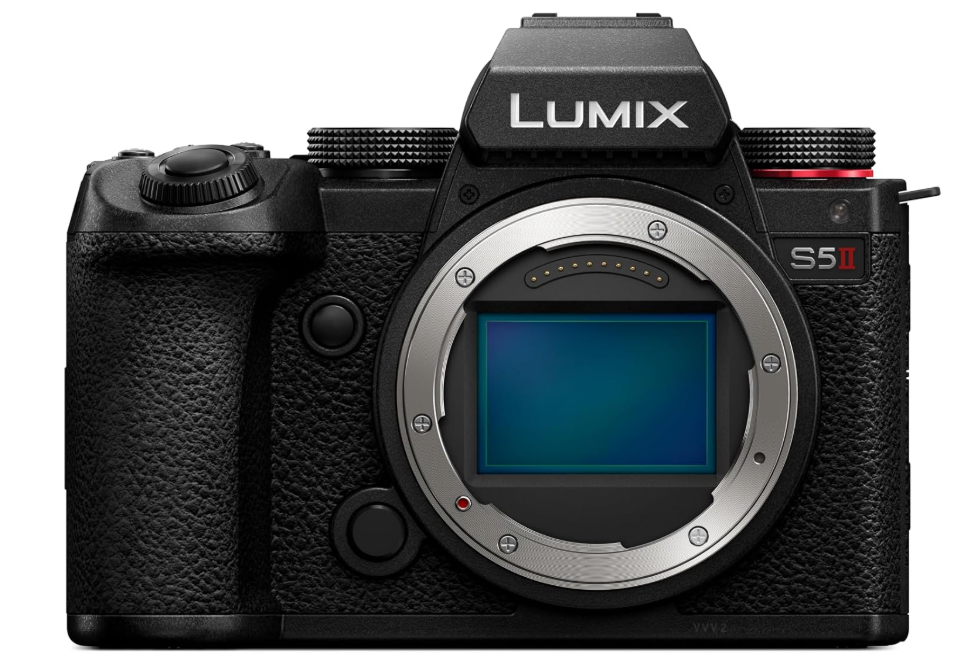
Choosing the best compact mirrorless camera for travel is all about finding the perfect balance between portability, performance, and versatility. Modern mirrorless cameras like the Sony Alpha 7C II, Fujifilm X-S20, Canon EOS R10, Sony a6700, and Panasonic LUMIX S5II have redefined what travelers can expect, offering powerful imaging capabilities in lightweight, easy-to-carry designs.
Whether you’re capturing landscapes, street photography, or creating travel vlogs, today’s compact mirrorless cameras deliver exceptional image quality, fast autofocus, and advanced video features without the bulk of traditional DSLRs. This makes them the ideal companion for both casual travelers and content creators who want to document their journeys with professional-level results.
Best Compact Mirrorless Camera for Travel
1) Sony Alpha 7C II
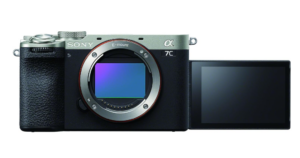
The Sony Alpha 7C II is a powerful yet incredibly compact mirrorless camera that brings full-frame performance into a lightweight, travel-friendly body. Designed for creators who want portability without sacrificing quality, it features a 33.0MP full-frame Exmor R CMOS sensor paired with the advanced BIONZ XR processor, delivering exceptional image clarity, rich detail, and impressive dynamic range even in challenging lighting conditions.
Its dedicated AI processing unit elevates autofocus to a new level, enabling highly accurate subject recognition and real-time tracking across humans, animals, birds, and more, ensuring sharp results in both photography and video. Despite its small size, the camera supports high-quality 4K 4:2:2 10-bit video recording up to 60p/50p, making it an excellent hybrid option for both photographers and content creators.
With its blend of portability, intelligent autofocus, and professional-grade imaging, the Alpha 7C II stands out as one of the best compact full-frame cameras for travel and everyday shooting.
Pros
-
Extremely compact and lightweight for a full-frame camera
-
High-resolution 33MP sensor delivers excellent image quality
-
Powerful BIONZ XR processor for fast performance and processing
-
Advanced AI autofocus with reliable subject tracking
-
High-quality 4K 10-bit video recording (great for creators)
-
Strong in-body image stabilization for handheld shooting
Cons
-
Premium price compared to APS-C alternatives
2) Fujifilm X-S20 Mirrorless Digital Camera
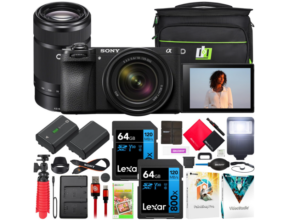
The Sony a6700 Alpha APS-C Mirrorless Camera is a next-generation hybrid powerhouse built for creators who want professional performance in a compact, travel-ready design. Featuring a 26MP APS-C Exmor R back-illuminated CMOS sensor combined with the advanced BIONZ XR processor, the a6700 delivers exceptional image quality with rich detail, accurate colors, and impressive dynamic range across a wide variety of shooting conditions.
What truly sets this camera apart is its dedicated AI processor, enabling highly advanced real-time subject recognition and tracking, including human pose estimation and precise eye autofocus, ensuring consistently sharp results for both photos and videos.
For video creators, the a6700 is a standout performer, offering 4K/60p recording oversampled from 6K in 4:2:2 10-bit, along with high frame rate 4K/120p recording for smooth slow-motion footage. With professional features like S-Log3 (14+ stops of latitude) and S-Cinetone, it provides cinematic color grading flexibility straight out of the camera.
The camera also incorporates AI-powered video tools such as Auto Framing and Real-time Tracking, making it ideal for solo creators and vloggers. On the photography side, it supports high-speed continuous shooting up to 11 fps and can capture over 1000 JPEG images in a burst, ensuring you never miss critical moments.
The a6700 is built for flexibility and stability, featuring 5-axis in-body image stabilization (IBIS) with up to 5 stops of compensation and precise anti-shake correction at the pixel level. Its 759 phase-detection autofocus points with 93% coverage ensure fast and accurate focusing across the frame.
The vari-angle touchscreen LCD and high-quality electronic viewfinder enhance usability for both stills and video shooting, while features like focus bracketing, breathing compensation, and flicker suppression further elevate its professional capabilities. With a comprehensive bundle including multiple lenses, accessories, and creative software, the Sony a6700 offers incredible value for photographers and videographers looking for a complete, high-performance kit.
Pros
-
Excellent 26MP APS-C sensor with outstanding image quality
-
Powerful BIONZ XR processor for fast, reliable performance
-
Advanced AI autofocus with real-time subject tracking and recognition
-
High-quality 4K video (6K oversampled) with 10-bit 4:2:2 recording
-
4K/120p support for smooth slow-motion footage
-
Strong 5-axis in-body image stabilization
-
Fast continuous shooting (11 fps) with large buffer capacity
-
Professional video features (S-Log3, S-Cinetone, breathing compensation)
-
Vari-angle touchscreen for vlogging and flexible shooting angles
-
Excellent autofocus coverage with 759 phase-detection points
Cons
- Premium price for an APS-C camera
5) Panasonic LUMIX S5II Mirrorless Camera
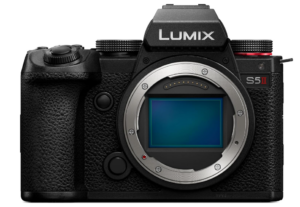
The Panasonic LUMIX S5II Mirrorless Camera is a powerful full-frame hybrid camera designed for creators who demand professional-level performance in both photography and video. One of its standout upgrades is the Phase Hybrid Autofocus system, which delivers fast and highly accurate subject detection, ensuring your subject stays sharp even in challenging lighting conditions or when multiple subjects are in motion. Once locked on, the camera maintains consistent tracking, making it ideal for dynamic shooting scenarios such as events, travel, and content creation.
For handheld shooting, the S5II features advanced Active Image Stabilization (Active I.S.), which significantly improves stability, especially for video, including walking shots. This makes it a strong choice for vloggers and filmmakers who need smooth, professional-looking footage without relying heavily on external gear. Video capabilities are where the S5II truly shines, offering 14+ stops of dynamic range with V-Log/V-Gamut, allowing for rich color grading and cinematic results.
The addition of a REAL TIME LUT function enables in-camera color grading for both photos and videos, giving creators more creative control straight out of the camera. It also supports 6K 30p Open Gate recording with unlimited recording time, making it highly versatile for different content formats and aspect ratios.
Another major advantage is its unlimited video recording capability, made possible by an efficient heat management system that combines a built-in fan and heat sink, ensuring long recording sessions without overheating while maintaining a compact form factor. Overall, the LUMIX S5II is an excellent choice for hybrid shooters who prioritize video performance, stabilization, and advanced creative features in a compact full-frame body.
Pros
-
Fast and accurate Phase Hybrid Autofocus with excellent subject tracking
-
Strong Active I.S. stabilization; great for handheld video and walking shots
-
Outstanding video quality with 14+ stops dynamic range (V-Log/V-Gamut)
-
REAL TIME LUT support for in-camera color grading
-
6K Open Gate recording for flexible video formats
-
Unlimited video recording with efficient heat management
-
Compact full-frame design for travel and hybrid use
Cons
- Premium pricing for budget-conscious users
Factors to Consider When Choosing the Best Compact Mirrorless Camera for Travel
1. Size and Weight
When traveling, portability is one of the most important factors. A compact and lightweight camera ensures you can carry it comfortably throughout the day without fatigue. Cameras like the Sony Alpha 7C II and Canon EOS R10 are designed with travel in mind, offering powerful performance in smaller bodies. It’s also important to consider lens size, as bulky lenses can reduce the overall portability of your setup.
2. Sensor Size and Image Quality
The sensor size directly impacts image quality, low-light performance, and depth of field. Full-frame cameras like the Panasonic LUMIX S5II and Sony Alpha 7C II provide superior dynamic range and low-light capability, making them ideal for night scenes and landscapes. APS-C cameras like the Fujifilm X-S20 and Sony a6700 still offer excellent image quality while keeping the camera body and lenses more compact and affordable, making them a great middle ground for travelers.
3. Autofocus Performance
Fast and accurate autofocus is essential for capturing spontaneous travel moments, especially when shooting people, wildlife, or moving subjects. Modern systems like the AI-powered autofocus in the Sony a6700 or the Dual Pixel CMOS AF in the Canon EOS R10 ensure your subject stays sharp with minimal effort. Reliable subject tracking is particularly important for vloggers and action photography.
4. Video Capabilities
If you plan to create travel vlogs or social media content, strong video features are crucial. Cameras like the Fujifilm X-S20 and Panasonic LUMIX S5II offer advanced video options such as 4K or even 6K recording, 10-bit color depth, and professional color profiles. Features like unlimited recording time and advanced autofocus during video recording can significantly improve your content quality and workflow.
5. Image Stabilization (IBIS)
In-body image stabilization (IBIS) helps reduce camera shake, especially when shooting handheld. This is particularly useful for travel, where you may not always carry a tripod. Cameras like the Fujifilm X-S20 and Panasonic LUMIX S5II offer strong stabilization, allowing for sharper photos and smoother video, even while walking or shooting in low light.
6. Battery Life
Travel often involves long days away from power sources, so battery life is a key consideration. Cameras with efficient processors, such as those powered by advanced chips like BIONZ XR or DIGIC X, tend to offer better battery performance. It’s also wise to consider cameras that support USB-C charging or carrying spare batteries to avoid missing important moments.
7. Lens Ecosystem and Compatibility
A camera is only as versatile as the lenses available for it. Systems like Sony’s E-mount and Canon’s RF mount offer a wide range of lenses, from compact travel zooms to specialized primes. The Canon EOS R10, for example, supports RF-S and RF lenses, as well as EF lenses via an adapter, giving you flexibility as your needs grow. A strong lens ecosystem ensures you can adapt to different travel scenarios, from landscapes to portraits.
8. Durability and Build Quality
Travel can expose your camera to dust, moisture, and varying weather conditions. While not all compact cameras are weather-sealed, choosing one with solid build quality can make a difference in longevity. Cameras like the Panasonic LUMIX S5II are built to handle more demanding environments, which is especially useful for outdoor and adventure travel.
9. Ease of Use and Controls
A travel camera should be intuitive and easy to operate, especially if you need to capture moments quickly. Features like Auto modes, touchscreen interfaces, and customizable controls can enhance usability. Cameras such as the Fujifilm X-S20 include dedicated modes for beginners and vloggers, making them accessible while still offering advanced functionality for experienced users.
10. Price and Value for Money
Finally, your budget will play a major role in your decision. While full-frame cameras like the Sony Alpha 7C II and Panasonic LUMIX S5II offer premium features, APS-C options like the Canon EOS R10 and Fujifilm X-S20 provide excellent performance at a more affordable price. It’s important to consider not just the camera body, but also the cost of lenses and accessories when evaluating overall value.