
Choosing the best interchangeable lens camera in 2026 comes down to finding the right balance between performance, versatility, and your specific creative needs. Modern mirrorless cameras from brands like Canon, Sony, and Nikon have pushed the boundaries with high-resolution sensors, lightning-fast shooting speeds, AI-powered autofocus, and advanced video capabilities, making them ideal for both photographers and content creators.
Whether you’re capturing fast-paced action, producing cinematic video, or simply upgrading from a beginner setup, interchangeable cameras offer the flexibility to switch lenses and adapt to any shooting scenario. With so many powerful options available; from entry-level models to professional flagships; understanding what truly matters will help you choose a camera that delivers both stunning results and long-term value.
Best Interchangeable Camera
1) Canon EOS R5 Mark II Body
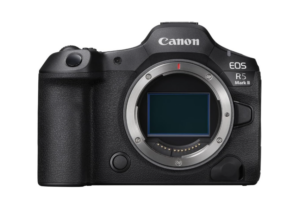
The Canon EOS R5 Mark II Body is a cutting-edge full-frame mirrorless camera designed for professionals who demand speed, precision, and versatility. At its core is a completely new Canon-designed 45MP back-illuminated stacked CMOS sensor, delivering exceptional image quality with improved dynamic range and reduced noise.
This advanced sensor enables incredibly fast read-out speeds, allowing up to 30 frames per second using the electronic shutter; perfect for capturing fast-moving subjects with stunning clarity. Canon has also significantly enhanced its autofocus system, introducing eye control focus and improved subject tracking that can maintain focus even when the subject is briefly obscured, ensuring consistent accuracy in challenging shooting conditions.
For hybrid creators, the ability to capture both video and stills simultaneously without interruption is a game-changer, streamlining workflow during live events or dynamic shoots. Additionally, the new Action Priority feature intelligently analyzes scenes and predicts the main subject, locking focus with impressive precision during high-speed action, making this camera a powerhouse for sports, wildlife, and professional content creation.
Pros
- New 45MP back-illuminated stacked CMOS sensor for superior image quality
- Ultra-fast shooting up to 30 fps with electronic shutter
- Advanced autofocus with eye control and improved subject tracking
- Maintains focus even when subjects are briefly obstructed
- Simultaneous video and still capture without interruption
- Action Priority mode enhances subject detection in fast-paced scenes
Cons
- Premium pricing may not suit beginners
2) Nikon Z6 III
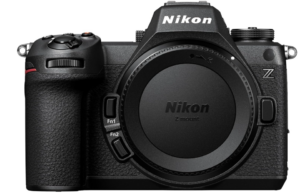
The Nikon Z6 III is a powerful hybrid mirrorless camera built for creators who demand exceptional performance in both video and photography. It stands out with its advanced video capabilities, offering 6K/60p internal N-RAW recording alongside oversampled 4K UHD, 4K/120p, and Full HD/240p slow-motion options, giving filmmakers unmatched flexibility and creative control.
Features like Hi-Res Zoom allow up to 2x digital zoom in HD and 1.4x in 4K without compromising usability, while professional tools such as line-in audio and monitoring options make it a serious production machine. Complementing this is its best-in-class electronic viewfinder, boasting an impressive 4000 nits brightness, 5760k-dot resolution, and a 120 fps refresh rate, delivering a crystal-clear, lifelike viewing experience even in harsh lighting conditions.
The wide ISO range of 100–64000 (expandable to ISO 204800) ensures excellent low-light performance, making it highly versatile across different environments. Nikon has also significantly upgraded autofocus performance, with detection down to -10EV and AI-driven subject recognition powered by deep learning, offering faster and more accurate tracking; even for very small subjects within the frame.
Additionally, the Flexible Picture Control system allows creators to design custom color profiles in NX Studio and upload them directly to the camera, giving full creative control over image aesthetics straight out of camera.
Pros
- Exceptional video capabilities with 6K/60p N-RAW and multiple slow-motion options
- Ultra-bright, high-resolution EVF with smooth 120 fps refresh rate
- Wide ISO range with excellent low-light performance
- Fast and highly accurate autofocus with advanced subject detection
- Customizable color profiles with Flexible Picture Control
- Professional video tools including audio input and monitoring features
Cons
- Premium pricing compared to entry-level hybrid cameras
3) Sony Alpha 1 II
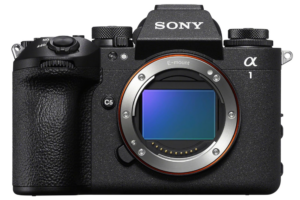
The Sony Alpha 1 II is a flagship full-frame mirrorless camera engineered for professionals who demand uncompromising speed, resolution, and intelligent performance. It features a powerful 50.1MP Exmor RS stacked image sensor paired with Sony’s BIONZ XR processing engine, delivering stunning, lifelike detail and exceptional clarity.
Even when shooting in APS-C mode or cropping, the camera maintains an impressive 21MP resolution, ensuring flexibility without sacrificing quality. The immense data captured by the sensor is processed in real time, while a dedicated AI processing unit enhances subject recognition using advanced human pose estimation and deep learning.
This allows the camera to accurately detect and track a wide range of subjects; including people, animals, vehicles, and even insects; with remarkable precision. With blackout-free shooting and continuous bursts of up to 30 fps supported by full AF/AE tracking, photographers can capture fast-moving action seamlessly, aided by up to 120 AF/AE calculations per second for unmatched accuracy.
On the video side, the Alpha 1 II excels with 8K 4:2:2 10-bit recording and highly detailed 4K footage oversampled from 8.6K, offering exceptional flexibility in post-production. Multiple recording formats, including XAVC HS, S, and S-I with bitrates up to 600 Mbps, ensure professional-grade video quality for demanding workflows.
Pros
- Ultra-high 50.1MP resolution with excellent detail and dynamic range
- Powerful BIONZ XR processor for real-time image processing
- Advanced AI autofocus with accurate multi-subject recognition
- Blackout-free shooting with up to 30 fps continuous bursts
- Exceptional tracking with up to 120 AF/AE calculations per second
- Versatile video capabilities including 8K and oversampled 4K recording
- Maintains strong resolution even in APS-C crop mode
Cons
- Very high price point aimed at professionals
4) Nikon Z5 II
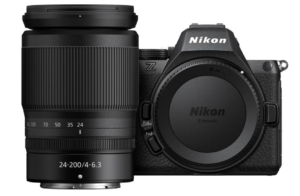
The Nikon Z5 II is a versatile full-frame mirrorless camera that blends performance, intelligent features, and user-friendly design, making it an excellent choice for enthusiasts and hybrid creators. At its core is a 24.5MP BSI-CMOS FX-format sensor powered by the advanced EXPEED 7 processing engine, delivering sharp, high-resolution images with the ability to shoot at impressive speeds of up to 30 frames per second.
Its advanced autofocus system supports automatic detection of nine subject types; including people, animals, and vehicles; ensuring precise focus across a wide range of shooting scenarios. The camera excels in low-light conditions, with autofocus sensitivity down to -10EV and up to 7.5 stops of in-body image stabilization, allowing for clear, steady shots even in challenging environments.
The bright and immersive electronic viewfinder, with a maximum brightness of 3000 nits, offers a crisp and natural viewing experience, especially for those transitioning from DSLRs. Practical features like dual SD UHS-II memory card slots provide reliable storage, while modern connectivity options such as Nikon Imaging Cloud and SnapBridge enable seamless file transfers, remote shooting, and automatic updates. To further enhance value, Nikon includes a limited-time 1-year Adobe Lightroom membership, making the Z5 II a well-rounded solution for both shooting and post-processing workflows.
Pros
- 24.5MP full-frame sensor with fast EXPEED 7 processing
- High-speed shooting up to 30 fps
- Advanced autofocus with 9 subject detection modes
- Excellent low-light performance with -10EV AF sensitivity
- Up to 7.5 stops of in-body image stabilization
- Bright 3000-nit EVF for clear viewing in all conditions
- Dual SD UHS-II card slots for flexible storage
- Seamless connectivity via Nikon Imaging Cloud and SnapBridge
- Includes limited-time Adobe Lightroom membership
Cons
- Lower resolution compared to high-end flagship models
5) Sony a7 IV
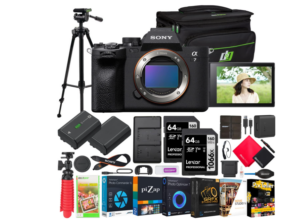
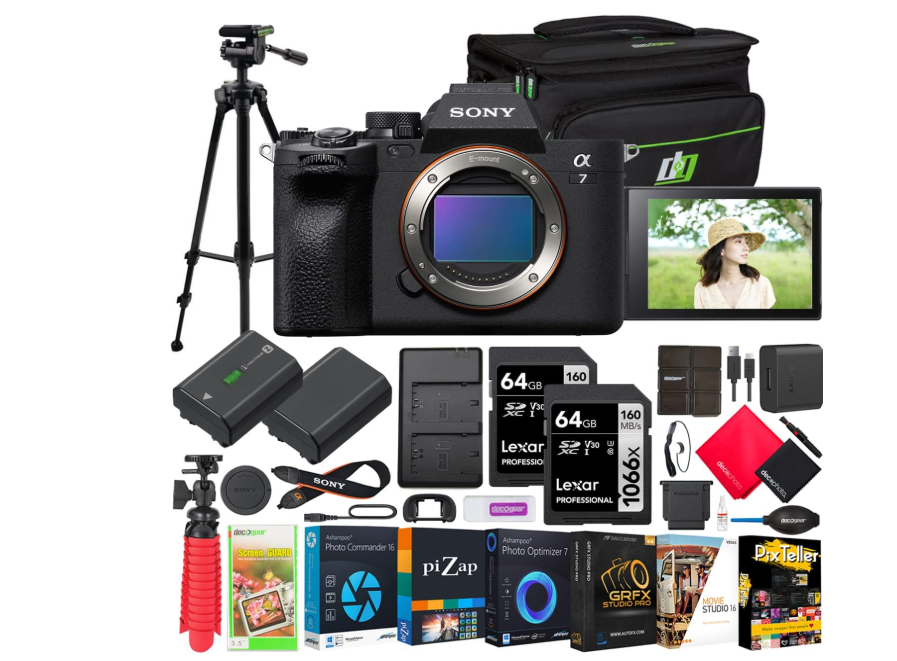
The Sony a7 IV is a powerful full-frame mirrorless camera that strikes an exceptional balance between photography and video, making it an ideal hybrid choice for modern creators. Built around a 33MP Exmor R back-illuminated CMOS sensor and powered by Sony’s next-generation BIONZ XR processor, it delivers stunning image quality with true-to-life detail and an impressive 15+ stops of dynamic range.
Designed to meet the demands of both photographers and filmmakers, the camera supports 4K 60p 10-bit 4:2:2 recording with full pixel readout, along with advanced cinematic tools like S-Cinetone, S-Log3, HLG, and creative look presets for flexible color grading. Its AI-powered autofocus system features 759 phase-detection points with 94% coverage, offering highly accurate Real-time Eye AF for humans, animals, and birds in both photo and video modes.
The a7 IV also excels in usability, with 5-axis in-body image stabilization and Active Mode for smooth handheld shooting, unlimited recording time supported by an efficient heat-dissipation system, and seamless connectivity including Wi-Fi, USB 3.2, and live streaming via UVC/UAC. Additional features like dual card slots (including CFexpress Type A support), a high-resolution 3.68M-dot OLED viewfinder with 120 fps refresh rate, and a comprehensive accessory bundle make this camera a complete package for professionals and serious enthusiasts alike.
Pros
- 33MP full-frame sensor with excellent detail and dynamic range
- Advanced BIONZ XR processor for fast, reliable performance
- High-quality 4K 60p 10-bit video with full pixel readout
- AI-powered autofocus with Real-time Eye AF for multiple subjects
- 5-axis image stabilization with Active Mode for video
- Unlimited recording time with efficient heat management
- Dual card slots with CFexpress Type A support
- Strong connectivity options including live streaming capability
- Comprehensive bundle with useful accessories
Cons
- Continuous shooting speed limited to 10 fps compared to flagship models
Factors to Consider When Choosing the Best Interchangeable Camera
1. Sensor Size and Resolution
The sensor is the heart of any camera, directly affecting image quality, detail, and low-light performance. Full-frame sensors, like those found in the Canon EOS R5 Mark II or Sony A1 II, deliver superior dynamic range and clarity, while APS-C and Micro Four Thirds options offer a more compact and affordable alternative. Resolution also matters; higher megapixels are ideal for cropping and large prints, but they generate larger files and require more storage and processing power.
2. Autofocus Performance
Modern interchangeable cameras rely heavily on advanced autofocus systems powered by AI and deep learning. Features such as eye detection, subject tracking, and multi-subject recognition; seen in cameras like the Nikon Z6 III and Sony a7 IV; ensure sharp focus even in fast-moving or unpredictable scenes. If you shoot sports, wildlife, or video, a fast and intelligent autofocus system is essential.
3. Continuous Shooting Speed
Burst shooting speed, measured in frames per second (fps), is crucial for capturing action. High-end cameras like the Sony Alpha 1 II and Canon EOS R5 Mark II can shoot up to 30 fps, making them ideal for sports and wildlife photography. However, casual users may not need such high speeds and can opt for more moderate performance to save on cost.
4. Video Capabilities
If you plan to shoot video, look for features like 4K or 8K resolution, frame rate options (such as 60p or 120p), and advanced codecs. Cameras like the Nikon Z6 III and Sony a7 IV offer professional-grade video tools, including 10-bit recording, slow motion, and color profiles for grading. Hybrid shooters should prioritize cameras that excel in both photo and video performance.
5. Image Stabilization
In-body image stabilization (IBIS) helps reduce blur from camera shake, especially in low-light conditions or handheld shooting. Cameras like the Nikon Z5 II offer up to 7.5 stops of stabilization, which is particularly useful for video creators and photographers who shoot without a tripod. Strong stabilization can significantly improve overall image quality.
6. Low-Light Performance (ISO Range)
A camera’s ISO range determines how well it performs in dim lighting. Models like the Nikon Z6 III, with extended ISO up to 204800, allow you to shoot in challenging lighting conditions without excessive noise. If you frequently shoot indoors, at night, or during events, strong low-light capability is a must-have.
7. Viewfinder and Display Quality
A high-quality electronic viewfinder (EVF) enhances your shooting experience by providing a clear and accurate preview of your image. Features like high brightness (3000–4000 nits), high resolution, and fast refresh rates; found in cameras like the Nikon Z6 III; make it easier to shoot in bright sunlight and track fast-moving subjects comfortably.
8. Build Quality and Ergonomics
Comfort and durability are often overlooked but are critical for long shooting sessions. Weather-sealed bodies, solid construction, and intuitive controls make a big difference, especially for professionals. A well-designed grip and button layout can improve handling and reduce fatigue during extended use.
9. Storage and Connectivity Options
Dual card slots, fast storage compatibility (like CFexpress), and wireless connectivity are important for workflow efficiency. Cameras like the Sony a7 IV and Nikon Z5 II offer flexible storage and seamless file transfer via Wi-Fi or cloud services. These features are particularly valuable for professionals and content creators who need quick backups and easy sharing.
10. Lens Ecosystem and Compatibility
An interchangeable camera is only as good as the lenses available for it. Systems like Sony E-mount, Canon RF, and Nikon Z offer a wide range of lenses for different shooting styles. Before choosing a camera, consider the availability, price, and variety of lenses you may need in the future.
11. Budget and Value for Money
Cameras range from beginner-friendly options like the Canon EOS R50 to high-end professional models like the Sony Alpha 1 II. It’s important to balance features with your budget and actual needs. Spending more doesn’t always mean better value—choose a camera that aligns with your shooting style and goals.
12. Extra Features and Ecosystem Support
Modern cameras come with additional features like cloud integration, live streaming, custom picture profiles, and mobile connectivity. For example, Nikon’s SnapBridge and Imaging Cloud enhance workflow and convenience. These extras can significantly improve usability and make your camera more versatile for content creation.
FAQs
1. What is the best interchangeable lens camera in 2026?
The best interchangeable lens camera in 2026 depends on your needs, but top contenders include the Canon EOS R5 Mark II for overall performance, the Sony Alpha 1 II for speed and resolution, and the Nikon Z6 III for hybrid photo and video use. These cameras offer advanced sensors, AI-powered autofocus, and professional-grade video features, making them ideal for both professionals and serious enthusiasts.
2. Are interchangeable lens cameras better than fixed-lens cameras?
Yes, interchangeable lens cameras are generally better because they offer greater flexibility and creative control. You can switch lenses depending on your shooting needs—wide-angle for landscapes, telephoto for wildlife, or prime lenses for portraits. They also typically feature larger sensors, better image quality, and more advanced features compared to fixed-lens cameras.
3. Which interchangeable camera is best for beginners?
For beginners, cameras like the Canon EOS R50 or Nikon Z5 II are excellent choices because they offer user-friendly controls, reliable autofocus, and strong image quality at a more affordable price. These models provide room to grow while still being easy to use, making them perfect for learning photography and video without feeling overwhelmed.
Read Also : Best Beginner Binoculars for Stargazing