
Bird photography is one of the most rewarding yet challenging genres, requiring the right balance of zoom, speed, and image quality; especially when working with a limited budget. Fortunately, the best birding cameras under $500 offer impressive capabilities without the need for expensive gear.
Options like the Canon PowerShot SX70 HS Digital Camera and Panasonic LUMIX FZ80D provide powerful superzoom lenses that let you capture distant birds with ease, while models such as the Sony Alpha a6000 Mirrorless Digital Camera deliver faster autofocus and better image quality for action shots.
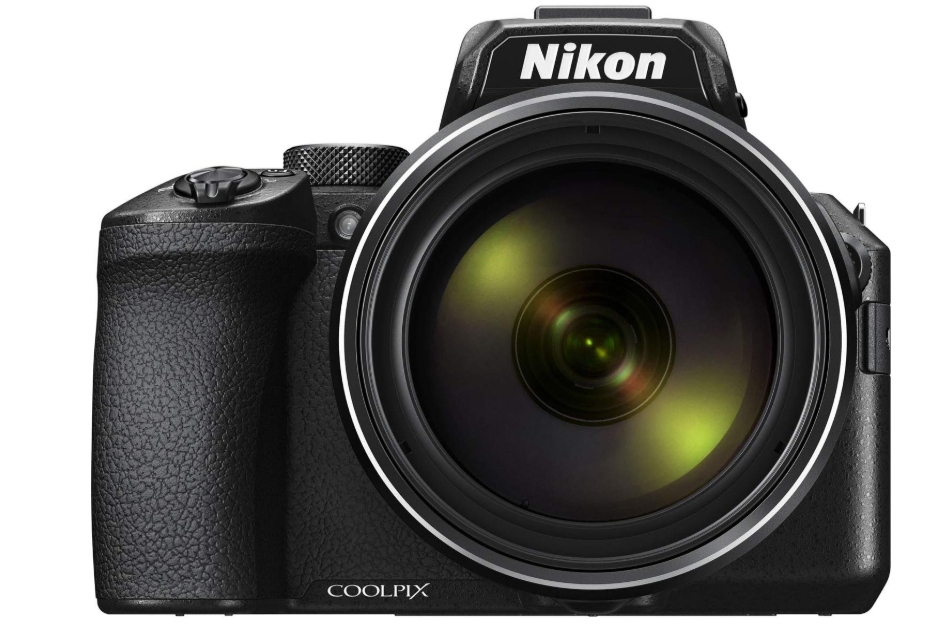
For those who prioritize extreme reach, cameras like the Nikon COOLPIX P950 Superzoom Digital Camera stand out with their incredible zoom capabilities. Whether you’re a beginner exploring birdwatching or a hobbyist looking to upgrade your gear, there are excellent budget-friendly options that make capturing stunning wildlife moments both accessible and enjoyable.
Best Birding Camera under $500
1) Canon PowerShot SX70 HS Digital Camera
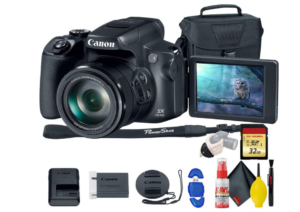
The Canon PowerShot SX70 HS is a powerful all-in-one superzoom camera designed for photographers who want extreme reach without the complexity of interchangeable lenses; making it especially appealing for birding, wildlife, and travel. At its core, it features a 20.3MP CMOS sensor paired with the DIGIC 8 image processor, delivering sharp images, accurate colors, and solid low-light performance for a camera in this class. What truly sets it apart is the impressive 65x optical zoom lens (21–1365mm equivalent), allowing you to capture distant subjects; like birds or wildlife; with incredible detail.
The camera also supports UHD 4K video recording and 4K time-lapse, making it versatile for both photography and videography. Composing shots is easy thanks to the 2.36-million-dot OLED electronic viewfinder, which remains clear even in bright outdoor conditions. Built-in image stabilization helps reduce blur at long zoom ranges, while Wi-Fi and Bluetooth connectivity make it simple to transfer images or control the camera remotely.
This bundle adds even more value, including a 32GB high-speed SD card, a shoulder bag for portability, a tabletop tripod for stability, and essential accessories like a lens cleaning kit, blower brush, lens pen, microfiber cloth, and SD card reader; making it a complete starter kit right out of the box.
Pros
- Powerful 65x optical zoom for long-distance photography
- Good image quality with 20.3MP sensor + DIGIC 8 processor
- 4K video and time-lapse capabilities
- Effective image stabilization for handheld shooting
- Built-in Wi-Fi & Bluetooth for easy sharing and remote control
- Clear and bright OLED electronic viewfinder
- All-in-one bundle with useful accessories for beginners
Cons
- Battery life is decent but not exceptional for long shooting sessions
2) Panasonic LUMIX FZ80D
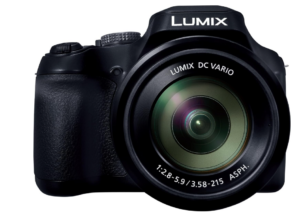
The Panasonic LUMIX FZ80D is a versatile superzoom camera built for photographers who want powerful reach, ease of use, and advanced shooting features without spending a fortune. Designed with outdoor and wildlife shooting in mind, it features a large 2,360K-dot Live View Finder (LVF) with 0.74x magnification (35mm equivalent), ensuring a clear, glare-free view even in bright sunlight; perfect for birding or safari photography.
One of its standout capabilities is 4K Video Mode, which records at four times the resolution of Full HD, delivering crisp, detailed footage of fast-moving subjects. The camera also includes a clever 4K Photo feature, allowing you to extract sharp 8MP still images directly from video, so you never miss the perfect moment.
Another impressive feature is Post Focus, which lets you select your focus point after capturing the image; ideal when shooting unpredictable subjects like birds or wildlife. At long distances, stability is crucial, and the FZ80D excels here with POWER O.I.S. (Optical Image Stabilizer), effectively minimizing blur caused by hand movement, even at its powerful 60x zoom range. Altogether, the LUMIX FZ80D offers a strong balance of zoom, video capability, and smart shooting features, making it a reliable all-in-one camera for beginners and enthusiasts alike.
Pros
- Powerful 60x optical zoom for distant subjects
- Bright, high-resolution LVF viewfinder works well in sunlight
- Excellent 4K video recording with 4K Photo extraction
- Innovative Post Focus feature for flexible focusing
- Effective POWER O.I.S. stabilization reduces blur at long zoom
- Great value for beginners and wildlife photographers
Cons
- Smaller sensor limits low-light performance
3) Panasonic LUMIX FZ300
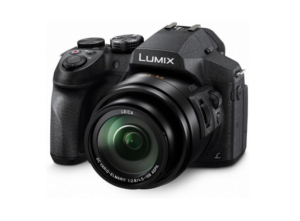
The Panasonic LUMIX FZ300 is a rugged, feature-rich superzoom camera designed for photographers who need reliability, versatility, and consistent performance in challenging environments. At the heart of the camera is a 12.1MP high-sensitivity MOS sensor paired with the Venus Engine, which delivers sharp, detailed images with excellent diffraction compensation; helping maintain clarity even at smaller apertures. One of its standout features is the Leica DC Vario-Elmarit lens, offering a 24x zoom range (25–600mm equivalent) with a constant f/2.8 aperture, making it exceptionally strong in low-light conditions compared to most superzoom cameras.
For video and action shooters, the FZ300 shines with 4K video recording and Panasonic’s 4K Photo technology, allowing you to capture fast moments at 30 frames per second and extract high-quality still images; ensuring you never miss the perfect shot. Built for the outdoors, it features a splash-proof and dustproof rugged design, with sealed joints and buttons that can withstand harsh weather and tough shooting conditions.
Additionally, the 5-Axis Hybrid Optical Image Stabilizer Plus minimizes blur caused by multiple types of camera movement, while the Level Shot function helps keep your horizon straight even when shooting handheld. Altogether, the FZ300 is a dependable all-in-one camera for wildlife, birding, and adventure photography.
Pros
- Bright f/2.8 constant aperture across entire zoom range
- High-quality Leica lens with 24x zoom (25–600mm)
- Strong 4K video and 4K Photo features
- Durable weather-sealed (splashproof & dustproof) body
- Effective 5-axis image stabilization for steady shots
- Good performance in low-light compared to other superzooms
Cons
- Lower 12.1MP resolution compared to competitors
4) Sony Alpha a6000 Mirrorless Digital Camera
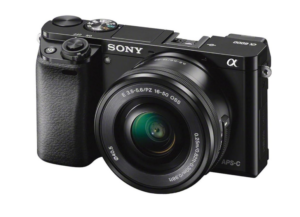
The Sony Alpha a6000 is a highly capable mirrorless camera that blends speed, image quality, and portability; making it a strong choice for wildlife, birding, and action photography on a budget. It features an advanced 24.2MP back-illuminated sensor, delivering sharp, detailed images with excellent performance across a wide ISO range of 100–25,600 (expandable to 51,200), allowing you to shoot confidently in both bright and low-light conditions. The camera uses Sony E-mount lenses, giving you flexibility to upgrade your setup as your skills grow.
One of its biggest strengths is its fast Hybrid Autofocus system, combining 179 phase-detection points and 25 contrast-detection points, which helps lock onto subjects quickly and accurately; ideal for birds in flight or fast-moving wildlife. Paired with an impressive 11 frames per second continuous shooting, the a6000 ensures you won’t miss critical moments. For composition, it includes a 3-inch tilting LCD screen (921K dots) and a 0.39-inch electronic viewfinder, offering flexibility whether shooting at awkward angles or in bright sunlight.
The camera also features 1200-zone evaluative metering for well-balanced exposures and an anti-dust system with ultrasonic vibration to keep the sensor clean. With a battery life of up to 360 shots per charge, and essential accessories like a rechargeable battery, shoulder strap, eyepiece cup, and USB cable included in the box, the a6000 delivers a complete and reliable shooting experience.
Pros
- High-resolution 24.2MP sensor with excellent image quality
- Fast and accurate Hybrid Autofocus (179 phase-detect points)
- 11 FPS continuous shooting for action photography
- Wide ISO range for good low-light performance
- Compact and lightweight mirrorless design
- Interchangeable Sony E-mount lens system
- Tilting LCD + electronic viewfinder for flexible shooting
Cons
- Requires additional lenses for birding (extra cost)
5) NIkon COOLPIX P950 Superzoom Digital Camera
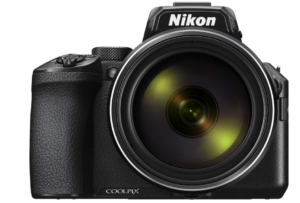
The Nikon COOLPIX P950 is a powerhouse superzoom camera built for extreme long-distance photography, making it an outstanding choice for birding, wildlife, and even astrophotography. It features a 16.0MP sensor, delivering solid image quality with good detail for everyday shooting. What truly sets the P950 apart is its incredible 83x optical zoom, which can be extended to 166x Dynamic Fine Zoom, giving you a staggering reach of up to 2000mm focal length equivalent; perfect for capturing distant birds or subjects that are impossible to approach.
To make shooting even easier, Nikon includes dedicated Bird and Moon modes, along with multiple scene modes that simplify capturing challenging subjects with the right settings automatically. For videographers, the camera supports 4K UHD video recording (2160p), allowing you to capture high-resolution footage with the same powerful zoom capabilities.
Whether you’re photographing wildlife from afar or recording detailed videos, the COOLPIX P950 combines extreme zoom, user-friendly features, and versatile performance into one all-in-one camera.
Pros
- Massive 83x optical zoom (up to 2000mm reach)
- Additional 166x Dynamic Fine Zoom for extreme distance
- Dedicated Bird and Moon modes for specialized shooting
- 4K UHD video recording (2160p)
- Easy-to-use controls with helpful scene modes
- Great for wildlife, birding, and astrophotography
Cons
- Autofocus can slow down at extreme zoom levels
Factors to Consider When Choosing the Best Birding Camera under $500
1. Zoom Range (Reach)
One of the most important factors in bird photography is how far your camera can “reach.” Birds are often distant and easily disturbed, so a powerful zoom; like the 60x, 65x, or even 83x found in superzoom cameras; allows you to capture detailed shots without getting physically close. Cameras such as the Nikon COOLPIX P950 excel here, offering extreme focal lengths that are difficult to achieve with budget interchangeable lenses.
2. Autofocus Speed and Accuracy
Birds move quickly and unpredictably, making autofocus performance critical. A fast and reliable autofocus system helps you lock onto subjects instantly, especially for birds in flight. Mirrorless cameras like the Sony Alpha a6000 stand out with advanced hybrid autofocus systems, while superzooms offer decent but sometimes slower performance at extreme zoom levels.
3. Image Stabilization
At long zoom ranges, even the slightest hand movement can cause blur. That’s why strong image stabilization is essential for birding cameras. Features like Optical Image Stabilization (O.I.S.) or 5-axis stabilization help keep your shots sharp, especially when shooting handheld. Cameras like the Panasonic LUMIX FZ300 and FZ80D are particularly strong in this area.
4. Image Quality and Sensor Size
While most cameras under $500 use smaller sensors, image quality still varies. A higher megapixel count and a good processor (like Canon’s DIGIC 8 or Panasonic’s Venus Engine) can improve sharpness, color accuracy, and low-light performance. Mirrorless cameras like the Sony a6000 typically offer better image quality due to larger sensors, but require additional lenses.
5. Burst Shooting (Continuous Shooting Speed)
Capturing birds in motion often requires shooting multiple frames per second to get the perfect moment. A camera with a fast burst rate; such as 10–11 fps; gives you a better chance of capturing wing positions, takeoffs, or feeding moments. This is especially useful for action-heavy bird photography.
6. Video Capabilities (4K Recording)
Many modern birders also shoot video, making 4K recording an important feature. Cameras like the Panasonic LUMIX FZ80D and FZ300 offer 4K video along with 4K Photo modes, allowing you to extract high-quality still images from video footage. This is a great way to capture fast action without missing key moments.
7. Viewfinder Quality
Birding often takes place in bright outdoor environments, where LCD screens can be hard to see. A high-quality electronic viewfinder (EVF) with good resolution ensures clear framing and tracking of subjects, even in direct sunlight. Cameras with OLED or high-dot EVFs provide a much better shooting experience in the field.
8. Portability and Build Quality
Since birding often involves walking long distances or shooting in rugged environments, the size, weight, and durability of the camera matter. Weather-sealed cameras like the Panasonic LUMIX FZ300 are ideal for harsh conditions, while lighter models are easier to carry during long birdwatching sessions.
9. Ease of Use and Special Modes
Beginner-friendly features like scene modes, Bird mode, or Post Focus can make a big difference. Cameras like the Nikon COOLPIX P950 simplify shooting with dedicated bird and moon modes, while Panasonic’s Post Focus lets you adjust focus after taking the shot. These features reduce the learning curve and improve your chances of getting great results.
10. Lens Flexibility vs All-in-One Convenience
Finally, decide whether you want an all-in-one superzoom camera or an interchangeable lens system. Superzooms like the Canon SX70 HS offer convenience and affordability with built-in lenses, while mirrorless options like the Sony a6000 provide better image quality and flexibility; but require additional investment in telephoto lenses for birding.
FAQs
1. What type of camera is best for birding under $500?
For most beginners and budget-conscious users, superzoom (bridge) cameras are the best choice for birding under $500. These cameras come with built-in lenses that offer extreme zoom ranges; often 60x or more; allowing you to photograph distant birds without needing expensive additional lenses.
Models like the Canon PowerShot SX70 HS or Panasonic LUMIX FZ80D are excellent examples. Mirrorless cameras like the Sony Alpha a6000 can deliver better image quality and faster autofocus, but they require telephoto lenses, which can exceed your budget.
2. Is zoom more important than megapixels for bird photography?
Yes, in most cases, zoom is more important than megapixels for birding. Since birds are usually far away, having a powerful zoom (e.g., 60x–83x) allows you to fill the frame with your subject. While megapixels affect image detail, they won’t help much if the bird appears too small in the frame. Cameras like the Nikon COOLPIX P950 prioritize zoom reach, making them ideal for capturing distant wildlife.
3. Can I shoot birds in flight with a camera under $500?
Yes, but your success will depend on the camera’s autofocus speed and burst shooting capability. Cameras like the Sony Alpha a6000 perform well for birds in flight thanks to fast hybrid autofocus and up to 11 fps continuous shooting. Some superzoom cameras can also handle action shots, but they may struggle slightly at extreme zoom levels. Using good technique; like tracking the bird and shooting in burst mode; will greatly improve your results.
Read Also : Best Camera for Mevo Plus
Final Thoughts
In conclusion, finding the best birding camera under $500 comes down to prioritizing what matters most for your shooting style; whether that’s extreme zoom, fast autofocus, or overall image quality. All-in-one superzoom options like the Canon PowerShot SX70 HS Digital Camera and Panasonic LUMIX FZ80D offer unbeatable convenience and reach for beginners, while more advanced users may prefer the speed and flexibility of the Sony Alpha a6000 Mirrorless Digital Camera paired with the right lens.
For those who want maximum distance coverage, the Nikon COOLPIX P950 Superzoom Digital Camera stands out as a top contender. Ultimately, the right choice depends on your needs, but with today’s budget-friendly options, capturing sharp, detailed bird photos is more accessible than ever.