
Best Camera for the Northern Lights
1) Nikon Z6 III
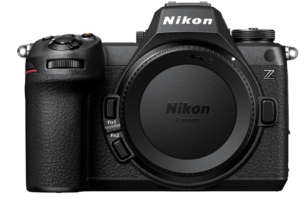
The Nikon Z6 III is a powerful full-frame mirrorless camera designed for creators who demand exceptional performance in both photography and video. It stands out with its advanced 6K/60p internal N-RAW video recording, delivering stunning detail and flexibility for professional-grade production. Videographers will appreciate the oversampled 4K UHD, 4K/120p, and Full HD/240p slow-motion capabilities, along with practical features like Hi-Res Zoom, line-in audio support, and professional monitoring tools. Whether you’re shooting cinematic footage or dynamic content, the Z6 III offers impressive versatility in a compact body.
One of its most striking features is the best-in-class electronic viewfinder (EVF). With a remarkable 4000 nits brightness, the view remains clear and vibrant even under harsh sunlight. The 5760k-dot resolution, combined with premium optics and a 120 fps refresh rate, ensures smooth, lifelike visuals; especially useful when tracking fast-moving subjects. The expanded DCI-P3 color gamut further enhances color accuracy, allowing photographers to capture subtle tones with precision.
In low-light conditions, the Z6 III truly shines thanks to its wide ISO range of 100–64,000, expandable up to ISO 204,800. This makes it an excellent choice for night photography, including challenging scenarios like astrophotography or Northern Lights shooting. Complementing this is the improved autofocus system, which can detect subjects down to -10EV. Powered by Nikon’s Deep Learning technology, autofocus is approximately 20% faster than the Z6 II and can accurately detect even very small human faces within the frame.
Creative control is another strong point of the Z6 III. With Flexible Picture Control, users can design custom color profiles using NX Studio and upload them directly to the camera. This allows photographers and videographers to maintain a consistent visual style straight out of the camera, reducing the need for heavy post-processing.
Pros
- Exceptional 6K video capabilities with multiple frame rate options
- Ultra-bright, high-resolution EVF for clear viewing in all conditions
- Excellent low-light performance with extended ISO range
- Fast and intelligent autofocus with advanced subject detection
- Customizable color profiles for creative flexibility
- Strong hybrid performance for both photo and video creators
Cons
- High-end features may be overwhelming for beginners
2) Canon EOS R8 Mirrorless Camera
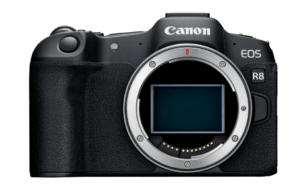
The Canon EOS R8 Mirrorless Camera is an impressive entry into full-frame photography, especially for creators looking for a lightweight yet powerful upgrade. As Canon’s lightest full-frame RF mount camera, it combines portability with performance, featuring a 24.2MP CMOS sensor paired with the advanced DIGIC X image processor. This combination delivers outstanding image quality with excellent detail, low noise at high ISO levels, and a wide dynamic range; making it ideal for everything from everyday shooting to demanding low-light conditions.
Despite its compact size, the EOS R8 is equipped with a high-quality 0.39-inch OLED electronic viewfinder with 2.36 million dots and a smooth 120 fps refresh rate, ensuring a clear and responsive shooting experience. The 3.0-inch vari-angle touchscreen LCD adds flexibility, making it perfect for vlogging, creative angles, and on-the-go content creation. Autofocus performance is a major highlight, thanks to Dual Pixel CMOS AF II, which covers nearly 100% of the frame with 1,053 AF zones. Enhanced by deep learning, it can intelligently detect and track subjects including people, animals, vehicles, and even aircraft, trains, and horses with remarkable accuracy.
For video creators, the EOS R8 punches well above its weight. It offers uncropped 4K video at up to 60 fps, oversampled from 6K for superior clarity, along with Full HD recording at up to 180 fps for smooth slow-motion footage. Advanced video features like Canon Log 3 and HDR PQ give users greater control over color grading and dynamic range. Additionally, with a maximum recording time of up to 2 hours and built-in UVC/UAC support, the camera doubles as a high-quality webcam or live streaming device. Canon has also improved rolling shutter performance, resulting in smoother footage when capturing fast-moving subjects or during quick pans.
Pros
- Lightweight and compact full-frame camera
- Excellent image quality with low noise and wide dynamic range
- Advanced Dual Pixel CMOS AF II with intelligent subject detection
- High-quality uncropped 4K video oversampled from 6K
- Vari-angle touchscreen ideal for vlogging and content creation
- Can be used as a webcam/streaming camera (UVC/UAC support)
Cons
- Battery life is relatively modest due to compact size
3) Sony a7 III
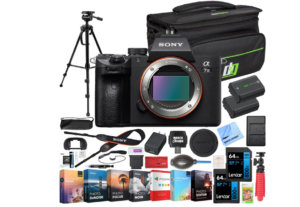
The Sony a7 III remains one of the most popular full-frame mirrorless cameras, offering a near-perfect balance of performance, reliability, and value. Built around a 24.2MP back-illuminated (BSI) full-frame CMOS sensor, it delivers excellent image quality with rich detail, low noise, and an impressive 15-stop dynamic range. This makes it ideal for both photographers and videographers who need flexibility across various lighting conditions. The camera’s wide ISO range up to 51,200 (expandable to 204,800) ensures strong low-light performance, making it especially effective for night photography and challenging environments.
One of the standout features of the a7 III is its 5-axis in-body image stabilization, which provides up to a 5-stop shutter speed advantage, allowing for sharper handheld shots even in low light. Autofocus is equally impressive, with a Fast Hybrid AF system that combines 693 phase-detection points and 425 contrast-detection points, covering approximately 93% of the frame. This results in fast, accurate subject tracking, even during high-speed continuous shooting of up to 10 frames per second with AF/AE tracking; perfect for sports, wildlife, and action photography.
For video creators, the Sony a7 III offers 4K HDR movie recording with full pixel readout and no pixel binning or crop, ensuring highly detailed footage. The inclusion of 14-bit uncompressed RAW for stills further enhances editing flexibility, while features like dual SD card slots (UHS-II compatible) and USB Type-C connectivity add convenience and reliability for professional workflows. The package also includes essential accessories such as the NP-FZ100 battery, along with a comprehensive bundle featuring memory cards, extra batteries, tripods, and editing software; making it a complete solution for both beginners and advanced users.
Pros
- Excellent 24.2MP full-frame image quality with wide dynamic range
- Reliable 5-axis in-body image stabilization for sharp handheld shots
- Advanced Fast Hybrid autofocus with wide coverage and accurate tracking
- Strong low-light performance with high ISO capability
- High-quality 4K HDR video with full pixel readout
- Dual card slots for backup and professional use
- Generous bundle accessories for added value
Cons
- Lacks some newer features found in more recent Sony models
4) Nikon D850
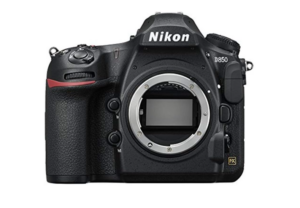
The Nikon D850 is a legendary full-frame DSLR that continues to set the benchmark for high-resolution photography and professional performance. At its core is a 45.7MP back-side illuminated (BSI) full-frame sensor with no optical low-pass filter, allowing it to capture incredibly sharp, detailed images with virtually no risk of moiré. This sensor design, combined with Nikon’s advanced imaging technology, delivers exceptional dynamic range and clarity, making the D850 an outstanding choice for landscape, studio, and commercial photographers who demand the highest level of detail.
Despite its high resolution, the D850 is also impressively fast. It supports continuous shooting at up to 9 frames per second with full autofocus performance, making it versatile enough for action and wildlife photography. The camera also excels in creative shooting modes, including focus shift shooting, which enables precise focus stacking for macro and product photography. Its tilting touchscreen enhances usability, especially when shooting from challenging angles, while its robust build and outstanding battery performance make it highly reliable for extended shooting sessions.
For videographers and time-lapse enthusiasts, the D850 offers impressive capabilities, including 4K Ultra HD video recording and 8K time-lapse movie creation, delivering remarkable sharpness and detail. Full HD recording at up to 120 fps allows for smooth slow-motion footage, adding creative flexibility. With support for standard file systems like DCF 2.0 and Exif 2.31, the camera integrates seamlessly into professional workflows. Altogether, the Nikon D850 is a powerhouse DSLR that combines ultra-high resolution, speed, and versatility in a rugged, professional-grade body.
Pros
- Ultra-high resolution 45.7MP full-frame BSI sensor
- Exceptional image quality with outstanding dynamic range
- Fast continuous shooting up to 9 fps for action photography
- Advanced features like focus shift shooting for macro work
- High-quality 4K video and 8K time-lapse capabilities
- Durable build with excellent battery life
Cons
- Larger and heavier than mirrorless alternatives
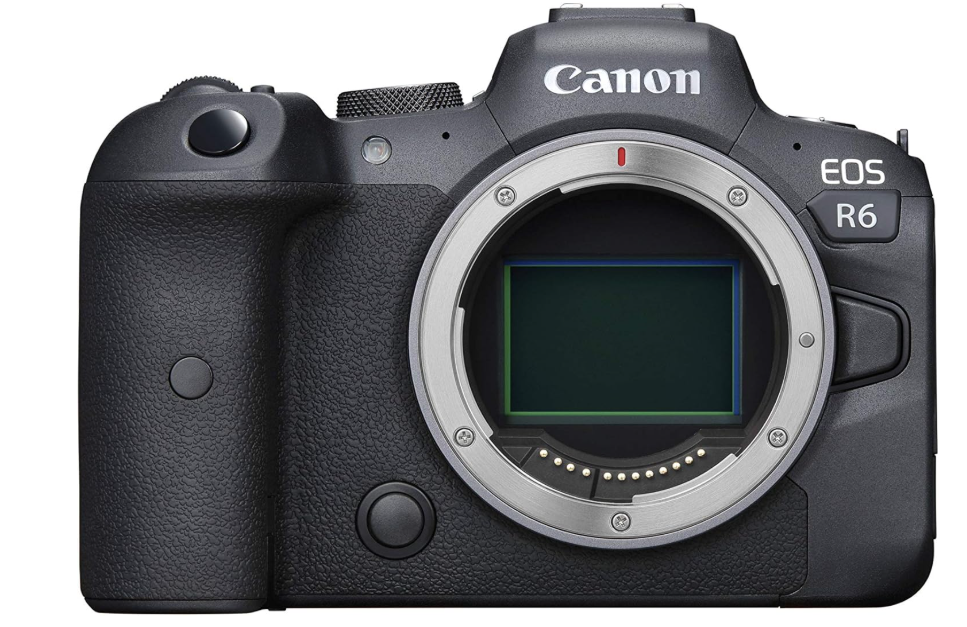
5) Canon EOS R6 Full-Frame Mirrorless Camera
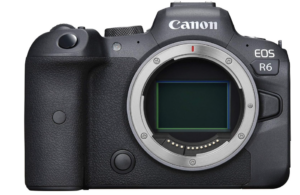
The Canon EOS R6 Full-Frame Mirrorless Camera is a powerful hybrid shooter built for speed, precision, and exceptional image quality. At its core is a 20MP full-frame CMOS sensor, which, while lower in resolution than some competitors, delivers outstanding performance in low-light conditions with clean, noise-free images and rich color reproduction.
Paired with the advanced DIGIC X image processor, the camera achieves a wide ISO range of 100–102,400 (expandable to 204,800), making it an excellent choice for challenging lighting environments such as indoor sports, wildlife, and night photography.
Speed is one of the EOS R6’s biggest strengths. It offers continuous shooting up to 12 fps with the mechanical shutter and an impressive 20 fps with the electronic (silent) shutter, allowing photographers to capture fast-moving subjects with ease. Complementing this is Canon’s highly advanced Dual Pixel CMOS AF system, which covers approximately 100% of the frame with 1,053 autofocus areas. Enhanced by deep learning technology, the camera provides intelligent subject tracking for people and animals, ensuring sharp focus even in unpredictable shooting scenarios.
For videographers, the EOS R6 delivers solid performance with 4K UHD (2160p) video recording, producing detailed and vibrant footage. Its combination of fast autofocus, strong low-light capabilities, and reliable performance makes it a versatile tool for both stills and video. Whether you’re capturing action, portraits, or cinematic clips, the EOS R6 is designed to perform consistently at a professional level.
Pros
- Excellent low-light performance with wide ISO range
- Fast continuous shooting up to 20 fps (electronic shutter)
- Highly accurate Dual Pixel CMOS AF with full-frame coverage
- Advanced subject tracking for people and animals
- Reliable 4K UHD video recording
- Strong overall performance for both photo and video
Cons
- Lower resolution (20MP) compared to some competitors
Factors to Consider When Choosing the Best Camera for the Northern Lights
1. Sensor Size (Full-Frame vs APS-C)
The size of the camera sensor plays a major role in how much light your camera can capture. Full-frame sensors are generally the best choice for Northern Lights photography because they have larger pixels, which collect more light and produce cleaner images with less noise in dark conditions. While APS-C cameras can still work well, especially with a fast lens, full-frame cameras like the Sony a7 III or Canon EOS R6 offer superior performance in low-light environments, making them ideal for aurora shooting.
2. Low-Light Performance & ISO Range
Northern Lights photography requires shooting in very dark conditions, so a camera’s ability to handle high ISO settings is critical. Look for a camera with a wide ISO range (e.g., ISO 100–64,000 or higher) and strong noise control at higher ISO levels. Cameras such as the Nikon Z6 III and Canon EOS R8 excel in maintaining image quality even when ISO is pushed high, allowing you to capture brighter, clearer aurora shots without excessive grain.
3. Lens Compatibility (Fast Aperture Lenses)
Even the best camera will struggle without the right lens. For Northern Lights photography, you need a lens with a wide aperture (f/2.8 or lower) to allow as much light as possible into the sensor. Choosing a camera system with access to high-quality wide-angle, fast lenses is essential. This combination helps you capture more detail in the sky while keeping exposure times short enough to avoid motion blur in the aurora.
4. Autofocus Performance in Low Light
Although many aurora shots are taken using manual focus, having a camera with strong low-light autofocus capabilities can be very helpful; especially when setting focus initially or composing shots. Cameras with advanced autofocus systems, like the Nikon Z6 III with -10EV detection or Canon’s Dual Pixel CMOS AF, make it easier to lock onto distant light sources or stars, saving time and frustration in the field.
5. Image Stabilization (IBIS)
In-body image stabilization (IBIS) can help reduce camera shake when shooting handheld, but for Northern Lights photography, you’ll often use a tripod. However, IBIS is still beneficial in certain situations, such as capturing handheld foreground shots or shooting video of the aurora. Cameras like the Sony a7 III and Canon EOS R6 offer strong stabilization systems that enhance versatility beyond tripod-based shooting.
6. Dynamic Range
A camera with a wide dynamic range can capture more detail in both the darkest and brightest parts of a scene. This is important when photographing the Northern Lights, as you may have bright aurora streaks against a very dark sky, along with foreground elements like snow or landscapes. Cameras like the Nikon D850 and Sony a7 III are known for their excellent dynamic range, helping preserve detail across the entire image.
7. Video Capabilities
If you plan to record the Northern Lights in motion, video performance becomes important. Look for features like 4K recording, high frame rates, and good low-light video quality. Cameras such as the Nikon Z6 III and Canon EOS R8 offer advanced video features, including oversampled 4K and slow-motion options, allowing you to capture cinematic aurora footage in addition to still images.
8. Build Quality & Weather Sealing
Northern Lights photography often takes place in extreme cold conditions, sometimes below freezing. A camera with strong build quality and weather sealing will perform more reliably in such environments. Professional-grade cameras like the Nikon D850 and Nikon Z6 III are designed to withstand harsh weather, ensuring durability and consistent performance during long outdoor shoots.
9. Battery Life
Cold temperatures can drain batteries quickly, so choosing a camera with good battery performance is crucial. DSLRs like the Nikon D850 typically offer longer battery life, but many mirrorless cameras (like the Sony a7 III) have improved significantly in this area. Regardless of your choice, it’s always wise to carry spare batteries when shooting the Northern Lights.
10. Ease of Use & Manual Controls
Northern Lights photography requires manual adjustments to settings like ISO, shutter speed, and aperture. A camera with intuitive controls and easy access to manual settings will make your shooting experience smoother. Features like customizable buttons, clear menus, and responsive dials; found in cameras like the Canon EOS R6 and Sony a7 III; allow you to quickly adapt to changing conditions in the sky.