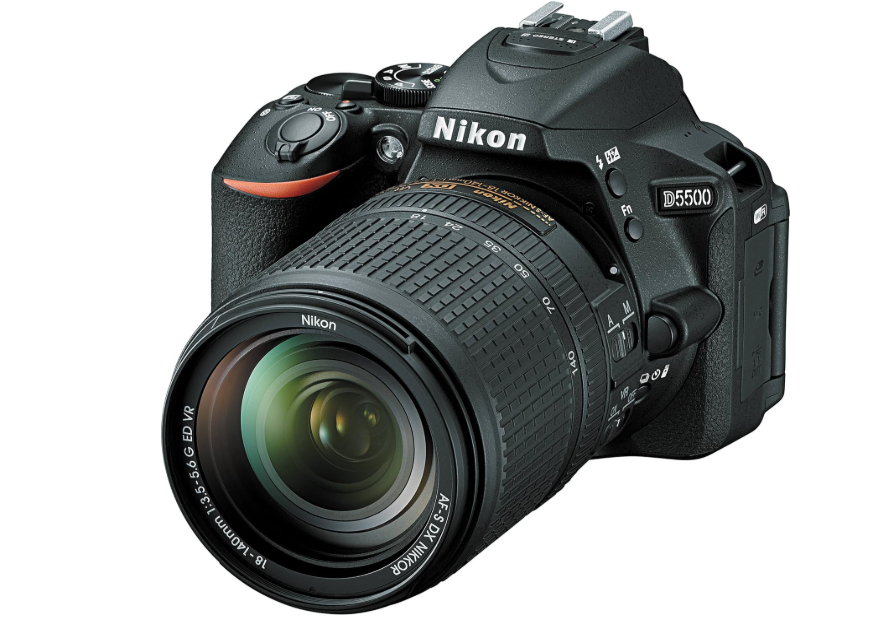
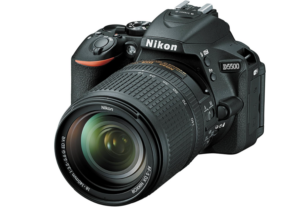
The Nikon D5500 is a lightweight and feature-rich DSLR designed for photographers who want high image quality and easy operation in a compact body. It features a 24.2-megapixel DX-format CMOS sensor without an optical low-pass filter (OLPF), allowing the camera to capture extremely sharp images with fine detail and vibrant colors. By removing the OLPF, the sensor can deliver greater clarity and improved resolution, making the D5500 an excellent choice for travel, portraits, landscapes, and everyday photography.
With an ISO range of 100–25,600, the camera performs well in both bright and low-light environments, enabling photographers to shoot indoors, at night, or in challenging lighting conditions while maintaining good image quality.
The Nikon D5500 also includes a 39-point autofocus system, which provides accurate and reliable focusing for both still images and video. This system helps track moving subjects effectively, making it suitable for action shots, family moments, and wildlife photography.
The camera supports continuous shooting at up to 5 frames per second, allowing users to capture multiple frames quickly when photographing fast-moving scenes. One of its standout features is the high-resolution vari-angle LCD touchscreen, which works similarly to a smartphone interface, making it easy for beginners to navigate settings, focus with a tap, and review images. The screen’s flexibility also allows photographers to shoot from creative angles such as high overhead or low to the ground.
For videography, the Nikon D5500 offers 1080p Full HD video recording at 60 frames per second, which helps capture smooth footage of fast-moving subjects and allows for slow-motion playback during editing. In addition, the camera features built-in Wi-Fi connectivity, enabling quick photo transfers to a compatible smartphone or tablet for instant sharing on social media or cloud storage. This combination of strong imaging performance, user-friendly controls, and wireless connectivity makes the Nikon D5500 a versatile DSLR for beginners and travel photographers who want high-quality results without carrying a bulky camera system.
Pros
-
24.2MP DX-format sensor without OLPF for sharper, highly detailed images
-
Wide ISO range (100–25,600) for strong low-light performance
-
39-point autofocus system for accurate subject tracking
-
Vari-angle touchscreen LCD with intuitive smartphone-like controls
-
5 fps continuous shooting for capturing action sequences
-
1080p Full HD video at 60fps for smooth video recording
-
Built-in Wi-Fi for quick photo sharing and smartphone connectivity
Cons
Factors to Consider When Choosing the Best Compact DSLR Camera for Travel
1. Size and Weight
One of the most important factors when choosing a travel DSLR is the size and weight of the camera body. Travelers often carry their cameras for long hours while exploring cities, hiking, or attending events, so a lightweight and compact design is essential for comfort and convenience. Cameras such as the Nikon D3500 and Nikon D5500 are popular travel choices because they offer DSLR performance in smaller bodies that are easier to carry in backpacks or camera bags.
2. Image Sensor and Resolution
The image sensor is the heart of any camera and directly affects image quality. Most compact DSLRs feature APS-C sensors, which are much larger than smartphone sensors and capture more light and detail. A higher megapixel count also allows photographers to crop images without losing quality. Cameras like the Canon EOS 90D with a 32.5MP sensor deliver extremely detailed photos, while cameras such as the Canon EOS Rebel T7 and Nikon D5500 offer 24MP sensors that are more than sufficient for travel photography, social media, and prints.
3. Autofocus Performance
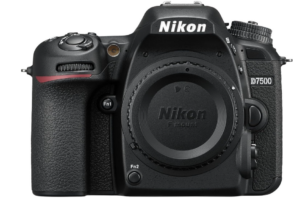
Fast and accurate autofocus is essential when capturing moving subjects such as wildlife, street scenes, or sports events during travel. Cameras with advanced autofocus systems can track subjects effectively and maintain sharp focus. For example, the Nikon D7500 features a 51-point autofocus system, while the Canon EOS 90D uses a 45-point all cross-type AF system that performs well in unpredictable shooting situations.
4. Continuous Shooting Speed
Travel photography often involves capturing fast moments such as wildlife encounters, festivals, or action scenes. Continuous shooting speed, measured in frames per second (fps), determines how many images a camera can capture in rapid succession. A camera like the Nikon D7500, which can shoot up to 8 fps, is excellent for action photography, while beginner cameras like the Nikon D5500 with 5 fps are still capable of capturing everyday travel moments.
5. LCD Screen and Usability
A high-quality LCD screen makes it easier to compose photos, review images, and navigate camera settings. Vari-angle or tilting screens are particularly useful for travel photography because they allow shooting from creative angles such as low to the ground or above crowds. Cameras like the Nikon D5500 offer a vari-angle touchscreen with smartphone-like controls, while the Nikon D7500 includes a tilting touchscreen that improves usability when shooting in different positions.
6. Video Capabilities
Many travelers want a camera that can capture both photos and videos. A good travel DSLR should support at least Full HD 1080p video, while more advanced models offer 4K recording. Cameras such as the Canon EOS Rebel T7 and Nikon D5500 record Full HD video, which is great for casual travel footage. For higher video quality and more advanced video features, the Nikon D7500 provides 4K Ultra HD recording.
7. Connectivity and Sharing Options
Modern travel photography often involves sharing photos instantly on social media or backing them up to a smartphone. Many compact DSLRs now include Wi-Fi or Bluetooth connectivity for easy photo transfer. Cameras such as the Canon EOS Rebel T7 feature built-in Wi-Fi and NFC, while the Nikon D3500 and Nikon D7500 connect through the Nikon SnapBridge app, allowing seamless image sharing with smartphones.
8. Battery Life
Battery life is another crucial factor for travel photographers, especially when shooting in remote areas where charging options may be limited. DSLR cameras are generally known for their long battery performance compared to mirrorless cameras. Models like the Nikon D3500 are well known for excellent battery life, making them ideal for long travel days or multi-day trips without frequent charging.
9. Lens Compatibility and Versatility
The flexibility to use different lenses is a major advantage of DSLR cameras. Travel photographers often prefer versatile zoom lenses that can cover wide landscapes and distant subjects without constantly changing lenses. Cameras such as the Canon EOS 90D often come in bundles with lenses like 18-55mm and 75-300mm, allowing photographers to shoot a wide variety of travel scenes including landscapes, wildlife, and portraits.
10. Durability and Weather Resistance
Travel environments can vary greatly, from dusty deserts to humid tropical climates. A durable camera body that can withstand different weather conditions is essential for long-term reliability. Cameras such as the Nikon D7500 are built with rugged construction and are designed to operate within temperature ranges suitable for outdoor adventures, making them dependable companions for travel photography.
FAQs
1. What is the best compact DSLR camera for travel beginners?
For beginners, a compact DSLR that is lightweight and easy to use is the best choice. Cameras like the Nikon D3500 and Canon EOS Rebel T7 are excellent options because they feature user-friendly controls, high-quality APS-C sensors, and helpful guide modes that make learning photography simple. These cameras are also relatively small and lightweight compared to professional DSLRs, making them ideal for travel, family trips, and everyday photography.
2. Are compact DSLR cameras better than smartphones for travel photography?
Yes, compact DSLR cameras generally produce higher-quality images than smartphones. DSLRs like the Nikon D5500 and Canon EOS 90D have much larger sensors than smartphones, allowing them to capture more light and detail. This results in sharper images, better performance in low light, and improved background blur for portraits. Additionally, DSLR cameras support interchangeable lenses, which gives travelers more creative control when photographing landscapes, wildlife, or distant subjects.
3. What features should a travel DSLR camera have?
A good travel DSLR should be compact, lightweight, and versatile. Important features to look for include a high-resolution APS-C sensor, reliable autofocus, long battery life, and built-in connectivity for easy photo sharing. Cameras such as the Nikon D7500 offer advanced autofocus and fast continuous shooting for action photography, while models like the Nikon D5500 provide a vari-angle touchscreen that makes it easier to capture photos from creative angles during travel.
Read Also : Best Affordable Camera for Newborn Photography
Final Thoughts
Choosing the best compact DSLR camera for travel ultimately depends on your photography needs, budget, and preferred features. A great travel DSLR should offer a balance of lightweight design, strong image quality, reliable autofocus, and convenient connectivity so you can capture memorable moments wherever your journey takes you.
Entry-level models like the Nikon D3500 and Canon EOS Rebel T7 are excellent for beginners who want simplicity and portability, while more advanced options such as the Nikon D7500 and Canon EOS 90D provide faster performance and enhanced features for serious photographers.
Meanwhile, versatile cameras like the Nikon D5500 strike a great balance between usability and performance. By selecting a compact DSLR that fits your travel style, you can ensure that every adventure is captured with clarity, detail, and lasting quality.