
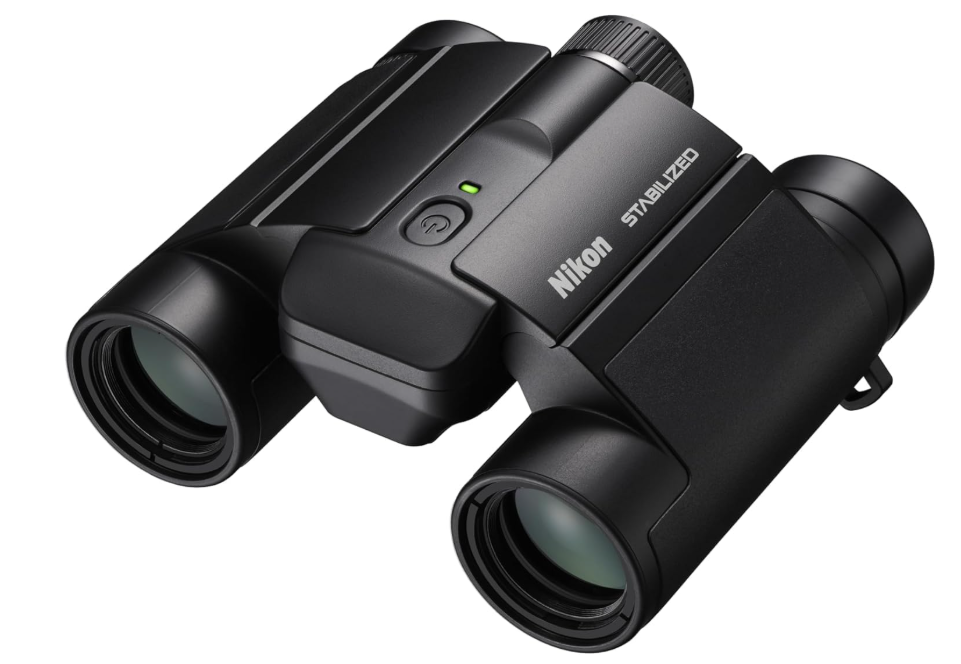
Best Image Stabilized Binoculars are designed for anyone who wants sharp, steady views without the need for a tripod, especially at higher magnifications where hand shake becomes a serious problem. By using advanced optical or electronic stabilization technology, these binoculars dramatically reduce image blur, allowing you to see fine details clearly and comfortably during handheld viewing.
Whether you’re birdwatching, observing wildlife, boating, traveling, or attending sports and live events, image stabilized binoculars combine powerful magnification, high-quality optics, and reduced eye strain to deliver a smoother, more immersive viewing experience in real-world conditions.
Best Image Stabilized Binoculars
1) Canon 10×42 L is WP Image Stabilized Binoculars
The Canon 10×42 L IS WP Image Stabilized Binoculars is one of the Best Image Stabilized Binoculars, it features; Powerful 10× magnification with image stabilization; reduces hand hold shake for steadier, clearer viewing, High-quality optics with ultralow dispersion glass and multi-coatings provide sharp, high-contrast imagery among other incredible features.
The Canon 10×42 L IS WP Image Stabilized Binoculars are a premium optical instrument designed for serious birdwatchers, wildlife observers, and outdoor enthusiasts who demand crisp, stable views in varied conditions. With 10× magnification and 42 mm objective lenses, these binoculars deliver bright, high-contrast images with excellent edge-to-edge clarity, thanks to ultralow dispersion glass and Canon’s Super Spectra multi-coatings that minimize chromatic aberration and internal reflections.
The standout feature is Canon’s Vari-Angle Prism image stabilization system, which actively compensates for hand-shake and movement, making long observation sessions less fatiguing and significantly clearer; especially when handheld at high power. This system operates from two standard AA alkaline batteries (included), with a convenient battery-check indicator and a five-minute continuous activation mode that’s perfect for quick spotting or longer viewing without fuss.
Built with durability in mind, the L-series rugged waterproof housing (WP) and fogproof design ensure reliable performance in wet or humid outdoor environments. Long 16 mm eye relief and comfortable eyecups make extended use easy, even for eyeglass wearers, while the wide field of view (~114 m at 1 000 m) provides a broad observational window.
Interpupillary adjustment and diopter correction allow fine-tuning for individual comfort and precision focus. Included accessories such as a padded case with strap, a neoprene neck strap, an eyepiece rainguard, one-piece push-on objective caps, and spare AA batteries mean you’re ready to go straight out of the box with protection and convenience handled.
Pros
-
Powerful 10× magnification with image stabilization; reduces hand hold shake for steadier, clearer viewing.
-
High-quality optics with ultralow dispersion glass and multi-coatings provide sharp, high-contrast imagery.
-
Waterproof and fogproof (WP); dependable in challenging weather.
-
Comfortable long eye relief and wide field of view; great for extended observation and spectacle wearers.
-
Comprehensive accessory set included; padded case with strap, neoprene neck strap, eyepiece rainguard, objective caps, and batteries.
Cons
- Heavier and bulkier than non-IS binoculars; not as travel-friendly for ultralight backpacking.
2) FUJINON Techno-STABI TS-L2040 20×40 Stabilized Binoculars
The FUJINON Techno-STABI TS-L2040 20×40 Stabilized Binoculars is one of Best Image Stabilized Binoculars, it features; Powerful 20× magnification ideal for long-range viewing, Electronic image stabilization (±3° correction) greatly reduces hand shake among other incredible features.
The FUJINON Techno-STABI TS-L2040 20×40 Stabilized Binoculars are engineered for observers who regularly tackle challenging, long-distance subjects; from birding and hiking to boating, wildlife observation, and live events. With a powerful 20× magnification, these binoculars let you reach far beyond what standard optics allow, bringing distant details into sharp, usable focus without the constant shake normally associated with high-power viewing. This makes them especially valuable for situations where tripods are impractical or slow to deploy.
At the heart of the TS-L2040 is advanced electronic image stabilization, delivering an impressive ±3° correction range. This system dramatically reduces visible hand movement, creating a steady, natural viewing experience that feels like an extension of your own vision. The result is clearer detail, less eye strain, and greater confidence when tracking moving subjects; whether you’re scanning the horizon from a boat or following birds in flight.
Optically, these binoculars are built to impress. The 40 mm objective lenses gather ample light for bright, well-defined images, while extra-low dispersion (ED) glass minimizes color fringing for cleaner, more accurate visuals. FUJINON’s EBC multicoatings enhance light transmission and contrast, and phase-corrected prisms ensure crisp resolution and excellent color fidelity. Together, these elements deliver a rich, sharp, and immersive viewing experience across a wide range of lighting conditions.
Despite their power, the TS-L2040 remain surprisingly manageable. Measuring just 7.3 inches (185.5 mm) in length and weighing approximately 30 oz (850 g), they’re comfortable for extended handheld use and easy to carry on long hikes or all-day outings. Powering the stabilization system are two AAA batteries, providing up to 30 hours of operation, so you can rely on them throughout a full day; or several days; of observation without frequent battery changes.
Pros
-
Powerful 20× magnification ideal for long-range viewing
-
Electronic image stabilization (±3° correction) greatly reduces hand shake
-
ED glass and EBC multicoatings deliver bright, sharp, high-contrast images
-
40 mm objective lenses provide strong light-gathering capability
-
Compact size and balanced weight for high-power stabilized binoculars
-
Long up to 30-hour battery life using standard AAA batteries
Cons
- Premium pricing compared to conventional optics
3) Canon 12×36 Image Stabilization III Binoculars
The Canon 12×36 Image Stabilization III Binoculars is one of Best Image Stabilized Binoculars, it features; 12× magnification with effective image stabilization for steady, detailed views, Compact and lightweight for a high-power IS binocular among other incredible features.
The Canon 12×36 Image Stabilization III Binoculars are designed for outdoor enthusiasts who want powerful magnification without sacrificing comfort or portability. Compact and easy to carry, these binoculars are ideal for birdwatching, hunting, wildlife observation, and travel, offering a strong 12× magnification that brings distant subjects noticeably closer. The 36 mm objective lenses strike an excellent balance between light-gathering ability and size, delivering bright, high-resolution images while keeping the overall form factor manageable for handheld use.
What truly sets this model apart is Canon’s advanced Image Stabilization (IS) technology, derived from the same optical expertise used in Canon EF camera lenses. This system dramatically reduces hand shake, allowing you to enjoy steady, detailed views at high magnification; something that would otherwise require a tripod. The binoculars also feature Porro II prisms, which enhance depth perception, image resolution, and light transmission, resulting in crisp, vivid visuals even during extended viewing sessions.
Optical performance is further refined with a doublet field-flattener lens system, producing sharp, virtually distortion-free images from edge to edge. A long 14.5 mm eye relief ensures comfortable viewing for eyeglass wearers, while the low-reflective exterior finish helps minimize glare; an important advantage for discreet birdwatching and hunting scenarios. Canon has also improved power efficiency in this third-generation model, reducing battery consumption for longer stabilization use. Rounding it all out is the use of environmentally friendly, lead-free glass, aligning strong optical performance with responsible design.
Pros
-
12× magnification with effective image stabilization for steady, detailed views
-
Compact and lightweight for a high-power IS binocular
-
Canon IS technology adapted from professional camera lenses
-
Porro II prisms deliver excellent resolution and light transmission
-
Edge-to-edge sharpness thanks to the doublet field-flattener
-
Long eye relief is comfortable for eyeglass wearers
-
Improved battery efficiency and eco-friendly lead-free glass
Cons
-
Premium price compared to non-stabilized alternatives
4) Canon Binoculars 8 x 20 is
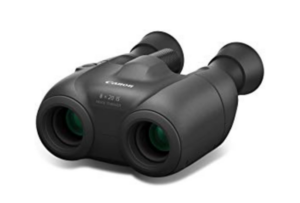
The Canon Binoculars 8×20 IS are designed for users who want dependable image stabilization in the smallest, lightest package possible. Exceptionally compact and easy to carry, these binoculars are ideal for travel, concerts, sporting events, sightseeing, and casual birdwatching, slipping effortlessly into a bag or jacket pocket. With an 8× magnification, they provide a comfortable balance between reach and stability, making them well suited for extended handheld viewing without excessive fatigue.
Despite their small size, the 8×20 IS binoculars feature Canon’s high-efficiency shift-system Image Stabilizer, which actively compensates for hand movement and delivers impressively steady views. This powered IS mode makes a noticeable difference, even at moderate magnification, allowing you to see finer details that would otherwise be blurred by natural hand shake. Canon’s field-flattener lens further enhances image quality by producing sharp, clear visuals from the center all the way to the edges, minimizing distortion and maintaining consistent focus across the entire field of view.
Built with portability and convenience in mind, these binoculars are among the lightest image-stabilized models available, making them perfect for users who don’t want to carry bulky optics but still appreciate stabilized performance. They’re a smart choice for anyone who values clarity, comfort, and mobility in a compact optical companion.
Pros
-
Ultra-compact and lightweight design with image stabilization
-
8× magnification offers comfortable, versatile viewing
-
High-efficiency shift-system image stabilizer reduces hand shake
-
Powered IS mode enhances detail and viewing comfort
-
Field-flattener lens delivers edge-to-edge sharpness
-
Excellent for travel, events, and everyday use
Cons
- Not ideal for long-range or extreme wildlife observation
5) Nikon STABILIZED 12×25 Binoculars
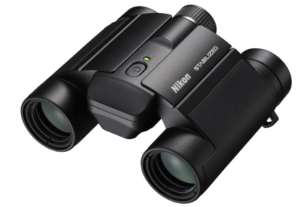
The Nikon STABILIZED 12×25 Binoculars are built for users who want powerful reach in a compact, travel-friendly design without sacrificing image stability. Featuring advanced electronic image stabilization, these binoculars actively compensate for natural hand movements, delivering steady, shake-free views even during handheld use. This makes them an excellent choice for concerts, sporting events, birdwatching, sightseeing, and travel, where subjects and viewing conditions are constantly changing and quick, stable focus is essential.
Optical performance is a clear highlight. Nikon equips the 12×25 STABILIZED binoculars with multicoated lenses and high-reflectivity silver-alloy prism coatings, producing bright, high-contrast images with accurate, true-to-life color reproduction. Each optical element is precision-engineered to maximize light transmission, ensuring sharp, vivid visuals from bright daylight through lower-light dusk conditions. Despite the compact 25 mm objective lenses, the image remains crisp and detailed, especially with stabilization engaged.
Designed for mobility, the slim roof-prism construction and lightweight housing make these binoculars easy to carry and comfortable to hold for extended periods. Ergonomics are thoughtfully handled with a textured, slip-resistant central focus wheel for smooth, precise focusing, while turn-and-slide eyecups allow users with or without glasses to achieve comfortable eye relief. The closed-bridge design adds structural stability and balance, reducing fatigue during longer viewing sessions.
Powering the stabilization system is an efficient design that delivers up to 12 hours of operation on standard batteries, complemented by a 60-minute automatic shutoff to conserve energy when the binoculars are not in use. This smart power management ensures reliable performance throughout full days of events or outdoor exploration.
Pros
-
Electronic image stabilization delivers steady, shake-free viewing
-
Powerful 12× magnification in a compact binocular body
-
Multicoated lenses and silver-alloy prisms provide bright, sharp, color-accurate images
-
Slim, lightweight design ideal for travel and on-the-go use
-
Comfortable ergonomics with adjustable eyecups and smooth focus control
-
Smart power management with auto shutoff extends battery life
Cons
-
Not ideal for prolonged low-light or nighttime observation
Factors to Consider When Choosing the Best Image Stabilized Binoculars
1. Image Stabilization Technology
Image stabilization (IS) is the defining feature of these binoculars, and not all systems perform the same. Some models use optical prism-shift stabilization (commonly found in Canon binoculars), while others rely on electronic stabilization (such as Fujinon and Nikon). The effectiveness of stabilization is often measured in degrees of correction (for example, ±3°), which determines how well hand shake is reduced. A high-quality IS system allows you to use higher magnifications handheld without a tripod, reduces eye strain, and delivers noticeably sharper details; especially during long observation sessions or when tracking moving subjects.
2. Magnification Power
Magnification determines how close distant objects appear, but higher magnification also amplifies hand shake. Image-stabilized binoculars make 12×, 16×, and even 20× magnification practical for handheld use. Lower magnifications like 8× or 10× offer a wider field of view and easier tracking, while higher magnifications excel at long-range observation such as wildlife viewing, boating, or live events. The ideal choice depends on whether you prioritize reach or ease of viewing.
3. Objective Lens Size and Light Gathering
The size of the objective lenses (e.g., 20 mm, 25 mm, 36 mm, or 40 mm) directly affects brightness and low-light performance. Larger objectives gather more light, producing brighter and more detailed images at dawn, dusk, or in shaded environments. Smaller objectives make binoculars lighter and more portable but may struggle in low-light conditions. Choosing the right balance is crucial depending on whether your use is mostly daytime travel or extended outdoor observation.
4. Optical Quality and Lens Coatings
High-quality glass and coatings play a major role in image clarity. Features such as extra-low dispersion (ED) glass, multicoated lenses, and phase-corrected prisms reduce chromatic aberration, improve contrast, and enhance color accuracy. Field-flattener lenses help maintain sharpness from edge to edge, minimizing distortion. Superior optics ensure that stabilization enhances detail rather than simply steadying an already compromised image.
5. Size, Weight, and Portability
Image stabilization adds internal components, which can increase weight. Compact models like 8×20 or 12×25 binoculars are ideal for travel and events, while larger models provide better brightness and ergonomics for extended use. Weight becomes especially important during long hikes, birding sessions, or marine use. A well-balanced design can feel lighter in hand, even if the binoculars are heavier on paper.
6. Comfort and Ergonomics
Comfort is essential for prolonged viewing. Look for binoculars with long eye relief if you wear glasses, adjustable eyecups, a smooth focus wheel, and a secure grip. Ergonomic housing and balanced weight distribution reduce fatigue. Image stabilization already minimizes eye strain, but good ergonomics ensure the binoculars remain comfortable during extended handheld use.
7. Battery Life and Power Management
Most image-stabilized binoculars require batteries, commonly AA or AAA. Battery life can range from several hours to over 30 hours, depending on efficiency. Features such as auto shutoff, improved power consumption, and readily available battery types are important for reliability in the field. Long battery life is especially critical for travel, birding trips, and events where charging options are limited.
8. Intended Use and Environment
Finally, consider where and how you’ll use your binoculars. Birdwatching and wildlife observation benefit from high magnification and strong stabilization, while concerts and sports favor compact size and quick handling. Marine and outdoor use may require weather resistance, low-reflective exteriors, and durable construction. Choosing a model aligned with your primary activity ensures the best real-world performance.
FAQs
1. Are image stabilized binoculars worth it compared to regular binoculars?
Yes, image stabilized binoculars are absolutely worth it if you frequently observe distant subjects handheld. Image stabilization significantly reduces hand shake, allowing you to see finer details; especially at higher magnifications like 12×, 16×, or 20×—without the need for a tripod. This results in clearer images, less eye strain, and more comfortable long-term viewing, making them ideal for birdwatching, wildlife observation, boating, travel, sports, and live events.
2. What magnification is best for image stabilized binoculars?
The best magnification depends on how you plan to use them. 8× to 10× stabilized binoculars are excellent for travel, concerts, and casual birding due to their wider field of view and easy handling. 12× to 16× models offer a strong balance of reach and usability for wildlife and outdoor observation, while 20× stabilized binoculars are best for long-range viewing where extreme detail is required. Image stabilization makes higher magnifications practical without sacrificing clarity.
3. Do image stabilized binoculars require batteries, and how long do they last?
Yes, most image stabilized binoculars require batteries to power the stabilization system, commonly using AA or AAA batteries. Battery life varies by model and efficiency, ranging from about 12 hours to over 30 hours on a single set. Many models include smart power features such as auto shutoff or improved power consumption to conserve energy, ensuring reliable performance during extended outdoor use or full-day events.
Read Also : Best Budget Binoculars for Safari