
Table of Contents
ToggleFinding a high-quality 4K mirrorless camera under $500 is no longer as challenging as it once was. Thanks to rapid advancements in camera technology, today’s budget-friendly mirrorless cameras offer impressive image quality, reliable autofocus, interchangeable lenses, and crisp 4K video recording without breaking the bank.
Whether you’re a beginner taking your first steps into photography, a traveller looking for a lightweight companion, or a content creator producing YouTube videos, vlogs, or social media content, there’s an affordable camera that can meet your needs. In this guide, we’ve rounded up the best 4K mirrorless cameras under $500, comparing their standout features, strengths, and overall value to help you choose the perfect camera for your budget and creative goals.
Here is a summary of the Best 4k Mirrorless Camera under 500;
- Canon EOS R100 – Best Overall
- Panasonic LUMIX G100 – Best for Vlogging
- OM SYSTEM OLYMPUS OM-D E-M10 Mark III – Best for Travel Photography
- Nikon Z50 – Best for Fast Autofocus
- Sony Alpha a6300 – Best for Action Photography
Best 4k Mirrorless Camera under 500
1) Canon EOS R100
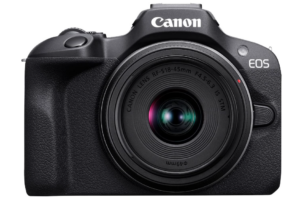
The Canon EOS R100 is an excellent entry-level mirrorless camera that delivers impressive image quality and reliable performance at an affordable price. Built around a 24.1MP APS-C CMOS sensor, it captures sharp, detailed photos with vibrant colours and pleasing natural background blur (bokeh), making it ideal for portraits, landscapes, travel, and everyday photography.
As the smallest and lightest camera in the EOS R series, the R100 is easy to carry wherever you go, making it a perfect companion for beginners, students, and content creators who want a portable camera without sacrificing image quality.
Powering the camera is Canon’s DIGIC 8 image processor, which enhances overall responsiveness, image processing, and video performance. It supports 4K video recording at 24fps, Full HD recording at 60fps, and HD slow-motion recording at up to 120fps, giving users the flexibility to create everything from cinematic footage to smooth slow-motion clips. While the 4K mode is aimed at casual videographers, the camera’s interchangeable RF lens system provides plenty of room to grow as your photography skills improve.
Focusing performance is another highlight thanks to Dual Pixel CMOS AF with coverage across 143 autofocus zones. The system offers human face and eye detection, along with animal and vehicle detection, ensuring subjects remain sharp whether you’re photographing people, pets, or moving vehicles.
For action photography, the EOS R100 can shoot continuously at up to 6.5 frames per second in One-Shot AF mode, making it suitable for capturing sports, wildlife, and fast-moving moments. Combining excellent image quality, dependable autofocus, compact portability, and access to Canon’s expanding RF lens ecosystem, the Canon EOS R100 stands out as one of the best 4K mirrorless cameras available for under $500.
Key Features
- 24.1MP APS-C CMOS sensor
- DIGIC 8 image processor
- 4K video recording at up to 24fps
- Full HD video at up to 60fps
- HD slow-motion recording at up to 120fps
- Dual Pixel CMOS AF with up to 143 AF zones
- Human face and eye detection AF
- Animal and vehicle detection autofocus
- Continuous shooting up to 6.5 fps (One-Shot AF)
- Compact and lightweight EOS R-series body
- Interchangeable Canon RF lens mount
Pros
- Excellent 24.1MP image quality with natural bokeh
- Lightweight and highly portable design
- Reliable Dual Pixel autofocus with face and eye detection
- Supports animal and vehicle subject detection
- Records 4K and Full HD video
- Access to Canon’s growing RF lens ecosystem
- Easy-to-use controls for beginners
- Great value for first-time mirrorless camera users
Cons
- 4K video is limited to 24fps
2) Panasonic LUMIX G100
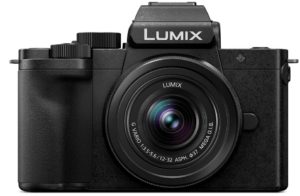
The Panasonic LUMIX G100 is a compact and versatile mirrorless camera designed for aspiring photographers, vloggers, and content creators who want to step up from smartphone photography. Equipped with the ability to capture crystal-clear 4K photos and 4K video at 24p and 30p, the G100 delivers impressive image quality that brings your memories to life with greater detail, colour, and clarity. Its lightweight body makes it comfortable to carry all day, while the included 12-32mm kit lens provides a versatile focal range for landscapes, travel, portraits, and everyday shooting.
One of the G100’s greatest strengths is its beginner-friendly operation combined with room to grow. The Intelligent Auto (iA) mode automatically optimises camera settings to help new users capture great images with ease, while manual shooting modes allow you to take full creative control as your skills develop.
Built around the Micro Four Thirds system, the camera is compatible with Panasonic’s extensive range of LUMIX lenses, giving you the flexibility to expand your photography and videography capabilities over time. Additional creative tools such as V-Log L recording, frame markers for popular social media aspect ratios, facial recognition, and dual image stabilisation make it an excellent choice for modern content creation.
The Panasonic LUMIX G100 also excels as a camera for online communication and video production. It can be easily connected to a computer for use as a high-quality webcam, making livestreams, video conferences, interviews, and virtual meetings look far more professional than a standard laptop camera.
Complementing its impressive video performance is Panasonic’s advanced 360-degree audio system, featuring a high-performance microphone with intelligent tracking that automatically adjusts recording direction to capture clear, natural sound whether you’re filming indoors, outdoors, in busy crowds, or during one-on-one conversations.
Combining portability, excellent video features, expandable lens options, and outstanding audio performance, the Panasonic LUMIX G100 is one of the best mirrorless cameras under $500 for beginners and creators alike.
Key Features
- 4K Photo mode
- 4K video recording at 24p and 30p
- Intelligent Auto (iA) mode and full manual shooting modes
- Micro Four Thirds interchangeable lens system
- Includes 12-32mm LUMIX kit lens
- Functions as a high-quality webcam
- V-Log L recording for greater colour grading flexibility
- Frame markers for social media aspect ratios
- Facial recognition technology
- Dual image stabilisation for smoother handheld shooting
- Advanced 360-degree microphone with tracking audio
- Lightweight design for comfortable one-handed recording
- Seamless smartphone transfer and sharing
Pros
- Excellent 4K photo and video quality
- Lightweight, travel-friendly design
- Outstanding built-in audio with intelligent tracking microphone
- Easy-to-use Intelligent Auto mode for beginners
- Manual controls for advanced users
- Compatible with a wide range of Micro Four Thirds lenses
- Can be used as a professional-quality webcam
- V-Log L support for creative video editing
- Simple wireless transfer to smartphones
Cons
- Micro Four Thirds sensor is smaller than APS-C alternatives
3) OM SYSTEM OLYMPUS OM-D E-M10 Mark III
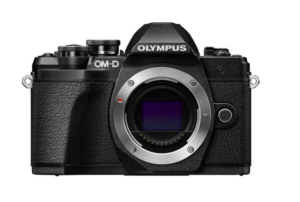
The OM SYSTEM OLYMPUS OM-D E-M10 Mark III is a compact mirrorless camera that combines classic styling with modern imaging technology, making it an excellent choice for beginners, travel photographers, and everyday creators. Featuring a 16MP Live MOS sensor paired with the TruePic VIII image processor, the camera produces sharp, vibrant images with accurate colours and impressive detail.
Despite its compact size, it delivers reliable performance for landscapes, portraits, street photography, and family moments, while remaining lightweight enough to carry comfortably throughout the day.
One of the standout features of the E-M10 Mark III is its 5-axis in-body image stabilization (IBIS), which significantly reduces camera shake when shooting handheld. This allows you to capture blur-free still photos and smooth, stable videos even in low-light conditions or without a tripod.
The camera also records 4K video at 30fps for crisp, detailed footage and supports HD slow-motion recording at up to 120fps, making it easy to create cinematic clips and dramatic slow-motion effects. Whether you’re documenting your travels or producing content for social media, the E-M10 Mark III offers dependable video performance in a highly portable package.
Designed with ease of use in mind, the camera features a timeless, retro-inspired body with intuitive controls that make photography enjoyable for users of all skill levels. Dual control dials, an arrow pad, and a dedicated shortcut button provide quick access to key settings, while the 3.0-inch tilting touchscreen LCD makes composing shots from creative angles simple.
The Touch AF and one-step touch shutter release let you focus and capture images with a single tap, making it especially useful for spontaneous moments. Combining effective image stabilization, 4K video, user-friendly controls, and a compact design, the OM SYSTEM OLYMPUS OM-D E-M10 Mark III remains one of the best mirrorless cameras under $500 for photographers seeking portability and reliable performance.
Key Features
- 16MP Live MOS sensor
- TruePic VIII image processor
- 5-axis in-body image stabilization (IBIS)
- 4K video recording at 30fps
- HD slow-motion video at up to 120fps
- Compact and lightweight retro-inspired body
- Dual control dials for quick adjustments
- Dedicated shortcut button and arrow pad controls
- 3.0-inch tilting touchscreen LCD
- Touch AF with one-step touch shutter release
Pros
- Excellent 5-axis in-body image stabilization
- Sharp image quality with vibrant colours
- Records detailed 4K video
- Compact, lightweight, and travel-friendly
- Intuitive controls suitable for beginners
- Responsive tilting touchscreen with Touch AF
- Comfortable retro-style design
- Great value for photography enthusiasts
Cons
- 16MP resolution is lower than many newer competitors
4) Nikon Z50
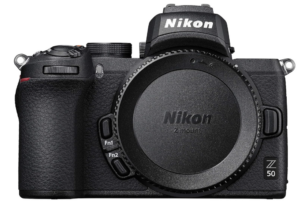
The Nikon Z50 is a versatile APS-C mirrorless camera that delivers outstanding image quality, fast performance, and intuitive handling, making it an excellent choice for beginners, enthusiasts, and content creators alike. At its core is a 20.9MP DX-format (APS-C) CMOS sensor, paired with Nikon’s EXPEED 6 image processor, which produces sharp, vibrant images with excellent dynamic range and low-light performance.
Combined with Nikon’s large Z mount, the camera gathers more light for improved image clarity and works seamlessly with Nikon’s growing lineup of Z-mount lenses, giving photographers plenty of room to expand their creative options.
Autofocus is one of the Z50’s standout features. Its hybrid autofocus system uses 209 on-sensor AF points covering approximately 90% of the frame both horizontally and vertically, allowing the camera to quickly and accurately lock onto subjects from edge to edge. Whether you’re photographing portraits, wildlife, or fast-moving action, the autofocus system delivers reliable subject tracking and crisp results.
The camera also offers continuous shooting at up to 11 frames per second with autofocus and auto exposure, making it ideal for capturing sports, pets, and other fleeting moments. For quieter environments, the Silent Photography Mode enables discreet shooting without the sound of the shutter.
Video capabilities are equally impressive for a camera in this price range. The Nikon Z50 records 4K UHD video at up to 30fps with no crop factor, allowing you to take full advantage of your lens’s field of view. It also supports Full HD slow-motion recording, enabling smooth cinematic footage, while 4K time-lapse movies can be created directly in the camera.
Adding to its creative appeal are 20 built-in creative effects for both photos and videos, with adjustable intensity for personalised results. The camera’s deep ergonomic grip, well-positioned control dials, responsive touchscreen, and shutter speed range from 30 seconds to 1/4000 second make it comfortable and easy to use in a wide variety of shooting situations.
Overall, the Nikon Z50 is one of the best mirrorless cameras under $500 on the refurbished market, offering an excellent balance of image quality, speed, portability, and creative flexibility.
Key Features
- 20.9MP DX-format (APS-C) CMOS sensor
- Wide Nikon Z mount
- EXPEED 6 image processor
- Hybrid autofocus system with 209 on-sensor AF points
- Approximately 90% autofocus frame coverage
- 4K UHD video recording at up to 30fps with no crop
- Full HD slow-motion video recording
- In-camera 4K time-lapse movie creation
- Continuous shooting up to 11fps with AF and AE
- Silent Photography Mode
- 20 built-in creative effects for photos and videos
- Deep ergonomic grip with intuitive controls
- Responsive touchscreen display
- Shutter speed range from 30 seconds to 1/4000 second
Pros
- Excellent image quality with a 20.9MP APS-C sensor
- Fast and accurate autofocus with wide frame coverage
- Uncropped 4K UHD video recording
- Impressive 11fps continuous shooting for action photography
- Comfortable ergonomic grip for extended shooting
- Silent shooting mode for discreet photography
- Creative effects add versatility for photos and videos
- Compact and lightweight design
- Access to Nikon’s expanding Z-mount lens system
Cons
- No in-body image stabilisation (IBIS)
5) Sony Alpha a6300
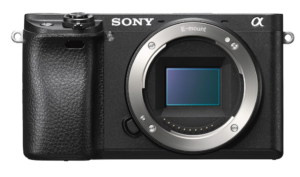
The Sony Alpha a6300 is a compact yet powerful mirrorless camera that delivers exceptional speed, image quality, and video performance for photographers and content creators. At its heart is a 24.2MP Exmor CMOS sensor, which captures sharp, highly detailed images with excellent dynamic range and impressive low-light performance.
The advanced sensor design expands light sensitivity while minimising image noise, allowing you to produce vibrant, high-quality photos in a wide variety of lighting conditions. Whether you’re shooting landscapes, portraits, street photography, or travel adventures, the a6300 consistently delivers professional-looking results.
One of the camera’s biggest strengths is its remarkably fast autofocus system. Equipped with 425 phase-detection autofocus points and an impressive 0.05-second AF acquisition speed, the Sony Alpha a6300 locks onto subjects quickly and accurately, making it ideal for sports, wildlife, and action photography.
It also supports continuous shooting at up to 11 frames per second, allowing you to capture fast-moving subjects with ease while maintaining reliable autofocus performance throughout the burst. For composing shots, the camera features a high-resolution XGA OLED Tru-Finder electronic viewfinder, providing a bright, detailed view that makes it easier to frame images accurately in both bright sunlight and low-light environments.
Video creators will appreciate the Sony Alpha a6300’s impressive recording capabilities. It captures 4K video using full pixel readout without pixel binning, resulting in exceptionally detailed footage with minimal moiré and aliasing. The camera also supports multiple Full HD recording options for greater creative flexibility, making it suitable for filmmaking, vlogging, and social media content.
Built with a rugged magnesium alloy body, the a6300 is protected by dust- and moisture-resistant sealing, ensuring dependable performance in challenging outdoor conditions. Combining outstanding autofocus, excellent image quality, durable construction, and advanced 4K recording, the Sony Alpha a6300 remains one of the best mirrorless cameras available under $500 on the used or refurbished market.
Key Features
- 24.2MP Exmor CMOS APS-C sensor
- Fast autofocus with 425 phase-detection AF points
- 0.05-second autofocus acquisition speed
- Continuous shooting at up to 11fps
- High-resolution XGA OLED Tru-Finder electronic viewfinder
- 4K video recording with full pixel readout
- Multiple Full HD recording modes
- Magnesium alloy camera body
- Dust- and moisture-resistant construction
- Compact and lightweight mirrorless design
Pros
- Excellent 24.2MP image quality with low noise
- Extremely fast and accurate autofocus
- 11fps continuous shooting for action photography
- Detailed 4K video with full pixel readout
- Bright, high-resolution OLED electronic viewfinder
- Compact, lightweight, and travel-friendly
- Durable magnesium alloy body
- Dust- and moisture-resistant for outdoor shooting
- Wide selection of Sony E-mount lenses
Cons
- No in-body image stabilisation (IBIS)
Factors to Consider When Choosing the Best 4k Mirrorless Camera under 500
1. Sensor Size and Image Quality
The sensor is one of the most important factors affecting a camera’s image quality. Most mirrorless cameras under $500 feature either an APS-C or Micro Four Thirds sensor. APS-C sensors, found in models like the Canon EOS R100, Nikon Z50, and Sony Alpha a6300, generally produce better low-light performance, greater dynamic range, and more natural background blur. Micro Four Thirds cameras, such as the Panasonic LUMIX G100 and OM SYSTEM OM-D E-M10 Mark III, offer excellent image quality while keeping the camera body and lenses smaller and lighter. Choose the sensor size that best suits your photography style and portability needs.
2. 4K Video Performance
Not all 4K video capabilities are created equal, even among budget cameras. Look for a camera that records 4K at 24fps or 30fps with minimal cropping to maintain the full field of view of your lens. Features like full pixel readout, slow-motion Full HD recording, and support for creative video profiles can significantly improve your video quality. If you plan to vlog, create YouTube content, or record travel videos, strong 4K performance should be a top priority.
3. Autofocus Speed and Accuracy
A fast and reliable autofocus system makes a huge difference when photographing moving subjects or recording video. Cameras equipped with advanced autofocus technologies, such as Dual Pixel CMOS AF, Hybrid AF, or hundreds of phase-detection focus points, can quickly lock onto subjects and keep them in focus. Face, eye, animal, and vehicle detection are valuable features that improve focusing accuracy and help beginners capture sharper images with less effort.
4. Image Stabilisation
Image stabilisation helps reduce camera shake, resulting in sharper handheld photos and smoother video footage. Some cameras, such as the OM SYSTEM OM-D E-M10 Mark III, include 5-axis in-body image stabilisation (IBIS), which stabilises any compatible lens attached to the camera. Others rely on lens-based stabilisation or digital stabilisation. If you frequently shoot handheld, travel, or record video without a tripod, effective stabilisation is an important feature to consider.
5. Continuous Shooting Speed
If you enjoy photographing sports, wildlife, children, or other fast-moving subjects, pay attention to the camera’s burst shooting speed. Entry-level mirrorless cameras typically offer between 6 and 11 frames per second (fps). Faster continuous shooting allows you to capture multiple frames in quick succession, increasing your chances of getting the perfect action shot while maintaining autofocus and exposure performance.
6. Lens Compatibility and System Growth
A mirrorless camera is a long-term investment, so it’s important to consider the availability of lenses. Systems such as Canon RF, Sony E-mount, Nikon Z, and Micro Four Thirds offer a wide range of lenses for landscapes, portraits, wildlife, macro photography, and video. Choosing a camera with a strong lens ecosystem ensures you can upgrade your equipment as your skills and creative interests evolve without replacing your entire camera system.
7. Portability and Build Quality
One of the biggest advantages of mirrorless cameras is their compact design. If you plan to carry your camera frequently, consider its weight, dimensions, and overall build quality. Lightweight models are ideal for travel and everyday photography, while cameras with magnesium alloy construction and weather-resistant sealing provide greater durability for outdoor adventures. A comfortable grip and intuitive controls also make long shooting sessions more enjoyable.
8. Ease of Use
For beginners, a camera with intuitive controls can make learning photography much easier. Features such as Intelligent Auto modes, touchscreen operation, helpful menus, and guided shooting modes allow new users to start taking great photos immediately. As your experience grows, manual exposure controls should also be available so you can develop your photography skills and experiment with different creative techniques.
9. Display and Viewfinder
A high-quality LCD screen and electronic viewfinder improve the overall shooting experience. Tilting or fully articulating touchscreens make it easier to shoot from creative angles, record selfies, or vlog. An electronic viewfinder is especially useful in bright outdoor conditions where the rear screen may be difficult to see. Look for a camera with a bright, responsive display that suits the type of photography or video you plan to create.
10. Connectivity and Content Sharing
Modern mirrorless cameras often include built-in Wi-Fi, Bluetooth, or USB connectivity for transferring photos and videos directly to your smartphone or computer. Some models can even function as high-quality webcams for video calls and livestreaming. If you regularly share content on social media, YouTube, or other online platforms, choosing a camera with seamless connectivity will simplify your workflow and save time.
11. Battery Life
Battery performance is another practical consideration, especially if you shoot for extended periods or travel frequently. Mirrorless cameras generally have shorter battery life than DSLRs because they constantly power the electronic viewfinder and LCD screen. Consider how many shots or minutes of video recording a camera can deliver on a single charge, and check whether spare batteries are readily available. Carrying an extra battery can help ensure you don’t miss important moments during long shooting sessions.
12. Value for Money
Finally, compare the overall feature set rather than focusing solely on the lowest price. The best 4K mirrorless camera under $500 should provide a balanced combination of image quality, autofocus performance, video capabilities, build quality, and lens compatibility. Spending a little more on a refurbished or discounted model can often unlock premium features that deliver better long-term value and a more enjoyable shooting experience.
FAQs
1. What is the best 4K mirrorless camera under $500?
The Canon EOS R100 is one of the best 4K mirrorless cameras under $500 thanks to its 24.1MP APS-C sensor, reliable Dual Pixel CMOS AF, compact design, and access to Canon’s RF lens system. If your primary focus is video, the Panasonic LUMIX G100 and Panasonic Lumix G7 are also excellent choices, offering strong 4K recording features and creator-friendly tools at an affordable price.
2. Can you get a good 4K mirrorless camera for under $500?
Yes. While cameras under $500 may not include every premium feature found on higher-end models, many deliver excellent image quality, reliable autofocus, and sharp 4K video recording. Models such as the Canon EOS R100, Panasonic LUMIX G100, OM SYSTEM OM-D E-M10 Mark III, Nikon Z50 (refurbished or used), and Sony Alpha a6300 (used or refurbished) offer outstanding value for beginners, hobbyists, and content creators.
3. What features should I look for in a 4K mirrorless camera under $500?
When shopping for a budget-friendly 4K mirrorless camera, prioritise a large image sensor (APS-C or Micro Four Thirds), reliable autofocus with face and eye detection, 4K video recording, image stabilisation, and a comfortable, lightweight design. You should also consider the availability of interchangeable lenses, battery life, connectivity options such as Wi-Fi or Bluetooth, and whether the camera fits your intended use, whether that’s photography, vlogging, travel, or everyday content creation.
Read Also : Best Compact Mirrorless Camera under 500
Final Thoughts
Choosing the best 4K mirrorless camera under $500 ultimately comes down to your photography style, video needs, and long-term goals. If you’re looking for the best all-around value, the Canon EOS R100 offers an excellent balance of image quality, portability, and affordability. For aspiring vloggers and video creators, the Panasonic LUMIX G100 stands out with its creator-focused features and advanced audio capabilities, while the Sony Alpha a6300 and Nikon Z50 remain outstanding options on the used or refurbished market for those seeking faster autofocus and premium performance.
No matter which model you choose, today’s budget-friendly mirrorless cameras prove that you don’t need to spend a fortune to enjoy stunning 4K video, interchangeable lenses, and exceptional photo quality. By focusing on the features that matter most to your creative needs, you can confidently invest in a camera that will serve you well for years to come.