
Table of Contents
ToggleModels like the Canon EOS R100, Sony Alpha a6000, Olympus OM-D E-M10 Mark III, Panasonic LUMIX G100, and Sony a5100 prove that you don’t need to spend a premium to enjoy professional-looking results. In this guide, we’ve rounded up the 5 best compact mirrorless cameras under $500, highlighting their key features, pros, cons, and overall value to help you confidently choose the perfect camera for your next creative adventure. While cutting down body mass keeps your travel workflow highly efficient, it helps to ensure the menus remain simple for a newcomer. Cross-reference these portable lines against our field reviews of the best camera under 500 for beginners.
Best Compact Mirrorless Camera under 500
1) Canon EOS R100
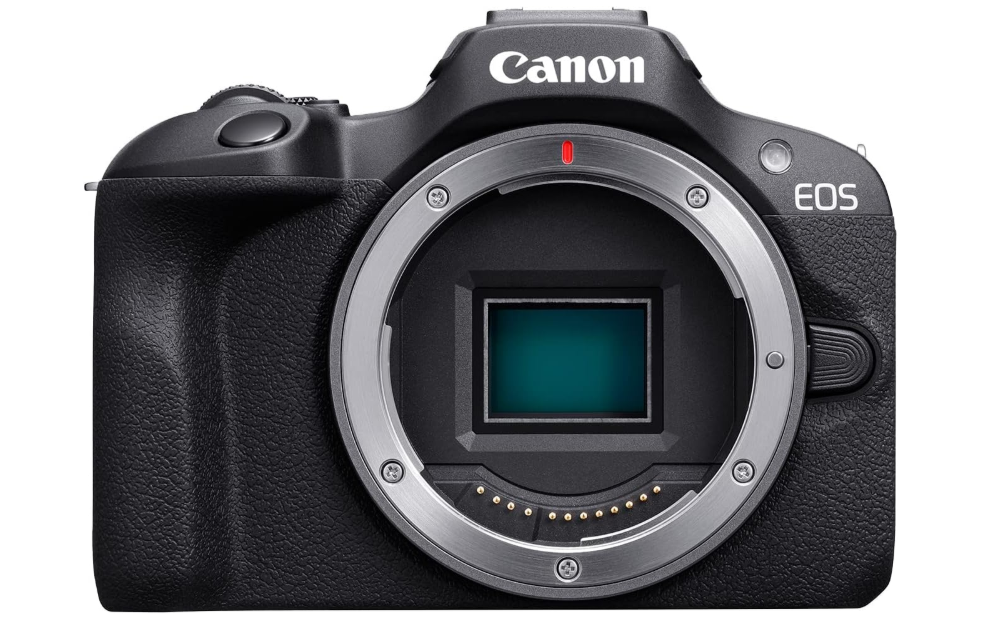
The Canon EOS R100 is an excellent entry-level mirrorless camera that combines portability, affordability, and impressive imaging performance, making it a top choice for beginners, travellers, and everyday photographers. As the smallest and lightest camera in Canon’s EOS R series, it is easy to carry wherever you go without sacrificing capability.
At its core is a 24.1-megapixel APS-C CMOS sensor paired with the DIGIC 8 image processor, delivering sharp, detailed images with accurate colours and reliable performance in a variety of lighting conditions. The camera features Dual Pixel CMOS AF with coverage across up to 143 autofocus zones, providing fast and precise focusing, while Auto Subject Detection and Eye Detection AF with Servo AF help keep people and moving subjects in sharp focus.
For capturing action, the EOS R100 offers continuous shooting at up to 6.5 frames per second in One-Shot AF mode, allowing you to freeze fast-moving moments with ease. With its compact design, intuitive controls, and access to Canon’s expanding RF lens system, the EOS R100 offers outstanding value for anyone looking to step into mirrorless photography without exceeding a modest budget.A compact lens footprint allows you to shoot candid portraits effortlessly without drawing attention from passing crowds. If you want a broader look at entry-level modular setups at this exact value tier, check out our master evaluation of the best mirrorless camera for beginners under 500.
Pros
- Compact and lightweight design for easy portability
- Affordable entry into Canon’s EOS R mirrorless system
- High-quality 24.1MP APS-C CMOS sensor produces detailed images
- DIGIC 8 processor delivers fast performance and excellent image processing
- Dual Pixel CMOS AF with up to 143 autofocus zones ensures quick and accurate focusing
- Auto Subject Detection and Eye Detection AF improve portrait and action photography
- Continuous shooting up to 6.5 fps captures fast-moving subjects effectively
- Compatible with Canon RF and RF-S lenses for future system expansion
Cons
- Continuous shooting speed is modest compared to higher-end mirrorless cameras
2) Sony Alpha a6000
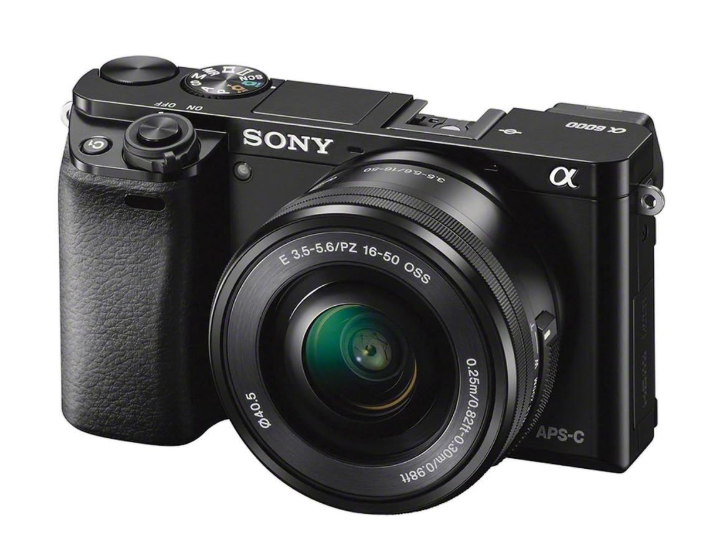
The Sony Alpha a6000 is a compact and highly capable mirrorless camera that continues to be a favourite among photography enthusiasts thanks to its fast performance and excellent image quality. Built around a 24.2MP image sensor, the camera captures sharp, vibrant images with impressive detail, while its ISO range of 100–25,600 (expandable to 51,200) delivers reliable low-light performance with reduced noise.
One of its standout features is the Fast Hybrid Autofocus system, which combines 179 focal-plane phase-detection points with 25 contrast-detection points to provide quick, accurate subject tracking for both stills and action photography. The a6000 also excels at capturing fast-moving moments with continuous shooting speeds of up to 11 frames per second, making it ideal for sports, wildlife, and everyday action.
Composing shots is easy with the 3-inch tilting LCD screen featuring 921,000 dots and the 0.39-inch electronic viewfinder, which offers a clear, real-time preview of your scene. Designed for convenience, the camera is compatible with Sony’s extensive E-mount lens system and includes practical accessories such as a rechargeable NP-FW50 battery, shoulder strap, eyepiece cup, and Micro USB cable.
An integrated anti-dust system with a protective coating and ultrasonic vibration mechanism helps keep the sensor clean, ensuring consistently sharp images. Lightweight, responsive, and versatile, the Sony Alpha a6000 remains an outstanding choice for beginners and enthusiasts seeking professional-level performance in a portable package.
Pros
- High-resolution 24.2MP sensor delivers detailed, vibrant images
- Fast Hybrid AF with 179 phase-detection and 25 contrast-detection points
- Continuous shooting up to 11 fps is excellent for action photography
- Wide ISO range provides strong low-light performance
- Compact and lightweight design that’s easy to carry
- Tilting 3-inch LCD offers flexible shooting angles
- Built-in electronic viewfinder improves visibility in bright conditions
- Compatible with a wide range of Sony E-mount lenses
- Anti-dust sensor protection helps reduce maintenance
Cons
- Battery life of up to 360 shots is relatively modest
3) Olympus OM-D E-M10 Mark III
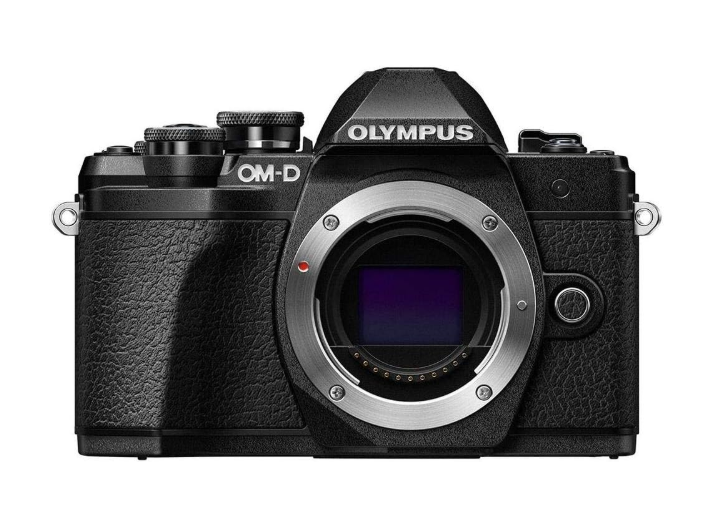
The Olympus OM-D E-M10 Mark III is a stylish and compact mirrorless camera that combines classic design with powerful imaging features, making it an excellent choice for travel, street, and everyday photography. At its core is a 16-megapixel Live MOS sensor paired with the TruePic VIII image processor, delivering sharp images with vibrant colours and reliable performance across a wide range of shooting conditions.
One of the camera’s standout features is its 5-axis in-body image stabilization (IBIS), which minimizes camera shake to produce blur-free still photos and remarkably smooth 4K video even when shooting handheld. Videographers will appreciate the ability to record 4K video at 30fps, as well as HD video at up to 120fps for stunning slow-motion footage.
Despite its advanced capabilities, the E-M10 Mark III remains incredibly portable thanks to its compact and lightweight body, while its timeless design features dual control dials, an arrow pad, and a dedicated shortcut button for intuitive operation. The 3.0-inch tilting touchscreen LCD makes it easy to compose shots from creative angles, and the Touch AF with one-step shutter release allows you to focus and capture an image with a single tap.
Combining portability, excellent image stabilization, and user-friendly controls, the Olympus OM-D E-M10 Mark III is a fantastic mirrorless camera for beginners, travellers, and enthusiasts looking for premium performance in a compact package.
Pros
- Excellent 5-axis in-body image stabilization for sharper photos and smoother handheld video
- 16MP Live MOS sensor produces detailed and vibrant images
- Powerful TruePic VIII image processor ensures fast, reliable performance
- Records crisp 4K video at 30fps
- HD 120fps recording enables high-quality slow-motion video
- Compact, lightweight body is ideal for travel and everyday carry
- Classic, ergonomic design with intuitive dual dials and shortcut controls
- Tilting 3.0-inch touchscreen supports easy composition and Touch AF with one-tap shutter release
Cons
- 16MP resolution is lower than many competing APS-C mirrorless cameras
4) Panasonic LUMIX G100
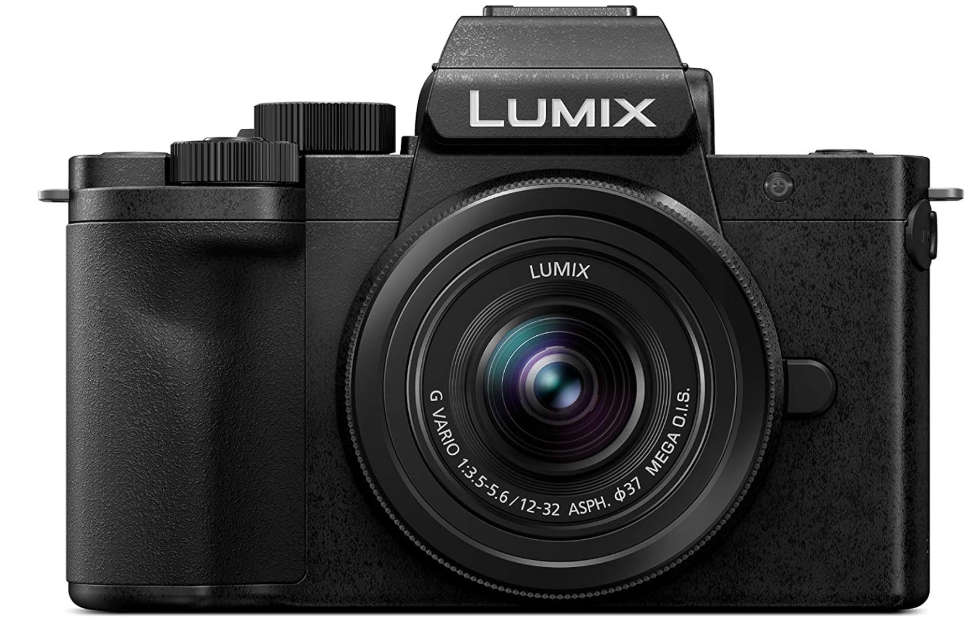
The Panasonic LUMIX G100 is a compact and versatile mirrorless camera designed for content creators, vloggers, travellers, and photography enthusiasts who want to step up from smartphone photography. Equipped with the ability to capture crystal-clear 4K photos and 4K video at 24p and 30p, the G100 delivers impressive image quality for both stills and video.
Its Intelligent Auto (iA) mode makes it easy for beginners to achieve great results, while full manual controls allow users to expand their creative skills over time. Built around the Micro Four Thirds system, the camera is compatible with a wide range of LUMIX lenses, and it comes bundled with a versatile 12–32mm lens to get you started.
The G100 also doubles as a high-quality webcam, making it ideal for livestreams, video calls, interviews, and online content creation. Creative features such as frame markers for social media aspect ratios, facial recognition, Dual Image Stabilization, and V-Log L recording simplify shooting and editing, while seamless smartphone connectivity makes transferring and sharing content effortless.
One of its standout features is the advanced 360-degree microphone with tracking audio, which intelligently adjusts sound capture to ensure clear audio whether you’re filming outdoors, in busy environments, or recording one-on-one conversations. Lightweight enough for comfortable one-handed shooting, the Panasonic LUMIX G100 is an outstanding all-around camera for creators looking for professional-quality visuals and audio in a highly portable package.
Pros
- Captures sharp 4K photos and 4K video at 24p and 30p
- Intelligent Auto mode is ideal for beginners while manual controls support creative growth
- Includes a versatile 12–32mm kit lens
- Compatible with the extensive Micro Four Thirds lens ecosystem
- Can be used as a high-quality webcam for streaming and video conferencing
- Frame markers make it easy to create content for different social media platforms
- Facial recognition improves focus accuracy for portraits and vlogging
- Dual Image Stabilization helps produce smoother handheld footage
- V-Log L recording offers greater flexibility for colour grading
- Advanced 360-degree microphone with tracking audio delivers excellent sound quality
- Lightweight and compact for comfortable one-handed recording
- Seamless smartphone connectivity for quick file transfers and sharing
Cons
- Micro Four Thirds sensor produces less background blur than larger APS-C or full-frame sensors
5) Sony a5100
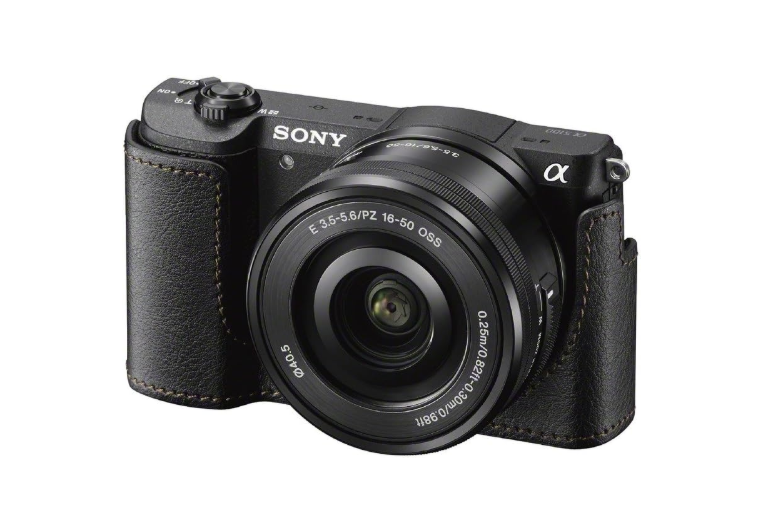
The Sony Alpha a5100 is an ultra-compact mirrorless camera that delivers impressive image quality and fast performance, making it an excellent choice for beginners, travellers, and content creators. Featuring a 24MP APS-C sensor, the a5100 captures sharp, high-resolution images with rich colours and excellent detail, while the BIONZ X image processor enhances image clarity and reduces noise for outstanding results, even in challenging lighting conditions.
The camera’s Fast Hybrid Autofocus system, equipped with 179 autofocus points, locks onto subjects quickly and accurately, making it ideal for capturing everything from portraits to fast-moving action. It also supports continuous shooting at up to 6 frames per second, allowing you to freeze memorable moments with ease. For video creators, the Sony a5100 records Full HD 1080p video at 24p and 60p, producing smooth, detailed footage for everyday filming and vlogging.
Built-in Wi-Fi and NFC connectivity make it simple to transfer photos and videos directly to a compatible smartphone for instant sharing on social media. Compatible with Sony’s extensive E-mount lens system, the camera offers plenty of room to grow as your photography skills improve. Supplied with a rechargeable NP-FW50 battery, AC charger, lens cap, shoulder strap, and Micro USB cable, the Sony Alpha a5100 combines portability, versatility, and reliable performance in a remarkably compact package.
Pros
- High-resolution 24MP APS-C sensor delivers detailed, vibrant images
- BIONZ X image processor provides excellent detail and effective noise reduction
- Fast Hybrid Autofocus with 179 AF points ensures quick and accurate subject tracking
- Continuous shooting up to 6 fps is suitable for everyday action photography
- Records smooth Full HD 1080p video at 24p and 60p
- Compact and lightweight design is ideal for travel and daily use
- Built-in Wi-Fi and NFC enable quick wireless photo and video sharing
- Compatible with a wide range of Sony E-mount lenses
- Beginner-friendly interface with room to grow into more advanced photography
Cons
- Does not support 4K video recording
Factors to Consider When Choosing the Best Compact Mirrorless Camera under 500
1. Sensor Size and Image Quality
The sensor is one of the most important components of any camera because it directly affects image quality, dynamic range, and low-light performance. Most compact mirrorless cameras under $500 feature either an APS-C or Micro Four Thirds sensor. APS-C sensors, like those found in the Canon EOS R100, Sony Alpha a6000, and Sony a5100, generally produce sharper images with better background blur and improved low-light performance. Meanwhile, Micro Four Thirds cameras such as the Olympus OM-D E-M10 Mark III and Panasonic LUMIX G100 offer excellent image quality while allowing for smaller camera bodies and lenses, making them ideal for travel.
2. Camera Size and Portability
One of the biggest advantages of a compact mirrorless camera is its portability. If you plan to travel frequently, shoot street photography, or carry your camera every day, choosing a lightweight model can make a significant difference. Cameras like the Canon EOS R100, Sony a5100, and Panasonic LUMIX G100 are designed with mobility in mind, offering compact bodies that fit easily into a small bag while remaining comfortable to use for extended periods.
3. Autofocus Performance
A fast and reliable autofocus system helps ensure your subjects remain sharp, especially when photographing people, pets, sports, or wildlife. Look for cameras with advanced autofocus technologies such as Dual Pixel CMOS AF or Hybrid Autofocus that include phase-detection and contrast-detection points. Features like Eye Detection AF, Face Detection, and subject tracking make it much easier to capture moving subjects accurately, especially for beginners.
4. Continuous Shooting Speed
If you enjoy photographing fast-moving subjects, continuous shooting speed is an important specification. Measured in frames per second (fps), burst shooting allows you to capture multiple images in quick succession, increasing your chances of getting the perfect shot. Cameras like the Sony Alpha a6000 offer up to 11 fps, making them excellent for action photography, while other models provide respectable speeds suitable for everyday family events, travel, and casual sports photography.
5. Video Recording Capabilities
Many photographers also create video content, making video performance an essential consideration. Cameras capable of recording 4K video provide sharper footage and greater editing flexibility than Full HD models. Features such as image stabilization, slow-motion recording, microphone quality, and V-Log recording can significantly improve video production. If you plan to vlog or produce YouTube content, prioritizing strong video features will provide better long-term value.
6. Image Stabilization
Image stabilization helps reduce blur caused by camera shake, particularly when shooting handheld in low light or recording video. Cameras equipped with In-Body Image Stabilization (IBIS), such as the Olympus OM-D E-M10 Mark III, offer stabilization regardless of the attached lens, resulting in sharper still photos and smoother videos. Models without IBIS often rely on stabilized lenses, which may increase the overall cost of your setup.
7. Lens Compatibility and System Growth
A mirrorless camera is an investment in an entire camera system rather than just a single body. Choosing a camera with access to a wide range of lenses gives you greater creative flexibility as your photography skills improve. Systems like Sony’s E-mount, Canon’s RF mount, and the Micro Four Thirds ecosystem provide options ranging from affordable prime lenses to professional telephoto and wide-angle lenses, ensuring your camera can grow with your needs.
8. Ease of Use
Beginners should look for cameras that offer intuitive controls and user-friendly features. Automatic shooting modes, touchscreen operation, guided menus, and customizable buttons make learning photography much easier. Cameras like the Panasonic LUMIX G100 include Intelligent Auto mode for effortless shooting while still providing manual controls for users who want to develop their skills over time.
9. Display and Viewfinder
A quality display makes composing images and reviewing shots much easier. Tilting or fully articulating touchscreens provide greater flexibility when shooting from creative angles, taking selfies, or recording vlogs. An electronic viewfinder (EVF) is also valuable, especially when photographing outdoors in bright sunlight where LCD screens can become difficult to see. The combination of a responsive touchscreen and a clear EVF improves the overall shooting experience.
10. Battery Life
Battery life determines how long you can shoot before needing to recharge or swap batteries. Compact mirrorless cameras generally offer shorter battery life than DSLRs due to their electronic viewfinders and LCD screens. If you plan to travel or spend long days shooting, consider a camera with good battery performance or one for which spare batteries are readily available. Carrying an extra battery is often a worthwhile investment for uninterrupted photography.
11. Connectivity and Sharing Features
Modern mirrorless cameras often include built-in Wi-Fi, Bluetooth, or NFC, allowing you to transfer photos and videos directly to your smartphone or tablet. These features make it quick and convenient to share images on social media, back up files, or control the camera remotely through a mobile app. For content creators and travellers, seamless wireless connectivity can greatly simplify the workflow.
12. Overall Value for Money
When shopping under a $500 budget, it’s important to balance features, performance, and long-term usability. Some cameras may offer superior autofocus, while others excel in image stabilization, video quality, or portability. Rather than focusing solely on the lowest price, consider which camera provides the best combination of image quality, ease of use, lens availability, and future upgrade potential. A well-rounded mirrorless camera will continue to meet your needs as your photography skills develop, making it a smarter investment over time.
FAQs
1. What is the best compact mirrorless camera under $500?
The Canon EOS R100 is widely regarded as one of the best compact mirrorless cameras under $500 due to its excellent balance of affordability, portability, and performance. It features a 24.1MP APS-C sensor, Dual Pixel CMOS AF with Eye Detection, and compatibility with Canon’s RF lens system, making it an ideal choice for beginners and enthusiasts alike. However, if you’re shopping on the used market, the Sony Alpha a6000 is another outstanding option thanks to its fast autofocus and 11 fps continuous shooting.
2. Is it better to buy a new or used mirrorless camera under $500?
Both new and used mirrorless cameras offer excellent value depending on your priorities. Buying new provides a manufacturer’s warranty, the latest technology, and peace of mind, with the Canon EOS R100 being one of the strongest options in this price range. Buying used can unlock higher-end models such as the Sony Alpha a6000, Olympus OM-D E-M10 Mark III, or Panasonic LUMIX GX85, which often include advanced features like faster autofocus, in-body image stabilization, or superior build quality for the same budget.
3. What features should I look for in a compact mirrorless camera under $500?
When choosing the best compact mirrorless camera under $500, focus on features that deliver the best overall value. Look for a large APS-C or Micro Four Thirds sensor for excellent image quality, a reliable autofocus system with Eye Detection or subject tracking, and continuous shooting for capturing action. If you plan to create videos, consider cameras that offer 4K recording and image stabilization. Additionally, evaluate lens compatibility, battery life, wireless connectivity, and the camera’s overall size and weight to ensure it suits your photography style and future needs.
Final Thoughts
If you’re looking to step into the world of mirrorless photography without breaking the bank, you’re in luck. The market is filled with compact mirrorless cameras under $500 that combine excellent image quality, fast autofocus, interchangeable lenses, and powerful video capabilities in lightweight, easy-to-carry bodies. Whether you’re a beginner eager to learn photography, a traveller who values portability, a street photographer capturing everyday moments, or a content creator upgrading from a smartphone, there’s a budget-friendly mirrorless camera designed to meet your needs.
Models like the Canon EOS R100, Sony Alpha a6000, Olympus OM-D E-M10 Mark III, Panasonic LUMIX G100, and Sony a5100 prove that you don’t need to spend a premium to enjoy professional-looking results. In this guide, we’ve rounded up the 5 best compact mirrorless cameras under $500, highlighting their key features, pros, cons, and overall value to help you confidently choose the perfect camera for your next creative adventure. Before making your investment, consider if you require an everyday casual body or a dedicated vacation kit for long flights. For an premium look at small mirrorless setups optimized for globetrotting, explore our expert selections for the best compact mirrorless camera for travel.