A .223 bolt-action rifle can serve several roles, from varmint and predator hunting to recreational shooting and precision target work. The right scope depends less on the cartridge itself than on how you intend to use the rifle.
For a lightweight hunting rifle, a compact 3-9×40 optic may make more sense than a heavy precision scope. On the other hand, a .223 bolt gun used from a bench or for longer-range target shooting can benefit from higher magnification, adjustable parallax, and a first focal plane reticle.
This guide compares five scopes that cover those different needs, so you can choose an optic that matches your shooting distance, rifle setup, and priorities rather than simply buying the scope with the highest magnification.
Quick Comparison
| Product | Best For | Weight | Magnification | Key Advantage | Check Price |
| Leupold VX-Freedom 3-9×40 | Lightweight hunting | 12.2 oz | 3-9x | Very light, simple design | 👉 View on Amazon |
| Vortex Crossfire II 3-9×40 | Budget-conscious general use | 15 oz | 3-9x | Forgiving and versatile | 👉 View on Amazon |
| Athlon Helos BTR Gen2 2-12×42 | Hunting and mixed-distance shooting | 25.4 oz | 2-12x | Wide magnification range with FFP | 👉 View on Amazon |
| Vortex Diamondback Tactical 4-16×44 FFP | Precision and longer-range shooting | 23.1 oz | 4-16x | FFP reticle and adjustable parallax | 👉 View on Amazon |
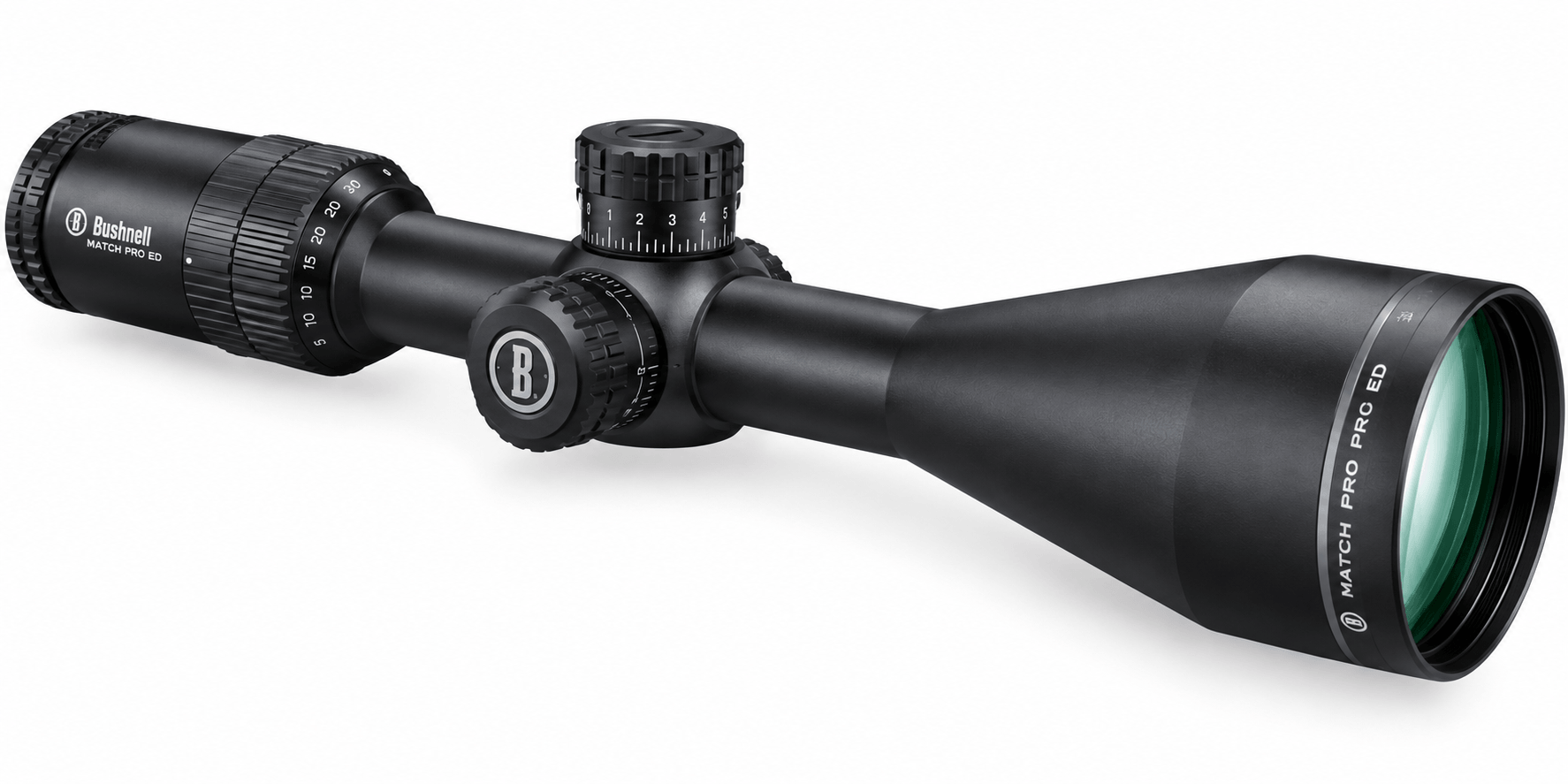
| Bushnell Match Pro ED 5-30×56 | Precision target shooting | 32 oz | 5-30x | ED glass and extensive adjustment range | 👉 View on Amazon |
Quick Recommendations
Choose the Leupold VX-Freedom 3-9×40 if: you want a lightweight, straightforward scope for a .223 bolt-action hunting rifle.
Choose the Vortex Crossfire II 3-9×40 if: you want an affordable general-purpose optic with a forgiving sight picture and simple controls.
Choose the Athlon Helos BTR Gen2 2-12×42 if: you want one scope that can cover close-to-mid-range hunting and more deliberate shooting.
Choose the Vortex Diamondback Tactical 4-16×44 FFP if: precision shooting and dialing or holding corrections matter more than keeping the rifle ultralight.
Choose the Bushnell Match Pro ED 5-30×56 if: your .223 bolt gun is primarily a precision or target rifle and weight is a secondary concern.
How These Scopes Were Chosen
A .223 bolt-action rifle generally does not require an extremely powerful optic simply because the cartridge can shoot accurately at extended distances. The better approach is to match magnification and features to the rifle’s actual role.
For hunting, useful priorities include manageable weight, a forgiving eye box, adequate low-light performance, and enough field of view for quickly locating game. For target shooting, parallax adjustment, reticle design, repeatable turrets, and higher magnification become more important.
I also looked for meaningful differences between the five scopes. The group ranges from a 12.2-ounce 3-9x hunting optic to a 32-ounce 5-30x precision scope, giving buyers substantially different options rather than five versions of the same basic design.
If you are also comparing optics for another small-caliber rifle, the scope comparison for .22 target shooting is useful for understanding how magnification, parallax, reticle design, and optical clarity change with shooting distance.
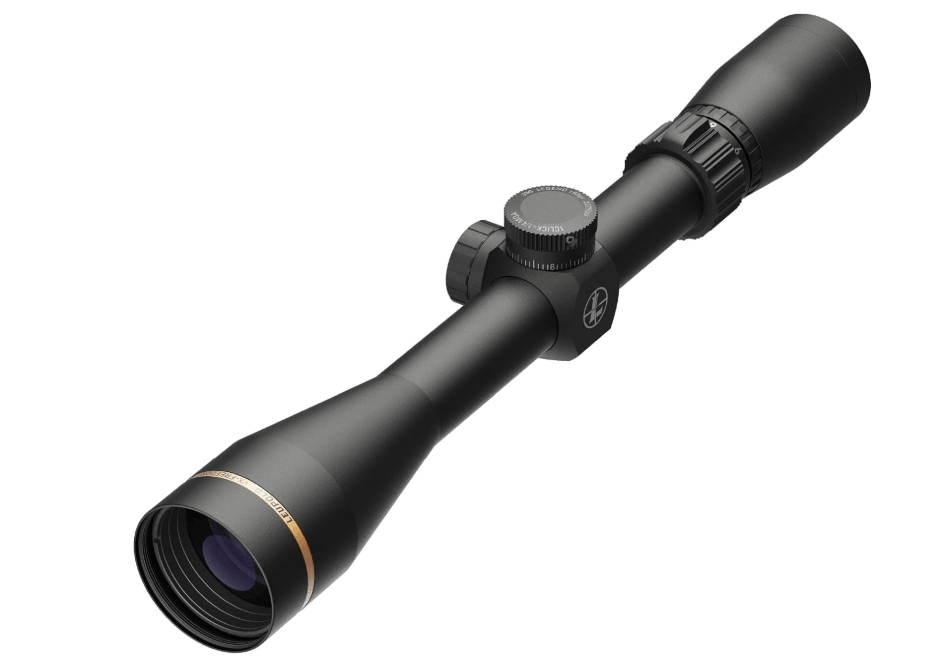
1. Leupold VX-Freedom 3-9×40
Best For
The Leupold VX-Freedom 3-9×40 is best suited to hunters who want a lightweight .223 bolt-action setup that remains simple and easy to carry.
At only 12.2 ounces, it is particularly attractive when rifle weight matters. A compact bolt-action .223 paired with a scope this light can remain comfortable to carry over long distances.
Why Choose It
The biggest advantage is simplicity. The 3-9x range covers common hunting distances without adding the size and weight associated with higher-power optics.
Leupold lists a 40mm objective, 1-inch tube, second focal plane Duplex reticle, and 1/4-MOA windage and elevation adjustments. It also has a fixed 150-yard parallax setting.
The Duplex reticle is particularly straightforward. Its heavier outer posts help the reticle stand out while the finer center section provides a more precise aiming point.
Key Features
- 3-9x magnification
- 40mm objective lens
- 1-inch tube
- 12.2-ounce weight
- Second focal plane Duplex reticle
- 4.2-3.7 inches of eye relief
- 33.1-13.6 ft field of view at 100 yards
- 1/4-MOA adjustments
- Fixed 150-yard parallax
- Waterproof and fogproof construction
What These Features Mean in Real Use
The 3-9x range makes sense on a general-purpose .223 hunting rifle because 3x gives you a relatively broad field of view for finding a target, while 9x provides enough magnification for more deliberate shots at moderate distances.
The 33.1-foot field of view at 3x is considerably more useful for scanning than the narrow view you get at high magnification. At 9x, the field narrows to 13.6 feet at 100 yards.
Weight is the other major advantage. At 12.2 ounces, this scope adds substantially less mass than the tactical and precision models in this guide. That difference becomes noticeable when carrying a rifle through the field.
The trade-off is that you do not get adjustable parallax or a first focal plane reticle. For a straightforward hunting setup, those omissions may be advantages rather than problems because they keep the optic simple.
Trade-Offs
You gain an exceptionally light scope and uncomplicated operation, but you give up high magnification, adjustable parallax, and tactical-style turret features.
May Not Be Ideal If
This is not the best choice if your .223 bolt-action rifle is primarily used for small targets at extended range or frequent dialing. A higher-magnification scope with adjustable parallax would provide more control for that application.
Pros
- Extremely lightweight
- Simple Duplex reticle
- Useful 3-9x range
- Generous eye relief
- Compact hunting-oriented design
- 1/4-MOA adjustments
Cons
- No adjustable parallax
- No first focal plane reticle
- Limited compared with dedicated precision scopes
Best if: You want a lightweight, uncomplicated hunting optic.
Consider another option if: You regularly shoot small targets at longer distances and need adjustable parallax or higher magnification.
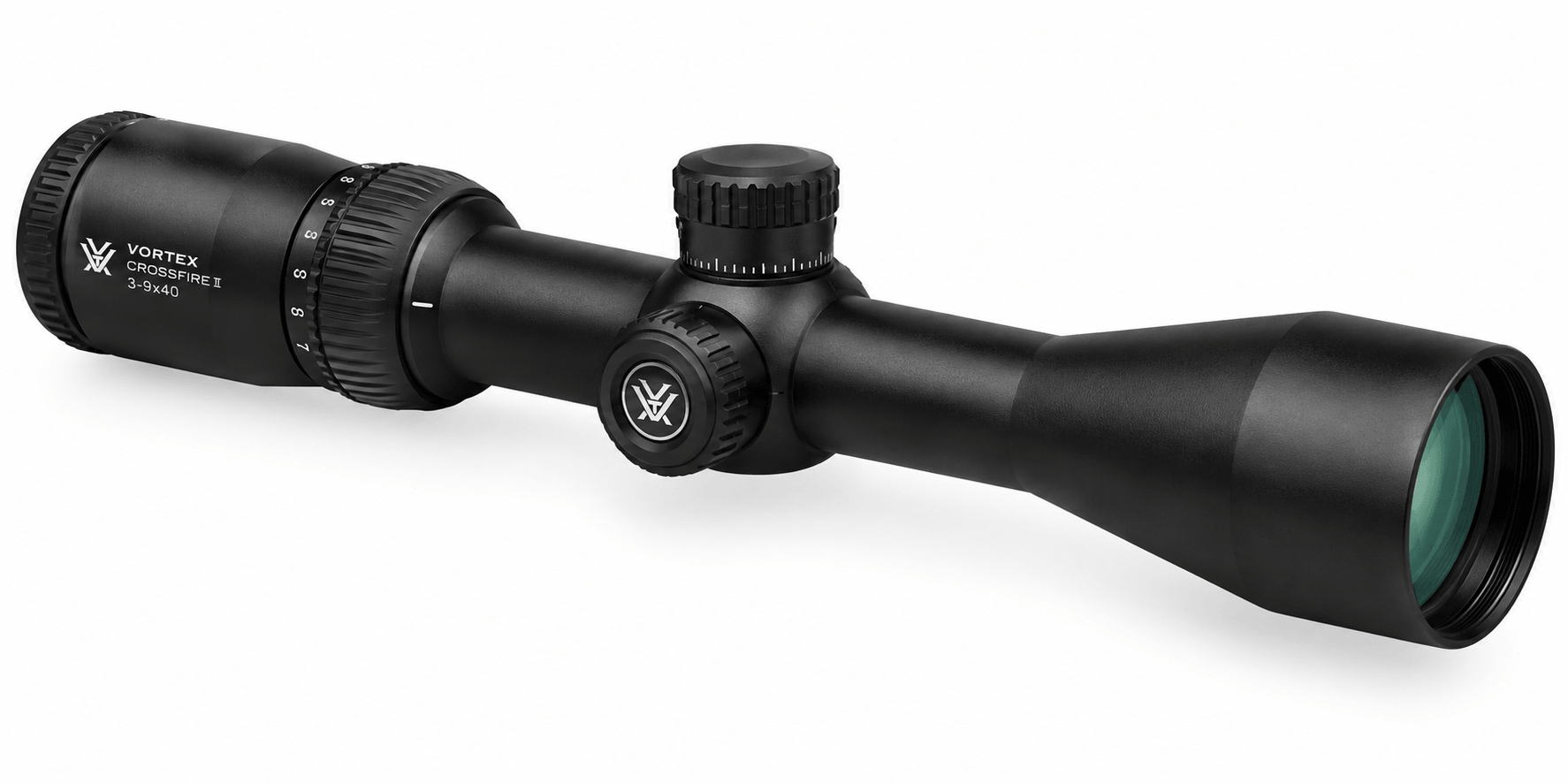
2. Vortex Crossfire II 3-9×40
Best For
The Vortex Crossfire II 3-9×40 is a strong fit for budget-conscious shooters who want a versatile optic for hunting, recreational shooting, and general use.
Why Choose It
The Crossfire II follows the same familiar 3-9×40 formula as many traditional hunting scopes, but adds features intended to make the optic forgiving and easy to use.
Vortex describes the model as having long eye relief, a fast-focus eyepiece, fully multi-coated lenses, and resettable MOA turrets. It is built on a 1-inch tube and is marketed for hunting use.
A commonly listed configuration weighs about 15 ounces and provides 3.8-4.4 inches of eye relief, making it reasonably light while still offering a comfortable sight picture.
Key Features
- 3-9x magnification
- 40mm objective
- 1-inch tube
- Approximately 15-ounce weight
- Fully multi-coated lenses
- Fast-focus eyepiece
- Long eye relief
- Resettable MOA turrets
- Hunting-oriented design
What These Features Mean in Real Use
The combination of 3-9x magnification and a 40mm objective works well for general-purpose shooting. At lower power, the wider field of view helps with target acquisition. At 9x, you have more detail for deliberate aiming.
The forgiving eye box is useful when shooting from different positions. You do not have to achieve perfect head placement every time to obtain a usable sight picture.
The fully multi-coated lenses are also important because a .223 bolt-action rifle may be used during early morning or late afternoon hunting, when contrast and light transmission become more noticeable.
The scope’s main limitation is that it remains a relatively simple optic. It does not offer the precision-oriented features of the Diamondback Tactical or Match Pro ED.
Trade-Offs
You get a relatively light, simple, affordable optic, but less magnification and less control over parallax than the precision-oriented alternatives.
May Not Be Ideal If
You primarily shoot from a bench at small targets beyond moderate distances. In that situation, adjustable parallax and higher magnification can be more useful than the Crossfire II’s simplicity.
Pros
- Versatile 3-9x range
- Reasonably light
- Forgiving eye relief and eye box
- Fully multi-coated optics
- Simple controls
- Suitable for hunting and general shooting
Cons
- No side-focus parallax adjustment
- Less suitable for dedicated precision shooting
- Less magnification than the tactical options
Best if: You want a straightforward, budget-conscious general-purpose scope.
Consider another option if: Precision shooting at longer distances is the main purpose of the rifle.
3. Athlon Helos BTR Gen2 2-12×42
Best For
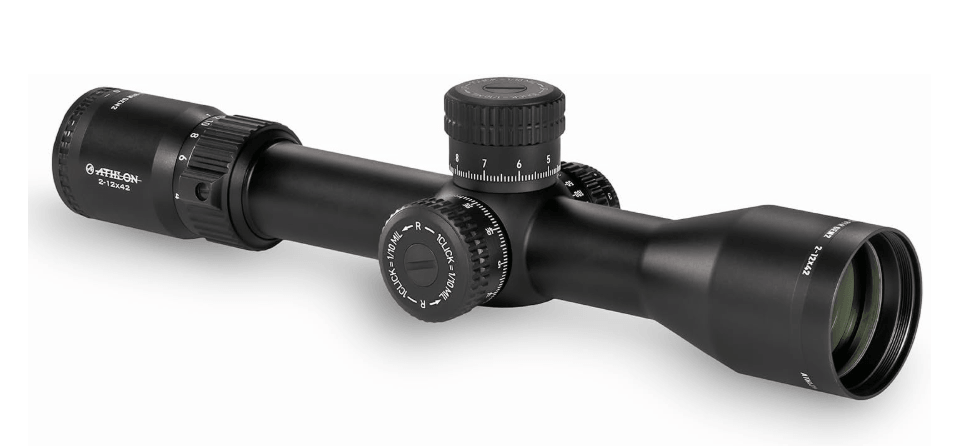
The Athlon Helos BTR Gen2 2-12×42 is best for shooters who want more flexibility than a traditional 3-9x hunting scope provides without moving all the way to a very large 5-30x precision optic.
Why Choose It
Its 2-12x magnification range is the standout feature. The 2x setting gives you a broad field of view for closer shooting, while 12x provides additional detail when targets are farther away.
Athlon lists the model with a 42mm objective, 30mm tube, 3.6-inch eye relief, 55.7-9.6 feet of field of view at 100 yards, side-focus parallax from 10 yards to infinity, and a 25.4-ounce weight.
It also uses a first focal plane illuminated reticle, exposed turrets, and a precision zero-stop system.
Key Features
- 2-12x magnification
- 42mm objective
- 30mm tube
- First focal plane illuminated reticle
- 3.6 inches of eye relief
- 55.7-9.6 ft field of view at 100 yards
- Side-focus parallax adjustment
- Exposed locking turrets
- Precision zero stop
- 25.4-ounce weight
What These Features Mean in Real Use
The 2x low end is useful when you need more field of view than a 4x or 5x starting magnification provides. That can make target acquisition easier at shorter distances.
At the other end, 12x gives a .223 bolt-action rifle considerably more precision potential than a basic 3-9x optic.
The first focal plane reticle is particularly useful if you use its holdover references at different magnifications. Because the reticle scales with magnification, its subtensions remain consistent for that purpose.
The cost is weight. At 25.4 ounces, this is more than twice the weight of the Leupold VX-Freedom.
That difference matters on a rifle carried through the woods but is less important on a rifle that spends most of its time on a bench or range.
Trade-Offs
You gain a broad magnification range, FFP reticle, adjustable parallax, and more advanced turret controls. In return, the rifle becomes heavier and the optic is more complicated than a traditional hunting scope.
May Not Be Ideal If
Your main priority is a lightweight hunting rifle. The extra ounces are difficult to justify if you rarely use magnification beyond 9x.
Pros
- 2-12x range is highly versatile
- First focal plane reticle
- Adjustable parallax
- Zero-stop system
- Locking turrets
- Useful for hunting and target shooting
Cons
- 25.4-ounce weight
- More complex than necessary for simple hunting
- Exposed turrets are less streamlined than capped hunting turrets
Best if: You want one optic for both hunting and more deliberate mid-range shooting.
Consider another option if: Keeping your .223 bolt-action rifle light and simple is the priority.
4. Vortex Diamondback Tactical 4-16×44 FFP
Best For
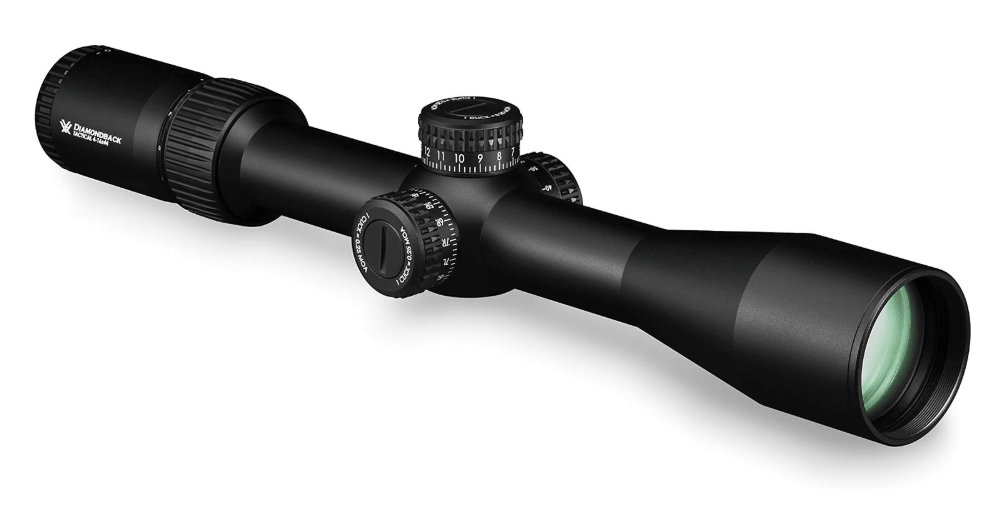
The Vortex Diamondback Tactical 4-16×44 FFP is best suited to .223 bolt-action rifles used for precision target shooting, varmint work, and longer-range practice.
Why Choose It
This is a significant step toward a precision-oriented setup. The 4-16x range provides substantially more magnification than the traditional 3-9x hunting scopes in this guide.
Vortex lists a 30mm tube, first focal plane configuration, 3.8 inches of eye relief, 26.9-6.7 feet of field of view at 100 yards, exposed turrets, and adjustable parallax from 20 yards to infinity. The listed weight is 23.1 ounces.
The scope also uses Vortex’s XD optical system, which the manufacturer says is intended to improve resolution, edge-to-edge sharpness, and color fidelity.
Key Features
- 4-16x magnification
- 44mm objective
- First focal plane reticle
- 30mm tube
- 3.8-inch eye relief
- 26.9-6.7 ft field of view at 100 yards
- Adjustable parallax from 20 yards to infinity
- Exposed tactical turrets
- 23.1-ounce weight
- XD optical elements
What These Features Mean in Real Use
The 4-16x range makes more sense when the rifle’s job involves smaller targets and greater distances. At 16x, you can resolve more detail than you would through a 9x hunting scope.
The first focal plane reticle becomes valuable when using holdover or windage references at varying magnifications. You can change magnification without changing the relationship between the reticle’s subtensions and the target.
Adjustable parallax is another major advantage. The manufacturer specifies adjustment from 20 yards to infinity, giving you control across a broad range of shooting distances.
The downside is that the optic is 14.06 inches long and weighs 23.1 ounces. On a lightweight hunting rifle, that can change the balance noticeably.
For readers comparing different precision-oriented optics, the Optics Find guide to .22 target-shooting scopes also illustrates why FFP reticles, parallax adjustment, and higher magnification become more important as target size decreases and shooting distance increases.
Trade-Offs
You gain precision-oriented features and more magnification, but sacrifice some of the lightness and simplicity that make traditional hunting scopes attractive.
May Not Be Ideal If
You mostly hunt inside moderate distances and rarely need more than 9x. In that case, the additional size and weight may not provide enough practical benefit.
Pros
- Useful 4-16x range
- FFP reticle
- Adjustable parallax
- Exposed tactical turrets
- Good fit for precision-oriented .223 rifles
- 23.1-ounce weight is moderate for this class
Cons
- Heavier than traditional hunting scopes
- 4x minimum magnification is less useful for very close targets
- Tactical configuration may be unnecessary for simple hunting
Best if: You want a .223 bolt-action scope for precision and longer-range shooting.
Consider another option if: Lightweight field carry and fast target acquisition matter more than dialing and precision features.
5. Bushnell Match Pro ED 5-30×56
Best For
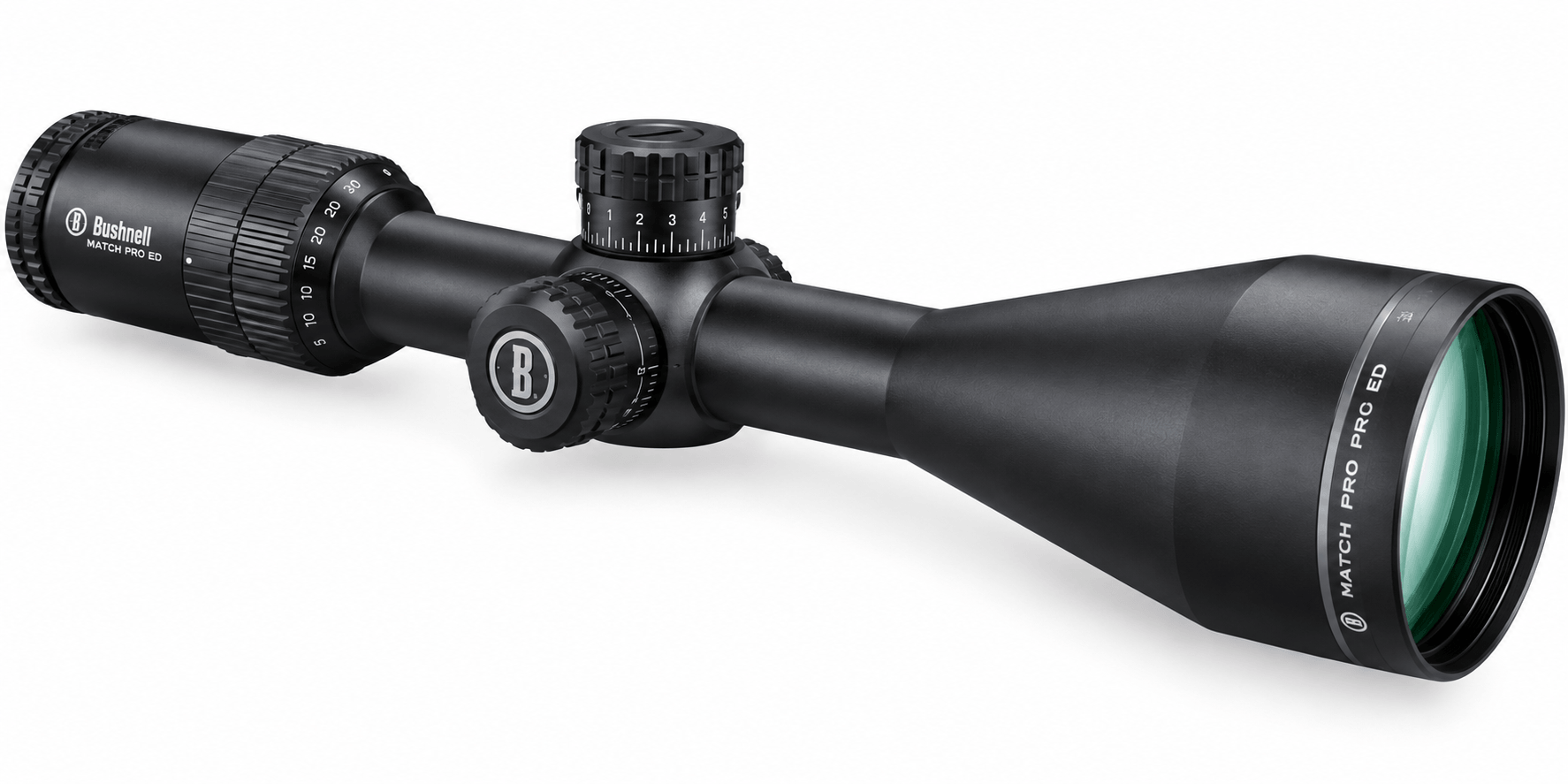
The Bushnell Match Pro ED 5-30×56 is best for dedicated precision shooters who want substantial magnification, a first focal plane reticle, and extensive adjustment capability.
Why Choose It
This is the most specialized scope in the group. Bushnell designed the Match Pro ED around competitive and advanced shooting rather than lightweight hunting.
It combines a 5-30x magnification range with a 56mm ED Prime objective, illuminated DM2 MRAD reticle, first focal plane configuration, 34mm tube, side-focus parallax, and 29 MRAD of elevation adjustment. Bushnell lists the scope at 32 ounces.
The manufacturer also lists 3.8 inches of eye relief and a 15-yard minimum parallax distance.
Key Features
- 5-30x magnification
- 56mm objective
- ED Prime glass
- First focal plane illuminated reticle
- 34mm tube
- 3.8-inch eye relief
- Side-focus parallax
- 29 MRAD elevation adjustment
- 14.5 MRAD windage adjustment
- Easy-Set zero stop
- 32-ounce weight
- IPX7 water resistance
What These Features Mean in Real Use
The 5-30x range gives the shooter enormous flexibility at longer distances, but that does not make 30x automatically better for every .223 rifle.
At high magnification, the narrower field of view makes target acquisition slower and magnifies every movement of the rifle. That makes the Match Pro ED much more appropriate for a supported shooting position than for walking through the woods.
The 56mm objective and ED glass are aimed at maintaining a detailed, high-contrast sight picture. Bushnell specifically identifies the ED Prime glass as a way to improve sharpness and reduce color fringing.
Its 34mm tube and extensive adjustment range also make sense for shooters who expect to dial elevation and windage rather than simply use a basic hunting reticle.
The major penalty is weight. At 32 ounces, this scope is 20 ounces heavier than the Leupold VX-Freedom.
That is a substantial difference on a rifle intended for long walks.
Trade-Offs
You gain a highly capable precision optic with extensive magnification and adjustment range, but the rifle becomes considerably heavier and less convenient for traditional hunting.
May Not Be Ideal If
Your .223 bolt-action rifle is primarily a lightweight hunting rifle. The Match Pro ED offers capabilities you may rarely use in the field.
Pros
- Very wide 5-30x magnification range
- ED Prime glass
- First focal plane illuminated reticle
- Extensive elevation adjustment
- Side-focus parallax
- Zero-stop system
- Designed for advanced precision shooting
Cons
- Heavy at 32 ounces
- Large 56mm objective
- Less convenient for field carry
- Excessive magnification for many hunting situations
Best if: Your .223 bolt-action rifle is primarily a precision or target platform.
Consider another option if: You carry the rifle frequently or mostly shoot at moderate distances.
Factors to Consider When Choosing a Scope for a .223 Bolt Action Rifle
1. Magnification Range
Start with your normal shooting distance rather than the maximum distance you might shoot someday.
A 3-9x scope is often easier to use for general hunting because its low magnification provides a wider field of view. A 4-16x or 2-12x optic makes more sense when smaller targets and longer distances become a regular part of the rifle’s role.
Very high magnification, such as 30x, is mainly useful when you have a stable shooting position and need to resolve small targets at distance.
2. Weight
Weight can change how a bolt-action rifle carries and balances.
A 12-ounce hunting scope such as the VX-Freedom keeps the setup relatively light, while a 25- to 32-ounce precision optic can make the rifle noticeably heavier.
For a rifle that will be carried through steep terrain, every additional ounce matters more than it does on a bench rifle.
3. Parallax Adjustment
Parallax becomes increasingly important as shooting becomes more precise.
A fixed-parallax hunting scope can work perfectly well when the rifle is used at typical hunting distances. However, adjustable parallax becomes more valuable when shooting small targets at different distances because it allows the shooter to focus the optic for the intended range.
The Diamondback Tactical, Helos BTR, and Match Pro ED all provide adjustable parallax, while the VX-Freedom 3-9×40 has a fixed 150-yard parallax setting.
4. Reticle and Focal Plane
For straightforward hunting, a simple Duplex-style reticle can be easier to use than a complicated precision reticle.
An FFP reticle becomes more useful when you regularly use holdover or windage references at different magnifications. The reticle changes apparent size with magnification, keeping its subtensions consistent for ranging and holdover work.
If you primarily aim and fire without dialing or holding corrections, you may not gain much from paying extra for a complex FFP system.
5. Optical Performance and Objective Size
A larger objective can support a larger exit pupil at a given magnification, but it also adds size and can affect mounting height.
The 40-42mm objectives on the Leupold, Vortex Crossfire II, and Athlon Helos provide a practical balance for general-purpose rifles. The 56mm objective on the Match Pro ED is better suited to a larger precision setup where maximum optical performance and high magnification take priority.
If low-light hunting is important, lens quality and coatings matter alongside objective size. A large objective by itself does not guarantee a brighter or better image.
6. Eye Relief and Eye Box
Eye relief affects how easily you can obtain a complete sight picture while maintaining a comfortable shooting position.
It also matters when wearing bulky clothing or shooting from less-than-perfect positions. A forgiving eye box can make a scope easier to use quickly, while a narrow eye box may require more precise head placement.
The Leupold, for example, provides 4.2-3.7 inches of eye relief across its magnification range, while the Athlon Helos BTR lists 3.6 inches.
7. Turrets and Adjustment System
Think about whether you intend to dial corrections or primarily hold them with the reticle.
Capped hunting turrets are convenient when you want to zero the rifle and leave the adjustments alone. Exposed tactical turrets are more useful when you frequently make elevation and windage corrections.
A scope with a zero stop can also make it easier to return to your established zero after dialing.
If you use a rangefinder to determine actual target distance, that information can become particularly useful when deciding whether your setup is better served by dialing, holding over, or simply staying within the rifle’s established zero range; the Optics Find hunting rangefinder guide explains the features that matter when choosing a rangefinder for this kind of distance-based shooting.
8. Rifle Balance and Intended Use
Finally, consider the complete rifle rather than the scope by itself.
A lightweight .223 bolt-action rifle paired with a 32-ounce precision scope may defeat the purpose of having a light rifle. Conversely, putting a 12-ounce hunting scope on a dedicated precision rifle may leave useful magnification and adjustment capability on the table.
The best combination is the one where the optic complements the rifle’s intended role.
For shooters who are considering a completely different optic system for low-light or nighttime applications, Optics Find’s thermal rifle scope guide for hunting explains how thermal optics differ from conventional riflescopes and why their requirements are substantially different.
Frequently Asked Questions
1. What magnification is best for a .223 bolt-action rifle?
For general hunting, 3-9x is a practical starting point because it combines a useful low-power field of view with enough magnification for moderate distances. If the rifle is primarily used for precision or varmint shooting at longer ranges, a 4-16x or 2-12x optic provides more flexibility.
2. Do I need adjustable parallax on a .223 scope?
Not necessarily. A fixed-parallax hunting scope can be perfectly practical when the rifle is used at typical hunting distances. Adjustable parallax becomes more valuable when shooting small targets at varying distances, particularly from a stable position.
3. Is a 30x scope too much for a .223 bolt-action rifle?
For most hunting applications, yes, 30x is more magnification than you need. However, it can be useful on a dedicated precision or target rifle where the shooter is firing from a stable position and needs to resolve small targets at longer distances. The trade-off is substantially greater weight, size, and a narrower field of view.
Conclusion
The best scope for a .223 bolt-action rifle depends on what you expect the rifle to do.
For lightweight hunting, the Leupold VX-Freedom 3-9×40 is difficult to overlook because of its low 12.2-ounce weight and straightforward design. The Vortex Crossfire II 3-9×40 offers a similarly familiar configuration for buyers who want a practical general-purpose optic.
If you want more flexibility, the Athlon Helos BTR Gen2 2-12×42 adds adjustable parallax, an FFP reticle, and a broader magnification range. For precision-oriented shooting, the Vortex Diamondback Tactical 4-16×44 FFP offers a more suitable combination of magnification, parallax control, and tactical adjustments.
Finally, the Bushnell Match Pro ED 5-30×56 is the specialist choice for a .223 bolt-action rifle built around precision shooting rather than lightweight field carry.
The key is to match the scope to the rifle’s actual job. More magnification and more features are useful only when you will use them; otherwise, a lighter and simpler optic may make the entire rifle more practical.