A slug gun needs an optic that suits the shotgun’s recoil, the ammunition being used, and the distances at which deer are likely to be encountered. A scope designed for a conventional rifle may have suitable magnification but still be a poor fit if its eye relief, mounting arrangement, or recoil suitability does not match the shotgun.
For most deer hunters using a rifled-barrel slug gun, a low- or moderate-magnification scope is a sensible starting point. A 1.5–5x or 2–7x scope offers a useful field of view in wooded terrain, while a specialized slug-gun reticle can help with elevation holds when its markings match the ammunition and zero.
The five options below emphasize hunting-oriented magnification, purpose-built slug-gun features, and practical differences. Before purchasing, confirm the exact model, compatibility with your shotgun, current retailer availability, and the manufacturer’s recoil guidance.
Quick Decision Table
| Product | Best For | Weight | Magnification | Key Advantage | Check Price |
|---|---|---|---|---|---|
| KonusPro 1.5-5×32 Slug Gun Scope | Woods hunting | 14.1 oz | 1.5–5x | Purpose-built slug-gun design | 👉 View on Amazon |
| Leupold VX-Freedom 3-9×40 UltimateSlam | Sabot-slug hunting | Not Specified | 3–9x | Slug-oriented ballistic reticle | 👉 View on Amazon |
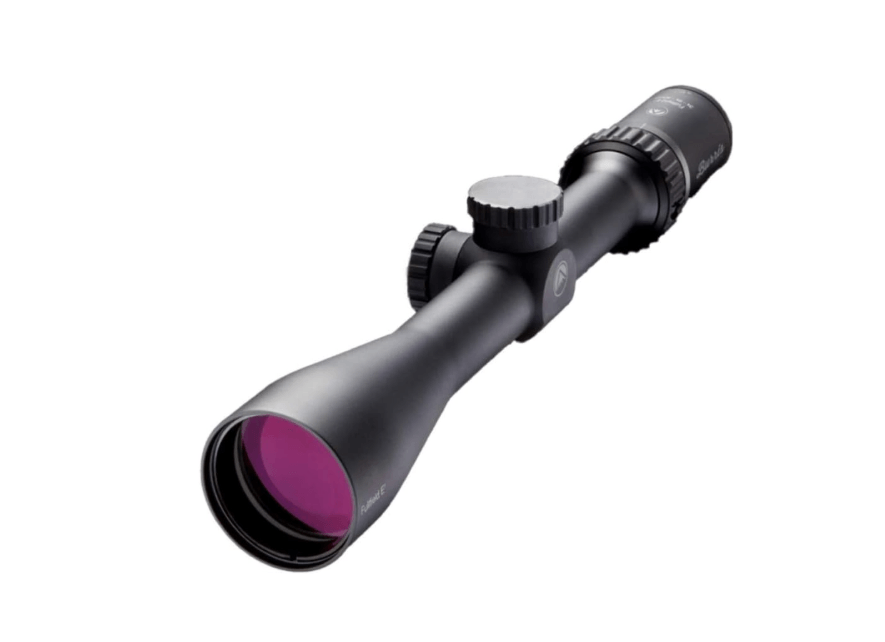
| Burris Fullfield E1 3-9×40 Shotgun Scope | Traditional slug-gun setup | Not Specified | 3–9x | Shotgun-oriented configuration | 👉 View on Amazon |
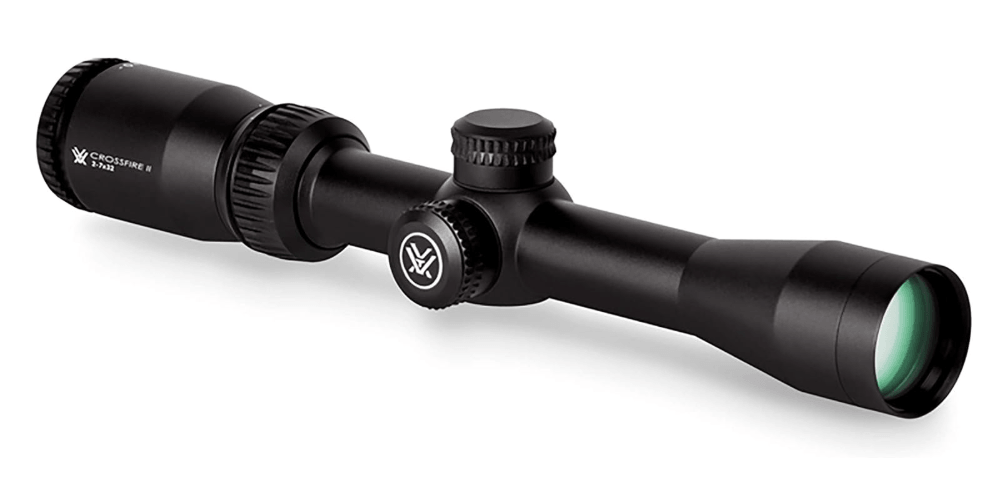
| Vortex Crossfire II 2-7×32 | General hunting magnification | Not Specified | 2–7x | Compact magnification range | 👉 View on Amazon |
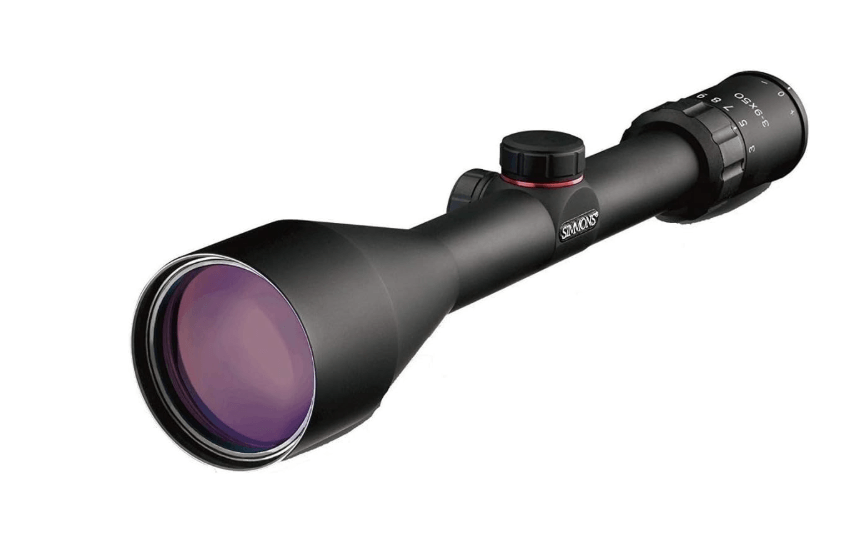
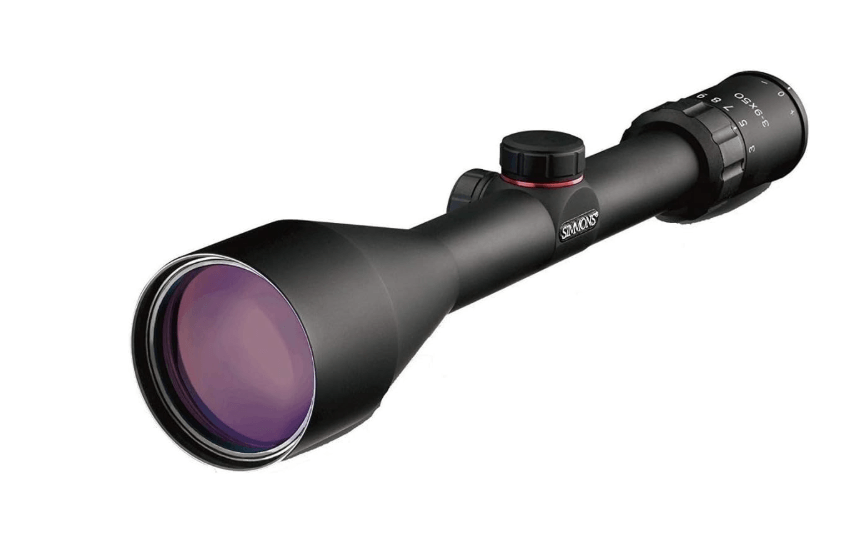
| Simmons 8-Point 3-9×50 | Budget-conscious buyers | Not Specified | 3–9x | Familiar hunting-scope format | 👉 View on Amazon |
Quick Recommendations
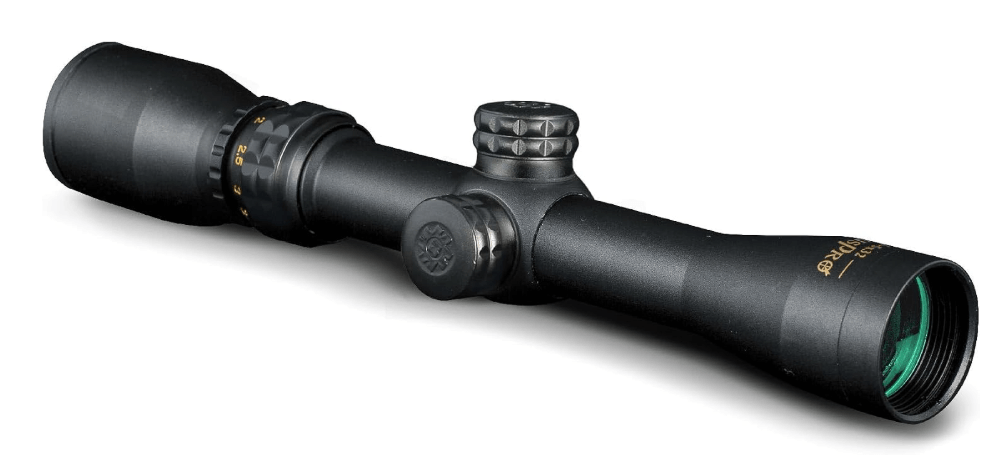
Choose the KonusPro 1.5-5×32 if you want a scope specifically marketed for slug guns and prefer a relatively compact optic. Its published weight is 14.1 ounces.
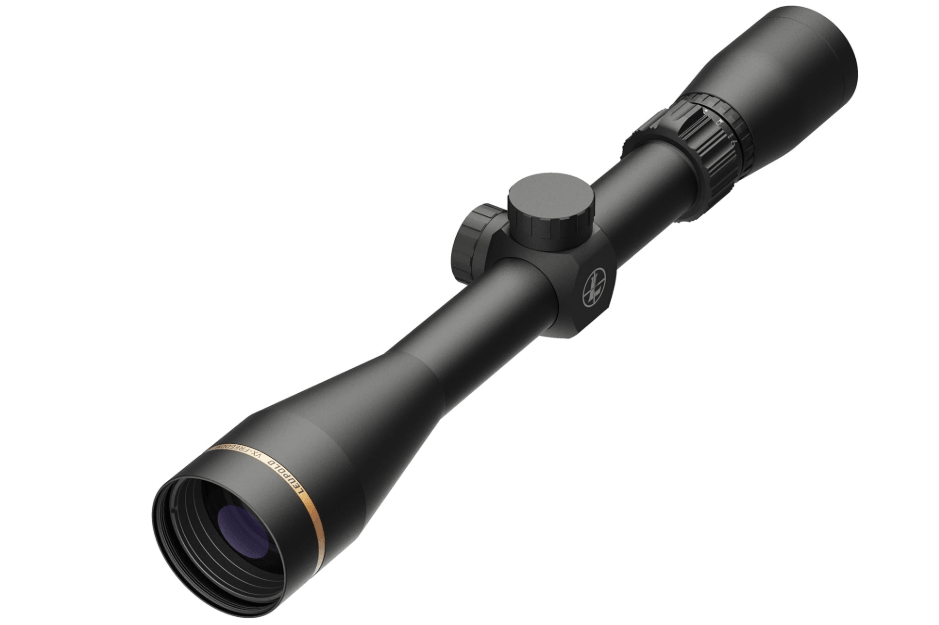
Choose the Leupold VX-Freedom 3-9×40 Muzzleloader UltimateSlam if you want a reticle designed for shotgun slugs and muzzleloaders, with additional aiming points.
Consider the Burris Fullfield E1 3-9×40 Shotgun if you want a hunting scope in a configuration explicitly designated for shotgun use.
Consider the Vortex Crossfire II 2-7×32 if its moderate magnification suits your hunting distances, but verify the exact model’s recoil suitability before mounting it on a slug gun.
Consider the Simmons 8-Point 3-9×50 only after confirming the exact model, recoil suitability, mounting compatibility, and current availability.
These are not five interchangeable scopes. The first three have more directly relevant slug-gun or shotgun designations; the other two need more careful compatibility verification.
How These Products Were Chosen
The main criteria are practical magnification, useful eye relief, hunting-oriented reticles, weight, and compatibility with the firearm. A slug gun is not simply a conventional rifle with a different cartridge, so suitability for heavy shotgun recoil deserves particular attention.
Manufacturer documentation provides the strongest basis for comparing model-specific specifications. For example, Konus explicitly markets its 1.5–5×32 model for shotgun and slug-gun applications, while Leupold identifies its UltimateSlam reticle as purpose-designed for shotguns and muzzleloaders.
1. KonusPro 1.5-5×32 Slug Gun Scope
Best for: Woods hunting and moderate-distance shots
The KonusPro 1.5-5×32 Slug Gun Scope stands out because the manufacturer specifically identifies it for shotgun, blackpowder, and slug-gun applications. Rather than adapting a high-magnification optic intended for distant rifle shooting, this model uses a compact magnification range suited to many traditional slug-hunting situations.
Why Choose It
A scope with a low starting magnification can be useful when hunting in woods, where a deer may appear briefly between trees. At 1.5x, the view is relatively wide compared with higher-powered settings, making it easier to locate the animal and maintain awareness of the surrounding scene.
The upper 5x setting provides more detail when assessing an appropriately identified target at a greater distance. That flexibility is useful without committing to a large, high-magnification optic.
Key Features
Magnification: 1.5–5x
Objective lens: 32mm
Weight: 14.1 oz
Tube diameter: 1 inch
Reticle: AimPro
Eye relief: 2.9 inches
Manufacturer-listed construction: nitrogen-purged, waterproof, fogproof, and shockproof
Parallax correction: 75 yards
What These Features Mean in Real Use
The 32mm objective keeps the optic relatively compact. The 1.5–5x range emphasizes a broad field of view at low power rather than extreme magnification.
The AimPro reticle includes an inner diamond intended to provide a distinct aiming reference. Konus also describes a range-estimation function within its reticle design, although hunters should not assume an estimate is accurate without understanding and validating the method.
There is one important consideration: 2.9 inches of eye relief is relatively short for a hard-recoiling shotgun. A hunter must assess the complete mounting position and obtain a safe, comfortable eye-to-scope distance. Do not assume that the slug-gun designation alone makes the scope suitable for every shotgun and load.
Trade-Offs
The main advantage is its purpose-built design and low magnification. The limitations are the relatively short published eye relief and the restricted maximum magnification compared with conventional 3–9x hunting scopes.
May Not Be Ideal If
You need generous eye relief, routinely hunt in open terrain, or prefer a higher-power view for checking details at greater distances.
Pros
Specifically marketed for slug-gun use
Compact 1.5–5x range
Relatively low published weight
Manufacturer-listed waterproof and fogproof construction
Cons
Short 2.9-inch published eye relief
Maximum magnification is 5x
Reticle-based range estimates require appropriate validation
Decision Summary
Best if: You want a compact, purpose-marketed slug-gun scope for woodland hunting and its eye relief suits your setup.
Consider another option if: You need more eye relief or a different magnification range.
2. Leupold VX-Freedom 3-9×40 Muzzleloader UltimateSlam
Best for: Hunters who want a slug-oriented ballistic reticle
The Leupold VX-Freedom 3-9×40 Muzzleloader UltimateSlam is a more specialized choice for hunters who want aiming references beyond a basic duplex crosshair. Its UltimateSlam reticle is designed specifically for muzzleloaders and shotguns, making this version more relevant to slug hunting than an otherwise similar scope with a general-purpose reticle.
Why Choose It
The primary reason to consider this model is its reticle, not simply the 3–9x magnification range. Its additional aiming points can help a hunter account for projectile drop when the scope is correctly set up and the chosen ammunition has been checked against the reticle’s intended use.
Leupold explains that the reticle uses a 100-yard zero, includes aiming points intended for use at distances out to 300 yards, and has power-selector markings that help users tune it to their specific load. These are design features, not a guarantee that every shotgun and slug combination will produce those results.
Key Features
Magnification: 3–9x
Objective lens: 40mm
Reticle: UltimateSlam
Focal plane: Second focal plane
Tube diameter: 1 inch
Eye relief: 4.2 inches at low magnification and 3.7 inches at high magnification
Fixed parallax-free distance: 150 yards
Published overall length: 12.49 inches
What These Features Mean in Real Use
The 3–9x range is versatile for hunters who may encounter deer in woodland openings or at the edge of fields. Lower power offers a broader view, while higher power can help with aiming at a more distant, clearly identified target.
The 40mm objective is a familiar hunting-scope size. However, objective diameter alone does not determine low-light performance; lens quality, coatings, magnification, and the observer’s pupil also matter.
The UltimateSlam reticle needs particular attention. Because it is a second-focal-plane design, its subtensions and intended use depend on the specified magnification and setup. Follow Leupold’s instructions, and confirm the actual trajectory of the exact slug load rather than assuming that the marked aiming points automatically match it.
The eye relief is longer at low magnification than at high magnification. That difference matters on a shotgun, where the scope must be positioned to provide a safe eye-to-eyepiece distance through the shooting position and recoil cycle.
Trade-Offs
This model provides a more specialized reticle than a basic hunting scope, but the extra aiming references are useful only when the hunter understands how to apply them. It also has a 3x minimum magnification rather than the lower starting power of the KonusPro.
May Not Be Ideal If
You prefer a simple crosshair, primarily hunt at very close distances, or do not want to validate ballistic holdovers for your ammunition.
Pros
Reticle designed for shotguns and muzzleloaders
Versatile 3–9x magnification
Manufacturer-published eye-relief specifications
Additional aiming points for appropriate ballistic applications
Cons
More reticle complexity than some hunters need
Eye relief decreases at higher magnification
The ballistic references must be matched to the actual load and setup
Decision Summary
Best if: You want a purpose-designed slug-oriented reticle and are prepared to validate it with your ammunition.
Consider another option if: You want a simpler reticle or prefer lower minimum magnification.
3. Burris Fullfield E1 3-9×40 Shotgun
Best for: Hunters seeking a shotgun-specific reticle configuration
The Burris Fullfield E1 3-9×40 Shotgun is worth considering because Burris lists a Fullfield E1 3–9×40 configuration with a Ballistic Plex reticle designated for shotgun use in its 2026 catalog. This is an important distinction: the Fullfield E1 family includes other configurations intended for different firearms and ammunition.
Why Choose It
This model offers a conventional 3–9x magnification range in a shotgun-designated configuration. It may appeal to hunters who prefer the flexibility of a variable-power hunting scope without needing the specific UltimateSlam reticle.
The most important purchasing detail is the exact model number. Burris identifies the shotgun configuration as item 200346, separate from the muzzleloader and .450 Bushmaster versions. That distinction should be preserved when researching listings and specifications.
Key Features
Magnification: 3–9x
Objective lens: 40mm
Reticle: Ballistic Plex
Designation: Shotgun configuration
Model identifier: Burris item 200346
What These Features Mean in Real Use
The 3–9x range accommodates a variety of hunting distances, but a hunter should not automatically use 9x in the field. Lower magnification can make it easier to acquire a deer quickly, while greater magnification can help when assessing a stationary target farther away.
The Ballistic Plex reticle provides aiming references intended to support holdover. As with any ballistic reticle, the useful relationship between those references and actual impact depends on ammunition, zero, and the conditions under which the system is used.
For slug hunting, mounting and eye relief are at least as important as magnification. Confirm the manufacturer’s guidance for the exact configuration, and make sure the shotgun’s receiver and mounting system accept the selected scope safely.
If low-light hunting is a priority, compare the entire optical system rather than relying on the 40mm objective alone; our guide to illuminated reticle scopes for dawn and dusk explains why reticle visibility and image clarity are separate considerations.
Trade-Offs
The shotgun-designated configuration is a meaningful advantage when choosing among Fullfield E1 models. However, the 3x minimum magnification may be less convenient than a lower-power optic in very dense cover, and a ballistic reticle requires familiarity before it becomes useful.
May Not Be Ideal If
You want the widest possible field of view at close range, or you cannot verify that the listing is the shotgun configuration rather than another Fullfield E1 variant.
Pros
Manufacturer-listed shotgun configuration
Conventional 3–9x hunting magnification
Ballistic Plex reticle
Clearly distinguishable model identifier
Cons
The family contains multiple configurations that can be confused
Ballistic holdovers require validation
Exact weight and eye-relief details should be confirmed for the selected model
Decision Summary
Best if: You want a conventional variable-power scope in a specifically designated shotgun configuration.
Consider another option if: You prefer lower starting magnification or cannot verify the exact model.
4. Vortex Crossfire II 2-7×32
Best for: Hunters who prefer a moderate magnification range
The Vortex Crossfire II 2-7×32 offers a magnification range that can make sense for deer hunting where most opportunities occur at short to moderate distances. However, a general-purpose hunting scope should not be treated as shotgun-compatible simply because its magnification appears appropriate.
Why Choose It
The main attraction is the balance between low magnification and a modest maximum power. At 2x, the view is more accommodating for close encounters than it would be at 9x. At 7x, the scope provides more magnification for aiming at greater distances when conditions and the firearm’s capabilities permit.
This is a general-purpose hunting-scope candidate, not a confirmed dedicated slug-gun model. Before considering it, establish whether Vortex’s documentation supports use with the specific shotgun and ammunition involved.
Key Features
Magnification: 2–7x
Objective lens: 32mm
Product family: Crossfire II
Intended comparison: General hunting scope rather than a purpose-built slug-gun optic
The specifications above identify the model configuration. Exact weight, eye relief, reticle, and recoil guidance should be confirmed from the current manufacturer documentation for the selected version.
What These Features Mean in Real Use
The 2–7x range gives a useful compromise between a wide field of view and additional magnification. For hunting in mixed woodland and open clearings, this range may be more practical than a high-powered target scope.
A 32mm objective also helps keep the overall optic relatively compact. However, compactness should not take priority over sufficient eye relief and verified recoil compatibility.
Do not confuse the Crossfire II 2–7×32 with other Crossfire II models. Similar product names can conceal different magnification ranges, objective sizes, reticles, and dimensions.
Trade-Offs
The magnification range is appropriate for many general hunting situations, but the model is not specifically identified here as a slug-gun scope. Its suitability therefore depends on confirmation of recoil compatibility and mounting requirements.
May Not Be Ideal If
You want a dedicated shotgun optic with clearly documented slug-gun application, or you need a ballistic reticle specifically configured for your slug ammunition.
Pros
Useful 2–7x magnification range
Relatively compact objective size
Suitable magnification concept for short- to moderate-distance hunting
Cons
General-purpose design rather than a confirmed slug-gun-specific configuration
Exact recoil suitability needs verification
Model variants must not be confused
Decision Summary
Best if: You prefer moderate magnification and can verify that the exact scope is appropriate for your shotgun.
Consider another option if: You want a scope explicitly marketed for slug guns with clearly documented application-specific features.
5. Simmons 8-Point 3-9×50
Best for: Budget-conscious hunters researching conventional hunting scopes
The Simmons 8-Point 3-9×50 represents a conventional hunting-scope format, with a 3–9x magnification range and a large 50mm objective. Those headline features may look attractive to buyers comparing scopes for deer hunting, but they do not establish that a particular version is appropriate for the recoil of a slug gun.
Why Choose It
The main reason to investigate this model is its familiar magnification range and large objective lens. The 3–9x format is common in hunting optics, and the 50mm objective may appeal to someone who expects to hunt in fading daylight.
However, a large objective does not automatically mean a brighter image in every situation. Optical quality, coatings, magnification, and exit pupil all affect the view.
This is a conditional option rather than a confirmed slug-gun recommendation. Do not purchase it for a slug gun unless the exact model’s recoil suitability and eye-relief requirements can be established.
Key Features
Magnification: 3–9x
Objective lens: 50mm
Product family: Simmons 8-Point
Primary consideration: General hunting-scope format
The exact model number and manufacturer documentation should be checked before relying on additional specifications.
What These Features Mean in Real Use
At 3x, a conventional variable-power scope offers a more forgiving view than at its maximum magnification. At 9x, the additional magnification can help with aiming at a stationary target farther away, but the narrower field of view can make target acquisition slower.
A 50mm objective can produce a larger exit pupil than a smaller objective at the same magnification. Yet the practical advantage depends on the complete optical system and the observer’s eye. The larger front lens can also affect mounting height and add bulk.
For slug-gun use, the unresolved question is not whether 3–9x is a useful magnification range. It is whether the precise scope configuration is suitable for the shotgun’s recoil and can be mounted with safe eye relief.
Trade-Offs
The conventional hunting format may suit some buyers, but its large objective does not resolve the need for recoil verification. Without reliable model-specific documentation, it is less straightforward to recommend than a scope explicitly designated for shotgun use.
May Not Be Ideal If
You want a straightforward, manufacturer-documented slug-gun solution, or you need a verified specification set before purchasing.
Pros
Familiar 3–9x hunting magnification
Large 50mm objective
Potentially worth researching for conventional hunting applications
Cons
Exact model and configuration require confirmation
Slug-gun recoil suitability has not been established here
Larger objective may complicate mounting height
No verified current Amazon listing is established here
Decision Summary
Best if: You are researching budget-oriented conventional hunting optics and can independently confirm the exact model’s suitability.
Consider another option if: You need a documented slug-gun scope and want to minimize uncertainty about recoil compatibility.
Factors to Consider When Choosing a Slug Gun Scope
1. Eye Relief and Recoil
Eye relief is the distance between your eye and the scope’s eyepiece when you see the full image. On a hard-recoiling shotgun, inadequate eye relief can result in the scope striking your brow.
Do not assume that a scope designed for a conventional rifle is suitable for a 12-gauge slug gun. Check the exact model’s published eye relief and recoil guidance, and have the mounting arrangement assessed for your firearm. The KonusPro’s published 2.9-inch eye relief, for example, deserves particular scrutiny before use on a hard-recoiling setup.
2. Magnification and Field of View
The best magnification depends on the terrain and expected hunting distances.
Low magnification: Useful for finding a deer quickly in woods and brush.
Moderate magnification: Offers flexibility for mixed woodland and open clearings.
High magnification: Can help with viewing distant details but narrows the field of view and can make rapid target acquisition more difficult.
For many slug-gun hunters, a 1.5–5x or 2–7x scope is a sensible starting point. A 3–9x scope may also suit a hunter who regularly encounters opportunities in more open terrain.
3. Reticle Design and Ballistic Compatibility
A simple duplex reticle can be effective for hunters who use a consistent zero and know the limits of their ammunition. A ballistic reticle offers additional aiming references, but those references only help when they match the actual trajectory.
Leupold’s UltimateSlam reticle is specifically designed for shotguns and muzzleloaders, with a 100-yard zero and additional aiming points. Its markings still need to be matched to the chosen load and validated.
4. Objective Size and Low-Light Performance
Deer often move during early morning and late afternoon, so visibility in changing light matters. However, a larger objective lens is not a guarantee of better low-light performance.
Compare lens quality, coatings, magnification, and exit pupil alongside objective diameter. If you are weighing different optical designs for general deer hunting, our budget 1–6x LPVO scope comparison explains how magnification range, reticle design, and weight affect optic selection; remember that a general-purpose LPVO is not automatically suitable for shotgun recoil.
5. Mounting Compatibility and Weight
Confirm that the scope mount fits the exact shotgun model and receiver configuration. Some shotguns use cantilever mounts, while others require different mounting arrangements. A compatible mount must position the scope correctly without compromising a safe shooting position.
Weight also affects handling. A compact scope may be more comfortable when carrying a firearm through the woods, but never sacrifice recoil compatibility or safe eye relief simply to reduce weight.
Finally, test the completed setup with the exact ammunition at a suitable range before hunting. Confirm the point of impact, understand the load’s trajectory, and establish realistic limits for accurate, ethical shots.
Frequently Asked Questions
1. What magnification is best for a slug gun used for deer hunting?
A 1.5–5x or 2–7x scope is a useful starting point for many woodland and short- to moderate-distance hunting situations. A 3–9x scope can be appropriate when additional magnification is useful, provided the exact model is suitable for the shotgun’s recoil.
2. Can I use a regular rifle scope on a slug gun?
Not automatically. A conventional rifle scope may have a suitable magnification range but insufficient eye relief or unverified recoil suitability. Check the manufacturer’s guidance for the exact model and confirm that the mounting system fits your shotgun.
3. Is a ballistic reticle necessary for slug hunting?
No. A simple reticle can work well when you know your zero and understand the ammunition’s trajectory. A ballistic reticle can offer additional aiming references, but those references must be validated with the specific slug load and setup.
Conclusion
The best slug gun scope for deer hunting balances safe eye relief, recoil suitability, practical magnification, and a reticle that matches the way you hunt.
The KonusPro 1.5–5×32 is specifically marketed for slug-gun use, while the Leupold VX-Freedom UltimateSlam and Burris Fullfield E1 Shotgun offer more specialized shotgun-related configurations. The Vortex Crossfire II 2–7×32 and Simmons 8-Point 3–9×50 should remain conditional candidates until their exact configurations and suitability for your firearm are confirmed.
Before purchasing, verify the manufacturer’s specifications, mounting compatibility, and current Amazon listing. A scope that looks right on paper is not necessarily the right scope for your particular slug gun.