The Tikka T3x is a versatile bolt-action hunting rifle, but choosing the right scope depends on how you plan to use it. A lightweight T3x Lite carried across steep hills calls for a different optic than a T3x Varmint used for precise shooting from a supported position. The best scopes for Tikka T3x hunting rifle setups balance optical clarity, manageable weight, comfortable eye relief, and magnification suited to your hunting environment.
In this guide, we compare five riflescopes with different strengths, from lightweight options for traditional big-game hunting to higher-magnification models for open-country use. You’ll learn which features matter, what each scope gives up, and how to choose an optic that complements your rifle rather than adding unnecessary weight or complexity.
Quick Decision Table
| Product | Best For | Weight | Magnification | Key Advantage | Check Price |
| Leupold VX-Freedom 3-9×40 | Lightweight hunting | 12.2 oz | 3–9x | Simple, practical hunting setup | 👉 View on Amazon |
| Leupold VX-3HD 3.5-10×40 | Premium traditional hunting | 13.1 oz | 3.5–10x | Lightweight design and CDS-ZL adjustment | 👉 View on Amazon |
| Vortex Viper HD 3-15×44 | Open-country hunting | 21.5 oz | 3–15x | Higher magnification and adjustable parallax | 👉 View on Amazon |
| Leupold VX-Freedom 4-12×40 | Mixed terrain and extra reach | 13.1 oz | 4–12x | More top-end magnification without a large weight penalty | 👉 View on Amazon |
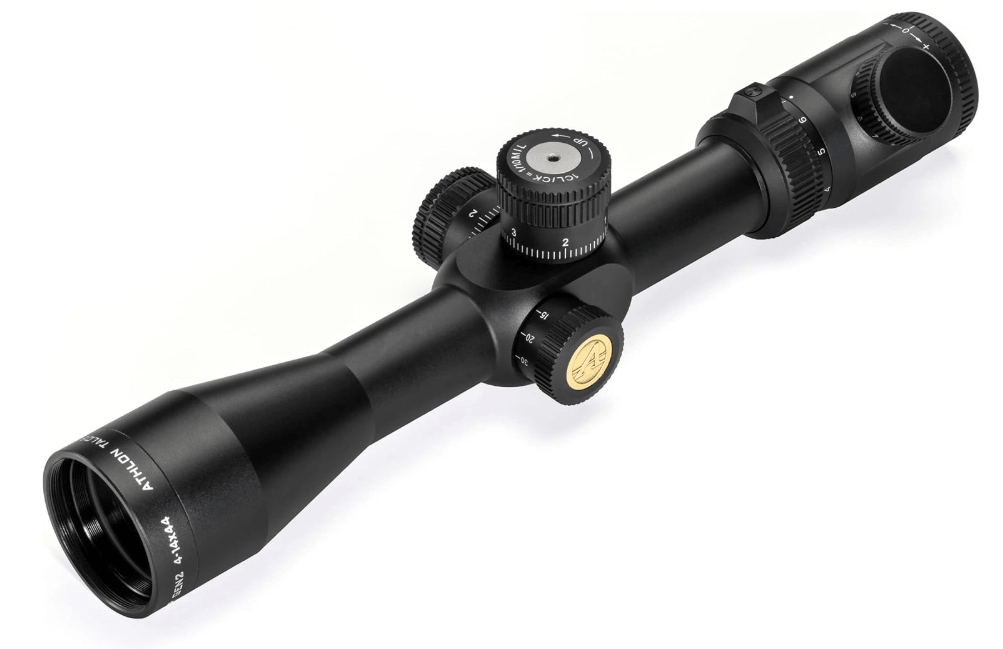
| Athlon Talos BTR Gen2 4-14×44 FFP | Feature-rich precision-oriented use | 25.9 oz | 4–14x | First-focal-plane reticle and side parallax adjustment | 👉 View on Amazon |
Quick Recommendations
Choose the Leupold VX-Freedom 3-9×40 if: You carry your T3x for long hunting days and want a straightforward, lightweight scope.
Choose the Leupold VX-3HD 3.5-10×40 if: You want a premium traditional hunting optic with a convenient elevation-adjustment system.
Choose the Vortex Viper HD 3-15×44 if: You hunt open terrain and want additional magnification, adjustable parallax, and an illuminated reticle.
Choose the Leupold VX-Freedom 4-12×40 if: You prefer a lightweight scope with more magnification for identifying and aiming at distant targets.
Choose the Athlon Talos BTR Gen2 4-14×44 FFP if: You prioritize reticle references that remain consistent across magnification settings and don’t mind a heavier optic.
How These Products Were Chosen
The comparison focuses on the needs of Tikka T3x owners who want a dependable hunting setup rather than simply the highest magnification available. Weight matters because a rifle carried through mountainous or wooded terrain can become tiring when fitted with unnecessarily heavy accessories. Eye relief, field of view, reticle design, and adjustment controls also influence how comfortable and practical a scope is to use.
The selection includes traditional second-focal-plane hunting scopes and more feature-rich optics for open terrain and precision-oriented shooting. Manufacturer specifications provide the basis for the listed weights, magnification ranges, and optical features. Suitability depends on your particular T3x model, chambering, intended hunting conditions, and mounting arrangement.
1. Leupold VX-Freedom 3-9×40 — Best for Lightweight Hunting
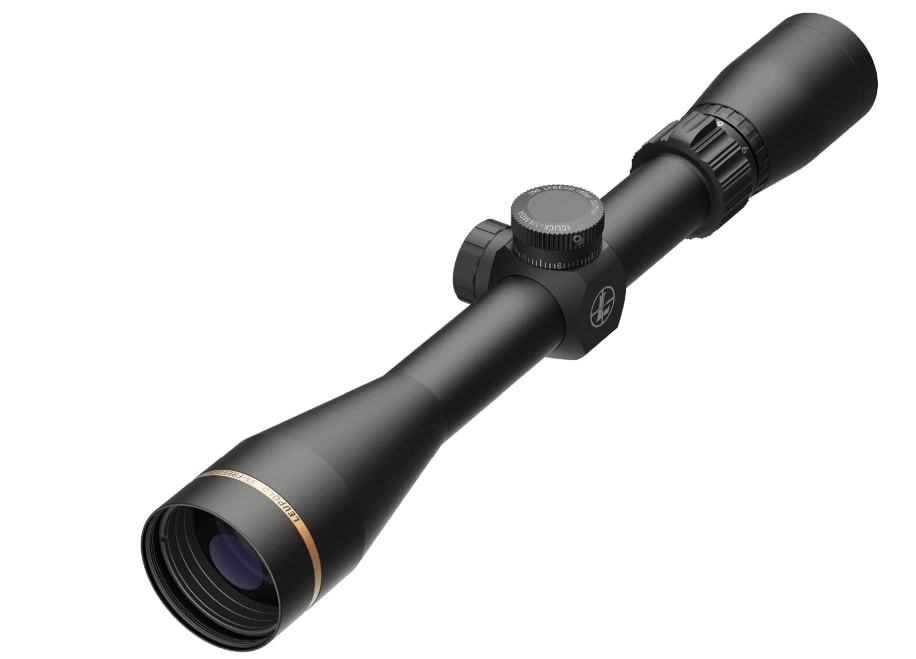
Best for: T3x Lite owners hunting deer and other big game in timber, fields, and mixed terrain.
The Leupold VX-Freedom 3-9×40 is a sensible starting point for hunters who want a traditional scope without unnecessary bulk. Its 3–9x magnification range covers many ordinary hunting situations, while the 40mm objective keeps the overall profile manageable.
Why Choose It
The biggest advantage is weight. At just 12.2 ounces for the standard configuration, it adds relatively little to a rifle that may already be designed around portability. Its conventional reticle and straightforward controls also suit hunters who prefer to establish a reliable zero rather than make frequent turret adjustments.
Leupold lists the Hunt-Plex version with a second-focal-plane reticle, a one-inch main tube, and a fixed parallax-free distance of 150 yards.
Key Features
Magnification: 3–9x
Objective lens: 40mm
Weight: 12.2 oz
Eye relief: 4.2 inches at 3x; 3.7 inches at 9x
Field of view: 33.1–13.6 feet at 100 yards
Reticle: Hunt-Plex, second focal plane
Main tube: 1 inch
Parallax: Fixed at 150 yards
What These Features Mean in Real Use
At 3x, the wider field of view helps you acquire the sight picture in wooded areas. At 9x, you gain additional detail when judging the aiming point across a clearing. For many traditional hunting applications, this range is more useful than a very high-power scope that must be turned down before a close encounter.
The lightweight construction is especially appealing for a T3x Lite. However, optical brightness depends on glass quality, coatings, magnification, and available light, not just objective diameter. A 40mm lens is a practical compromise, but it cannot overcome poor visibility or make an unsafe shot appropriate.
Trade-Offs
The standard configuration does not provide adjustable parallax or an illuminated reticle. Its top-end magnification may also feel limiting if you regularly shoot at longer distances from a stable rest.
May Not Be Ideal If
You need adjustable parallax, illuminated aiming points, or frequent elevation adjustments for precision-oriented shooting.
Pros
Lightweight and compact.
Practical 3–9x magnification.
Simple hunting reticle.
Relatively easy to balance on a lightweight rifle.
Cons
No adjustable parallax in this configuration.
No illuminated reticle.
Limited top-end magnification compared with 4–14x and 3–15x alternatives.
Decision Summary
Best if: You want a straightforward, lightweight hunting scope for your T3x.
Consider another option if: You need additional magnification or more advanced adjustment features.
2. Leupold VX-3HD 3.5-10×40 — Best Premium Traditional Hunting Scope
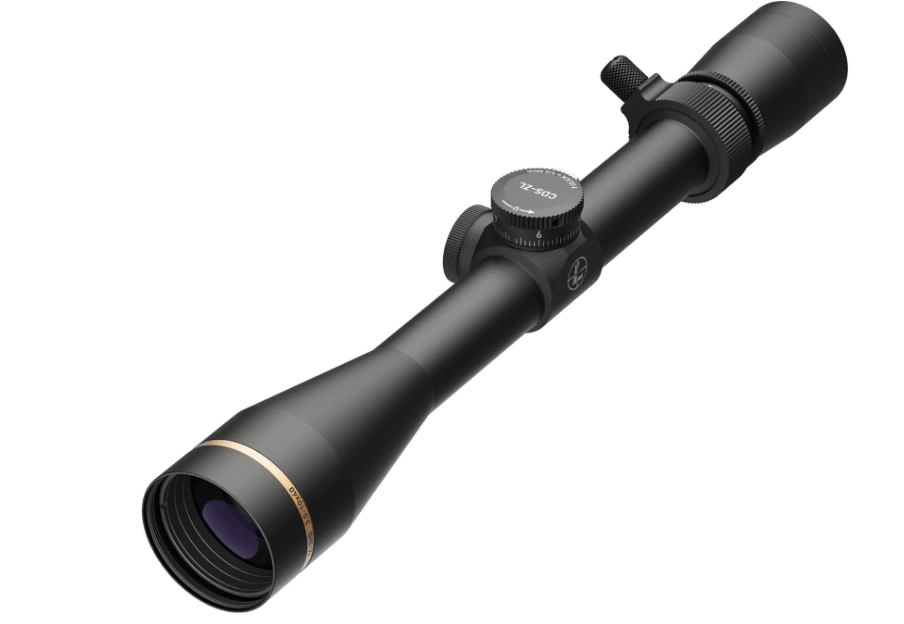
Best for: Hunters who want a relatively lightweight optic with a more feature-rich elevation-adjustment system.
The Leupold VX-3HD 3.5-10×40 offers a modest step up in magnification and a different approach to elevation adjustment. It is particularly appealing to hunters who want to keep their rifle portable without limiting themselves to a basic scope design.
Why Choose It
The standard Duplex configuration weighs 13.1 ounces and uses Leupold’s Custom Dial System ZeroLock (CDS-ZL). The locking elevation dial can be reset, allowing the hunter to configure the scope for a verified ballistic setup.
For hunters comparing conventional scopes, our guide to the best rifle scopes for the Remington 700 also provides a useful comparison of traditional hunting optics and more feature-rich alternatives.
Key Features
Magnification: 3.5–10x
Objective lens: 40mm
Weight: 13.1 oz
Eye relief: 4.4 inches at low magnification; 3.6 inches at high magnification
Field of view: 29–11 feet at 100 yards
Reticle: Duplex, second focal plane
Main tube: 1 inch
Elevation adjustment: CDS-ZL, with 1/4-MOA clicks
Parallax: Fixed at 150 yards
What These Features Mean in Real Use
The 10x upper limit offers a little more detail than a 9x scope, although the difference is not dramatic. The more important distinction is the elevation dial. Hunters who use a verified ballistic setup may appreciate being able to make deliberate elevation corrections rather than relying entirely on a basic aiming reference.
However, a ballistic dial is not automatically accurate for every cartridge or ammunition load. The trajectory depends on the actual ammunition, velocity, sight height, and environmental conditions. Confirm the setup before relying on it.
The scope’s 13.1-ounce weight also makes it a reasonable option for a hunting rifle that must remain portable. Its fixed parallax is suitable for many conventional hunting applications, but it offers less flexibility than the Viper HD or Talos BTR.
Trade-Offs
The VX-3HD costs more than an entry-level hunting scope in many retail lineups, although current prices vary. Its conventional Duplex reticle is easy to understand, but it lacks the extra ranging references found in more complex reticles.
May Not Be Ideal If
You want an illuminated reticle, adjustable parallax, or a first-focal-plane reticle for using holdover references across magnification settings.
Pros
Lightweight for its feature set.
CDS-ZL elevation-adjustment system.
Practical 3.5–10x range.
Conventional reticle with an uncluttered sight picture.
Cons
Fixed parallax.
No illumination in the standard Duplex configuration.
Ballistic dial performance requires verification.
Decision Summary
Best if: You want a lightweight hunting scope with a useful elevation-adjustment system.
Consider another option if: You prefer a simpler, less expensive optic or need adjustable parallax and an illuminated reticle.
3. Vortex Viper HD 3-15×44 — Best for Open-Country Hunting
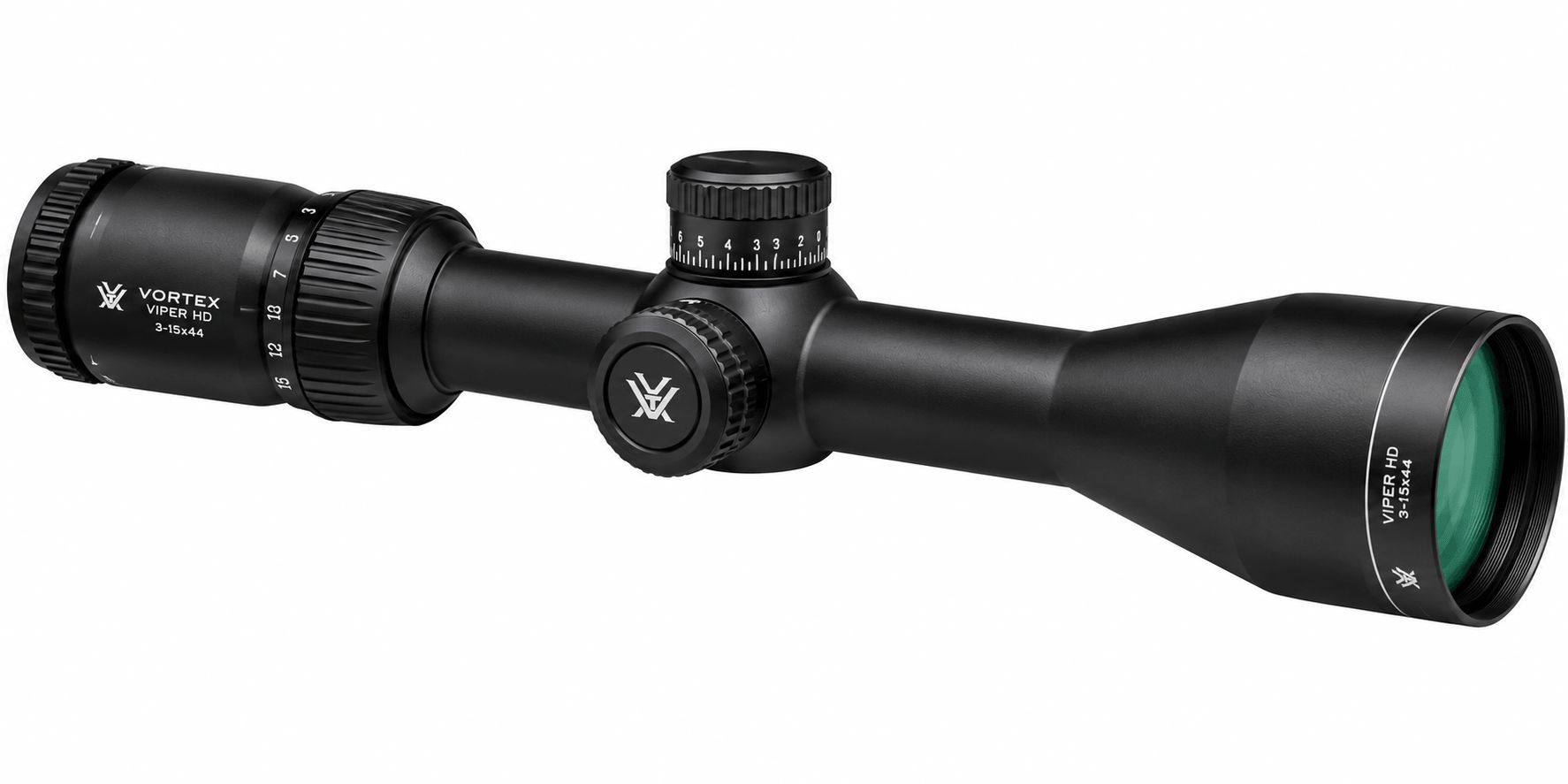
Best for: Hunters who frequently move between moderate distances and open terrain where additional magnification is useful.
The Vortex Viper HD 3-15×44 provides a wider magnification range than either Leupold option above. It is a good candidate for a T3x used in open-country hunting, especially when the shooter values adjustable parallax and an illuminated reticle.
Why Choose It
Vortex lists the specified Dead-Hold BDC MOA configuration with a 30mm tube, a second-focal-plane reticle, capped turrets, and adjustable parallax from 20 yards to infinity. The manufacturer also lists a 21.5-ounce weight.
That extra capability comes at a portability cost. Compared with the 12.2-ounce VX-Freedom, the Viper HD adds 9.3 ounces before rings and other mounting hardware are considered.
Key Features
Magnification: 3–15x
Objective lens: 44mm
Weight: 21.5 oz
Eye relief: 3.4 inches
Field of view: 39.9–8.0 feet at 100 yards
Reticle: Illuminated Dead-Hold BDC MOA, second focal plane
Main tube: 30mm
Turrets: Capped
Parallax: Adjustable from 20 yards to infinity
What These Features Mean in Real Use
At 3x, the Viper HD offers a broad field of view for locating a target. At 15x, it provides more image detail when evaluating an aiming point from a stable position. Nevertheless, maximum magnification is not automatically useful in every hunting situation. Higher power narrows the field of view and makes it harder to maintain a steady sight picture when shooting unsupported.
The adjustable parallax is helpful when the distance to the target varies, particularly in precision-oriented applications. Meanwhile, the illuminated reticle can make the aiming point easier to distinguish against a dark background, although it does not make it safe or legal to shoot when visibility is inadequate.
The 44mm objective also gives this model a larger front profile than the 40mm Leupold scopes. Consequently, check clearance and ring height before purchasing mounting hardware.
Trade-Offs
The Viper HD is substantially heavier than the traditional hunting options. Its additional features are most worthwhile if you actually use the extra magnification, adjustable parallax, and illumination.
May Not Be Ideal If
You prioritize minimum carry weight, mostly hunt thick timber, or rarely need magnification above 9x.
Pros
Versatile 3–15x range.
Adjustable parallax.
Illuminated reticle.
Capped turrets help prevent accidental changes.
Cons
Heavier than the lightweight hunting options.
Narrower field of view at maximum magnification.
Larger objective bell requires careful mounting checks.
Decision Summary
Best if: You hunt open terrain and want additional magnification and optical adjustments.
Consider another option if: Your T3x is a lightweight mountain rifle and portability is your main concern.
4. Leupold VX-Freedom 4-12×40 — Best Lightweight Option for More Magnification
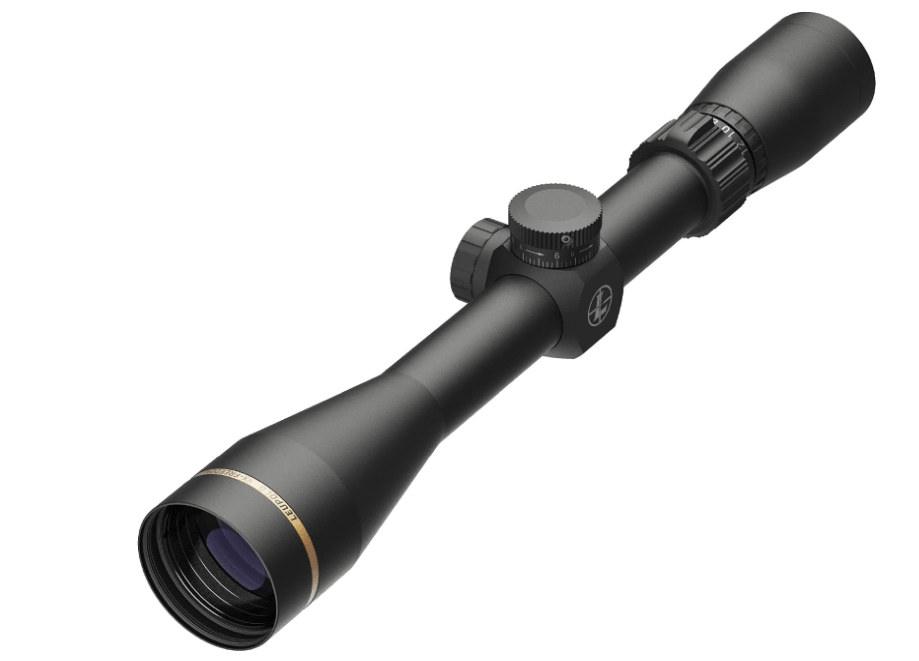
Best for: Hunters who want more magnification than a standard 3–9x scope while keeping the rifle relatively light.
The Leupold VX-Freedom 4-12×40 fills an important gap between basic hunting optics and heavier scopes designed for precision-oriented use. It offers a 12x upper limit without requiring the larger objective lens of some higher-magnification models.
Why Choose It
The Hunt-Plex version weighs 13.1 ounces and uses a second-focal-plane reticle. Its combination of a 40mm objective and a 1-inch main tube keeps the design conventional, making it attractive to hunters who want extra magnification without moving to a much heavier optic.
Key Features
Magnification: 4–12x
Objective lens: 40mm
Weight: 13.1 oz
Eye relief: 4.9 inches at 4x; 3.7 inches at 12x
Field of view: 21.5–10 feet at 100 yards
Reticle: Hunt-Plex, second focal plane
Main tube: 1 inch
Parallax: Fixed at 150 yards
What These Features Mean in Real Use
The 12x upper limit gives you more image detail than a 9x scope when conditions allow a stable shooting position. This can be useful for carefully evaluating an aiming point across open terrain.
However, the 4x minimum is higher than the 3x minimum of the VX-Freedom 3-9×40 and Viper HD. That difference can matter in dense timber, where a broader field of view helps you locate a target quickly. The field of view also narrows as magnification increases, so using the highest setting all the time is not necessarily an advantage.
The standard model has fixed parallax. Therefore, hunters who regularly switch between very different target distances and want fine parallax adjustment may prefer the Viper HD or Talos BTR.
Trade-Offs
This model offers more magnification than the 3–9x version, but it sacrifices some low-power field of view. Its standard configuration also lacks an illuminated reticle and adjustable parallax.
May Not Be Ideal If
You mostly hunt dense cover, want an illuminated aiming point, or regularly use adjustable parallax for precision-oriented shooting.
Pros
Lightweight 13.1-ounce design.
Useful 4–12x magnification range.
Conventional 40mm objective.
Simple second-focal-plane reticle.
Cons
Higher minimum magnification than the 3–9x alternative.
Fixed parallax.
No illuminated reticle in the standard configuration.
Decision Summary
Best if: You want a lightweight scope with additional magnification for mixed terrain.
Consider another option if: You need a wider low-power view or more advanced optical adjustments.
5. Athlon Talos BTR Gen2 4-14×44 FFP — Best Feature-Rich Precision-Oriented Option
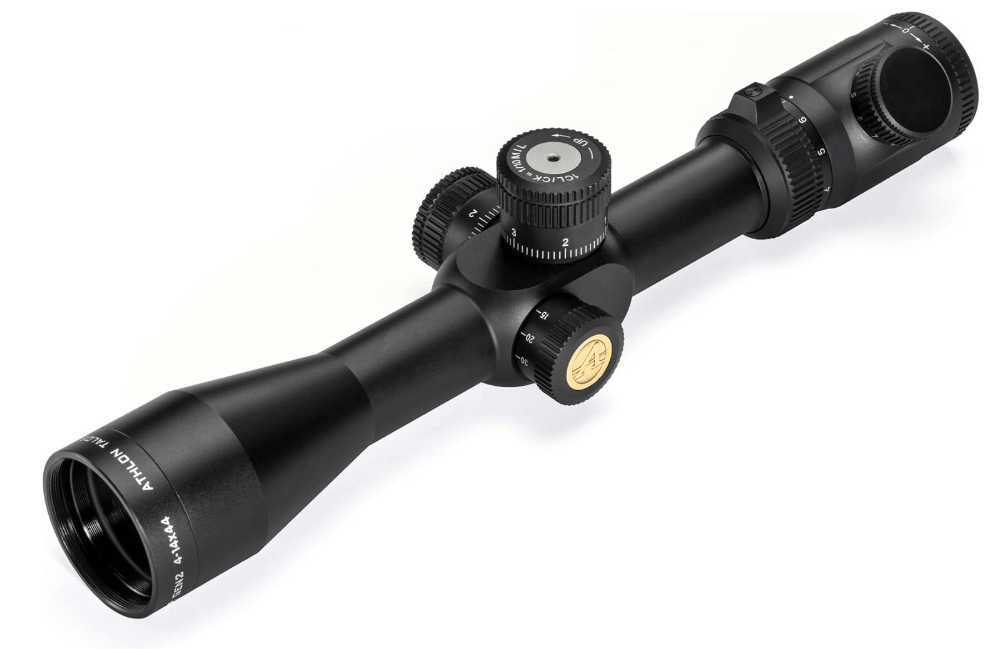
Best for: T3x owners who prioritize a first-focal-plane reticle and adjustable parallax over minimum rifle weight.
The Athlon Talos BTR Gen2 4-14×44 FFP is the most feature-oriented option in this group. It is not the obvious choice for every hunting rifle, but it offers capabilities that can appeal to shooters who want more flexibility for supported shooting and deliberate adjustments.
Why Choose It
Athlon lists this configuration with a first-focal-plane reticle, illuminated aiming references, exposed turrets, and side-focus parallax adjustment. Its specifications also identify a 30mm tube and a weight of 25.9 ounces.
Key Features
Magnification: 4–14x
Objective lens: 44mm
Weight: 25.9 oz
Eye relief: 3.23–3.15 inches
Field of view: 27.2–7.9 feet at 100 yards
Reticle: APLR2 FFP IR MIL configuration
Main tube: 30mm
Turrets: Exposed
Parallax: Side focus, starting at 10 yards
What These Features Mean in Real Use
The first-focal-plane design changes the apparent size of the reticle as you adjust magnification. When the reticle is designed with suitable subtensions, its ranging and holdover references remain consistent across the magnification range. This can be useful for shooters who want to understand their aiming references without depending on a single magnification setting.
Side-focus parallax adjustment offers additional control over the sight picture at different distances. Illumination can also help distinguish the reticle against a dark target background, although the brightness setting should remain appropriate to the available light.
There is a significant trade-off, however: at 25.9 ounces, this is the heaviest scope in the comparison. Its exposed turrets and more detailed reticle also add complexity that many traditional hunters do not need.
Eye relief deserves particular attention. At approximately 3.15–3.23 inches, it is shorter than the listed eye relief of the two Leupold VX-Freedom hunting configurations. Confirm a comfortable, safe eye position with your exact rifle and chambering before using the setup.
Trade-Offs
The Talos BTR offers greater adjustment flexibility, but its weight makes it less attractive for long backcountry hikes. Its more complex reticle and exposed turrets may also be unnecessary for a hunter who prefers a simple, established zero.
May Not Be Ideal If
You want a lightweight T3x hunting setup, prefer capped turrets, or need generous eye relief as a priority.
Pros
First-focal-plane reticle.
4–14x magnification.
Side-focus parallax adjustment.
Illuminated reticle and exposed turrets.
Cons
Heaviest scope in this comparison.
Shorter listed eye relief than the Leupold hunting options.
More complex controls than many conventional hunting situations require.
Decision Summary
Best if: You prioritize a first-focal-plane reticle and flexible adjustments for precision-oriented use.
Consider another option if: You want the lightest possible hunting rifle or prefer a straightforward Duplex reticle.
Factors to Consider When Choosing the Best Scope for a Tikka T3x Hunting Rifle
1. Magnification Range
Start with the terrain and the way you hunt rather than choosing the highest magnification available.
A 3–9x scope is a practical option for many conventional hunting situations because it offers a broad view at low power and more detail at higher power. A 4–12x or 3–15x scope can be useful when you spend more time in open country or shoot from a supported position.
Remember that extra magnification narrows the field of view and can make movement more noticeable. It does not automatically improve your results when the shooting position is unstable or visibility is poor.
2. Weight and Rifle Balance
The T3x Lite is particularly sensitive to unnecessary weight because its appeal includes portability. A scope weighing 12–13 ounces keeps the optic’s contribution relatively small, whereas a scope approaching 26 ounces makes a more noticeable difference to the finished rifle.
Consider the weight of the scope, rings, bases, and other accessories together. A setup that feels manageable at a bench may become tiring after several hours of walking.
3. Eye Relief and Shooting Comfort
Eye relief is the distance between your eye and the scope’s ocular lens at which you can see the complete image. Adequate clearance is important for maintaining a comfortable shooting position and preventing contact between the scope and your brow during recoil.
This matters especially when selecting optics for different T3x chamberings. Check the exact scope configuration and test the fit from the shooting positions you expect to use. Also account for thick hunting clothing, glasses, and the position of the rifle’s stock.
4. Objective Size and Low-Light Performance
A larger objective lens can help deliver a larger exit pupil at a given magnification, but it does not guarantee a brighter image. Glass quality, lens coatings, magnification, and available ambient light all matter.
For example, a 40mm objective at 5x produces an 8mm exit pupil, while a 44mm objective at 10x produces a 4.4mm exit pupil. These figures illustrate why lowering magnification can improve the usable image in dim conditions. Neither configuration can compensate for insufficient legal hunting light.
5. Reticle and Turret Design
A simple Duplex or Hunt-Plex reticle suits hunters who prefer a clean sight picture and a confirmed zero. A BDC reticle offers additional aiming references, while a first-focal-plane reticle can maintain consistent subtensions across magnification settings.
Exposed turrets are useful when frequent adjustments are part of your shooting method. Capped turrets are often more convenient for hunters who want to reduce accidental changes while carrying the rifle.
Any ballistic reference or custom dial should be verified against the exact ammunition and setup. Do not assume a reticle’s printed distance markings will match every load.
6. Tube Diameter, Mounting, and Clearance
A scope’s main-tube diameter must match the rings or mounting system you select. A one-inch scope and a 30mm scope require appropriately sized rings; they are not interchangeable without the correct mounting hardware.
Objective-bell clearance, bolt-handle clearance, eye position, and cheek weld also matter. The best scope on paper may be uncomfortable if mounted too high or too far forward. Check compatibility with your specific T3x model and have the mounting arrangement inspected by a qualified gunsmith when necessary.
7. Match the Optic to Your Cartridge and Hunting Style
Tikka T3x rifles come in different chamberings, and the scope should suit the intended application rather than the rifle’s name alone. A lightweight optic with a straightforward reticle may be preferable for a rifle carried all day, while a precision-oriented setup may benefit from adjustable parallax and more detailed aiming references.
For instance, hunters comparing different chambering-specific setups can use the guide to scopes for .300 Winchester Magnum rifles to explore how intended use and cartridge characteristics affect optic selection. The most important point is to verify the exact rifle, scope, ammunition, and mounting arrangement rather than assuming a single configuration works equally well for every T3x.
Frequently Asked Questions
1. What magnification is best for a Tikka T3x hunting rifle?
A 3–9x scope is a versatile choice for many hunting situations. However, a 4–12x or 3–15x model may suit open terrain better when additional magnification is useful. Choose according to your typical hunting environment and shooting position.
2. Is a 40mm or 44mm objective better for the Tikka T3x?
Neither is automatically better. A 40mm objective generally supports a more compact setup, while a 44mm objective can provide a larger exit pupil at the same magnification. Optical quality, coatings, and the magnification setting also influence low-light performance.
3. Should I choose a first-focal-plane or second-focal-plane scope?
A second-focal-plane scope is often a practical choice for conventional hunting with a simple reticle. A first-focal-plane scope is useful when you want reticle subtensions to remain consistent across magnification settings. Your shooting method and preferred reticle should determine which design makes more sense.
Conclusion
The best scopes for Tikka T3x hunting rifle setups depend on the balance you want between portability, magnification, and adjustment features. The Leupold VX-Freedom 3-9×40 is a strong starting point for hunters who prioritize low weight and simplicity, while the VX-3HD 3.5-10×40 adds a convenient elevation-adjustment system. For open terrain, the Vortex Viper HD 3-15×44 offers more magnification and adjustable parallax, whereas the VX-Freedom 4-12×40 provides extra magnification in a lighter package.
The Athlon Talos BTR Gen2 4-14×44 FFP is better suited to shooters who value a first-focal-plane reticle and additional adjustments over minimum weight. Before purchasing, verify eye relief, mounting compatibility, and the exact configuration. The right choice is the scope that complements your T3x and your hunting conditions without adding features or weight you don’t need.