
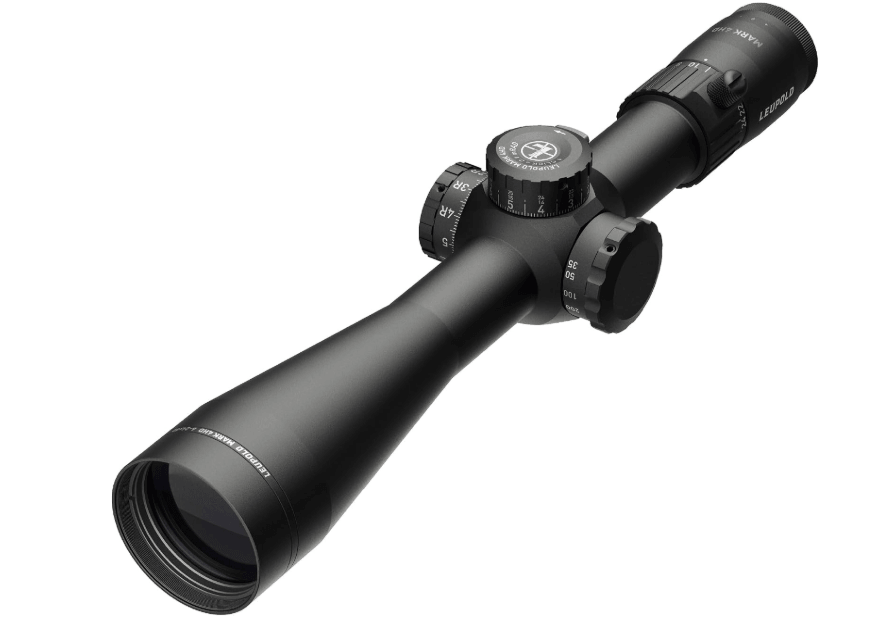
The Bergara B-14 HMR combines a precision-oriented action, a heavy-contour barrel, and an adjustable stock, making it a strong platform for recreational target shooting and precision rifle competition. However, getting the most from this rifle requires a scope that matches your shooting discipline, budget, and preferred magnification range.
The 5 best scopes for the Bergara B-14 HMR target rifle should offer more than high magnification. Reliable elevation adjustments, a useful reticle, adjustable parallax, comfortable eye relief, and sufficient adjustment travel all matter when shooting paper targets or steel at distance. Weight also deserves attention because a scope that works well on a dedicated range rifle may feel cumbersome if you carry your HMR into the field.
This guide compares five precision-oriented riflescopes: the Vortex Venom, Bushnell Match Pro ED, Athlon Ares ETR Gen2 UHD, Arken EP-5, and Leupold Mark 4HD. Each serves a different buying priority, from practical long-range features to more advanced optical systems and a lighter overall scope package.
Quick Decision Table
| Product | Best For | Weight | Magnification | Key Advantage | Check Price |
| Vortex Venom 5-25×56 FFP | All-around precision target shooting | 35 oz | 5–25× | RevStop zero system | 👉 View on Amazon |
| Bushnell Match Pro ED 5-30×56 | Dedicated range and competition use | 32 oz | 5–30× | ED glass and 15-yard parallax | 👉 View on Amazon |
| Athlon Ares ETR Gen2 UHD 4.5-30×56 | Feature-rich precision shooting | 36.8 oz | 4.5–30× | UHD glass and locking turrets | 👉 View on Amazon |
| Arken EP-5 5-25×56 FFP | Shooters seeking a feature-rich FFP design | 39.2 oz | 5–25× | VPR reticle and zero stop | 👉 View on Amazon |
| Leupold Mark 4HD 6-24×52 FFP | A lighter precision-oriented setup | 27.5 oz | 6–24× | Lower weight and 25-yard parallax | 👉 View on Amazon |
Quick Recommendations
Choose the Vortex Venom if you want a dedicated long-range scope with a first focal plane reticle, generous eye relief, and a zero-stop system.
Choose the Bushnell Match Pro ED if you spend most of your time on the range and value a 30× maximum magnification and close-range parallax adjustment.
Choose the Athlon Ares ETR Gen2 UHD if you want a wide magnification range, premium-oriented glass features, and locking adjustment turrets.
Choose the Arken EP-5 if you prefer a 5–25× precision optic with an FFP reticle and a detailed aiming grid.
Choose the Leupold Mark 4HD if minimizing scope weight matters while retaining precision-oriented adjustments and useful high magnification.
How These Products Were Chosen
The comparison focuses on precision target shooters and Bergara B-14 HMR owners who need an optic for repeatable shooting at the range, paper-group evaluation, or organized long-range target disciplines.
The main considerations are magnification, focal-plane design, parallax adjustment, reticle usability, elevation and windage controls, eye relief, weight, and optical features. These affect how easily a shooter can maintain a consistent sight picture and evaluate small targets.
The models also represent different priorities. The Bushnell emphasizes close-range parallax adjustment and a competition-oriented feature set, while the Leupold offers a substantial weight advantage. The other three provide different combinations of magnification, reticle design, and adjustment features.
1. Vortex Venom 5-25×56 FFP
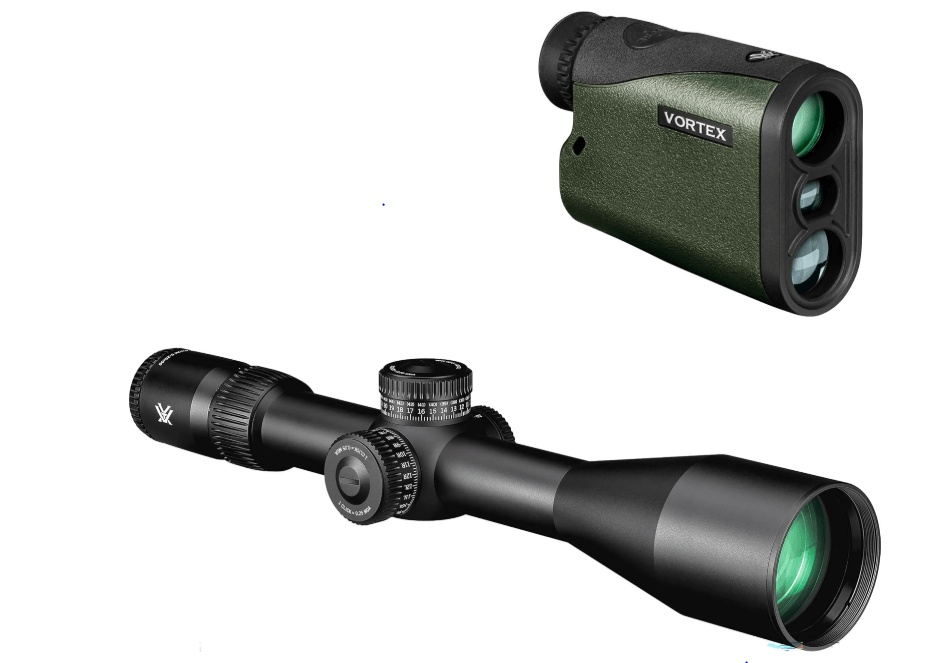
Best for all-around precision target shooting
The Vortex Venom 5-25×56 FFP is a practical starting point for B-14 HMR owners who want a dedicated precision optic rather than a conventional hunting scope. Its magnification range covers general range work and more demanding target sessions, while the first focal plane reticle supports consistent use of its graduated aiming references at different magnifications.
Why Choose It
The Venom combines a 34mm main tube with a RevStop zero system, which helps the shooter return to a configured zero after making elevation adjustments. This is useful for range sessions that involve changing target distances and returning to a familiar baseline.
Its 5× minimum magnification also offers more flexibility than a scope with a very high starting power. You can use the lower end for a broader view, then increase magnification when examining smaller targets.
Key Features
Magnification: 5–25×
Objective lens: 56mm
Focal plane: First focal plane
Main tube: 34mm
Weight: 35 oz
Eye relief: 4.0–3.7 inches
Adjustment options: MOA or MRAD configurations
Construction: IPX7 waterproof and nitrogen-purged fogproof design
What These Features Mean in Real Use
The FFP reticle grows and shrinks with the target image. Its measurement references therefore remain consistent at different zoom settings, provided the correct reticle configuration is selected. That is helpful when a shooter prefers to use the reticle’s graduated references rather than relying exclusively on turret adjustments.
The 56mm objective can help maintain a useful exit pupil at higher magnifications, although actual image quality also depends on glass, coatings, lighting, and atmospheric conditions. The large front lens may require taller rings, so check clearance before buying a mounting system.
Trade-Offs
At 35 ounces, the Venom adds meaningful weight to the rifle. Its maximum 25× magnification is also lower than the Bushnell and Athlon’s 30× maximum.
May Not Be Ideal If
You want the highest magnification available among these five models, or you are trying to keep a rifle as light as possible.
Pros
FFP reticle
RevStop zero system
34mm tube
Useful 5–25× range
Cons
Relatively heavy
25× maximum magnification
Large objective requires mounting-clearance checks
Best if: You want a versatile long-range optic for regular target-range use.
Consider another option if: Weight is a priority or you specifically want 30× magnification.
2. Bushnell Match Pro ED 5-30×56
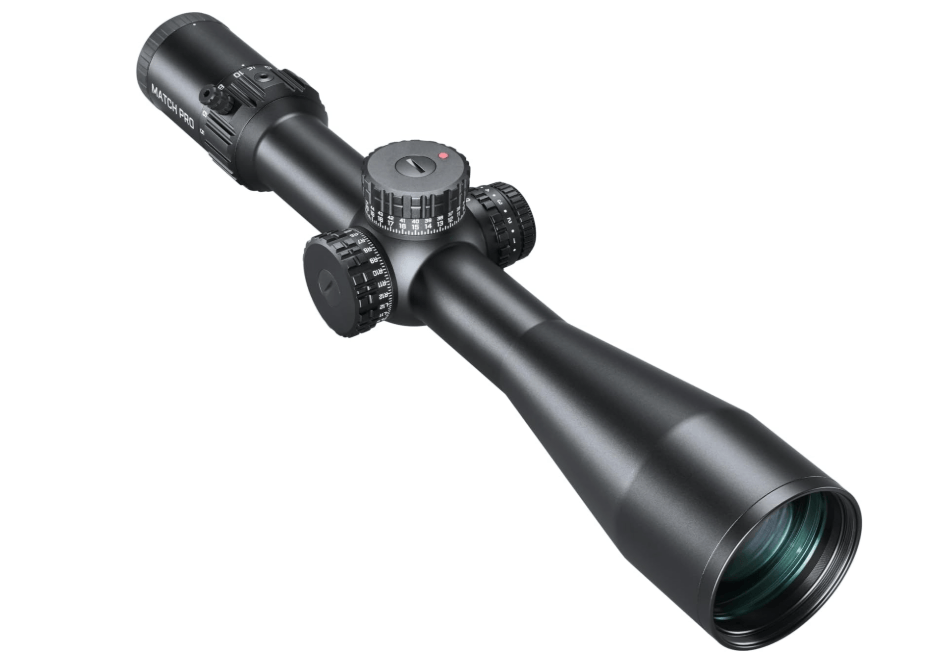
Best for dedicated target shooting
The Bushnell Match Pro ED 5-30×56 is particularly well matched to shooters who primarily use their B-14 HMR on a range. Bushnell lists ED Prime glass, a first focal plane reticle, exposed locking turrets, and side-focus parallax adjustment that starts at 15 yards.
Why Choose It
The 5–30× magnification range gives you a broad choice of settings for different target sizes and distances. Its 15-yard minimum parallax setting is also useful for shooters who switch between close-range practice and longer-distance targets.
The scope’s 34mm tube, zero stop, and revolution indicator support repeated elevation adjustments. These features can make range sessions more convenient when you move between different distances and need to return to a known zero.
If you are also comparing optics for smaller-caliber practice rifles, our guide to the best .22 rifle scopes for target shooting explains why parallax control, reticle design, and magnification should be matched to target size and distance.
Key Features
Magnification: 5–30×
Objective lens: 56mm
Focal plane: First focal plane
Main tube: 34mm
Weight: 32 oz
Eye relief: 3.8 inches
Parallax adjustment: From 15 yards
Elevation adjustment: 29 MRAD on the cited DM2 MRAD configuration
Reticle: Illuminated DM2 MRAD grid
What These Features Mean in Real Use
The 30× maximum magnification can make small aiming marks easier to inspect, but it does not automatically improve results. At high power, atmospheric mirage can become more obvious, and the narrower field of view makes it harder to locate targets quickly.
ED glass is designed to reduce chromatic aberration, which can appear as colored fringes around high-contrast edges. That can help preserve target detail, though it does not eliminate the effects of poor visibility or mirage.
Trade-Offs
At 32 ounces, the Match Pro ED is lighter than the Vortex Venom and Athlon Ares ETR listed here, but it remains a substantial optic. Its feature set is particularly useful for range-oriented shooting, where close-range parallax adjustment and repeatable turret use matter more than compactness.
May Not Be Ideal If
You want a lightweight hunting optic or have little need for a detailed reticle and exposed adjustments.
Pros
5–30× magnification
ED Prime glass
15-yard minimum parallax setting
Zero stop and revolution indicator
Cons
32-ounce scope weight
Large 56mm objective
Competition-oriented controls may be unnecessary for casual use
Best if: Your HMR is primarily a range rifle and you want a versatile precision-oriented feature set.
Consider another option if: You value a lighter rifle or prefer a simpler hunting-style scope.
3. Athlon Ares ETR Gen2 UHD 4.5-30×56
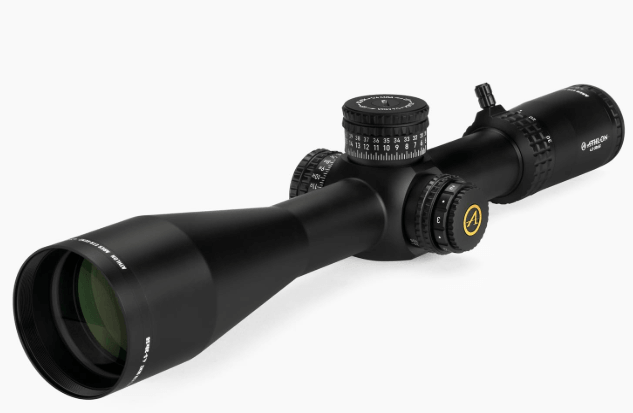
Best for feature-rich precision shooting
The Athlon Ares ETR Gen2 UHD 4.5-30×56 is worth considering if you want a broad magnification range and a feature set aimed at demanding long-range use. The manufacturer lists UHD glass, a 34mm tube, locking turrets, a precision zero-stop system, and a first focal plane illuminated reticle.
Why Choose It
The Ares ETR offers a 4.5× low end and 30× maximum magnification. That range gives you flexibility when switching between different target sizes or shooting distances.
Its UHD optical system is designed to reduce chromatic fringes and improve image definition. For a shooter examining small paper aiming marks, visible detail can matter more than simply having a higher maximum magnification.
The locking turrets are another practical advantage. They help prevent unintended changes to the adjustment settings when handling or transporting the rifle.
Key Features
Magnification: 4.5–30×
Objective lens: 56mm
Focal plane: First focal plane
Main tube: 34mm
Weight: 36.8 oz
Eye relief: 3.9 inches
Parallax adjustment: From 25 yards
Reticle: Illuminated APRS12 FFP IR MIL or another listed configuration, depending on model
What These Features Mean in Real Use
The 4.5× starting magnification offers a slightly wider viewing window than the 5× starting points of the Vortex, Bushnell, and Arken. That can make it easier to locate a target before increasing magnification.
At the upper end, 30× provides considerable detail for inspecting small aiming marks. However, high magnification also makes mirage and minor movement more apparent, so the highest setting will not always produce the most useful sight picture.
The 36.8-ounce weight is a consideration. On a dedicated range rifle, the extra mass may be acceptable. If you regularly carry the rifle over long distances, the lighter Leupold may be more appealing.
Trade-Offs
The Ares ETR has a wide magnification range and advanced optical features, but it weighs more than the Vortex Venom, Bushnell Match Pro ED, and Leupold Mark 4HD.
It is also important to verify the precise reticle and adjustment configuration before ordering. Athlon offers different reticle variants, and their adjustment systems should not be treated as interchangeable.
May Not Be Ideal If
You prioritize minimum weight, rarely shoot at higher magnifications, or would rather avoid paying for features you will not use.
Pros
4.5–30× magnification
UHD glass
FFP illuminated reticle
Locking turrets and zero stop
Cons
Relatively heavy at 36.8 oz
Large objective may require higher mounting clearance
Reticle and adjustment variants need careful checking
Best if: You want a feature-rich optic for dedicated precision target shooting.
Consider another option if: You want a lighter scope or do not need the additional magnification range.
4. Arken EP-5 5-25×56 FFP
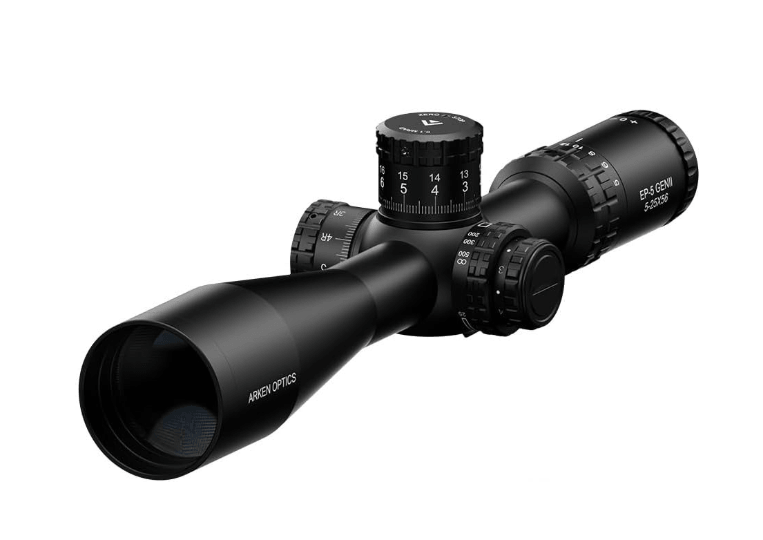
Best for a detailed reticle and precision adjustments
The Arken EP-5 5-25×56 FFP offers a 5–25× magnification range, an illuminated first focal plane reticle, and a 34mm tube. The manufacturer lists the VPR-MIL and VPR-MOA reticle variants, along with a zero-stop system and side-focus parallax adjustment.
Why Choose It
The EP-5 is an option for shooters who prefer a graduated reticle and want to make use of either MIL or MOA measurements. Choosing one measurement system and using it consistently across the scope, range observations, and other relevant equipment can simplify the process of interpreting adjustments.
Its zero-stop feature is useful when you frequently adjust elevation during range sessions. Rather than relying entirely on remembering the number of turns made, you can return to the configured reference point.
Key Features
Magnification: 5–25×
Objective lens: 56mm
Focal plane: First focal plane
Main tube: 34mm
Weight: 39.2 oz
Eye relief: 3.4 inches
Field of view: 25.3–4.9 feet at 100 yards
Parallax adjustment: 25 yards to infinity
Reticle: Illuminated VPR-MIL or VPR-MOA, depending on configuration
Adjustment: 0.1 MIL or 0.25 MOA, depending on configuration
What These Features Mean in Real Use
The FFP design keeps the reticle’s subtensions consistent relative to the target across the magnification range. That can be helpful when you change zoom settings but still want to use the reticle’s graduated references.
The 3.4-inch eye relief is worth checking against your preferred head position. Although the B-14 HMR is a precision-oriented rifle, a comfortable and repeatable cheek position remains important when establishing a consistent sight picture.
At 39.2 ounces, the EP-5 is the heaviest option in this comparison. That may be acceptable for a rifle used mainly from a bench or supported position, but it is a meaningful drawback if portability matters.
Trade-Offs
The Arken provides useful precision features, but its weight is a clear disadvantage compared with the Leupold and Bushnell. Its 25× maximum magnification also falls short of the 30× available from Bushnell and Athlon.
May Not Be Ideal If
You want the lightest possible rifle setup or need maximum magnification above 25×.
Pros
FFP reticle
Illuminated VPR reticle options
Zero-stop system
Side-focus parallax adjustment
Cons
Heaviest scope in this comparison
Shorter listed eye relief than the other models
Reticle and adjustment configuration must be verified
Best if: You value an FFP reticle with a detailed aiming grid and zero-stop functionality.
Consider another option if: You want a lighter optic or prioritize a 30× maximum magnification.
5. Leupold Mark 4HD 6-24×52 FFP
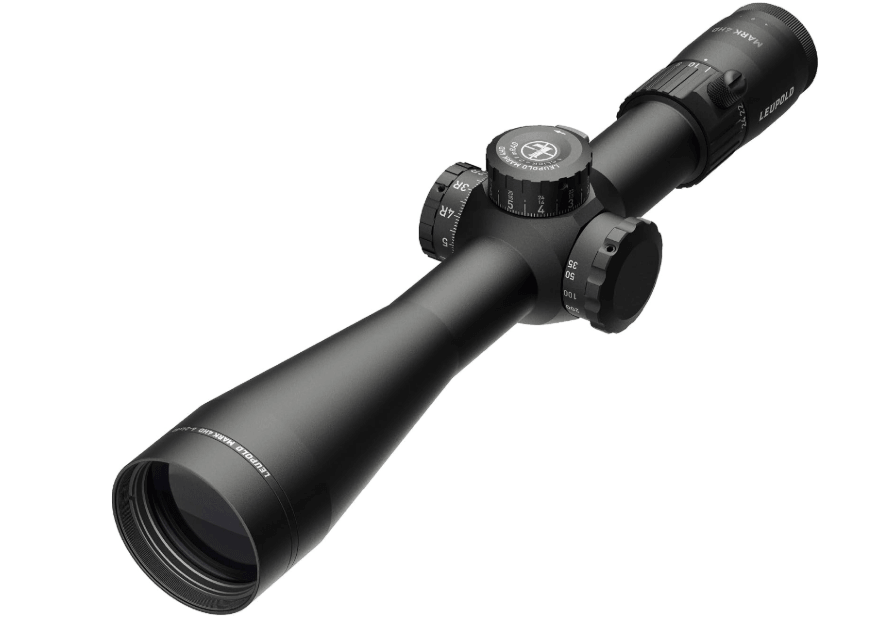
Best for a lighter precision-oriented setup
The Leupold Mark 4HD 6-24×52 FFP stands out because it weighs 27.5 ounces, substantially less than the other four scopes listed here. The cited PR3-MIL configuration has a 34mm tube, a first focal plane reticle, precision side focus, and a 25-yard minimum parallax-free distance.
Why Choose It
The Mark 4HD is worth considering when you want precision-oriented features without adding as much weight as a larger competition-style optic. Its 6–24× magnification range is still suitable for many target-shooting applications, particularly when the rifle is used at established ranges rather than exclusively for extreme-distance shooting.
Leupold’s listed eye relief ranges from 3.8 to 4 inches. That provides some flexibility when establishing a comfortable shooting position.
Key Features
Magnification: 6–24×
Objective lens: 52mm
Focal plane: First focal plane
Main tube: 34mm
Weight: 27.5 oz
Eye relief: 3.8–4 inches
Parallax adjustment: From 25 yards
Elevation adjustment: 0.1 MIL per click on the cited PR3-MIL configuration
Elevation range: 36 MIL listed total adjustment range
What These Features Mean in Real Use
The lower weight is the clearest advantage. Compared with the 39.2-ounce Arken, the Mark 4HD saves 11.7 ounces before considering mounting hardware. That can make a noticeable difference when balancing the complete rifle.
The 52mm objective is smaller than the 56mm lenses on the other four models. This may allow more flexibility with mounting clearance, although the required ring height still depends on the actual dimensions of the scope, rifle, and mounting system.
The 6× minimum magnification is slightly higher than the starting point of the other scopes. For a rifle used exclusively for precision target work, this may be a reasonable compromise. However, it offers a narrower field of view at the low end than a comparable scope with a 4.5× or 5× starting point.
Trade-Offs
The Mark 4HD sacrifices some maximum magnification compared with the 30× alternatives. Its lower weight and 52mm objective may be advantageous, but neither guarantees better optical performance; the complete optical system matters.
The PR3-MIL configuration should also be distinguished from other Mark 4HD 6–24×52 variants, including models with different reticles or illumination.
May Not Be Ideal If
You want the highest available magnification or prefer a lower starting magnification for greater flexibility at shorter distances.
Pros
Lowest scope weight in this comparison
FFP reticle
34mm tube
25-yard parallax adjustment
Generous listed eye relief
Cons
Maximum magnification is 24×
Minimum magnification is 6×
Configuration-specific features need verification
Best if: You want a lighter precision-oriented optic for a B-14 HMR that may also be carried in the field.
Consider another option if: Your main priority is 30× magnification or a wider low-power viewing window.
Factors to Consider When Choosing the Best Scope for a Bergara B-14 HMR
1. Magnification Range
For precision target shooting, a variable scope in the 4.5–30×, 5–25×, or 6–24× class provides useful flexibility. The best range depends on target size, distance, atmospheric conditions, and personal preference.
Lower magnification makes it easier to locate a target and offers a wider field of view. Higher magnification helps you see smaller aiming marks, but it can also exaggerate mirage and make small movements more obvious.
If your primary interest is very long-range target shooting, our guide to the best rifle scopes for 1,000 yards discusses how magnification, elevation adjustment, reticle design, and optical clarity affect the selection.
2. First Focal Plane vs. Second Focal Plane
A first focal plane (FFP) reticle changes apparent size with the target image as you adjust magnification. Its measurement references remain consistent across the zoom range.
A second focal plane (SFP) reticle appears approximately the same size as magnification changes. Its subtensions are generally accurate at a designated magnification, as specified by the manufacturer.
For precision-oriented target shooting, FFP is a useful choice if you intend to use the reticle’s graduated references at different magnifications. However, a simpler reticle may be sufficient if you rarely use holdover references.
3. Parallax Adjustment
Parallax occurs when the reticle appears to shift relative to the target as your eye moves behind the scope. This can interfere with consistent aiming, particularly when shooting small targets.
Side-focus parallax adjustment lets you tune the scope for the target distance. The Bushnell Match Pro ED starts at 15 yards, while the Leupold Mark 4HD and Athlon Ares ETR configurations discussed above start at 25 yards. The Arken EP-5 also lists a 25-yard minimum.
Choose a parallax range that suits the distances at which you practice. An adjustable system is especially useful when switching between different target distances.
4. Turrets and Adjustment Precision
Turrets control elevation and windage adjustments. On a scope used for precision target shooting, clear markings, consistent adjustments, and a reliable return to zero can make range sessions easier to manage.
MOA and MRAD are two different angular measurement systems. Neither is inherently better for every shooter, but your scope’s adjustment units should match the measurement system you use elsewhere.
A zero stop provides a reference point that helps you return to your established zero after making adjustments. It is particularly convenient when you regularly change elevation settings.
5. Objective Size and Optical Quality
A 52mm or 56mm objective is common among these precision scopes. A larger objective can provide a larger exit pupil at a given magnification, but brightness and resolution also depend on optical design, lens coatings, and viewing conditions.
For example, a 56mm objective at 25× produces an exit pupil of approximately 2.24mm, while a 52mm objective at 24× produces about 2.17mm. These calculations describe the geometry of the optical system; they do not establish which scope has the better image.
Look for a scope that maintains useful contrast and target definition at the magnification you commonly use, rather than choosing by objective diameter alone.
6. Weight and Rifle Balance
The five scopes range from 27.5 ounces for the Leupold to 39.2 ounces for the Arken. That difference is substantial enough to consider when planning your complete rifle setup.
A heavier optic may be perfectly acceptable on a rifle that stays at the range. However, it can make a rifle more cumbersome when carried through the field. The scope, rings, mounting hardware, and any accessories all contribute to the final weight.
7. Eye Relief and Mounting Compatibility
Eye relief determines how far your eye should sit behind the ocular lens to obtain a full sight picture. Consistent eye alignment helps make the shooting position comfortable and repeatable.
Before purchasing, check the scope’s main tube diameter, objective clearance, mounting space, and compatibility with your rifle’s rail and chosen rings. A 34mm tube requires appropriately sized rings, and a large objective may require more clearance than a smaller one.
Also confirm the exact B-14 HMR variant and its existing mounting arrangement rather than assuming every rifle configuration is identical.
8. Budget and Intended Use
Spend on features you will actually use. A dedicated target shooter may benefit from an FFP reticle, reliable turrets, adjustable parallax, and higher magnification. A recreational shooter may prefer a simpler setup that meets their needs without unnecessary complexity.
Our guide to long-range scopes under $700 offers additional context for comparing magnification, reticle features, and adjustment systems within a defined budget. Check current prices and exact configurations before treating any model as a budget fit.
Frequently Asked Questions
1. What magnification is best for the Bergara B-14 HMR target rifle?
A 5–25× or 5–30× scope is a useful starting point for many precision target applications. The best choice depends on target size, distance, and shooting conditions. A 6–24× scope can also work well when you prioritize a lighter optic.
2. Is a first focal plane scope better for the Bergara B-14 HMR?
An FFP scope is useful if you want to use graduated reticle references at different magnifications. However, it is not essential for every shooter. If you primarily aim using the center of the reticle and make adjustments through the turrets, your preferred reticle design and optical quality may matter more than focal-plane type alone.
3. Does the Bergara B-14 HMR need a 34mm scope tube?
No. A 34mm tube is a feature of the five models compared here, not a requirement of the rifle. What matters is selecting a compatible mounting system for the scope you purchase. Confirm the tube diameter, ring compatibility, objective clearance, and mounting arrangement before ordering.
Conclusion
The best scope for the Bergara B-14 HMR depends on how you intend to use the rifle and which features matter most to you. The Vortex Venom offers a versatile 5–25× range, while the Bushnell Match Pro ED provides 30× magnification and close-range parallax adjustment. The Athlon Ares ETR adds a wide magnification range and UHD glass features, and the Arken EP-5 offers a detailed FFP reticle with a zero-stop system. Meanwhile, the Leupold Mark 4HD is the lightest option in this comparison.
For a rifle used primarily for precision target shooting, prioritize a clear sight picture, suitable magnification, adjustable parallax, and reliable adjustments. If you also carry the rifle into the field, give weight and mounting compatibility greater consideration. Comparing these factors against your actual shooting needs will help you choose an optic that complements the B-14 HMR without paying for features you do not need.