
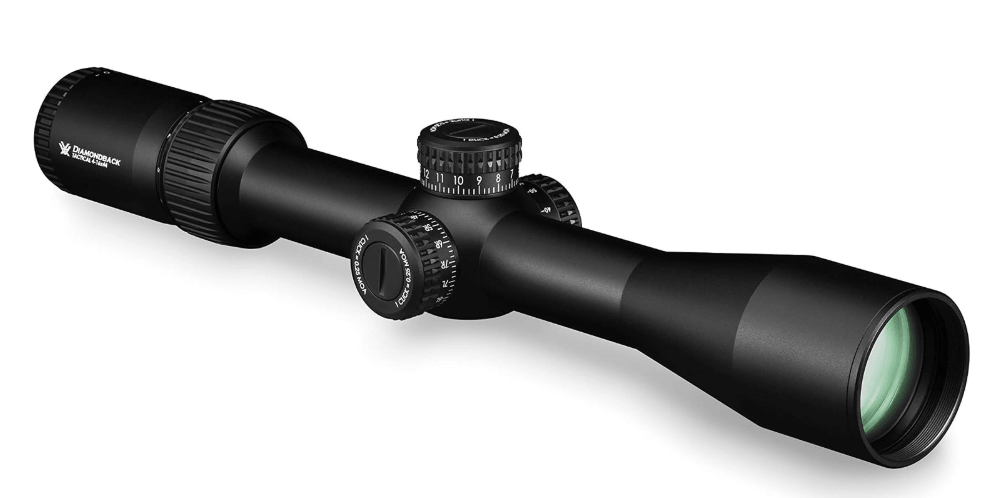
The key to choosing a scope for a Christensen Arms Ridge rifle is balancing long-range capability with the lightweight handling that makes this hunting rifle appealing. A heavy precision optic may offer excellent adjustment controls, but it can add unnecessary weight to a rifle carried across mountains, open country, or thick timber.
This guide compares five riflescopes for hunters and recreational precision shooters who want dependable optics for their Christensen Arms Ridge. The recommendations focus on practical magnification, optical clarity, weight, reticle design, and adjustment features. The goal is to help you choose a scope that suits your rifle’s chambering, hunting environment, expected distances, and budget rather than simply buying the highest magnification available.
Quick Decision Table
| Product | Best For | Weight | Magnification | Key Advantage | Check Price |
|---|---|---|---|---|---|
| Leupold VX-5HD Gen 2 3-15×44 | All-around hunting | 19.9 oz | 3–15× | Versatile zoom and side focus | 👉 View on Amazon |
| ZEISS Conquest V4 4-16×44 | Mountain hunting and longer shots | 22.6 oz | 4–16× | Compact precision-oriented design | 👉 View on Amazon |
| Vortex Razor HD LHT 3-15×42 | Weight-conscious hunters | Not Specified | 3–15× | Hunting-focused magnification range | 👉 View on Amazon |
| Vortex Viper HD 3-15×44 | Versatile field use | 21.5 oz | 3–15× | Balanced magnification range | 👉 View on Amazon |
| Vortex Diamondback Tactical 4-16×44 FFP | Range and target shooting | 23.1 oz | 3–15× | First-focal-plane reticle | 👉 View on Amazon |
Quick Recommendations
Leupold VX-5HD Gen 2: A versatile option for hunters who want a practical combination of magnification, manageable weight, and field-friendly controls.
ZEISS Conquest V4: Worth considering for open terrain and supported shooting where 16× magnification and adjustable parallax are useful.
Vortex Razor HD LHT: A strong candidate for hunters who want a purpose-oriented hunting optic and prioritize carrying comfort.
Vortex Viper HD: A practical choice for hunters who appreciate an illuminated aiming point and capped adjustment turrets.
Vortex Diamondback Tactical: Better suited to frequent target practice and shooters who want a first-focal-plane reticle with exposed adjustment turrets.
How These Products Were Chosen
These scopes represent different approaches to equipping a lightweight hunting rifle. The comparison prioritizes practical magnification, published weight, reticle design, adjustment controls, optical features, and suitability for outdoor use.
The rifle’s chambering and intended role also matter. A Ridge used primarily for hunting at moderate distances may benefit more from a wide field of view and straightforward controls than from a large, heavy scope with extensive adjustment features. Meanwhile, a shooter who regularly practices at longer distances may appreciate higher magnification, adjustable parallax, and a graduated reticle.
For hunters comparing cartridges and their typical applications, Optics Find’s guide to scopes for the .300 Winchester Magnum provides additional context for evaluating magnification and adjustment requirements when that is the chambering of their rifle.
1. Leupold VX-5HD Gen 2 3-15×44
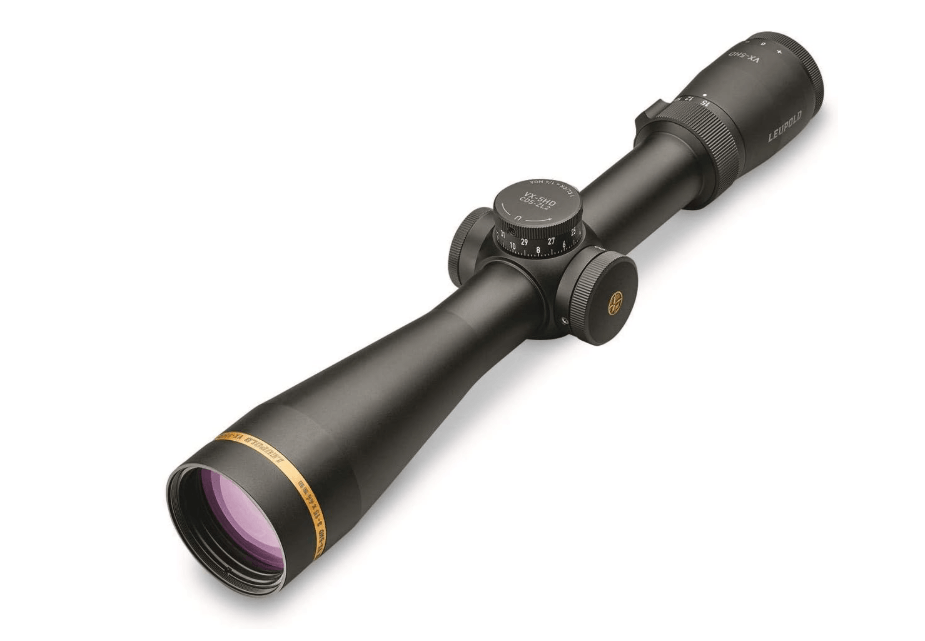
Best for: Hunters who want one versatile scope for mixed terrain and general big-game hunting.
Why Choose It?
The VX-5HD Gen 2 3-15×44 offers a useful middle ground between a traditional hunting scope and a more specialized precision optic. Its 3× low setting is practical for closer encounters, while 15× provides additional magnification when viewing distant animals from a stable position.
Leupold’s published specifications list the 3-15×44 side-focus configuration at approximately 19.9 ounces, depending on the exact model and reticle. That makes it worth considering for a rifle where overall weight matters. The manufacturer also lists a Custom Dial System on relevant configurations, allowing compatible elevation dials to be matched to a shooter’s ballistic requirements.
Key Features
3–15× magnification.
44mm objective lens.
30mm main tube.
Approximately 19.9-ounce weight for the specified catalog configuration.
Side-focus parallax adjustment.
Second-focal-plane reticle.
Custom Dial System on compatible versions.
Model-specific reticles and turret configurations.
What These Features Mean in Real Use
At 3×, the scope offers a more accommodating view for scanning nearby terrain and locating an animal. Moving toward 15× helps with detail when conditions permit, although the field of view narrows as magnification increases.
The 44mm objective provides a useful balance between light gathering, mounting clearance, and overall bulk. However, objective diameter alone does not determine low-light performance; lens quality, coatings, magnification, and the shooter’s pupil size also matter.
Side focus lets the shooter adjust parallax for the viewing distance. This is useful for precision at the range, although many hunters will leave it set appropriately for their usual field conditions rather than continually adjusting it during a short opportunity.
Trade-Offs
The VX-5HD Gen 2 is a premium hunting optic, and its advanced features may be unnecessary for someone who mainly hunts at short distances. Its 15× maximum magnification also does not make every distant shot appropriate; wind, visibility, stability, and the shooter’s ability remain important.
May Not Be Ideal If
You want a dedicated target scope with a first-focal-plane reticle and exposed tactical turrets, or you need the simplest possible hunting optic at a lower price point.
Pros
Versatile 3–15× range.
Manageable published weight.
Side-focus parallax adjustment.
Compatible with Leupold’s custom elevation-dial system.
Practical for mixed hunting environments.
Cons
Premium feature set may exceed some buyers’ needs.
Reticle and turret features vary by configuration.
A 44mm objective still requires careful ring-height and clearance checks.
Best if: You want a versatile hunting scope for timber edges, hillsides, and open country.
Consider another option if: Your priority is a dedicated precision-range setup or a more basic hunting optic.
2. ZEISS Conquest V4 4-16×44
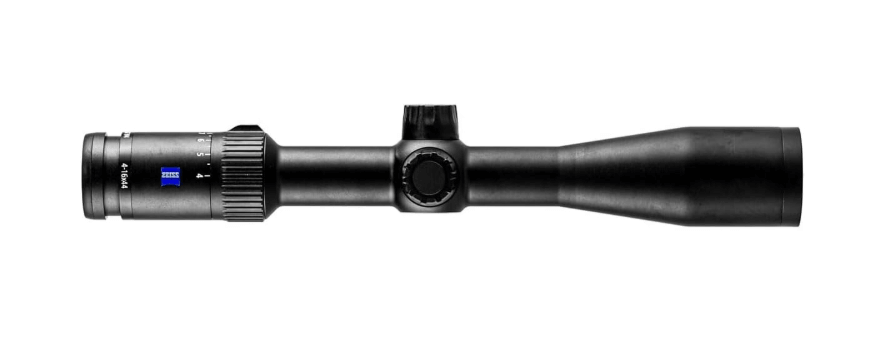
Best for: Hunters who frequently view distant terrain from a supported position.
Why Choose It?
The Conquest V4 4-16×44 provides a little more maximum magnification than the 3–15× options. Its design may appeal to hunters who spend time in open country and want a detailed view of distant terrain before deciding whether a closer observation is possible.
ZEISS lists this configuration at 22.6 ounces, with a 30mm main tube, second-focal-plane reticle, and adjustable parallax from approximately 10 yards to infinity. The manufacturer also specifies T* lens coatings, LotuTec exterior lens treatment, and nitrogen filling.
Key Features
4–16× magnification.
44mm objective lens.
30mm main tube.
22.6-ounce published weight.
Second-focal-plane reticle.
Adjustable parallax.
ZEISS T* lens coatings.
LotuTec exterior lens treatment.
Nitrogen-filled, weather-resistant construction.
What These Features Mean in Real Use
The 16× upper setting can help with target observation and deliberate aiming from a stable rest. However, at 4× the scope offers less low-end magnification than a 3–15× model, which may be less convenient when a nearby animal appears unexpectedly.
At 22.6 ounces, it also adds more weight than the specified Leupold configuration. That difference may seem modest on paper, but a hunter carrying a rifle all day should consider the combined weight of the scope, rings, ammunition, and other equipment.
The adjustable parallax is particularly useful for range practice at varying distances. Lens coatings help manage reflections and preserve image quality, but they cannot eliminate the effects of poor weather, haze, or inadequate natural light.
Trade-Offs
The ZEISS offers useful magnification and optical features, but the extra power and weight are not automatically advantages for every hunting style. The 4× minimum may be less convenient for close encounters than a scope starting at 2× or 3×.
May Not Be Ideal If
You regularly carry your rifle through steep terrain and prioritize the lowest possible optic weight, or most of your hunting takes place in dense timber at short distances.
Pros
Useful 4–16× magnification range.
Adjustable parallax.
Established optical-coating technologies.
Weather-resistant construction.
Suitable for deliberate viewing from a stable rest.
Cons
Heavier than the specified Leupold VX-5HD Gen 2.
Higher minimum magnification than the 3–15× models.
Exact reticle and turret arrangements vary.
Best if: You hunt open country and value additional magnification for observation and supported shooting.
Consider another option if: You prioritize close-range field of view or carrying comfort above maximum magnification.
3. Vortex Razor HD LHT 3-15×42
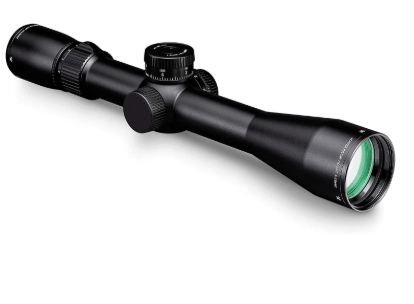
Best for: Hunters looking for a hunting-oriented optic with a versatile magnification range.
Why Choose It?
The Razor HD LHT 3-15×42 is designed around hunting use rather than a dedicated tactical-range role. Its 42mm objective and 3–15× magnification range are well suited to buyers who want enough power for open terrain without automatically choosing a large 50mm objective.
Vortex describes the Razor HD LHT as a lightweight hunting riflescope with an HD optical system, push-button illumination, and a zero system intended to support dependable elevation adjustments. The exact weight, reticle, and turret details should be verified against the particular model number before publication or purchase.
Key Features
3–15× magnification.
42mm objective lens.
30mm main tube.
HD optical system.
Illuminated reticle on the specified family configuration.
Hunting-oriented elevation controls.
Model-specific reticle and zeroing features.
Weather-resistant construction; verify the precise specification for the selected SKU.
What These Features Mean in Real Use
The 3× low setting gives the shooter a practical starting point for scanning and aiming in varied terrain. At 15×, additional magnification helps when observing a distant animal from a stable rest, but it also narrows the field of view and makes movement more noticeable.
The 42mm objective supports a relatively compact design. It can also help keep mounting requirements manageable compared with some larger-objective scopes, although the correct ring height still depends on the rifle, scope geometry, and any accessories.
Reticle illumination can make the aiming point easier to distinguish against a dark background. It does not improve the detail of an indistinct target or make it appropriate to shoot when visibility is insufficient.
Trade-Offs
The Razor HD LHT belongs to a premium product family. Its specialized hunting features may be attractive, but buyers should compare the exact reticle and turret system with less expensive options before deciding that the extra cost is justified.
Do not assume every Razor HD LHT 3-15×42 version has identical controls or weight. Confirm the product’s SKU and current official specification sheet.
May Not Be Ideal If
You want a first-focal-plane reticle with tactical-style exposed turrets for regular range adjustments, or you need a scope with a clearly documented low purchase cost.
Pros
Versatile 3–15× magnification.
Hunting-oriented design.
42mm objective.
Illumination options in the product family.
Features intended for practical field use.
Cons
Exact configuration must be verified.
Premium positioning may not suit every budget.
Reticle and adjustment details vary by version.
Best if: You want a dedicated hunting optic with a broad magnification range.
Consider another option if: Your main use is target shooting with frequent elevation and windage adjustments.
4. Vortex Viper HD 3-15×44
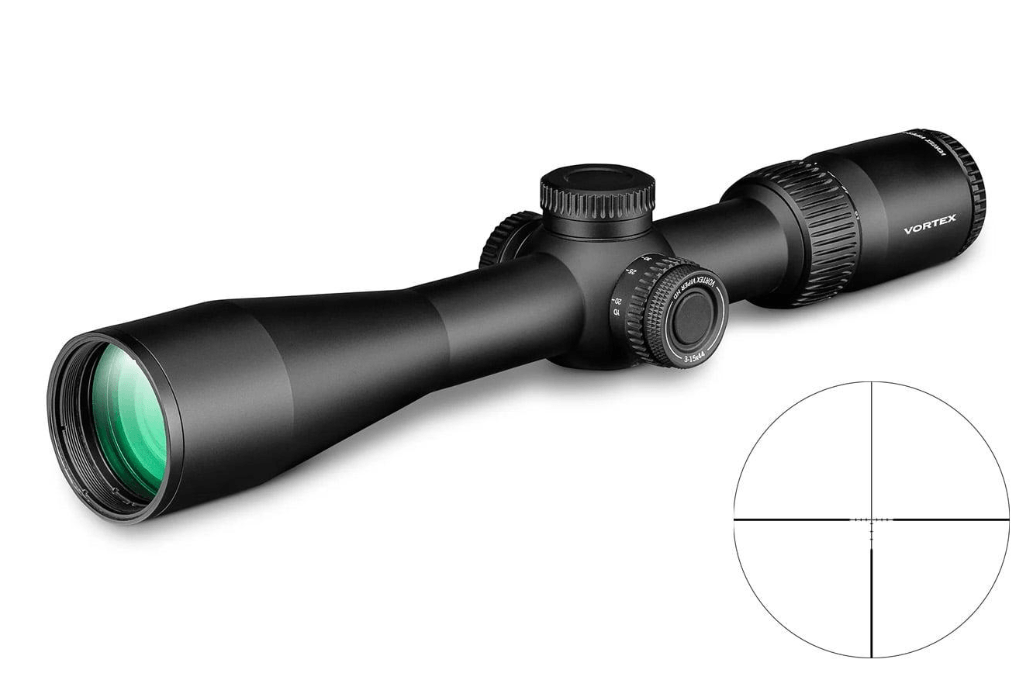
Best for: Hunters who want a flexible scope with an illuminated reticle and capped turrets.
Why Choose It?
The Viper HD 3-15×44 combines a versatile zoom range with features that suit general hunting. For the specific Dead-Hold BDC MOA version, Vortex lists a 21.5-ounce weight, second-focal-plane reticle, capped turrets, and a 30mm main tube.
The illuminated reticle may help the shooter distinguish the aiming point when the background is dark enough to make a conventional reticle difficult to see. Capped turrets also reduce the chance of accidentally changing a setting while carrying the rifle.
Key Features
3–15× magnification.
44mm objective lens.
21.5-ounce published weight.
30mm main tube.
Second-focal-plane illuminated Dead-Hold BDC MOA reticle on the specified version.
Capped turrets.
Quarter-MOA adjustment increments.
Adjustable parallax from 20 yards to infinity.
Manufacturer-listed eye relief of 3.4 inches.
Waterproof, fog-proof, and shockproof design.
What These Features Mean in Real Use
The 3–15× range is useful for hunters moving between wooded areas and more open ground. At low power, the scope provides a wider view; at higher power, it makes detailed aiming easier when the shooter has a steady position.
The Dead-Hold BDC reticle provides aiming references, but those references should not be assumed to correspond exactly to a particular cartridge or load. The shooter needs to verify the relationship between the reticle, ammunition, zero, and actual ballistic performance.
Because the specified reticle is in the second focal plane, its subtensions are calibrated for the manufacturer’s designated magnification. Check the manual to establish that setting before relying on holdover marks.
Capped turrets suit hunters who generally zero their rifle and leave the adjustments alone. They are less convenient for someone who expects to dial elevation frequently.
Trade-Offs
At 21.5 ounces, the Viper HD adds a meaningful amount of weight compared with some lightweight hunting optics. Its feature set is also more involved than a simple fixed-use hunting scope, although it remains less target-focused than the Diamondback Tactical.
May Not Be Ideal If
You want the lightest possible setup, or you need a first-focal-plane reticle that maintains its subtensions across the full magnification range.
Pros
Versatile 3–15× range.
Illuminated Dead-Hold BDC MOA option.
Capped turrets for field use.
Adjustable parallax.
Published weight and specifications for the exact version are available.
Cons
Heavier than some hunting-focused alternatives.
Second-focal-plane reticle requires attention to its calibrated magnification.
BDC references require verification with the actual ammunition and zero.
Best if: You want a general-purpose hunting scope with illumination and protected turret controls.
Consider another option if: You need a lighter scope or regularly use a first-focal-plane reticle for target work.
5. Vortex Diamondback Tactical 4-16×44 FFP
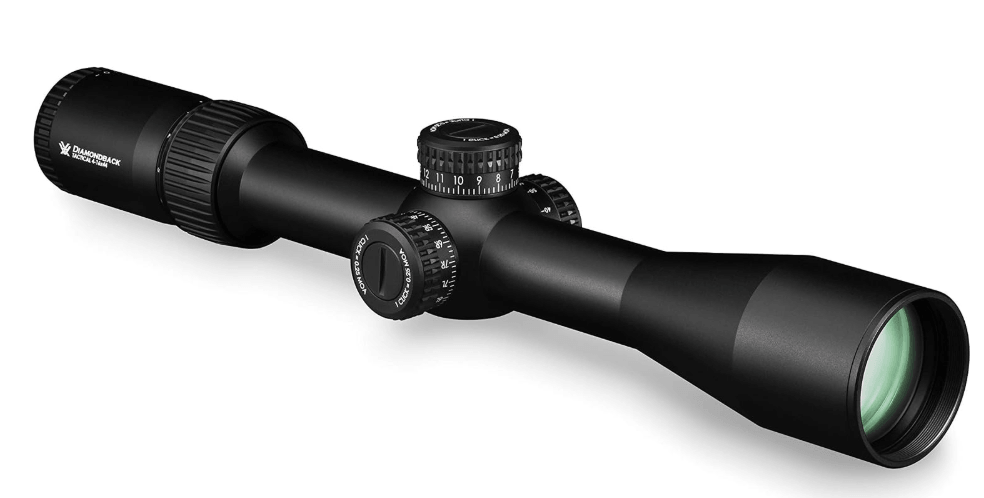
Best for: Range shooters who also use their Christensen Arms Ridge for deliberate, supported target practice.
Why Choose It?
The Diamondback Tactical 4-16×44 FFP takes a more target-oriented approach than the hunting-focused scopes above. Vortex lists this model with a first-focal-plane reticle, exposed turrets, adjustable parallax, and a 30mm tube. Its published weight is 23.1 ounces.
The main reason to choose this scope is its reticle and adjustment arrangement, not simply its maximum magnification. Those features are useful when practicing at varying distances and making measured adjustments at the range.
Key Features
4–16× magnification.
44mm objective lens.
23.1-ounce published weight.
30mm main tube.
First-focal-plane reticle.
Exposed elevation and windage turrets.
Quarter-MOA adjustment increments on the specified MOA version.
Adjustable parallax from 20 yards to infinity.
Published eye relief of 3.8 inches.
Includes a sunshade on the manufacturer’s listed package.
What These Features Mean in Real Use
A first-focal-plane reticle changes apparent size as magnification changes, keeping its angular subtensions consistent throughout the zoom range. That can make reticle-based holdovers and corrections more flexible for range practice.
Exposed turrets make adjustments accessible, which is helpful when dialing elevation between known distances. However, they also introduce a risk of accidental adjustment during a long hunt if the rifle brushes against equipment or vegetation.
The 4× minimum magnification may be less convenient than 3× for close-range encounters. At 23.1 ounces, the scope also weighs more than the specified Leupold and Viper configurations, which matters when carrying the rifle over long distances.
For readers interested in how focal-plane design and adjustment features affect target shooting, Optics Find’s guide to .22 rifle scopes for target shooting provides a related explanation of why reticle behavior and parallax matter when aiming at small targets.
Trade-Offs
The Diamondback Tactical prioritizes range-oriented features over a minimalist hunting setup. Its first-focal-plane reticle and exposed turrets may be useful at the range, but those features do not automatically improve a hunting experience where speed, field of view, and low weight matter more.
May Not Be Ideal If
Your Ridge is carried on long hikes and used primarily for hunting at close to moderate distances, or you prefer capped turrets and a simpler reticle.
Pros
First-focal-plane reticle.
Exposed turrets for deliberate adjustments.
Adjustable parallax.
4–16× magnification.
Useful for target practice and learning reticle-based corrections.
Cons
Heavier than several hunting-oriented options.
Exposed turrets can be inconvenient in dense vegetation.
4× minimum magnification is less accommodating at close range.
More specialized than many hunters need.
Best if: You prioritize range practice, reticle-based corrections, and exposed adjustment controls.
Consider another option if: Your primary goal is a lightweight, straightforward hunting setup.
Factors to Consider When Choosing a Scope for the Christensen Arms Ridge Rifle
1. Magnification Range
Magnification should match the terrain and the way you use the rifle. A 3–15× scope provides flexibility for varied hunting conditions, while a 4–16× design favors more deliberate observation and supported shooting.
Higher magnification is not a substitute for good positioning or visibility. It also narrows the field of view, making it harder to locate an animal quickly when the scope is already set to a high power.
2. Scope Weight and Rifle Balance
The Ridge is a hunting-oriented rifle, so total carried weight matters. A scope that weighs a few ounces more may not seem significant at a shooting bench, but it adds to the load during a long hike.
Compare the scope, rings, and any accessories as a complete system. A lightweight optic that preserves the rifle’s balance may be more useful in the field than a heavier model with features you rarely use.
3. Objective Lens and Low-Light Performance
A 42mm or 44mm objective can offer a useful balance between optical performance and manageable size. However, the objective diameter alone does not tell you how well a scope will perform at dawn or dusk.
Lens quality, coatings, magnification, exit pupil, and contrast also affect the image. For example, a 44mm objective at 8× produces a theoretical exit pupil of 5.5mm before optical losses. At 15×, the same objective produces an exit pupil of about 2.9mm.
A larger exit pupil can help in dim conditions when the shooter’s pupil can use the available light, but it cannot overcome poor visibility or inadequate target identification. Hunters should always follow local legal shooting-light requirements.
4. Eye Relief and Shooting Comfort
Eye relief is the distance between your eye and the scope’s ocular lens when the image remains visible. Adequate eye relief helps prevent the scope from striking your brow under recoil and makes it easier to maintain a consistent cheek weld.
The Ridge’s chambering influences recoil, so check the scope’s published eye relief and confirm comfortable positioning with the rifle unloaded before use. Allow enough clearance for your normal shooting position and any clothing worn during cold-weather hunts.
5. Reticle Design and Focal Plane
A simple hunting reticle can be easier to use quickly when an opportunity is brief. A graduated reticle can provide aiming references for holdover and wind corrections, provided the shooter understands its subtensions.
First-focal-plane reticles maintain consistent angular subtensions across the magnification range. Second-focal-plane reticles usually require the shooter to use the specified magnification for calibrated holdover references.
Neither design is universally better. The choice depends on whether you prefer straightforward field aiming or frequent reticle-based corrections.
6. Turrets and Parallax Adjustment
Capped turrets are practical for hunters who zero the scope and rarely make field adjustments. Exposed turrets suit range shooters who routinely dial elevation, but they can be more vulnerable to accidental movement.
Parallax adjustment can improve aiming consistency at different distances by reducing apparent reticle movement relative to the target when the eye shifts. It is particularly useful for precision practice, though it may be less important to a hunter who uses a consistent setup at typical field distances.
7. Mounting Compatibility and Durability
Before buying, verify the scope’s main-tube diameter, objective clearance, ring height, and mounting compatibility with your specific Ridge configuration. A 30mm tube requires compatible rings, and a larger objective may need additional clearance from the barrel or other components.
Weather-resistant construction is also valuable for hunting in rain, humidity, and changing temperatures. Follow the manufacturer’s mounting instructions and recommended torque values; incorrect installation can affect performance or damage equipment.
FAQs
1. What is the best magnification for a Christensen Arms Ridge rifle?
A 3–15× scope is a versatile starting point for many hunting applications. It provides a useful low setting for scanning and a higher setting for deliberate aiming. A 4–16× model may suit range-focused shooters or those who often observe distant terrain from a stable position.
2. Is a first-focal-plane scope necessary for hunting?
No. A second-focal-plane scope with a simple reticle can work very well for conventional hunting. A first-focal-plane reticle is more useful when you want consistent reticle subtensions across different magnification settings for holdovers and corrections.
3. Should I choose a 42mm or 44mm objective lens?
Both sizes can work well on a hunting rifle. The difference is relatively small, and image quality depends on more than objective diameter. Compare the scope’s optical system, weight, magnification, eye relief, and mounting clearance instead of choosing solely by lens size.
Conclusion
The best scope for a Christensen Arms Ridge rifle depends on whether you prioritize lightweight field handling, versatile hunting performance, or precision-oriented range features.
The Leupold VX-5HD Gen 2 3–15×44 offers a balanced hunting configuration. The ZEISS Conquest V4 4–16×44 provides more maximum magnification, while the Razor HD LHT 3–15×42 is designed around hunting use. The Viper HD 3–15×44 adds an illuminated reticle and capped turrets, whereas the Diamondback Tactical 4–16×44 FFP emphasizes range-oriented adjustments and reticle functionality.
Compare the exact configuration, total weight, reticle, and mounting requirements before purchasing. A scope that matches your typical terrain and shooting style will generally serve you better than one chosen simply for its maximum magnification.