The Ruger American Predator is available in configurations suited to hunting and recreational target shooting, so choosing the right riflescope starts with understanding how you intend to use your rifle. A lightweight hunting optic may be the better choice for carrying through the field, while a scope with greater magnification and adjustable parallax may be more useful for paper targets and other precision-oriented applications.
The five scopes below offer different combinations of magnification, weight, reticle design, and adjustment features. The goal is to help you narrow down your options without paying for features you may never use. Ruger also offers different generations and chamberings of the American Predator, so confirm your exact rifle model and mounting requirements before buying an optic.
Quick Decision Table
| Product | Best For | Weight | Magnification | Key Advantage | Check Price |
| Vortex Crossfire II 3-9×40 | General hunting | Not Specified | 3–9× | Simple, versatile design | 👉 View on Amazon |
| Leupold VX-Freedom 3-9×40 Hunt-Plex | Lightweight hunting | 12.2 oz | 3–9× | Low weight and generous eye relief | 👉 View on Amazon |
| Vortex Diamondback 4-12×40 | Hunting and general target shooting | 14.2 oz | 4–12× | Extra magnification without a large objective | 👉 View on Amazon |
| Athlon Argos HMR 2-12×42 | Versatile hunting and range use | 19.8 oz | 2–12× | Broad magnification range and adjustable parallax | 👉 View on Amazon |
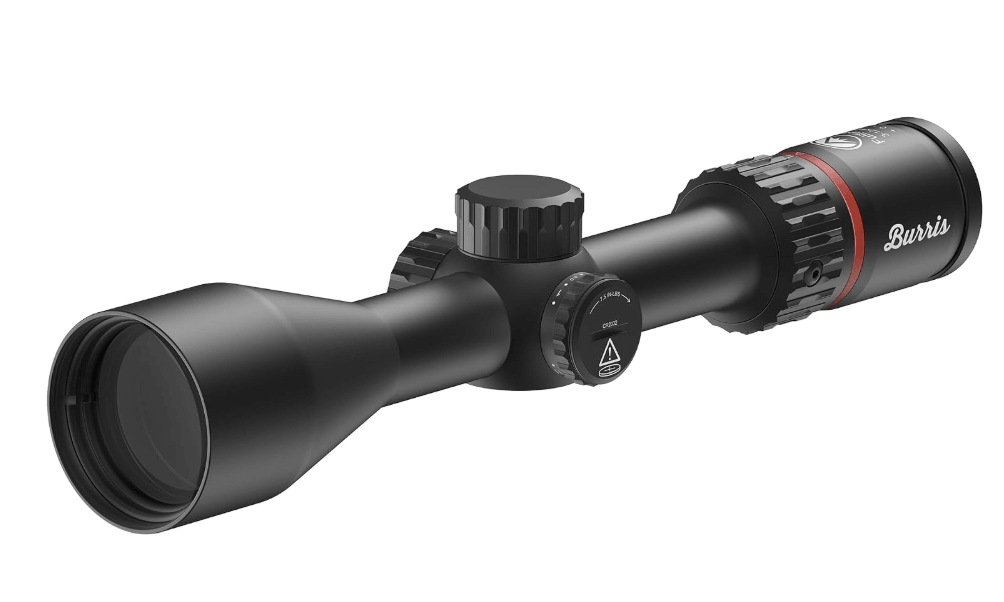
| Burris Fullfield IV 3-12×42 | General hunting and target use | 14.7–15.3 oz | 3–12× | Multiple reticle options | 👉 View on Amazon |
Quick Recommendations
Choose the Vortex Crossfire II 3-9×40 if you want a straightforward scope for ordinary hunting distances without a complicated adjustment system.
Choose the Leupold VX-Freedom 3-9×40 Hunt-Plex if keeping the rifle light is a priority.
Choose the Vortex Diamondback 4-12×40 if you want more top-end magnification while retaining a relatively lightweight setup.
Choose the Athlon Argos HMR 2-12×42 if you want a wide magnification range and the ability to adjust parallax.
Choose the Burris Fullfield IV 3-12×42 if you prefer a traditional hunting scope with several reticle configurations to consider.
These are use-case recommendations based on published specifications, not claims of comparative field testing.
How These Scopes Were Chosen
The comparison prioritizes practical considerations for a Ruger American Predator: magnification, weight, eye relief, reticle, parallax, and ease of use. Hunting optics need to remain comfortable to carry and straightforward to operate, while target-oriented use can benefit from more magnification and finer image adjustment.
1. Vortex Crossfire II 3-9×40
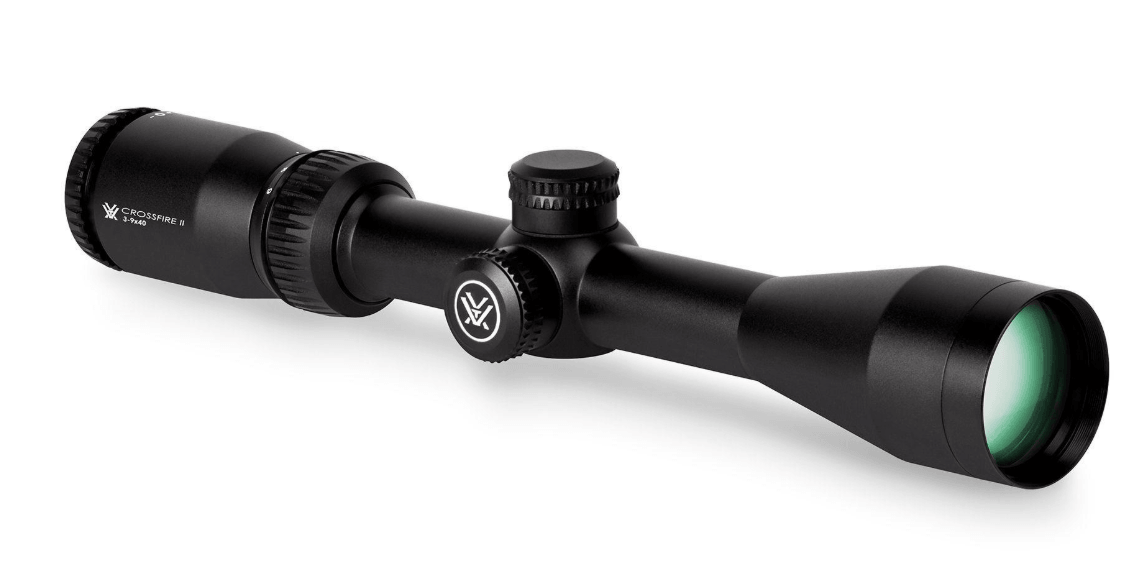
Best for: straightforward hunting use
The Vortex Crossfire II 3-9×40 is a traditional hunting riflescope for buyers who prefer familiar controls and a moderate magnification range. Its 3–9× configuration is versatile enough for many common hunting situations without making the scope unnecessarily complicated.
Why Choose It?
The main attraction is simplicity. Rather than paying for a specialized precision system, you get a variable-power optic with a fast-focus eyepiece, fully multi-coated lenses, and resettable MOA turrets. Vortex lists this model for hunting.
Key Features
Magnification: 3–9×
Objective lens: 40 mm
Tube diameter: 1 inch
Reticle: Depends on the selected configuration
Optical features: Fully multi-coated lenses
Adjustments: Resettable MOA turrets
Eye relief: Long eye relief is a feature of the Crossfire II series; confirm the precise specification for the selected SKU.
What These Features Mean in Real Use
The 3–9× magnification range provides a practical middle ground. Lower magnification gives you a wider view, while higher magnification makes distant details appear larger. A 40 mm objective also avoids the bulk associated with some larger hunting optics.
The fully multi-coated lenses are designed to improve light transmission. However, lens coatings alone cannot guarantee excellent low-light performance; glass quality, magnification, exit pupil, and the surrounding conditions also matter.
Trade-Offs
This model prioritizes everyday simplicity over advanced precision features. If you expect to make frequent elevation adjustments or need adjustable parallax for target work at varying distances, a more specialized model may be a better fit.
May Not Be Ideal If
You want a first-focal-plane reticle, advanced dialing features, or a dedicated precision-oriented setup. Also, do not assume that every Crossfire II configuration has the same reticle or specifications.
Pros
Familiar 3–9× hunting format
Fully multi-coated lenses
Fast-focus eyepiece
Resettable MOA turrets
Cons
Fewer specialized precision features than some alternatives
Reticle and configuration need to be checked carefully
May not suit buyers who need frequent parallax adjustment
Decision Summary
Best if: You want a straightforward hunting scope with moderate magnification.
Consider another option if: Adjustable parallax and more specialized target-shooting features are priorities.
2. Leupold VX-Freedom 3-9×40 Hunt-Plex
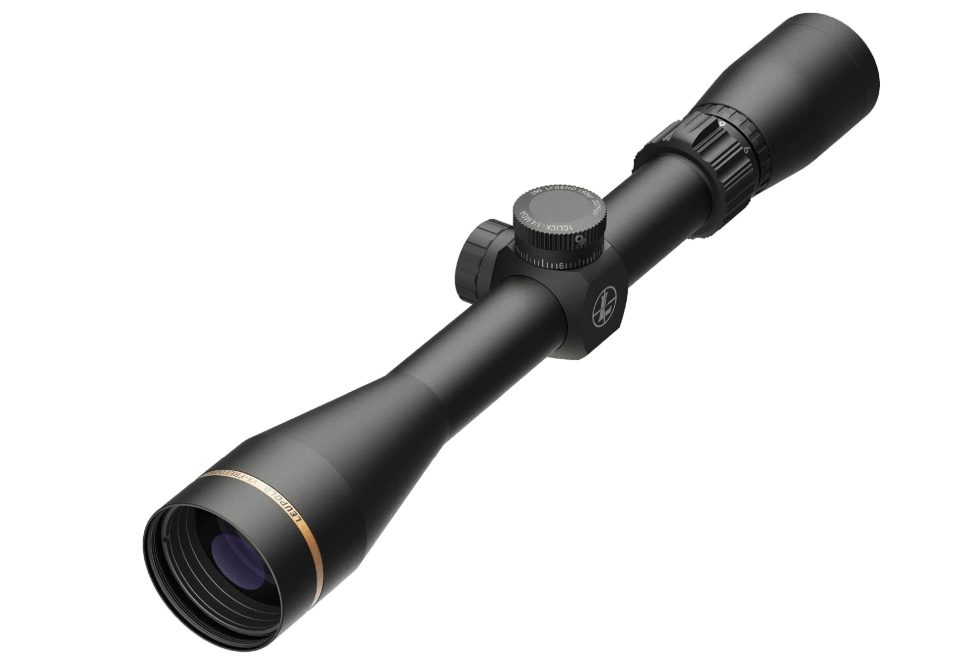
Best for: hunters prioritizing low weight
The Leupold VX-Freedom 3-9×40 is worth considering if you carry your rifle over long distances and want to avoid unnecessary weight. Leupold’s VX-Freedom line includes several reticle configurations, so check the exact model before ordering.
The manufacturer lists the VX-Freedom 3–9×40 Tri-MOA at 12.2 ounces, with a 40 mm objective and second-focal-plane reticle. Those specifications belong to the identified Tri-MOA configuration; the Hunt-Plex version should be checked separately.
Why Choose It?
Weight matters when a rifle is carried for hours rather than used only from a stationary position. A lighter scope can help keep the overall setup manageable, although the rifle’s stock, barrel, rings, and other accessories also affect total weight.
The 3–9× magnification range keeps the design focused on general hunting rather than high-magnification target work. Leupold also lists relatively generous eye relief on its VX-Freedom 3–9×40 configurations.
Key Features
Magnification: 3–9×
Objective lens: 40 mm
Weight: 12.2 oz for the specified Tri-MOA configuration
Tube diameter: 1 inch
Reticle: Hunt-Plex or other model-specific options
Adjustments: 1/4 MOA per click on the cited configuration
Parallax: Fixed at a manufacturer-specified distance; confirm the exact model
What These Features Mean in Real Use
The moderate zoom range is easy to understand and does not require a complicated setup. The 40 mm objective provides a familiar balance between size and light-gathering potential.
Leupold’s published eye-relief specifications vary slightly with magnification. Correct eye placement is still essential, especially when wearing bulky clothing or using different shooting positions. Mounting the scope at a comfortable height and checking eye relief according to the manufacturer’s instructions are important steps.
Trade-Offs
The 3–9× format does not provide as much top-end magnification as a 4–12× or 2–12× alternative. It also lacks the adjustable side-focus feature found on some more specialized scopes.
May Not Be Ideal If
You mainly use your rifle from a bench and want extra magnification, or you need to adjust parallax for precision work at multiple distances.
Pros
Lightweight configuration
Versatile 3–9× magnification
Generous eye relief on the listed models
Straightforward hunting-oriented design
Cons
Less top-end magnification than the 4–12× and 2–12× options
No side-focus parallax adjustment on the cited configuration
Specifications differ across reticle variants
Decision Summary
Best if: Portability and a traditional hunting format matter most.
Consider another option if: You need higher magnification or more adjustable precision features.
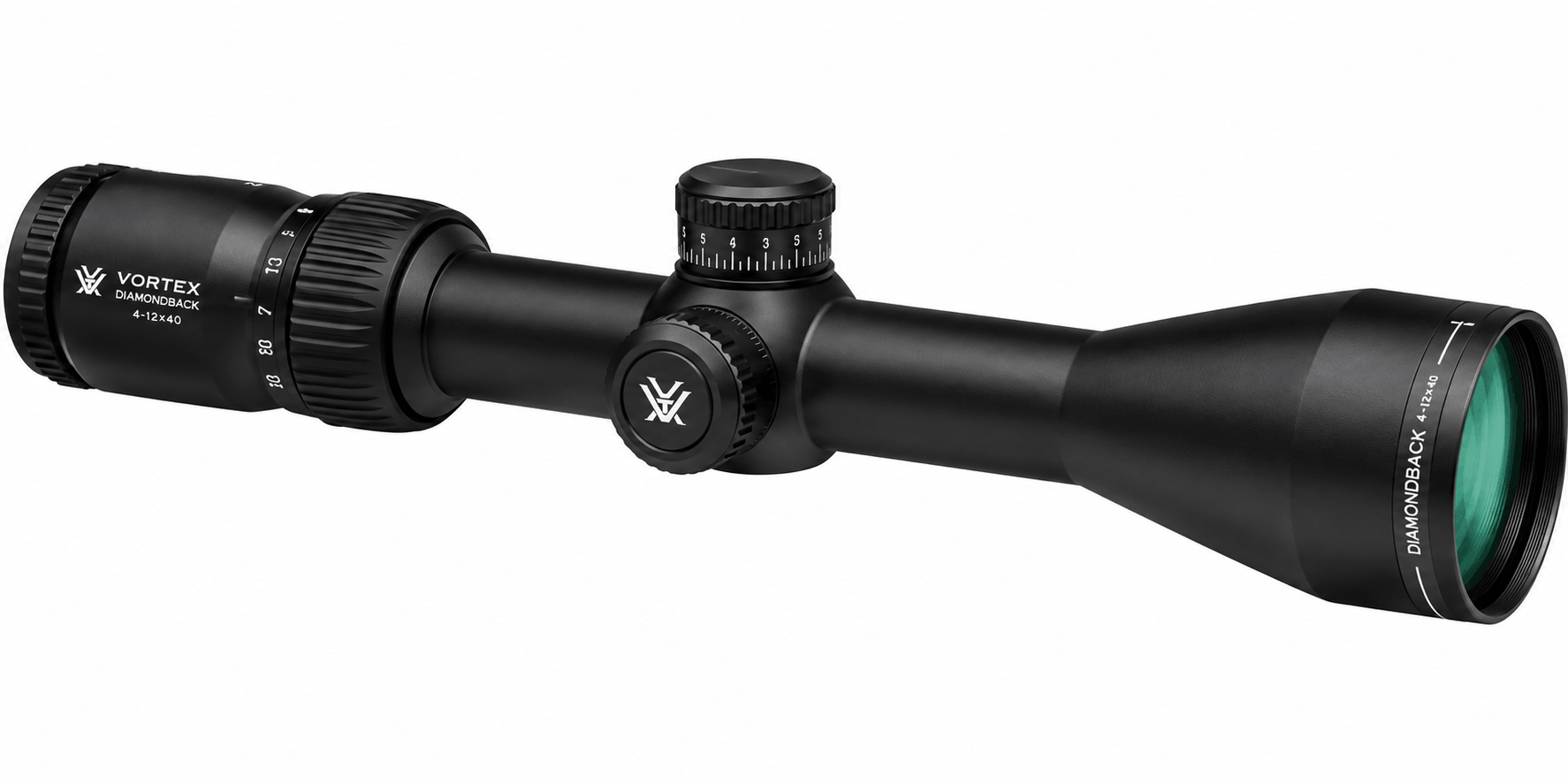
3. Vortex Diamondback 4-12×40
Best for: hunters who want extra magnification
The Vortex Diamondback 4-12×40 increases maximum magnification from 9× to 12× while retaining a 40 mm objective. That makes it worth comparing with a standard 3–9× scope if you want additional viewing detail without moving to a much larger objective lens.
Vortex lists the cited model with a second-focal-plane Dead-Hold BDC MOA reticle, capped turrets, a one-inch tube, and a weight of 14.2 ounces. Its published eye relief is 3.1 inches, and its parallax setting is 100 yards.
Why Choose It?
The additional magnification may be useful when viewing small targets or distinguishing detail at a distance. Meanwhile, capped turrets help protect the adjustment controls from accidental movement during transport and ordinary field use.
For readers comparing different rifle platforms, the considerations in our guide to scopes for the Savage Axis deer rifle also illustrate why the intended use matters more than choosing a scope based on magnification alone.
Key Features
Magnification: 4–12×
Objective lens: 40 mm
Weight: 14.2 oz
Tube diameter: 1 inch
Reticle: Dead-Hold BDC MOA, second focal plane
Turrets: Capped
Adjustment graduation: 1/4 MOA
Parallax setting: 100 yards
What These Features Mean in Real Use
The 12× upper magnification gives you more image enlargement than a 9× scope. The trade-off is a narrower field of view at the higher setting, making it harder to scan broadly or locate a target quickly if you begin at maximum power.
The second-focal-plane reticle stays approximately the same apparent size as you zoom. Any subtensions or holdover references must be used according to the manufacturer’s specified magnification, rather than assuming they work identically at every setting.
Capped turrets are convenient if you expect to leave the scope’s zero unchanged during normal use. They are less convenient if you intend to make frequent elevation adjustments.
Trade-Offs
At 14.2 ounces, the Diamondback is still relatively light, but it weighs more than the listed Leupold configuration. Its 4× minimum magnification is also less flexible for very close viewing than a scope that starts at 2× or 3×.
May Not Be Ideal If
You want a wider low-magnification view, an adjustable parallax system, or a scope intended for frequent precision adjustments.
Pros
4–12× magnification range
14.2-ounce published weight
Capped turrets
BDC reticle option
One-inch tube
Cons
Higher minimum magnification than 2–12× models
Fixed 100-yard parallax setting on the cited model
More limited adjustment flexibility than specialized precision optics
Decision Summary
Best if: You want a little more magnification than a standard 3–9× hunting scope.
Consider another option if: You need low minimum magnification or adjustable parallax.
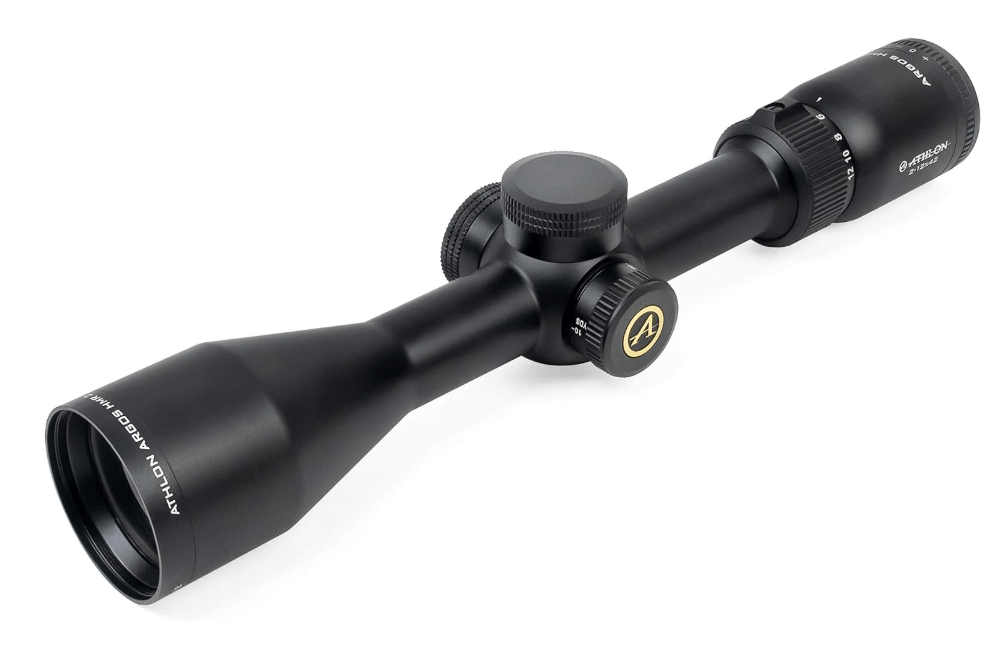
4. Athlon Argos HMR 2-12×42
Best for: buyers who want a broad magnification range
The Athlon Argos HMR 2-12×42 offers a different balance from the traditional 3–9× scopes. Its 2× minimum magnification provides a wider view at the low end, while 12× gives you more enlargement when you want to examine distant details.
Athlon lists the BDC 600 SFP MOA configuration at 19.8 ounces, with a 42 mm objective, a one-inch tube, 3.6 inches of eye relief, capped turrets, and parallax adjustment starting at 10 yards. Other reticle versions are available, so confirm the exact configuration.
Why Choose It?
Its broad zoom range makes this model worth considering if you want one scope for both general hunting and range use. The adjustable parallax is another distinction from the Vortex Diamondback 4–12×40, which has a fixed 100-yard parallax setting in the cited configuration.
Key Features
Magnification: 2–12×
Objective lens: 42 mm
Weight: 19.8 oz
Tube diameter: 1 inch
Eye relief: 3.6 inches
Reticle: Model-dependent second-focal-plane options
Turrets: Capped
Parallax adjustment: 10 yards to infinity, according to the manufacturer
What These Features Mean in Real Use
At 2×, the image appears less enlarged than at higher settings, giving you a wider field of view. This can make it easier to maintain awareness of the surrounding scene. At 12×, you gain additional image enlargement, although the field of view narrows.
Adjustable parallax can help reduce apparent reticle movement against the target when your eye position changes. It is particularly useful for precision-oriented range work, but it does not compensate for poor mounting, inconsistent positioning, or other sources of aiming error.
The larger 42 mm objective is only slightly bigger than a 40 mm objective. That small difference alone does not establish which scope will deliver the brighter image; optical design, coatings, magnification, and viewing conditions all contribute.
Trade-Offs
At 19.8 ounces, the Argos HMR is substantially heavier than the two lightweight hunting options above. Its extra features may be worthwhile for a rifle used regularly at the range, but they may add unnecessary weight if you mainly carry your rifle on hunts.
May Not Be Ideal If
You want the lightest possible hunting setup or prefer the simplest controls available.
Pros
Wide 2–12× magnification range
Adjustable parallax
Capped turrets
Several reticle configurations
3.6-inch published eye relief
Cons
Heavier than the other scopes in this comparison
More features to understand and configure
Exact reticle and specifications depend on the SKU
Decision Summary
Best if: You want flexibility between low magnification and more detailed viewing.
Consider another option if: Low weight and simplicity matter more than additional features.
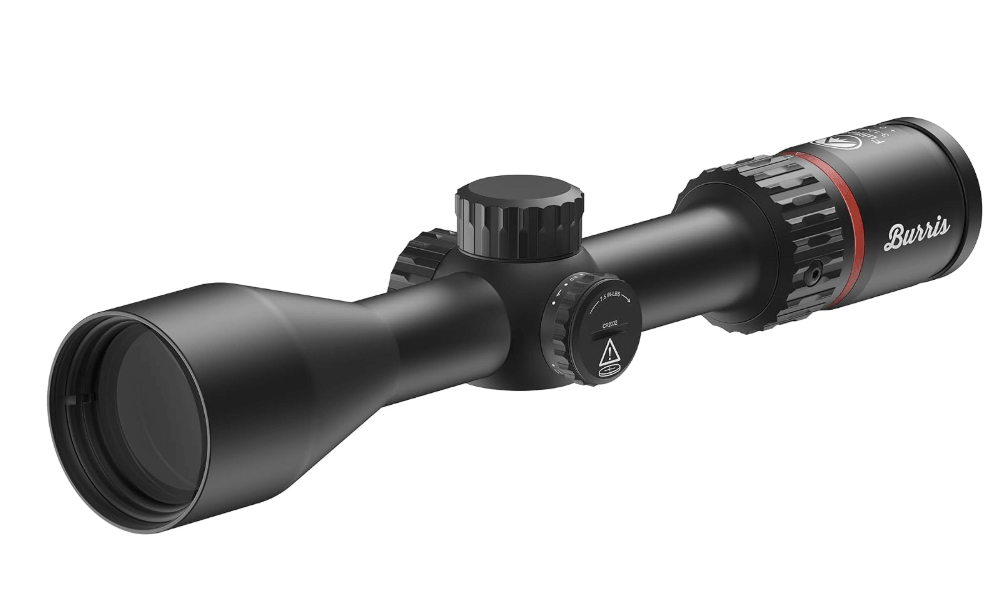
5. Burris Fullfield IV 3-12×42
Best for: a traditional hunting scope with reticle choices
The Burris Fullfield IV 3-12×42 provides another 12× option, but with a conventional hunting-scope design. It is worth considering if you want more maximum magnification than a 3–9× model without choosing the heavier Athlon Argos HMR.
Burris’s published specifications identify the 3–12×42 model with a one-inch tube, a second-focal-plane reticle, 1/4 MOA click adjustments, approximately 3.9–4.2 inches of eye relief, and a weight of 14.7–15.3 ounces. Specific features, including parallax settings, can differ by SKU.
Why Choose It?
The Fullfield IV gives you a 3× starting magnification, a 12× maximum, and a choice of reticles across the product family. That makes it a useful middle ground for a buyer who wants more magnification than a 3–9× scope without moving to a substantially heavier optic.
Key Features
Magnification: 3–12×
Objective lens: 42 mm
Weight: Approximately 14.7–15.3 oz for the listed model
Tube diameter: 1 inch
Reticle: Second focal plane; options vary by SKU
Adjustment graduation: 1/4 MOA
Eye relief: Approximately 3.9–4.2 inches
Parallax: Confirm the exact model specification
What These Features Mean in Real Use
The 3–12× range offers flexibility for general hunting and viewing targets at different distances. At 3×, the image is less enlarged and the field of view is wider than at 12×. At the top end, more magnification can help you see detail, but it also makes movement and imperfect positioning more noticeable.
Eye relief of around four inches gives you room to position your eye behind the scope. However, the correct distance and eye alignment must be confirmed for the exact model and shooting position.
The second-focal-plane reticle is straightforward for ordinary hunting, but any ballistic holdover marks should be used according to the reticle’s instructions. A reticle does not automatically compensate for every cartridge, load, or distance.
Trade-Offs
The Fullfield IV does not offer the 2× minimum magnification of the Athlon Argos HMR. Furthermore, choosing the wrong reticle configuration could leave you with a scope that does not suit your intended use.
May Not Be Ideal If
You want a very lightweight optic, need a particularly wide low-magnification view, or require a specialized first-focal-plane reticle and advanced turret system.
Pros
3–12× magnification range
Conventional hunting-scope design
Multiple reticle choices across the product family
Approximately four inches of eye relief
Published weight below the Athlon Argos HMR
Cons
Reticle and features vary by configuration
Less low-end magnification than the Argos HMR
Must verify the exact SKU before comparing specifications
Decision Summary
Best if: You want a conventional hunting scope with a 12× maximum and a range of reticle options.
Consider another option if: You need the lowest possible weight or a more specialized precision setup.
Factors to Consider When Choosing a Scope for the Ruger American Predator
The best scope depends on how you plan to use your rifle. Before purchasing, compare these five factors rather than focusing on magnification alone.
1. Magnification Range
A 3–9× scope is a sensible starting point for many general hunting applications. It offers a useful balance between a wide field of view at lower power and greater image enlargement at higher power.
A 4–12× or 3–12× model provides more magnification at the upper end. Meanwhile, a 2–12× scope offers more flexibility at the low end. Remember that higher magnification does not automatically improve practical results; a narrow field of view and a less forgiving sight picture can make a scope harder to use.
2. Objective Lens and Optical Clarity
The objective lens is the front lens of the scope. A 40–42 mm objective is a common size for hunting optics, offering a practical balance between size and light-gathering potential.
However, a larger objective does not automatically produce a brighter image. Magnification, lens coatings, optical quality, and exit pupil also affect the view. If early-morning or late-evening hunting is important, our guide to illuminated-reticle scopes for dawn and dusk explains why reticle visibility and optical brightness are different considerations.
3. Weight and Rifle Balance
A lighter scope is often preferable if you carry your rifle for extended periods. In this comparison, the listed Leupold VX-Freedom configuration weighs 12.2 ounces, while the Athlon Argos HMR weighs 19.8 ounces.
That difference may matter during a long walk. A heavier optic can still make sense if its additional adjustment features are useful to you, especially when the rifle spends more time at a shooting bench than on your shoulder.
4. Reticle and Adjustments
A simple hunting reticle can be easy to use and uncluttered. A bullet-drop-compensating (BDC) reticle provides additional aiming references, but its marks should not be assumed to match your ammunition automatically.
Capped turrets help protect adjustments against accidental movement. More specialized turret systems can suit shooters who need to make frequent adjustments, but they also require a clear understanding of the scope’s adjustment units and operating instructions.
5. Eye Relief, Parallax, and Mounting Compatibility
Eye relief is the distance between your eye and the scope’s eyepiece when you see the full image. Adequate eye relief supports comfortable positioning, but it must be checked against the exact scope and rifle configuration.
Parallax occurs when the reticle appears to move relative to the target as your eye position changes. Adjustable parallax can be useful for precision-oriented work at different distances. A fixed-parallax hunting scope may be simpler when its factory setting matches your intended use.
Finally, check the rifle’s generation, scope rail, ring height, tube diameter, and clearance before buying. Ruger’s documentation identifies a factory-installed scope rail on relevant Predator models, but you should confirm the details for your particular rifle.
If your intended use is predominantly close-range shooting, our guide to budget 1–6× LPVO scopes explains how low-power optics differ from conventional hunting scopes. An LPVO is an alternative to consider only if its characteristics suit your application; it is not automatically a better match for a bolt-action hunting rifle.
Frequently Asked Questions
1. What magnification is best for a Ruger American Predator?
For general hunting, a 3–9× scope is a reasonable starting point. A 4–12× or 3–12× model provides more magnification at the upper end, while a 2–12× scope offers a wider range of options at the low end. Your intended use, viewing conditions, and preference for portability should guide the decision.
2. Is a 40 mm objective lens enough for the Ruger American Predator?
A 40 mm objective is suitable for many conventional hunting setups. A 42 mm objective is another reasonable option. The larger number alone does not guarantee a brighter image, so consider optical quality, magnification, coatings, and the conditions in which you will use the scope.
3. Do I need adjustable parallax on a Ruger American Predator?
Not necessarily. A fixed-parallax scope may suit general hunting when its factory setting fits your intended use. Adjustable parallax can be more useful for precision-oriented shooting at different distances, where changes in eye position may affect the apparent relationship between reticle and target.
Conclusion
The best scope for your Ruger American Predator depends on the balance you want between portability, magnification, and adjustment features. The Leupold VX-Freedom is worth considering if low weight matters most, while the Vortex Crossfire II offers a straightforward 3–9× format. The Diamondback adds 12× maximum magnification, and the Athlon Argos HMR provides a wider zoom range and adjustable parallax. The Burris Fullfield IV is another conventional option with several reticle configurations.
Before choosing, verify the exact scope model, reticle, mounting requirements, and specifications. A scope that suits your intended use is a better choice than one selected simply because it offers the highest magnification.