
The .30-06 Springfield is a versatile hunting cartridge used for whitetail deer, mule deer, elk, and other big game. Choosing a scope for this rifle means balancing magnification, weight, eye relief, and optical performance rather than automatically buying the highest-powered optic. A lightweight 3–9x scope may suit a hunter walking through timber, while a 3–12x model provides more magnification for open-country hunting.
This guide compares five scopes with different strengths so you can identify the one that fits your hunting style, budget, and preferred shooting distances.
Quick Decision Table
| Scope | Best For | Weight | Magnification | Key Advantage | Check Price |
| Leupold VX-Freedom 3–9×40 | General deer hunting | 12.2 oz | 3–9x | Lightweight, simple design | 👉 View on Amazon |
| Vortex Crossfire II 3–9×40 | Everyday hunting | Configuration-dependent | 3–9x | Straightforward controls and reticle options | 👉 View on Amazon |
| Burris Fullfield 3–12×42 | Mixed terrain | 14.7 oz | 3–12x | Broader magnification range | 👉 View on Amazon |
| SIG SAUER WHISKEY4 3–12×44 | Versatile hunting | 23 oz | 3–12x | 30mm tube and four-times zoom range | 👉 View on Amazon |
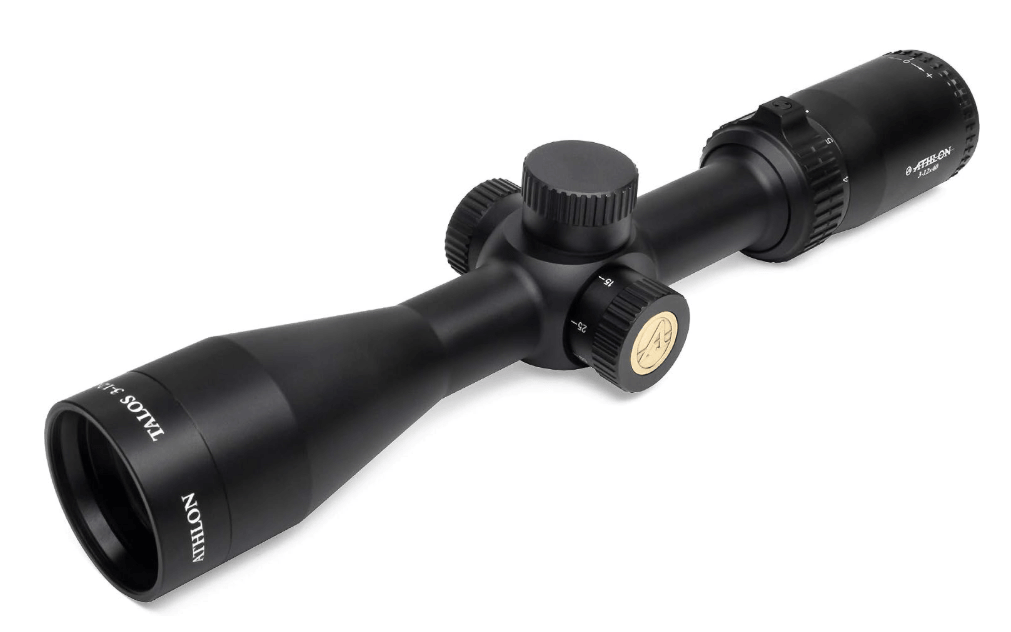
| Athlon Talos 3–12×40 BDC 600 IR | Hunters wanting illumination | 16.2 oz | 3–12x | Illuminated BDC reticle | 👉 View on Amazon |
How These Products Were Chosen
The comparison prioritizes manufacturer-published specifications and practical differences that matter on a .30-06 hunting rifle. These include magnification, weight, objective diameter, eye relief, reticle design, and weather protection.
The .30-06 is commonly used for hunting in varied terrain, so a useful scope should suit the intended environment without adding unnecessary weight or complexity. No single magnification range or reticle is ideal for every hunter.
1. Leupold VX-Freedom 3–9×40
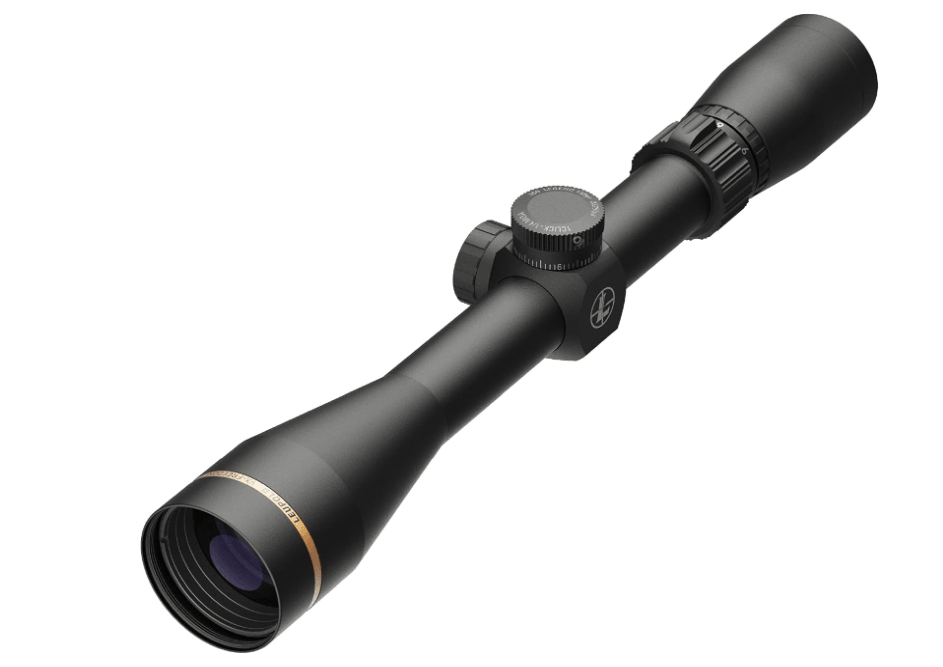
Best for lightweight, general-purpose hunting
The Leupold VX-Freedom 3–9×40 is a practical option for hunters who prefer a traditional variable-power scope without a complicated adjustment system. Its moderate magnification range suits a broad range of conventional hunting situations.
Leupold publishes a weight of 12.2 ounces for the specified 3–9×40 configuration. The manufacturer also lists 4.2 inches of eye relief at low magnification and 3.7 inches at high magnification.
Why Choose It?
A lightweight scope helps keep a hunting rifle manageable during long walks, climbs, and extended periods in the field. The 3–9x range offers a useful balance between a wider view at low power and greater target detail at higher power.
The standard Duplex reticle is relatively uncluttered, which can suit hunters who prefer a simple aiming reference rather than numerous markings.
Key Features
Magnification: 3–9x
Objective lens: 40mm
Main tube: 1 inch
Weight: 12.2 ounces
Reticle: Duplex, second focal plane
Eye relief: 4.2–3.7 inches
Fixed parallax distance: 150 yards
Waterproof and fogproof construction
What These Features Mean in Real Use
At 3x, the scope provides a wider field of view that can help when observing a larger area. At 9x, distant animals appear larger, although the field of view becomes narrower.
The 40mm objective lens balances optical requirements with manageable dimensions. Meanwhile, the scope’s low weight makes it appealing to hunters who carry their rifles over long distances.
Eye relief deserves attention on a .30-06. The scope must be positioned correctly so the shooter maintains adequate clearance from the eyepiece when the rifle recoils. The published eye-relief range should be checked alongside the actual mounting position.
Trade-Offs
The standard configuration does not include an illuminated reticle or adjustable side-focus parallax. Hunters who want more magnification, specialized reticle references, or additional adjustment features may prefer another option.
Pros
Lightweight construction
Familiar 3–9x magnification
Simple Duplex reticle
Generous published eye relief at low power
Weather-resistant construction
Cons
No illumination in the standard Duplex version
Fixed parallax setting
Less maximum magnification than the 3–12x alternatives
Decision summary
Best if: You want a lightweight scope for general deer hunting and a straightforward sight picture.
Consider another option if: You need an illuminated reticle or want greater magnification flexibility.
2. Vortex Crossfire II 3–9×40
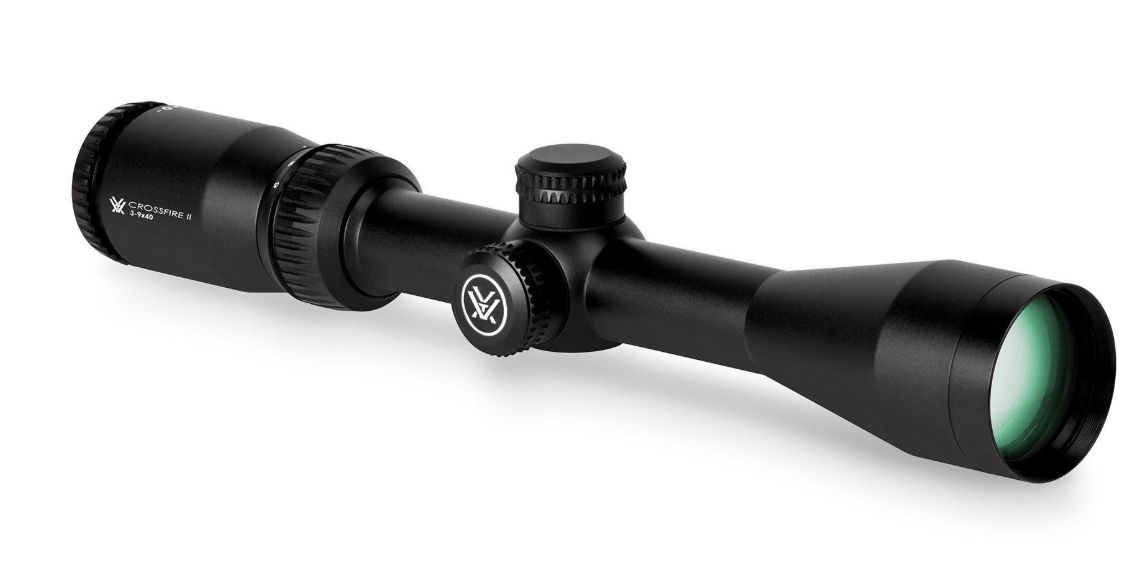
Best for conventional, everyday hunting
The Vortex Crossfire II 3–9×40 is another conventional variable-power scope worth comparing for a .30-06 hunting rifle. It offers a familiar magnification range and multiple reticle configurations, depending on the exact model.
Vortex’s Crossfire II range includes V-Plex and Dead-Hold BDC reticle options. Its manufacturer-described features include fully multi-coated lenses, a fast-focus eyepiece, and waterproof and fogproof construction.
Why Choose It?
This scope makes sense for a hunter who wants conventional magnification and uncomplicated operation. Its reticle options allow buyers to compare a straightforward crosshair with a design that includes additional aiming references.
If you are also considering a rifle-platform-specific setup, our guide to scopes for the Remington 700 explains how weight, mounting compatibility, and reticle selection affect the buying decision.
Key Features
Magnification: 3–9x
Objective lens: 40mm
Main tube: 1 inch
Reticle options: V-Plex or Dead-Hold BDC, depending on configuration
Fully multi-coated lenses
Fast-focus eyepiece
Resettable adjustment turrets
Waterproof and fogproof construction
What These Features Mean in Real Use
The 3–9x range works as a general-purpose starting point for hunters who do not need high magnification for every situation.
A fast-focus eyepiece lets you adjust the reticle’s sharpness to your eyesight. The choice between V-Plex and BDC is also important: a conventional reticle is simple to interpret, while additional aiming marks require an understanding of their intended use and calibration.
BDC markings should not be assumed to match a particular .30-06 load automatically. Actual trajectory depends on the ammunition, bullet characteristics, sight-in distance, and other conditions.
Trade-Offs
The Crossfire II’s conventional configuration has a fixed parallax setting, and the standard hunting-style models do not offer the full adjustment features of more specialized optics. Check the exact SKU before relying on a particular weight or reticle specification.
Pros
Familiar hunting magnification
Multiple reticle configurations
Fully multi-coated lenses
Fast-focus eyepiece
Weather-resistant construction
Cons
No side-focus adjustment in the standard configuration
Reticle specifications vary by model
Additional BDC markings require appropriate calibration
Decision summary
Best if: You want a straightforward hunting scope with a choice of reticle styles.
Consider another option if: You prefer adjustable parallax or need a lighter scope with verified low weight.
3. Burris Fullfield 3–12×42
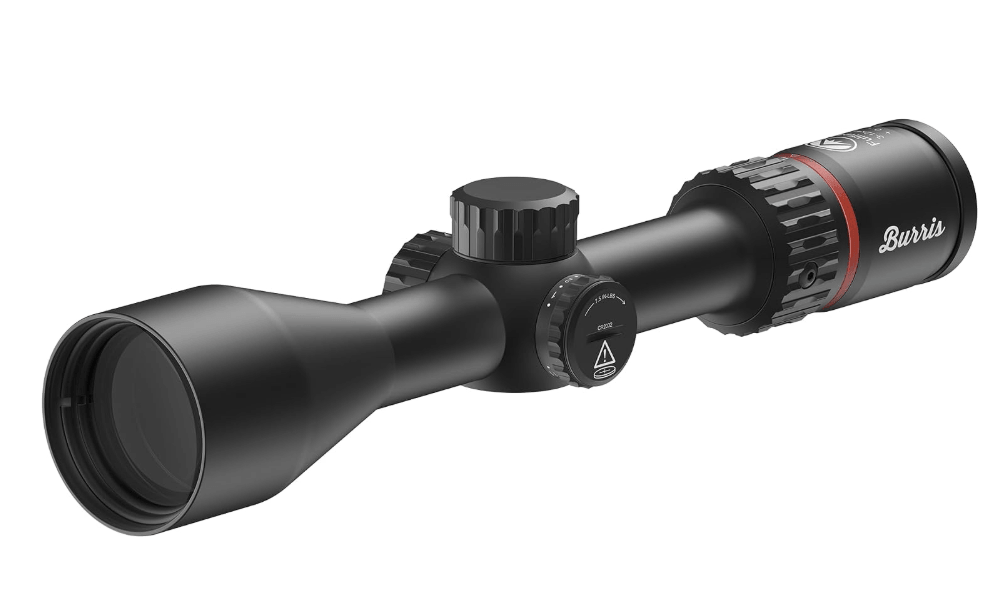
Best for mixed terrain and additional magnification
The Burris Fullfield 3–12×42 is worth considering if your hunting includes both wooded areas and more open terrain. Its 3–12x magnification range offers more maximum magnification than a conventional 3–9x scope without requiring a move to an especially large objective lens.
Burris lists the 3–12×42 Fullfield at approximately 14.7–15.3 ounces, depending on the specified version. Its published eye relief is 3.9–4.2 inches, with a 1-inch tube and a fixed 100-yard parallax setting for the applicable model.
Why Choose It?
The additional magnification can help when observing distant game in open country or assessing an animal before deciding whether the conditions are appropriate for a shot.
It also provides flexibility for hunters whose terrain changes throughout a trip. You can use lower power for a wider view and increase magnification when more visual detail is helpful.
Key Features
Magnification: 3–12x
Objective lens: 42mm
Main tube: 1 inch
Weight: approximately 14.7–15.3 ounces, depending on version
Second focal plane
Eye relief: approximately 3.9–4.2 inches
1/4 MOA adjustment increments
Fixed parallax on the applicable configuration
What These Features Mean in Real Use
The increase from 9x to 12x can help make distant details appear larger. However, higher magnification also narrows the field of view and makes movement or an unsteady shooting position more noticeable.
The 42mm objective lens is a moderate size for a hunting optic. It balances light collection with the physical dimensions of the scope, although actual low-light performance depends on the complete optical system, not objective diameter alone.
The second focal plane reticle stays approximately the same apparent size as magnification changes. If you use reticle markings for holdover, verify the magnification at which those references are calibrated.
Trade-Offs
This model is heavier than some lightweight 3–9×40 scopes. Its additional magnification may also be unnecessary for hunters who primarily shoot at shorter distances in dense cover.
Pros
Broader 3–12x magnification range
Moderate 42mm objective lens
Multiple reticle options, depending on model
Conventional hunting-oriented format
Useful flexibility across different terrain
Cons
Heavier than some lightweight alternatives
Fixed parallax on the applicable configuration
Narrower field of view at maximum magnification
Decision summary
Best if: You hunt mixed terrain and want more magnification than a conventional 3–9x scope provides.
Consider another option if: You prioritize minimum weight or rarely need magnification above 9x.
4. SIG SAUER WHISKEY4 3–12×44
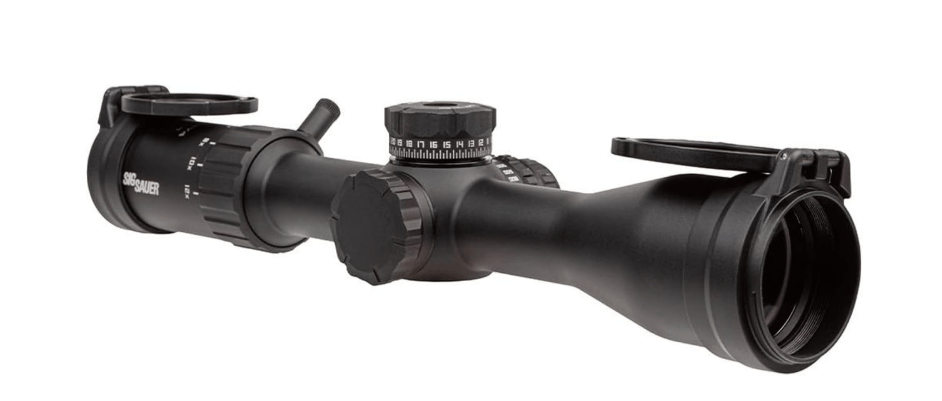
Best for hunters who want a 30mm tube and versatile magnification
The SIG SAUER WHISKEY4 3–12×44 offers a wider magnification range than a basic 3–9x hunting scope, along with a 44mm objective lens and 30mm main tube.
For the specified non-illuminated, second focal plane Quadplex configuration, SIG SAUER lists a weight of 23 ounces, a length of 12.2 inches, and eye relief of 4 inches at low magnification and 3.7 inches at high magnification. The family also includes different reticle and turret configurations, so the exact model matters.
Why Choose It?
The WHISKEY4 is suited to buyers who want a 3–12x range and prefer a scope with a 30mm tube. Some configurations offer a BDC reticle, while selected versions offer an illuminated Hellfire reticle.
These features can be useful to hunters who want a more specialized aiming system. However, the illuminated and non-illuminated versions should not be treated as identical products.
Key Features
Magnification: 3–12x
Objective lens: 44mm
Main tube: 30mm
Weight: 23 ounces for the specified non-illuminated configuration
Second focal plane
Quadplex or BDC reticle, depending on model
1/4 MOA adjustments on the specified version
Argon-purged, waterproof, and fogproof construction
Removable magnification throw lever on the listed family
What These Features Mean in Real Use
The 3–12x range provides flexibility across varied hunting environments. A 44mm objective lens may appeal to hunters seeking a balance between aperture size and overall scope dimensions.
The 30mm tube is relevant when selecting mounting rings. It does not automatically guarantee better optical performance than a 1-inch tube; optical design, adjustment range, and other specifications matter as well.
At 23 ounces, the specified version is substantially heavier than the lightweight Leupold. That difference is worth considering if you carry your rifle for hours at a time.
Trade-Offs
The main trade-off is weight. Some of the WHISKEY4’s more specialized features may also be unnecessary for hunters who simply want a conventional hunting reticle and a modest magnification range.
Pros
3–12x magnification
44mm objective lens
30mm main tube
Multiple configuration options
Weather-resistant, gas-purged construction
Cons
Heavier than lightweight hunting scopes
Mounting rings must match the 30mm tube
Reticle and illumination features vary by SKU
Decision summary
Best if: You want 3–12x magnification and a 30mm-tube scope with configuration choices.
Consider another option if: You want to minimize rifle weight or prefer a simpler 3–9x setup.
5. Athlon Talos 3–12×40 BDC 600 IR
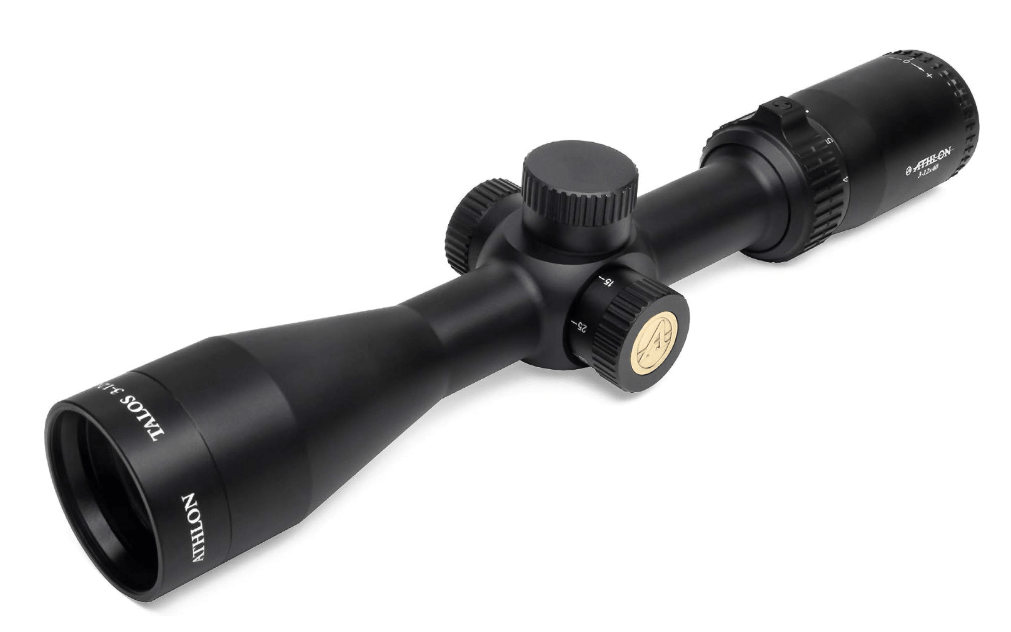
Best for hunters who want an illuminated reticle
The Athlon Talos 3–12×40 BDC 600 IR combines 3–12x magnification with a 40mm objective lens and an illuminated BDC reticle. It is an option for hunters who want additional aiming references without moving to a much larger objective lens.
Athlon lists the model at 16.2 ounces and 12 inches long, with a 1-inch tube, eye relief of 3.8–3.35 inches, and side-focus parallax adjustment starting at 15 yards.
Why Choose It?
An illuminated reticle can make the aiming point easier to distinguish against a dark or shaded background. This may be helpful during legal hunting hours when visibility is reduced.
For additional context, our guide to illuminated reticle scopes for dawn and dusk explains why illumination, lens coatings, objective size, and magnification should be considered together.
Key Features
Magnification: 3–12x
Objective lens: 40mm
Main tube: 1 inch
Weight: 16.2 ounces
BDC 600 IR illuminated reticle
Eye relief: 3.8–3.35 inches
Side-focus parallax adjustment starting at 15 yards
Fully multi-coated lenses
Waterproof, nitrogen-purged construction
What These Features Mean in Real Use
The illuminated aiming point can help the reticle stand out when a dark crosshair becomes difficult to see against shaded vegetation or an animal’s coat. It does not make an otherwise unclear target easier to identify, and it cannot replace adequate optical clarity.
The 3–12x range offers more magnification flexibility than a basic 3–9x scope. Side-focus adjustment is another useful distinction, allowing the user to adjust parallax for different distances.
However, eye relief decreases as magnification increases on this model. Since the .30-06 produces noticeable recoil, confirm the scope can be mounted with adequate eye clearance in the intended shooting position.
Trade-Offs
The illuminated reticle introduces battery dependence and additional complexity. The 40mm objective is smaller than the 44mm and 56mm options available in other hunting scopes, although objective size alone does not determine brightness.
The BDC markings also need to be understood and verified for the intended ammunition and setup rather than assumed to match every .30-06 load.
Pros
Illuminated BDC reticle
3–12x magnification
Side-focus parallax adjustment
16.2-ounce published weight
Fully multi-coated optics
Waterproof and nitrogen-purged construction
Cons
Requires a battery for illumination
Eye relief decreases at higher magnification
BDC references require appropriate verification
Smaller objective than some alternatives
Decision summary
Best if: You want an illuminated reticle, additional magnification, and adjustable parallax.
Consider another option if: You prefer a simpler reticle without battery dependence or want a different eye-relief profile.
Factors to Consider When Choosing a Scope for a .30-06 Springfield
1. Magnification
A 3–9x scope is a sensible starting point for many general hunting situations. It offers a wider view at low power and more image detail at high power.
A 3–12x scope offers additional magnification for open terrain. However, higher magnification also narrows the field of view and makes it more difficult to maintain a steady image. Choose according to the terrain and realistic shooting conditions rather than maximum magnification alone.
2. Eye Relief and Recoil
Eye relief is the distance between your eye and the scope’s eyepiece while maintaining a full sight picture. Because the .30-06 produces substantial recoil compared with many smaller hunting cartridges, adequate eye relief and correct mounting are important.
Compare eye relief at both ends of the magnification range. Ensure the scope is mounted with sufficient clearance for your shooting position, including when wearing heavy hunting clothing.
3. Objective Lens and Low-Light Performance
The objective lens affects the amount of light entering the scope, but it does not determine image brightness by itself. Lens quality, coatings, magnification, exit pupil, and other optical factors also contribute.
A 40mm or 42mm objective can provide a practical balance of optical performance and manageable size. Larger objectives may be worth considering for hunters who prioritize low-light observation, but they can increase weight and mounting-height requirements.
4. Weight and Rifle Balance
A scope weighing 12 ounces affects the complete rifle differently from one weighing 23–28 ounces. The difference can matter when hiking through mountainous terrain or carrying a rifle throughout a long hunting day.
Consider the weight of the scope, rings, base, and other accessories together. A lighter scope may be preferable for mobile hunting, while additional features may justify more weight for other applications.
5. Reticle and Adjustment System
A Duplex or V-Plex reticle offers a relatively simple aiming reference. A BDC reticle adds markings intended to assist with different distances, but the markings must be matched to the intended cartridge and setup.
Capped turrets help protect adjustments from accidental movement. Exposed or specialized turrets may suit users who make deliberate adjustments, but they are not essential for every hunting situation.
6. Mounting Compatibility and Weather Protection
Confirm that the scope’s tube diameter matches the rings, that the objective bell clears the rifle, and that the eye relief can be set correctly. The rifle’s receiver, base, and mounting hardware all affect compatibility.
Waterproof and fogproof construction is also useful when hunting in rain, changing temperatures, and damp environments. Check the manufacturer’s specifications for the exact model before buying.
Frequently Asked Questions
1. What magnification is best for a .30-06 hunting rifle?
A 3–9x scope is a practical starting point for many deer hunters. A 3–12x scope offers more flexibility for open terrain and distant observation. The best choice depends on hunting conditions and intended use.
2. Is a 40mm objective lens enough for a .30-06 scope?
Yes, a 40mm objective can be suitable for many hunting applications. Optical quality, lens coatings, magnification, and exit pupil also affect viewing performance, so a larger objective is not automatically better.
3. Do I need an illuminated reticle for .30-06 hunting?
No. A conventional reticle can be sufficient in good lighting. An illuminated reticle may help the aiming point stand out against dark backgrounds, but it does not replace the need to identify the target clearly or comply with legal hunting hours.
Conclusion
The best scope for a .30-06 Springfield depends on how and where you hunt. The Leupold VX-Freedom 3–9×40 is a strong candidate if keeping weight low and operation simple are priorities. The Vortex Crossfire II offers a conventional alternative, while the Burris Fullfield and SIG SAUER WHISKEY4 provide broader magnification ranges. The Athlon Talos is worth considering if an illuminated reticle and adjustable parallax are important to you.
Before buying, compare the exact model specifications, eye relief, reticle, mounting requirements, and overall weight. A scope that suits your hunting environment and shooting needs is more useful than one chosen simply because it offers the highest magnification.