The best scope for a .30-06 rifle balances useful magnification, comfortable eye relief, manageable weight, and dependable construction. Whether you hunt whitetail deer in thick timber, pursue elk across open country, or use your rifle for recreational target shooting, the right optic should match your typical shooting distance rather than simply offer the highest magnification.
For most general-purpose hunting, a traditional 3-9x or 3-12x scope is a sensible starting point. A lightweight 3-9x model suits hunters who carry their rifles for hours, while a 4-12x or higher-magnification optic offers more flexibility for identifying targets and aiming at longer distances. The .30-06’s recoil also makes generous eye relief and a secure, correctly fitted mounting system important considerations.
This guide compares five riflescopes with different strengths, from straightforward hunting optics to more specialized options for distance shooting. The aim is to help you choose a scope that fits your hunting terrain, rifle balance, and intended use.
Quick Decision Table
| Product | Best For | Weight | Magnification | Key Advantage | Check Price |
| Leupold VX-Freedom 3-9×40 | General hunting | 12.2 oz | 3-9x | Lightweight design | 👉 View on Amazon |
| Burris Fullfield IV 3-12×42 | Versatile field use | 17.6 oz | 3-12x | Additional magnification | 👉 View on Amazon |
| Vortex Diamondback Tactical 4-12×40 | Range and distance shooting | 17.5 oz | 4-12x | Exposed adjustment turrets | 👉 View on Amazon |
| Primary Arms SLx 4-14×44 FFP | Reticle-based distance shooting | Not Specified | 4-14x | First-focal-plane reticle | 👉 View on Amazon |
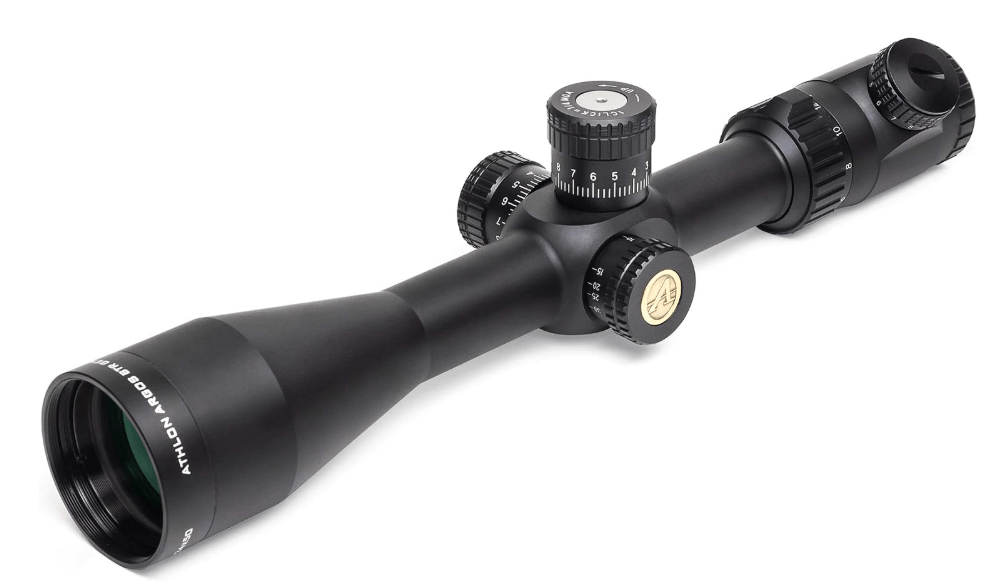
| Athlon Argos BTR GEN2 6-24×50 | Dedicated target shooting | Not Specified | 6-24x | High maximum magnification | 👉 View on Amazon |
Quick Recommendations
Choose the Leupold VX-Freedom 3-9×40 if: You want a lightweight, uncomplicated scope for general big-game hunting.
Choose the Burris Fullfield IV 3-12×42 if: You want a wider magnification range for mixed terrain and occasional longer shots.
Choose the Vortex Diamondback Tactical 4-12×40 if: You prioritize adjustable turrets and range practice over a traditional hunting-scope layout.
Choose the Primary Arms SLx 4-14×44 FFP if: You prefer a first-focal-plane reticle for using its subtensions across magnification settings.
Choose the Athlon Argos BTR GEN2 6-24×50 if: Your .30-06 is primarily a range or precision-shooting rifle rather than a lightweight hunting rifle.
How These Products Were Chosen
The selection considers magnification, eye relief, weight, reticle design, adjustment controls, and suitability for the intended application. A hunting scope needs to be comfortable to carry and quick to acquire through, whereas a range-oriented optic can justify greater weight and more elaborate adjustment features.
Manufacturer specifications are used where they can be verified. The five models represent different design priorities, not a claim that every scope is equally suitable for every .30-06 rifle. Before purchasing, confirm the exact model, reticle, tube diameter, and current retailer listing.
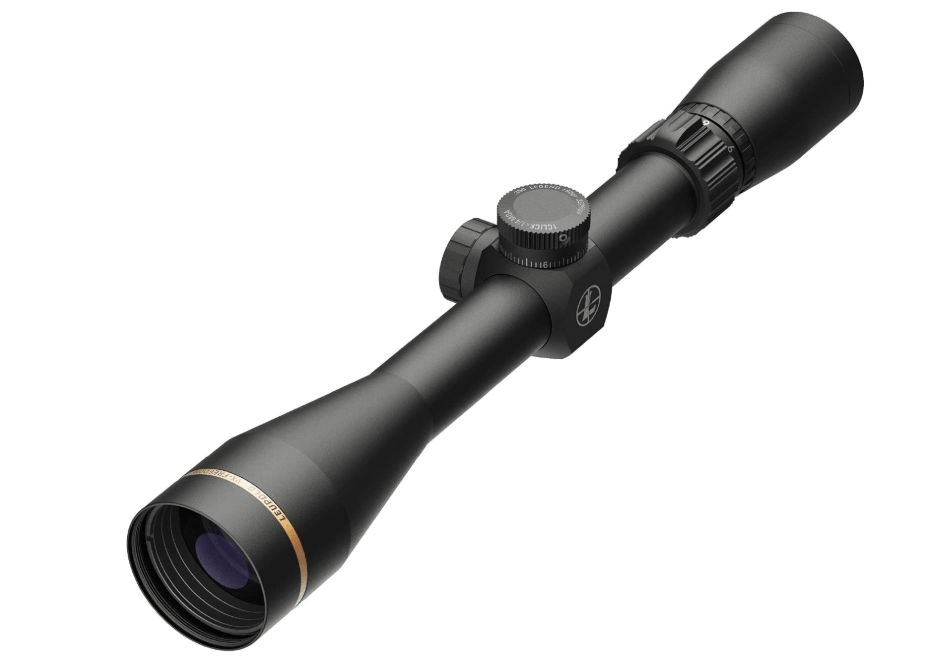
1. Leupold VX-Freedom 3-9×40 — Best for General Hunting
Best suited to hunters who prioritize low weight and a straightforward reticle.
The Leupold VX-Freedom 3-9×40 is a practical option for a .30-06 hunting rifle that spends most of its time in the field. Its conventional magnification range suits general big-game hunting without adding the bulk of a dedicated precision optic.
Leupold lists the standard 3-9×40 configuration at 12.2 ounces, with a 1-inch main tube and a second-focal-plane reticle.
Why Choose It
Its biggest advantage is simplicity. A conventional hunting reticle provides an uncluttered aiming point, while the 3-9x range covers many ordinary hunting situations.
The relatively low weight also makes it attractive for hunters who walk long distances or carry their rifle over uneven terrain.
Key Features
Magnification: 3-9x
Objective lens: 40mm
Weight: 12.2 ounces
Tube diameter: 1 inch
Eye relief: 4.2 inches at low magnification and 3.7 inches at high magnification
Field of view: 33.1–13.6 feet at 100 yards
Reticle: Duplex or another configuration-specific option
Parallax: Fixed at 150 yards for the standard configuration
What These Features Mean in Real Use
At 3x, the scope offers a wider field of view than it does at 9x, helping you maintain awareness of the surrounding area. At higher magnification, the image provides more detail for careful aiming at greater distances.
The 40mm objective offers a practical balance between optical performance, overall size, and mounting height. The 12.2-ounce weight is particularly appealing on a rifle carried throughout the day.
Eye relief deserves special attention on a .30-06. The listed 3.7-inch high-power eye relief means you should establish a comfortable, repeatable shooting position and confirm adequate clearance before firing.
Trade-Offs
The standard model favors simplicity over specialized features. It does not have adjustable parallax, and its conventional reticle lacks the detailed holdover references found on some distance-oriented optics.
May Not Be Ideal If: You frequently shoot paper targets at varied distances or want exposed turrets and extensive reticle references.
Pros
Lightweight construction
Practical 3-9x magnification
Familiar hunting reticle options
Straightforward controls
Cons
Fixed parallax
Limited specialized adjustment features
Eye relief decreases at higher magnification
Decision Summary
Best if: You want a lightweight, conventional scope for general .30-06 hunting.
Consider another option if: You need adjustable parallax or a more elaborate system for distance shooting.
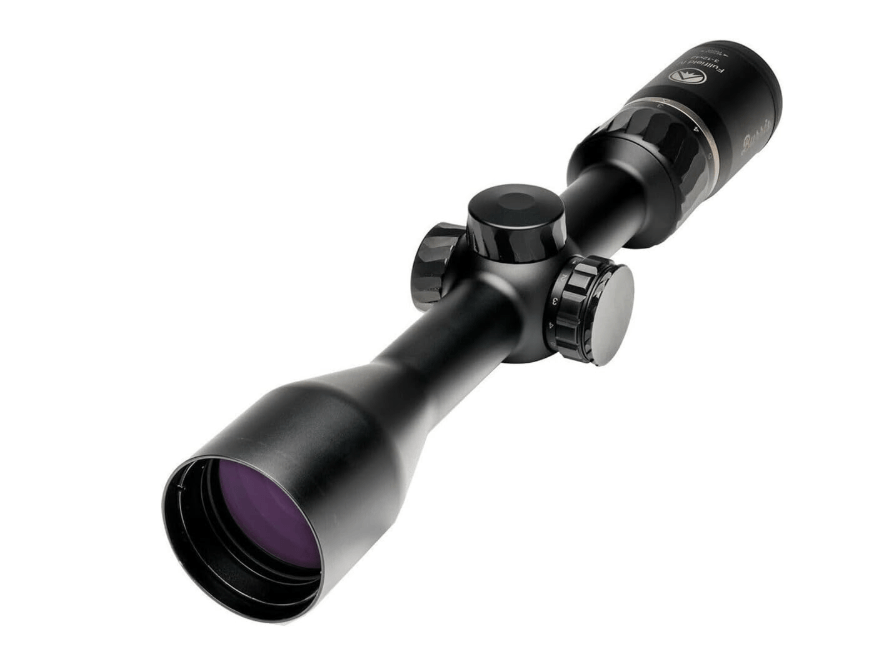
2. Burris Fullfield IV 3-12×42 — Best for Versatile Field Use
Best suited to hunters who want more magnification without moving to a large target scope.
The Burris Fullfield IV 3-12×42 offers a useful middle ground between a basic hunting scope and a more specialized distance optic. Its 3x low end remains practical for many hunting situations, while 12x provides additional magnification for examining distant targets.
Burris lists this configuration with a 42mm objective, a 1-inch tube, and a second-focal-plane reticle. The non-illuminated Long-Range MOA version weighs 17.6 ounces. Other reticle versions have different specifications.
Why Choose It
The additional magnification makes this scope appealing for hunters who alternate between wooded areas and more open terrain.
It also provides an option for recreational range use. However, the standard configuration has fixed parallax, so it is not as adjustable as a dedicated precision scope.
Key Features
Magnification: 3-12x
Objective lens: 42mm
Weight: 17.6 ounces for the listed Long-Range MOA version
Tube diameter: 1 inch
Eye relief: 3.5–3.8 inches
Field of view: 38–9 feet at 100 yards
Reticle: Configuration-dependent
Adjustment value: 1/4 MOA per click
Parallax: Fixed at 100 yards
What These Features Mean in Real Use
The 3-12x magnification range offers flexibility. Lower power helps preserve the field of view when locating game, while 12x can make it easier to distinguish aiming details at longer distances.
Compared with the Leupold, the Burris weighs approximately 5.4 ounces more. That difference may be acceptable for a rifle used from a blind or shooting rest, but it becomes more noticeable during long hikes.
The Long-Range MOA reticle provides reference marks intended for more deliberate aiming. Those references should be matched to the actual ammunition and trajectory rather than assumed to correspond perfectly to every .30-06 load.
Trade-Offs
The Burris offers more magnification than a conventional 3-9x scope, but the additional weight and narrower field of view at maximum power are worth considering.
The fixed parallax is also a limitation for precision target work at changing distances.
May Not Be Ideal If: Your priority is the lightest possible hunting setup or you require adjustable parallax for frequent precision shooting.
Pros
Versatile 3-12x magnification
42mm objective
Multiple reticle options
Useful for both field and recreational range use
Cons
Heavier than the Leupold listed above
Fixed parallax
Reticle features vary by configuration
Decision Summary
Best if: You want a versatile scope for mixed hunting terrain and occasional longer shots.
Consider another option if: You need a lightweight setup or regularly use adjustable parallax.
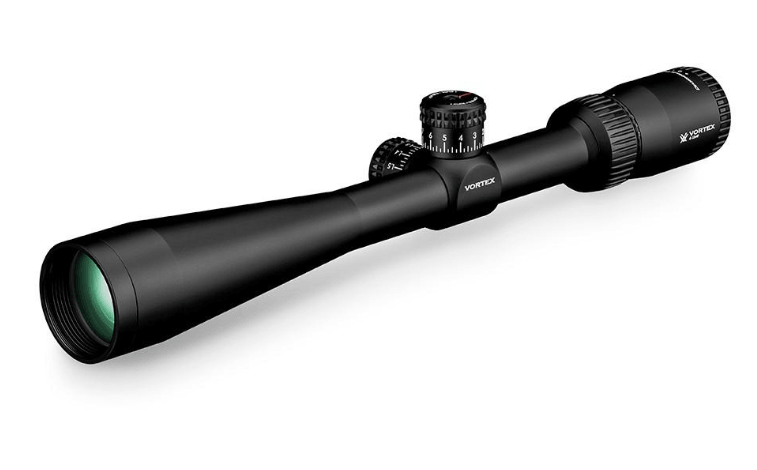
3. Vortex Diamondback Tactical 4-12×40 — Best for Range Practice
Best suited to range-focused shooters who want accessible adjustment controls.
The Vortex Diamondback Tactical 4-12×40 is a more range-oriented choice than a traditional hunting scope. Its magnification range and exposed turrets favor deliberate shooting, making it worth considering if your .30-06 spends substantial time at the range.
Vortex lists the Tactical 4-12×40 with a second-focal-plane VMR-1 MOA reticle, 1-inch tube, 17.5-ounce weight, and fixed 100-yard parallax setting.
Why Choose It
The main attraction is its exposed adjustment system. Rather than relying entirely on a simple hunting reticle, the shooter can make measured adjustments when using a known zero and a verified ballistic solution.
This is particularly relevant to recreational target shooting, where you may want to record and repeat adjustments between distances.
Key Features
Magnification: 4-12x
Objective lens: 40mm
Weight: 17.5 ounces
Tube diameter: 1 inch
Reticle: VMR-1 MOA, second focal plane
Eye relief: 3.9 inches
Field of view: 23.6–7.9 feet at 100 yards
Adjustment value: 1/4 MOA per click
Turrets: Exposed
Parallax: Fixed at 100 yards
What These Features Mean in Real Use
The 4x minimum magnification gives you less field of view than the Leupold’s 3x setting. That makes the Diamondback Tactical less attractive when you need to locate game quickly in dense cover.
In contrast, the 12x maximum offers useful detail for paper targets and deliberate shooting at distance. The exposed turrets allow adjustments without first removing protective caps.
The second-focal-plane reticle retains its apparent size as magnification changes. However, any reticle subtensions must be used according to the manufacturer’s instructions and the magnification for which they are calibrated.
Trade-Offs
This is a range-focused design rather than the most streamlined choice for a hunting rifle. Its exposed turrets can also be less convenient than capped controls when moving through thick brush or handling equipment in the field.
The fixed parallax setting limits its flexibility for precision shooting at varying distances.
May Not Be Ideal If: You primarily hunt in dense timber or want a lightweight scope with capped turrets.
Pros
Exposed adjustment turrets
Useful 4-12x range
MOA-based reticle
Relatively compact 40mm objective
Cons
Less field of view at low power than a 3x scope
Fixed parallax
Exposed turrets may be less convenient in rough field conditions
Decision Summary
Best if: You use your .30-06 for range practice and want more adjustment flexibility.
Consider another option if: Your priority is quick target acquisition while hunting in close cover.
4. Primary Arms SLx 4-14×44 FFP — Best for Reticle-Based Distance Shooting
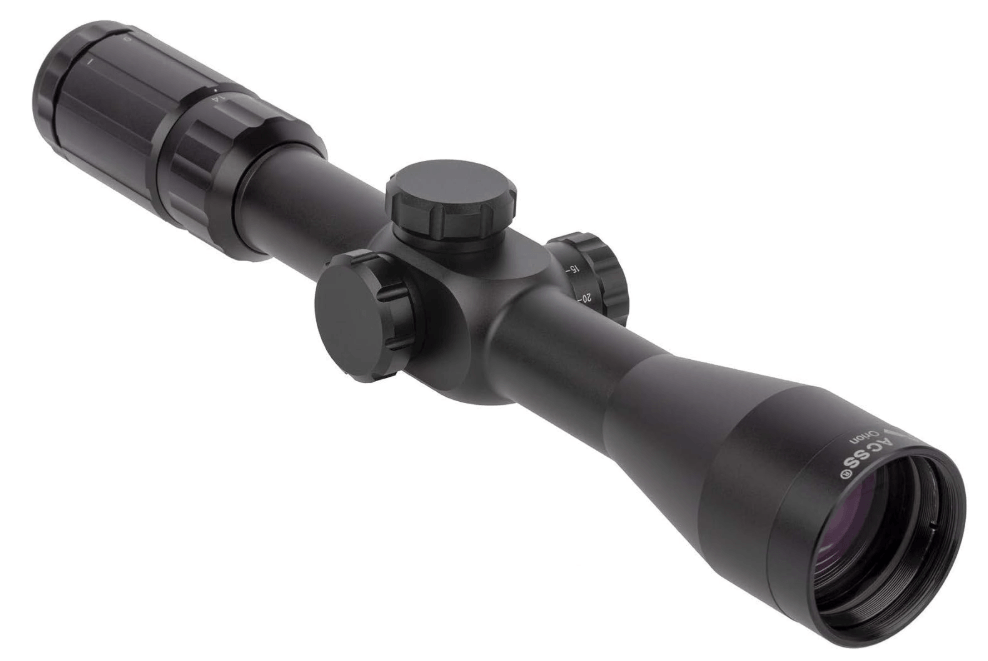
Best suited to shooters who prefer first-focal-plane reticle references.
The Primary Arms SLx 4-14×44 FFP represents a different approach from conventional hunting optics. Its first-focal-plane design is intended for shooters who use reticle references to estimate corrections and make repeatable adjustments.
Before purchasing, confirm the exact SLx model and reticle. Primary Arms has offered multiple optics with similar names, and their features should not be treated as interchangeable.
Why Choose It
The key distinction is the first-focal-plane reticle. In this design, the reticle changes apparent size as magnification changes, keeping its subtensions consistent relative to the target throughout the magnification range.
That feature can be useful for shooters who use the reticle for holdovers or wind corrections. It is less important to hunters who simply want a clean crosshair for ordinary field shots.
Key Features
Magnification: 4-14x
Objective lens: 44mm
Focal plane: First focal plane
Reticle: Confirm the exact model
Weight: Confirm the exact model
Tube diameter: Confirm the exact model
Adjustment values and parallax: Confirm the exact model
What These Features Mean in Real Use
At 4x, the scope offers a more moderate field of view than a conventional 3-9x hunting scope at its lowest setting. At 14x, it provides additional magnification for carefully aimed shots at distance.
The first-focal-plane reticle can make range and hold references more consistent across magnification settings. However, the shooter must understand the reticle’s markings and verify their application with the actual ammunition.
The 44mm objective is larger than the 40mm objectives on the Leupold and Vortex models in this guide. That difference alone does not establish which scope will deliver the best image; lens design, coatings, optical quality, and viewing conditions also matter.
Trade-Offs
The greater magnification and more technical reticle may be unnecessary for ordinary deer hunting. Also, the model-specific details need to be confirmed before making a direct weight or feature comparison.
May Not Be Ideal If: You prefer a simple Duplex-style reticle and rarely make deliberate distance corrections.
Pros
First-focal-plane reticle design
Higher maximum magnification than a standard 3-9x scope
Useful for reticle-based aiming methods
Cons
Exact specifications depend on the model
More technical than many hunters need
Additional magnification may be unnecessary for close-range hunting
Decision Summary
Best if: You want a first-focal-plane optic for deliberate range shooting and reticle-based corrections.
Consider another option if: You prioritize a lightweight, uncomplicated hunting setup.
5. Athlon Argos BTR GEN2 6-24×50 — Best for Dedicated Target Shooting
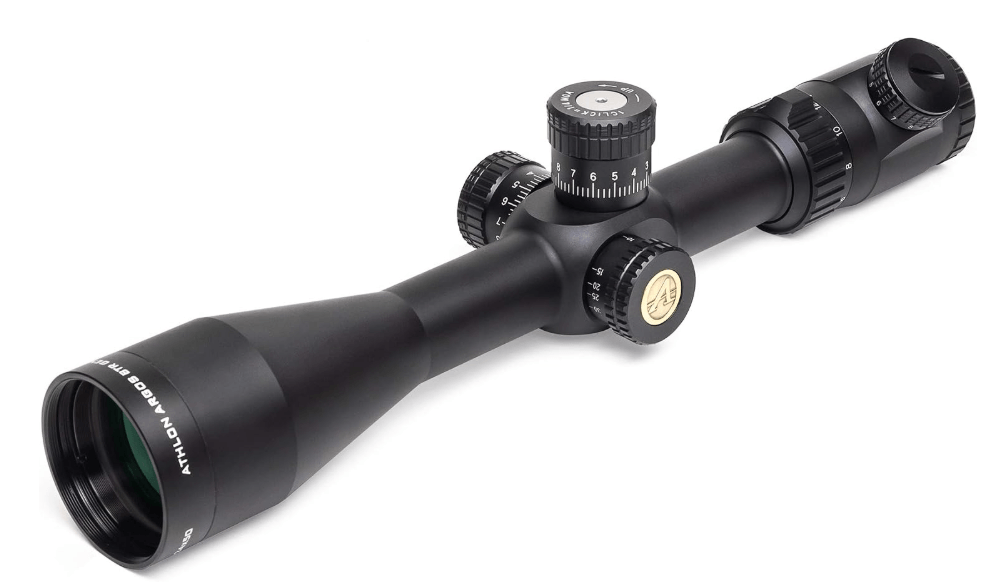
Best suited to stationary range use, with an important availability caveat.
The Athlon Argos BTR GEN2 6-24×50 is a high-magnification optic designed around long-range target shooting rather than lightweight field hunting. It provides a useful example of the features that become relevant when a .30-06 is used primarily from a bench or supported shooting position.
Why Choose It
Its 6-24x magnification range and side-focus parallax adjustment make the Argos BTR GEN2 more specialized for precision range work than the first three scopes in this guide.
It is most relevant to a shooter who values high magnification, adjustable parallax, and exposed turrets over portability.
Key Features
Magnification: 6-24x
Objective lens: 50mm
Weight: 30.3 ounces
Tube diameter: 30mm
Eye relief: 3.3 inches
Field of view: 16.7–4.5 feet at 100 yards
Reticle: First-focal-plane illuminated options, depending on model
Turrets: Exposed
Parallax: Side focus from 10 yards to infinity
Construction: One-piece aluminum tube
Purging: Argon
What These Features Mean in Real Use
The 6x minimum magnification gives a narrower field of view than the hunting scopes discussed earlier. That makes it less convenient for quickly locating game in thick cover.
At 24x, the scope provides more image magnification for examining paper targets and refining aim from a stable position. Side-focus parallax adjustment helps the shooter reduce apparent reticle movement relative to the target when properly adjusted.
The 30.3-ounce weight is substantial for a rifle that must be carried over long distances. Combined with the 50mm objective, it makes more sense on a range-oriented rifle than on a lightweight backcountry hunting setup.
The listed 3.3-inch eye relief also deserves attention on a .30-06. Correct mounting and a consistent shooting position are essential for maintaining adequate clearance under recoil.
Trade-Offs
High magnification, adjustable parallax, and exposed turrets are useful for certain range applications, but they add bulk and complexity. The discontinued status is another significant drawback for buyers who want straightforward current retail availability and support.
May Not Be Ideal If: You need a current, readily available product or carry your rifle over long distances while hunting.
Pros
High 6-24x magnification range
Adjustable side-focus parallax
Exposed turrets and a zero-stop system
First-focal-plane reticle options
Cons
Heavy at 30.3 ounces
Narrow field of view at high magnification
Shorter listed eye relief than the Leupold
Discontinued model with uncertain retailer availability
Decision Summary
Best if: You find a verified, suitable example and want a high-magnification optic for stationary target shooting.
Consider another option if: You need a current-production scope or a lightweight hunting optic.
Factors to Consider When Choosing a Scope for a .30-06 Rifle
1. Magnification and Field of View
For general hunting, 3-9x is a practical starting point. It provides a relatively broad field of view at low power and sufficient magnification for many moderate-distance situations.
A 3-12x or 4-14x scope can make more sense when you regularly hunt open terrain or spend time shooting at the range. However, higher magnification does not automatically improve results. It can make the image appear shakier, narrow the field of view, and make quick target acquisition more difficult.
Choose magnification according to your normal hunting environment and the distances at which you can make a safe, ethical shot.
2. Eye Relief and Recoil
The .30-06 produces substantial recoil compared with many lighter sporting cartridges. Adequate eye relief helps prevent the scope from striking your brow when the rifle moves backward during firing.
Look at the manufacturer’s eye-relief figures, but do not rely on the number alone. Your stock dimensions, shooting position, scope mounting, and clothing affect how much clearance you have.
A qualified gunsmith can help ensure that the scope is mounted securely and positioned correctly. Always verify eye clearance from your normal shooting positions before using the rifle.
3. Objective Size and Optical Performance
A larger objective lens can support a larger exit pupil at a given magnification, but it does not guarantee a brighter or sharper image.
For example, a 40mm objective at 8x produces a theoretical 5mm exit pupil. A 50mm objective at the same magnification produces 6.25mm. Actual perceived brightness also depends on lens transmission, coatings, optical quality, and ambient light.
A larger objective may require higher mounting rings, which can affect cheek weld and rifle handling. For a hunting rifle, a well-made 40mm or 42mm scope may provide a more practical balance than a bulky 50mm model.
4. Weight and Rifle Balance
Scope weight matters when you carry a rifle throughout a long hunting day. A lightweight optic can help preserve the rifle’s balance and reduce fatigue, particularly during backcountry hunts.
A heavier scope may be acceptable for a rifle used mainly from a bench or supported position. However, adding weight can make a rifle less comfortable to carry and harder to handle quickly.
Compare the complete setup, including rings and bases, rather than considering the scope alone.
5. Reticle and Turret Design
A conventional Duplex reticle is often sufficient for straightforward hunting. More elaborate MOA, MIL, or ballistic reticles can help with distance corrections, but only when their markings are understood and verified.
Capped turrets are practical for hunters who want to avoid accidental adjustments. Exposed turrets suit shooters who make frequent, deliberate corrections at the range.
For more specialized reticle designs, our guide to scopes for .300 Winchester Magnum provides another comparison of optics suited to powerful centerfire rifles and distance-oriented use.
6. Parallax and Mounting Compatibility
Parallax occurs when the reticle appears to shift against the target as your eye moves behind the scope. Adjustable parallax can help precision shooters at varying distances, while a fixed setting is often sufficient for general hunting.
Before purchasing, confirm the scope’s tube diameter, ring height, objective clearance, and compatibility with your rifle’s mounting system. A 1-inch tube and a 30mm tube require different rings.
Also verify that the scope can be mounted at a comfortable height without compromising a consistent cheek weld.
Frequently Asked Questions
What magnification is best for a .30-06 hunting rifle?
For general deer and big-game hunting, 3-9x is a versatile starting point. A 3-12x scope suits hunters who want additional magnification for open terrain, while higher-powered optics are more appropriate for specialized range use.
Is a 50mm objective better than a 40mm objective on a .30-06?
Not automatically. A 50mm objective can provide a larger exit pupil at the same magnification, but overall optical quality and light transmission also matter. A 40mm scope is often easier to mount low and can keep the rifle lighter.
Does a .30-06 need a special recoil-rated scope?
Rather than relying on a marketing label alone, select a reputable scope intended for centerfire rifle use and confirm the manufacturer’s specifications and warranty terms. Proper mounting and adequate eye relief are also important for a rifle with .30-06 recoil.
Conclusion
The right scope for a .30-06 depends on how you use the rifle. The Leupold VX-Freedom 3-9×40 offers a lightweight, traditional hunting configuration, while the Burris Fullfield IV 3-12×42 provides additional magnification for varied terrain. The Vortex Diamondback Tactical is more range-oriented, and first-focal-plane or high-magnification designs suit shooters who prioritize reticle references and precision adjustments.
For most hunters, start with practical magnification, comfortable eye relief, and manageable weight. Choose more specialized features only when your intended use justifies them, and confirm the exact configuration and current retailer availability before buying.