The best scope for a Weatherby Vanguard depends on whether you use your rifle for deer hunting, varmint shooting, or precision-oriented target work. A lightweight 3–9x or 3.5–10x hunting scope suits many general-purpose setups, while a 4–16x optic can be more useful for small targets and deliberate shooting at longer distances.
The key is matching the scope to your Vanguard’s chambering, your intended use, and the distances at which you typically shoot. The five options below cover different priorities, from lightweight hunting to higher-magnification shooting, so you can narrow your choice without paying for features you may not need.
Quick Decision Table
| Product | Best For | Weight | Magnification | Key Advantage | Check Price |
|---|---|---|---|---|---|
| Leupold VX-Freedom 3–9×40 | General hunting | 12.2 oz | 3–9× | Lightweight, straightforward design | 👉 View on Amazon |
| Vortex Diamondback Tactical 3–9×40 | Range-oriented shooting | 15.9 oz | 3–9× | First-focal-plane reticle | 👉 View on Amazon |
| Burris Fullfield 3–12×42 | Versatile hunting and target use | 14.7 oz | 3–12× | Additional magnification without a large objective | 👉 View on Amazon |
| Burris Fullfield IV 4–16×50 | Higher-magnification shooting | 17.7–18.2 oz | 4–16× | Side parallax adjustment on listed models | 👉 View on Amazon |
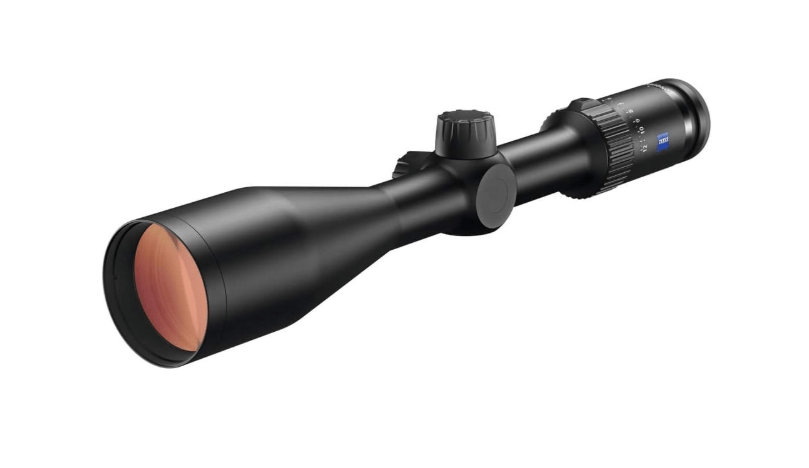
| ZEISS Conquest V4 3–12×56 | Low-light-oriented hunting | Not Specified | 3–12× | 56mm objective and coated optics | 👉 View on Amazon |
Quick Recommendations
Choose the Leupold VX-Freedom 3–9×40 if: you want a lightweight, uncomplicated scope for general hunting and ordinary field use.
Choose the Vortex Diamondback Tactical 3–9×40 if: you want a first-focal-plane reticle and prefer a scope with range-oriented adjustment features.
Choose the Burris Fullfield 3–12×42 if: you want more magnification than a conventional 3–9× scope while keeping the optic relatively compact.
Choose the Burris Fullfield IV 4–16×50 if: you spend more time shooting from a stable position and want higher magnification with adjustable parallax.
Choose the ZEISS Conquest V4 3–12×56 if: low-light hunting is a priority and you are comfortable with the larger objective and the mounting requirements it brings.
How These Products Were Chosen
The Weatherby Vanguard is a bolt-action rifle platform used in different chamberings and hunting configurations. That means the ideal scope depends less on the rifle’s name alone and more on how you intend to use it.
This selection emphasizes practical differences in magnification, weight, reticle design, objective size, and adjustment features. Manufacturer specifications provide the basis for the comparisons, while the recommendations explain how those features affect a typical hunting or range setup.
For most general-purpose hunting, a moderate magnification range and manageable weight make a sensible starting point. More specialized shooting can justify a larger objective, additional magnification, or more sophisticated reticle and adjustment systems.
1. Leupold VX-Freedom 3–9×40
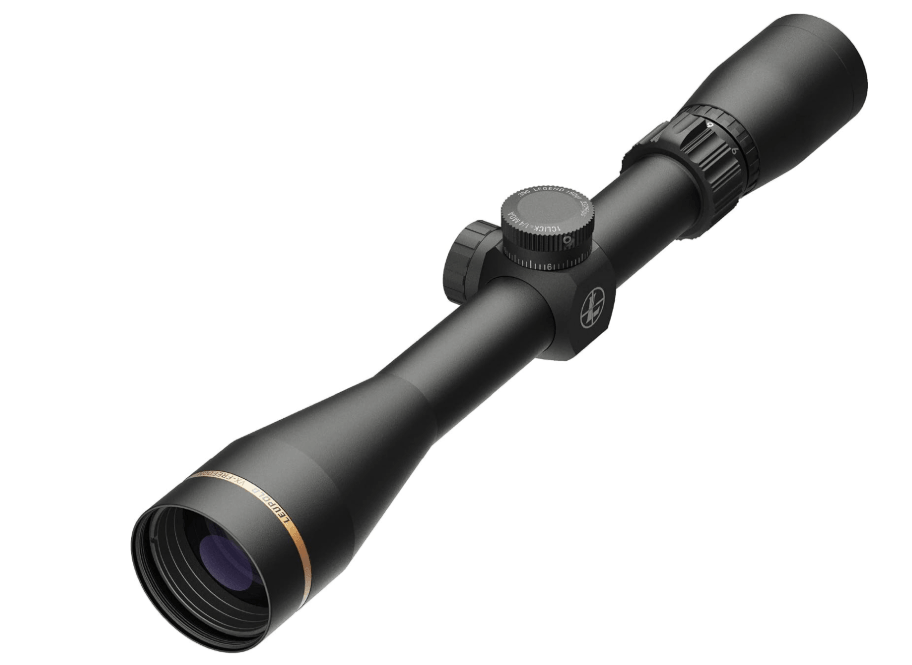
Best for general-purpose hunting
The Leupold VX-Freedom 3–9×40 is a practical starting point for a Weatherby Vanguard that will primarily be used for hunting. Its moderate magnification range keeps the design straightforward, while the 40mm objective avoids the bulk of many larger hunting optics.
Why Choose It
A general-purpose hunting scope should make it easy to acquire a target, provide enough magnification for the intended distance, and avoid unnecessary weight. The VX-Freedom meets those priorities without requiring the shooter to learn a complicated reticle system.
Its simple Duplex reticle is particularly suitable for buyers who prefer conventional crosshairs and expect to use a verified zero rather than make frequent turret adjustments.
Key Features
Magnification: 3–9×
Objective lens: 40mm
Weight: 12.2 ounces
Tube diameter: 1 inch
Eye relief: 4.2 inches at low power and 3.7 inches at high power
Field of view: 33.1–13.6 feet at 100 yards
Parallax: Fixed at 150 yards
Reticle: Second-focal-plane Duplex
What These Features Mean in Real Use
At 3×, the wider field of view helps you locate a stationary target and maintain more awareness of the surrounding area. At 9×, additional magnification makes it easier to distinguish details at greater distances, although the field of view narrows.
The 12.2-ounce weight is a meaningful advantage for hunters who carry their rifles over long distances. A lighter scope also helps avoid adding unnecessary weight to an already equipped rifle.
Eye relief decreases as magnification increases, so the scope should be mounted to provide a comfortable sight picture throughout its magnification range. Its fixed parallax setting favors conventional hunting distances rather than specialized close-range or precision-target applications.
Trade-Offs
The VX-Freedom prioritizes simplicity over advanced adjustment features. It does not have adjustable side focus, and its 9× maximum magnification may be limiting for shooters who regularly work with small targets at greater distances.
May Not Be Ideal If
You want adjustable parallax, a first-focal-plane reticle, or a higher-magnification scope for dedicated target shooting.
Pros
Lightweight construction
Straightforward Duplex reticle
Useful general-purpose magnification
Relatively compact 40mm objective
Cons
No adjustable side focus
Limited maximum magnification for specialized range use
Reticle references are not designed for advanced measurement work
Decision Summary
Best if: You want a lightweight hunting scope for a straightforward Weatherby Vanguard setup.
Consider another option if: You need adjustable parallax or more magnification for precision-oriented shooting.
2. Vortex Diamondback Tactical 3–9×40
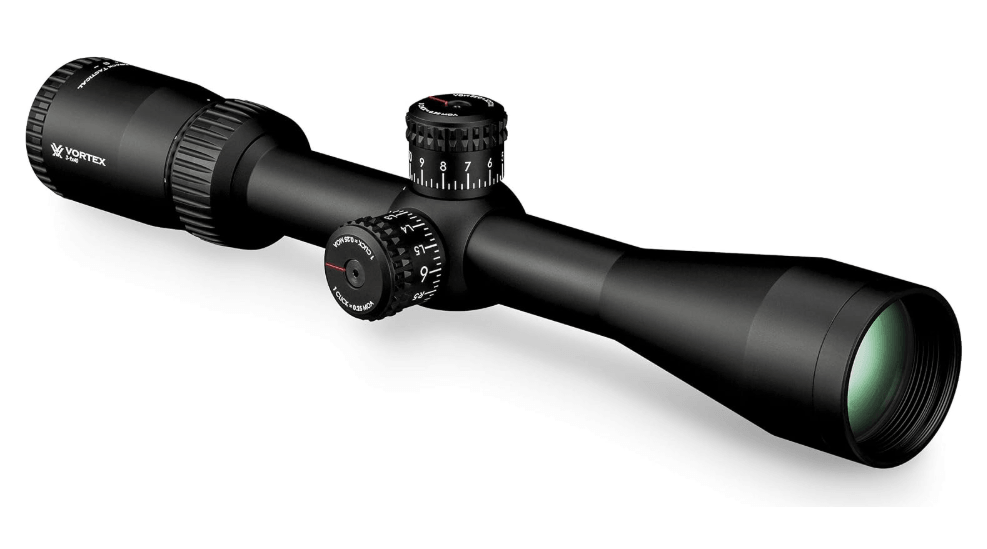
Best for range-oriented shooting
The Vortex Diamondback Tactical 3–9×40 differs from a conventional hunting scope through its first-focal-plane reticle and adjustment-oriented design. It is worth considering if your Vanguard is used for recreational range shooting as well as hunting.
Why Choose It
The first-focal-plane reticle changes apparent size as magnification changes. Its measurement references remain proportional to the target throughout the magnification range, which can be useful when applying holdovers or estimating corrections with a reticle you understand.
This is a different approach from the simple Duplex reticle on the Leupold. It offers more measurement-oriented functionality, but it also requires the buyer to learn the reticle’s markings.
Key Features
Magnification: 3–9×
Objective lens: 40mm
Weight: 15.9 ounces
Tube diameter: 1 inch
Eye relief: 3.9 inches
Field of view: 33.7–11.3 feet at 100 yards
Parallax: Fixed at 100 yards
Reticle: VMR-1 MOA, second focal plane in the listed configuration
What These Features Mean in Real Use
The reticle is designed around MOA references for holdover, windage corrections, and other range-related measurements. However, the listed configuration uses a second-focal-plane reticle, so its subtensions are calibrated for a specified magnification. Check the manual before using its markings for calculations.
At 15.9 ounces, it is heavier than the Leupold VX-Freedom. That difference is not enormous, but it matters when you are trying to keep a rifle light for long hunting trips.
The fixed 100-yard parallax setting also suits conventional distances better than shooting at widely varying distances where parallax correction is important.
Trade-Offs
The Diamondback Tactical is more adjustment-oriented than a basic hunting scope, yet this particular 3–9×40 configuration does not offer adjustable parallax. Buyers seeking both high magnification and side focus should look at a different configuration rather than assume every Diamondback Tactical model has the same features.
May Not Be Ideal If
Your priority is the lightest possible rifle, you want adjustable parallax, or you prefer a simple reticle with minimal markings.
Pros
First-focal-plane design
MOA-based reticle
Moderate magnification range
Published specifications make configuration comparison straightforward
Cons
Heavier than the Leupold VX-Freedom
No adjustable side focus in this configuration
More complex than a conventional hunting reticle
Decision Summary
Best if: You want a scope with a measurement-oriented reticle for recreational range use.
Consider another option if: You primarily hunt and prefer a simple, lightweight optic.
3. Burris Fullfield 3–12×42
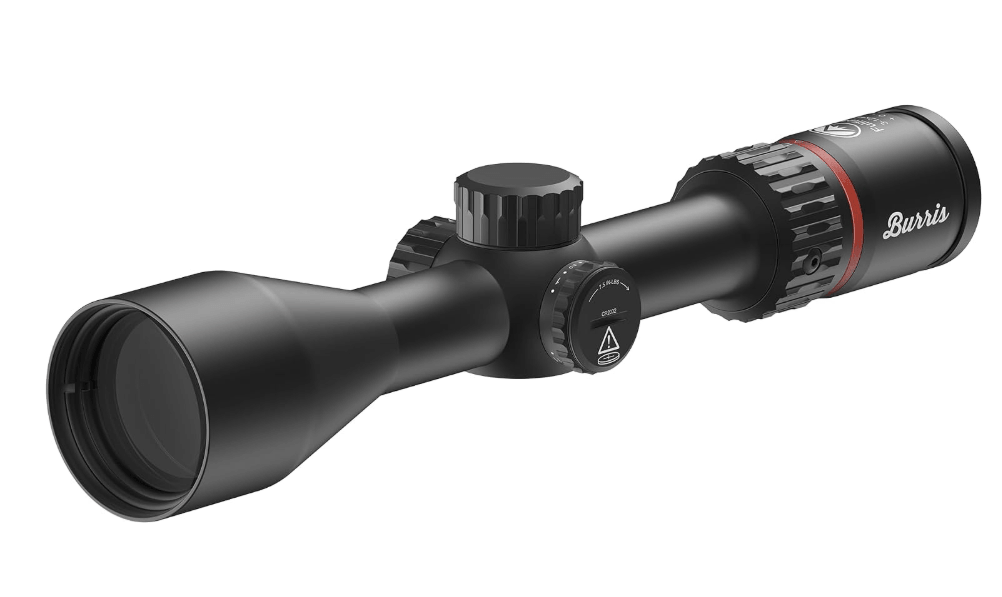
Best for versatile hunting and target use
The Burris Fullfield 3–12×42 offers a useful middle ground between a conventional 3–9× hunting scope and a more specialized high-magnification optic.
Why Choose It
Its 3–12× magnification range gives you more flexibility than a typical 3–9× model. The additional top-end magnification can help when examining a stationary target, while the lower setting remains useful for locating targets in the field.
The scope weighs 14.7 ounces in the standard listed configurations, making it a relatively manageable option for a hunting rifle.
Key Features
Magnification: 3–12×
Objective lens: 42mm
Weight: 14.7 ounces
Tube diameter: 1 inch
Reticle: Ballistic E3 or Plex, depending on model
Eye relief: 3.9–4.2 inches
Field of view: 36–9.25 feet at 100 yards
Parallax: Fixed at 100 yards on the listed standard configurations
Adjustment value: 1/4 MOA per click
What These Features Mean in Real Use
The extra magnification provides more flexibility for open terrain and range sessions without requiring a 50mm objective. At the same time, the field of view becomes narrower as magnification increases, so 12× is not necessarily the best setting for every hunting situation.
The Ballistic E3 reticle includes aiming references intended to assist with estimating bullet drop and windage. Those references should not be treated as universal trajectory data. Their usefulness depends on the ammunition, zero, distance, and environmental conditions.
The standard configuration’s fixed parallax setting keeps operation simple. However, if your shooting regularly involves varied distances and small targets, you may prefer a scope with adjustable parallax.
Trade-Offs
The Fullfield offers more magnification than the Leupold VX-Freedom while remaining relatively light. However, its standard configurations lack side-focus adjustment, and the reticle choice matters: the Plex version is simpler, while the Ballistic E3 offers additional aiming references.
May Not Be Ideal If
You need a first-focal-plane reticle, adjustable parallax, or a dedicated precision-range optic.
Pros
Useful 3–12× magnification range
Relatively light for its magnification range
Choice of reticle configurations
42mm objective balances size and light gathering
Cons
Fixed parallax on the listed standard models
Ballistic references require verification against the actual load
Configuration details differ by item number
Decision Summary
Best if: You want one scope for general hunting and occasional range use, with more magnification than a standard 3–9× optic.
Consider another option if: You need adjustable parallax or a reticle specifically designed for frequent precision adjustments.
4. Burris Fullfield IV 4–16×50
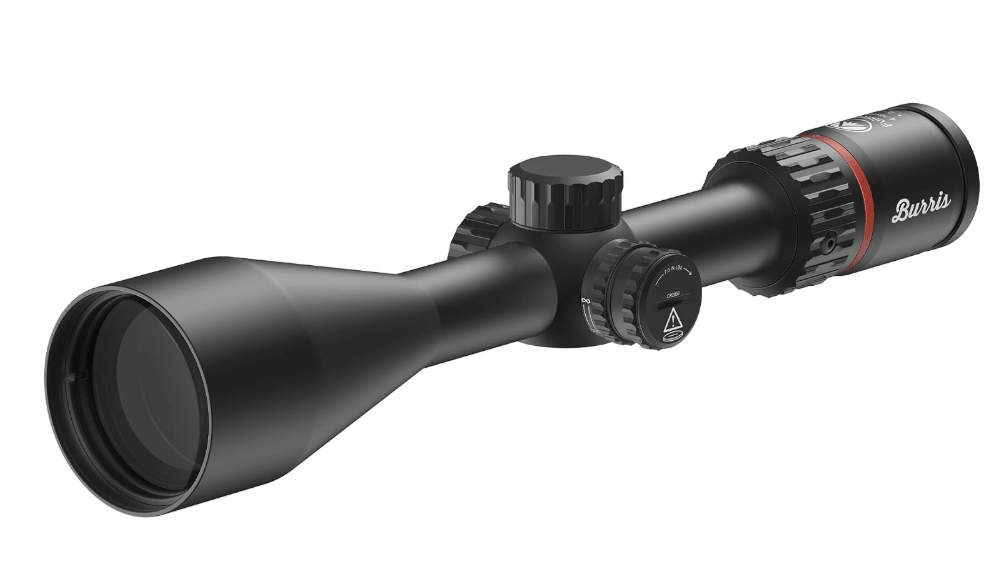
Best for higher-magnification shooting
The Burris Fullfield IV 4–16×50 is the more specialized option in this comparison. It offers a higher magnification range and a 50mm objective, making it worth considering for shooters who spend more time at the range or in open terrain.
Why Choose It
The 4–16× range offers more top-end magnification than the Fullfield 3–12×42. That can be useful for examining small, stationary targets at distances where additional magnification improves the view.
Some Fullfield IV configurations include side parallax adjustment, allowing the shooter to correct parallax for the target distance. Verify the precise SKU because features and reticles vary across the product family.
Key Features
Magnification: 4–16×
Objective lens: 50mm
Weight: Approximately 17.7–18.2 ounces, depending on configuration
Tube diameter: 1 inch on listed 4–16×50 models
Adjustment value: 1/4 MOA per click
Parallax: Side adjustment on the listed 4–16×50 configurations
Reticle and illumination: Vary by SKU
What These Features Mean in Real Use
At 16×, a target appears larger, which can help with deliberate aiming. However, the narrower field of view and more noticeable movement can make high magnification less convenient when shooting without a stable rest.
The larger objective may provide a larger exit pupil than a smaller lens at the same magnification, but it also increases mounting considerations. You may need higher rings to clear the rifle’s barrel or other components. Higher mounting is not automatically better, so confirm that the resulting cheek position remains comfortable and consistent.
The side-focus feature is useful for range work, particularly when shooting at different distances. It allows you to adjust for parallax rather than relying on a fixed setting.
Trade-Offs
This scope gives up some portability compared with the lightweight Leupold. Its 50mm objective and higher magnification make it a more substantial setup, and its extra features may be unnecessary for a hunter who usually shoots at moderate distances.
May Not Be Ideal If
You carry your Vanguard for long distances, mainly hunt in dense cover, or rarely need magnification above 9×.
Pros
Broad 4–16× magnification range
50mm objective
Side parallax adjustment on listed configurations
Multiple reticle options
Cons
Heavier than minimalist hunting scopes
Larger objective can complicate mounting
Configuration-specific details need verification
Decision Summary
Best if: You want more magnification and adjustable parallax for range sessions or stationary targets.
Consider another option if: You prioritize a light rifle for all-day hunting.
5. ZEISS Conquest V4 3–12×56
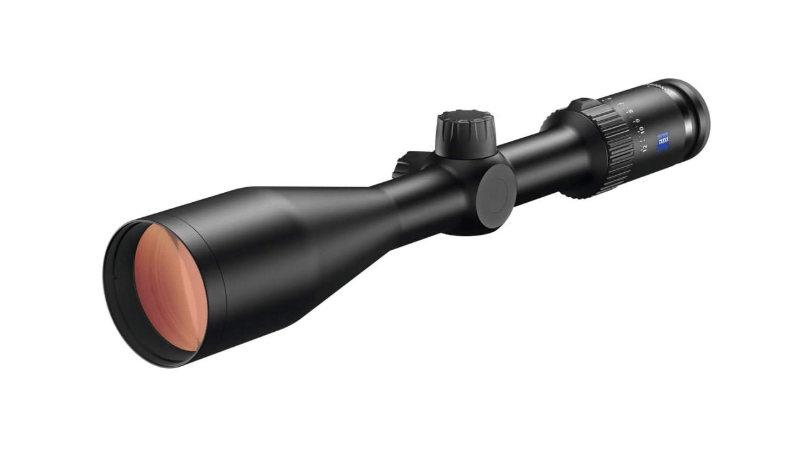
Best for low-light-oriented hunting
The ZEISS Conquest V4 3–12×56 is worth considering if you frequently hunt during legal low-light periods and prefer a larger objective lens.
Why Choose It
ZEISS lists a 3–12×56 configuration in its Conquest V4 family. The 56mm objective is the largest in this comparison, which can provide a larger exit pupil at a given magnification than smaller objectives.
The scope also uses ZEISS T* lens coatings and LotuTec lens protection, according to the manufacturer’s Conquest V4 series information. Those features are intended to support image transmission and help keep exterior lens surfaces clear of moisture and dirt.
Key Features
Magnification: 3–12×
Objective lens: 56mm
Reticle: Verify the specific model and reticle option
Main tube: 30mm for the listed V4 family configuration
Eye relief: Confirm the exact 3–12×56 model’s technical sheet
Parallax: Verify the selected configuration
Lens protection: LotuTec coating listed for the V4 series
What These Features Mean in Real Use
The large objective can provide a larger exit pupil at moderate magnification, which may make eye positioning more forgiving as available light decreases. However, objective diameter alone does not guarantee a brighter image. Optical quality, coatings, magnification, and your own pupil size also influence what you see.
The 3–12× range remains versatile for general hunting. You can keep magnification low for a wider view and increase it when a target is stationary and additional detail is useful.
The trade-off is size. A 56mm objective can require higher mounting rings, and the resulting scope-and-rifle combination may feel bulkier than a 40mm hunting setup. Confirm the exact model’s weight and mounting dimensions before purchasing.
Trade-Offs
The Conquest V4 is a premium-oriented option, and its larger objective makes it less suited to buyers who prioritize minimum weight and compactness. The precise reticle and technical details also need to be checked against the exact configuration being offered.
May Not Be Ideal If
You want a light, compact scope, rarely hunt in low light, or do not need the benefits of a larger objective.
Pros
3–12× magnification range
Large 56mm objective
Manufacturer-listed T* lens coatings
LotuTec lens protection listed for the V4 series
Cons
Larger objective can complicate mounting
Exact weight and configuration need confirmation
May be more scope than a general-purpose hunter needs
Decision Summary
Best if: Low-light-oriented hunting is a priority and the larger scope fits your rifle and carrying style.
Consider another option if: You prefer a lightweight setup or rarely hunt during low-light periods.
Factors to Consider When Choosing a Scope for the Weatherby Vanguard
1. Magnification and Intended Use
For general hunting, a 3–9× or 3–12× scope is a practical starting point. These ranges offer flexibility without forcing you to carry a dedicated high-magnification optic.
If you mostly shoot from a stable bench or target small objects at longer distances, 4–16× may be worth considering. More magnification is not automatically better: it narrows the field of view and makes movement more noticeable.
2. Weight and Rifle Balance
A lighter scope helps preserve the rifle’s portability, especially if you walk long distances while hunting. The difference between a 12-ounce optic and a scope weighing around 20 ounces can become noticeable once rings, a rail, and other accessories are added.
Consider the complete rifle rather than the scope alone. A large objective and high mounting rings can change the rifle’s balance and your cheek position.
3. Objective Size and Low-Light Performance
A 40mm objective is a sensible choice for many general-purpose hunting rifles. A 50mm or 56mm lens may offer a larger exit pupil at comparable magnification, but it adds size and may require different rings.
For legal dawn and dusk hunting, compare optical quality, coatings, magnification, and reticle visibility rather than choosing based on objective size alone. Our guide to illuminated reticle scopes for dawn and dusk explains why an illuminated aiming point can help when a dark reticle becomes difficult to distinguish against a shaded background.
4. Reticle, Turrets, and Parallax
A simple Duplex reticle suits hunters who want uncomplicated aiming. Ballistic reticles can provide extra references, but you must validate them against the ammunition and zero. First-focal-plane reticles keep their subtensions consistent across magnification, while second-focal-plane reticles generally use a specified magnification for accurate measurement.
Capped turrets are practical if you rarely adjust elevation in the field. Exposed turrets can be more convenient for repeated adjustments but need more care to prevent accidental movement.
Parallax adjustment matters most when you shoot at varied distances, particularly at higher magnification. A fixed-parallax hunting scope can still be suitable for conventional hunting distances.
5. Mounting Compatibility and Eye Relief
The Weatherby Vanguard name covers different chamberings and configurations, so confirm the scope’s tube diameter, ring height, objective clearance, and mounting-base compatibility for your exact rifle.
Eye relief is equally important. Make sure you can obtain a full sight picture in a natural shooting position without moving your head awkwardly forward. Your final setup should allow a comfortable cheek weld and safe clearance between your brow and the scope.
Frequently Asked Questions
1. What magnification is best for a Weatherby Vanguard?
For general hunting, 3–9× or 3–12× is a sensible starting point. A 4–16× scope may suit range use or stationary targets in open terrain. Your intended shooting distance, field of view, and portability needs should determine the final choice.
2. Is a 50mm objective better than a 40mm objective?
Not necessarily. A 50mm objective can provide a larger exit pupil at the same magnification, but it also adds bulk and may require higher mounting rings. Lens quality, coatings, magnification, and available light all influence the view.
3. Do all Weatherby Vanguard rifles use the same scope mounts?
Do not assume that every rifle and configuration uses identical mounting hardware. Check your exact Vanguard model, receiver and base compatibility, tube diameter, ring height, and objective clearance before buying. Have the scope mounted and checked according to the manufacturer’s instructions.
Conclusion
For most general-purpose Weatherby Vanguard hunting setups, the Leupold VX-Freedom 3–9×40 is the straightforward lightweight choice. The Burris Fullfield 3–12×42 offers more magnification while remaining relatively compact, and the Burris Fullfield IV 4–16×50 is better suited to buyers who value higher magnification and adjustable parallax. The Vortex Diamondback Tactical serves a more range-oriented role, while the ZEISS Conquest V4 3–12×56 is worth considering for low-light-focused hunting.
Choose based on your actual hunting conditions, preferred weight, and shooting distances rather than magnification alone. Before ordering, verify the exact model and reticle, confirm mounting compatibility, and check current availability.