
Table of Contents
ToggleFinding the best mirrorless camera under $2,000 has never been easier, thanks to the incredible range of high-performance models available today. Whether you’re a professional photographer, an aspiring content creator, or an enthusiast looking to upgrade from an entry-level camera, this budget offers access to powerful full-frame and APS-C mirrorless cameras packed with advanced features.From lightning-fast autofocus and impressive in-body image stabilization to stunning 4K and 6K video recording, these cameras deliver exceptional performance for portraits, landscapes, wildlife, sports, travel, and filmmaking.
In this guide, we’ve rounded up the 10 best mirrorless cameras under $2,000, comparing their standout features, strengths, and value to help you find the perfect model for your photography or video needs. Whether you prioritize image quality, speed, portability, or professional video capabilities, there’s a camera on this list that’s ready to elevate your creative work. While evaluating overall body ergonomics at this mid-tier price point is essential, you must also decide on your preferred sensor format. Compare these lines directly against our structured reviews of the best full frame mirrorless camera under 2000.
Here is a summary of the Best Mirrorless Camera Under $2000;
- Canon EOS R8 — Best Overall Mirrorless Camera Under $2,000
- Sony a6700 — Best APS-C Mirrorless Camera
- Nikon Z6 II — Best Value Full-Frame Mirrorless Camera
- Panasonic Lumix S5 II — Best Mirrorless Camera for Video
- Fujifilm X-T5 — Best High-Resolution Mirrorless Camera
- Canon EOS R7 — Best Mirrorless Camera for Wildlife and Sports
- Nikon Zf — Best Retro-Style Full-Frame Mirrorless Camera
- Sony A7 III — Best Mirrorless Camera for Battery Life
- Fujifilm X-S20 — Best Mirrorless Camera for Content Creators and Vlogging
- OM SYSTEM OM-3 — Best Compact Mirrorless Camera for Travel and Outdoor Photography
Best Mirrorless Camera Under $2000
1) Canon EOS R8
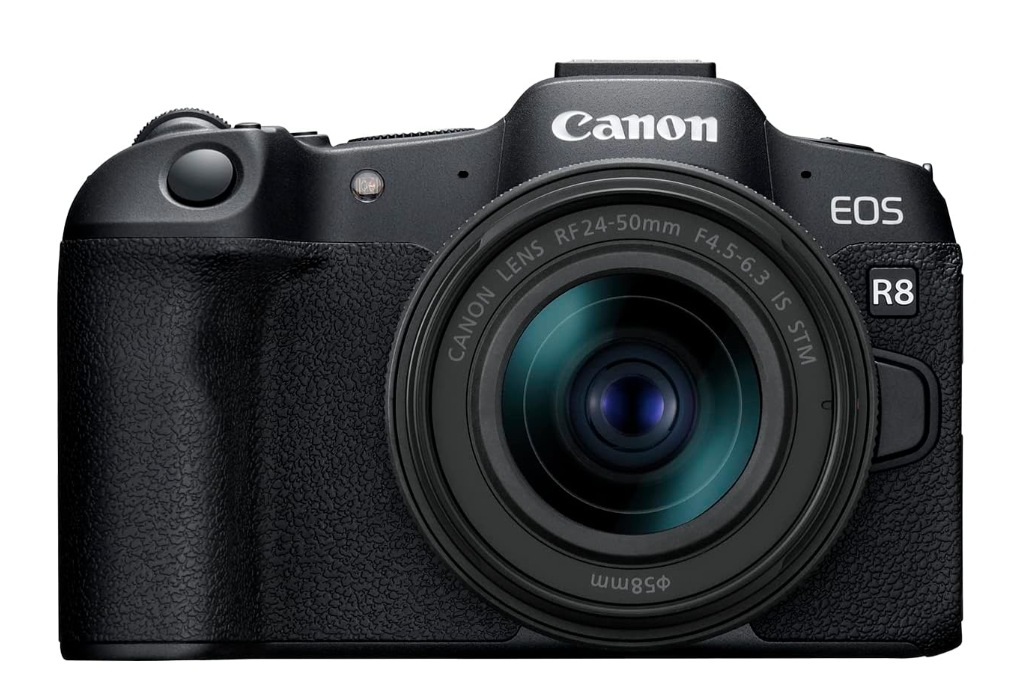
The Canon EOS R8 is one of the best full-frame mirrorless cameras for photographers and content creators looking to step up to professional image quality without spending a fortune. As Canon’s lightest full-frame RF-mount mirrorless camera, it combines portability with impressive performance, making it an excellent choice for travel, portraits, weddings, sports, wildlife, and video production.At its core is a 24.2MP full-frame CMOS sensor paired with the powerful DIGIC X image processor, delivering sharp images with excellent color accuracy, a wide dynamic range, and outstanding low-light performance.
Whether you’re shooting landscapes at low ISO or indoor events at high ISO, the EOS R8 consistently produces clean, detailed images with minimal noise.The camera is equipped with a bright 0.39-inch 2.36-million-dot OLED electronic viewfinder featuring a refresh rate of up to 120 fps, providing a smooth and responsive shooting experience. A 3.0-inch 1.62-million-dot vari-angle touchscreen LCD makes composing shots from creative angles effortless and is especially useful for vloggers and content creators.
Canon’s Dual Pixel CMOS AF II system covers virtually 100% of the frame with 1,053 autofocus zones, delivering incredibly fast and accurate subject tracking. Powered by deep-learning technology, it can automatically recognize and track people, animals, vehicles, aircraft, trains, and even horses, ensuring reliable focus even in challenging shooting situations.Video capabilities are equally impressive, with uncropped 4K recording at up to 60 fps oversampled from 6K for exceptional detail and clarity. It also supports Full HD recording at up to 180 fps for smooth slow-motion footage, along with Canon Log 3 and HDR PQ for greater flexibility during color grading.
With recording times of up to two hours and built-in UVC/UAC support for webcam and live streaming, the EOS R8 is an outstanding hybrid camera for creators who produce both photos and videos. Additionally, the improved rolling shutter performance makes it easier to capture fast-moving subjects and quick camera pans with minimal distortion. Elite image stabilization within these bodies ensures your handheld shots remain crystal clear even in low-light indoor environments. If you want to put this fast tracking speed to work capturing high-stakes commercial ceremonies, look over our hands-on evaluation of the best professional camera for wedding photography.
Key Features
- 24.2MP full-frame CMOS image sensor
- DIGIC X image processor
- Lightweight and compact RF-mount mirrorless design
- 0.39-inch OLED electronic viewfinder with 2.36 million dots and 120 fps refresh rate
- 3.0-inch 1.62-million-dot vari-angle touchscreen LCD
- Dual Pixel CMOS AF II with 1,053 AF zones
- 100% x 100% autofocus coverage
- AI-powered subject detection for people, animals, vehicles, aircraft, trains, and horses
- Uncropped 4K 60p video oversampled from 6K
- Full HD recording up to 180 fps
- Canon Log 3 and HDR PQ support
- Up to 2-hour continuous video recording
- UVC/UAC support for webcam and live streaming
- Excellent low-light performance with reduced image noise
- Improved rolling shutter performance for action photography
Pros
- Excellent full-frame image quality with impressive low-light performance
- Compact and lightweight body for travel and everyday use
- Industry-leading autofocus with intelligent subject detection
- Sharp oversampled 4K 60p video quality
- High-quality vari-angle touchscreen for vlogging and creative shooting
- Long video recording times with professional video profiles
- Great webcam and live streaming capabilities
- Smooth electronic viewfinder with 120 fps refresh rate
Cons
- No in-body image stabilization (IBIS)
2) Sony a6700
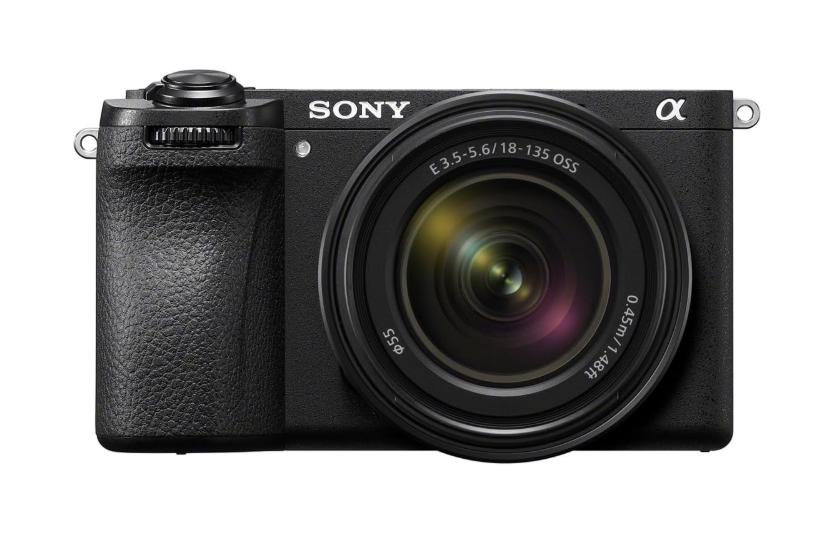
The Sony a6700 is one of the most capable APS-C mirrorless cameras available, combining cutting-edge autofocus, impressive image quality, and professional-grade video features in a compact body. Designed for photographers, videographers, and content creators, it features a 26.0MP APS-C Exmor R back-illuminated CMOS sensor that delivers exceptional detail, vibrant colors, and excellent low-light performance.
Powered by Sony’s advanced BIONZ XR image processor, the a6700 offers fast performance, reduced image noise, and outstanding dynamic range, making it an excellent choice for everything from landscapes and portraits to sports and wildlife photography.
One of the standout features of the Sony a6700 is its dedicated AI processing unit, which enhances the camera’s Real-time Recognition autofocus system for remarkably accurate subject tracking. Using artificial intelligence, the camera can intelligently recognize and track people, animals, birds, insects, cars, trains, and airplanes, ensuring your subjects remain sharp even during fast-paced action.
This advanced autofocus system makes the a6700 an ideal camera for sports, wildlife, travel, and everyday photography where reliable tracking is essential.
Video performance is equally impressive, making the a6700 a powerful hybrid camera. It records 4K video at up to 60fps, oversampled from 6K for exceptional sharpness and detail, while supporting 4:2:2 10-bit internal recording in both Long GOP and All-Intra formats for greater flexibility in post-production.
For creators looking to capture cinematic slow-motion footage, the camera also offers high-frame-rate 4K recording at up to 120fps, enabling stunning slow-motion sequences with excellent image quality. Whether you’re producing YouTube videos, documentaries, travel films, or professional content, the Sony a6700 delivers the speed, image quality, and advanced video capabilities needed to handle a wide range of creative projects.
Key Features
- 26.0MP APS-C Exmor R back-illuminated CMOS sensor
- BIONZ XR image processor
- Dedicated AI processing unit
- Real-time Recognition autofocus with intelligent subject tracking
- Advanced AI detection for people, animals, birds, insects, vehicles, trains, and aircraft
- 4K video recording at up to 60fps oversampled from 6K
- 4:2:2 10-bit internal recording
- Long GOP and All-Intra recording formats
- High-frame-rate 4K video recording up to 120fps
- Compact and lightweight mirrorless design
Pros
- Outstanding image quality with excellent low-light performance
- Fast and highly accurate AI-powered autofocus and subject tracking
- Sharp 6K oversampled 4K video
- Professional-grade 10-bit 4:2:2 internal video recording
- 4K 120fps for high-quality slow-motion footage
- Compact and travel-friendly design
- Excellent dynamic range and color reproduction
- Suitable for both photography and professional video production
Cons
- APS-C sensor offers less background blur than full-frame cameras
3) Nikon Z6II
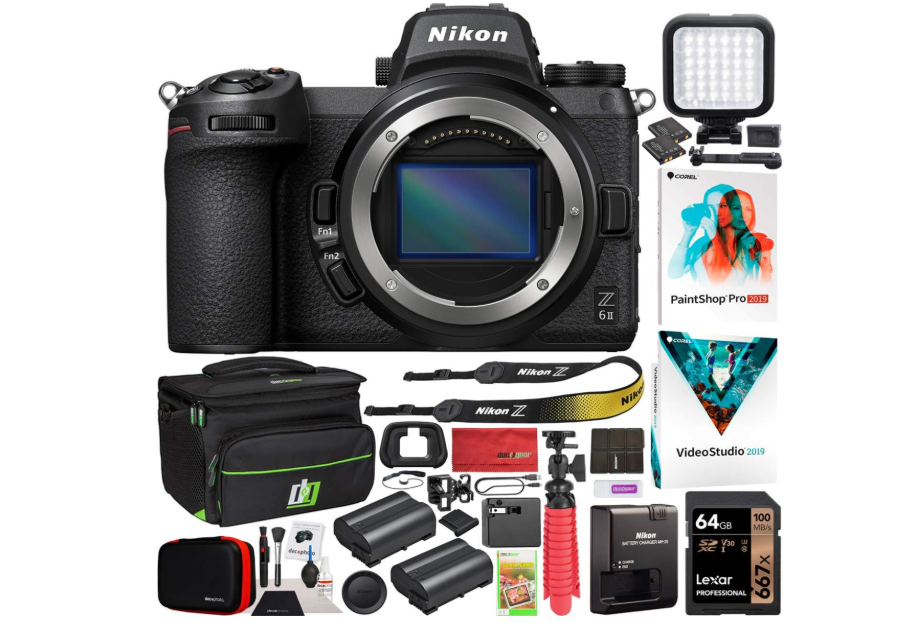
The Nikon Z6 II is a versatile full-frame mirrorless camera that strikes an excellent balance between speed, image quality, and advanced video capabilities, making it a top choice for photographers and hybrid content creators. Equipped with a 24.5MP backside-illuminated (BSI) CMOS sensor and powered by dual EXPEED 6 image processors, the Z6 II delivers exceptional detail, vibrant colors, and impressive low-light performance.
Its native ISO range of 100–51,200, expandable to an equivalent of ISO 204,800, allows photographers to capture clean, sharp images in challenging lighting conditions. With a continuous shooting speed of up to 14 frames per second, the camera is well-suited for wildlife, sports, weddings, and action photography where speed is essential.
The Nikon Z6 II also excels in autofocus performance thanks to its 273 on-sensor phase-detection autofocus points, providing fast and reliable subject acquisition across nearly the entire frame. The autofocus system performs exceptionally well even in extremely dim conditions, with sensitivity down to -4.5 EV, making it ideal for night photography and indoor events.
Nikon’s Eye-Detection AF and Animal-Detection AF are available for both still photography and video, enabling accurate tracking of people, dogs, and cats while keeping their eyes perfectly in focus. Combined with its responsive tracking system, the camera consistently delivers sharp results when photographing moving subjects.
For videographers, the Nikon Z6 II offers professional-level recording features with full-frame 4K UHD video at up to 60p using full pixel readout for outstanding image quality. It also supports 4K 30p and Full HD 120p recording for smooth slow-motion footage. Adjustable autofocus speed and tracking sensitivity allow filmmakers to customize focus transitions, while the reversible focus ring offers greater flexibility for manual focus operation.
A major advantage for professionals is the inclusion of dual memory card slots; one CFexpress/XQD slot and one UHS-II SD slot; providing backup recording and flexible storage options for important shoots such as weddings, commercial work, and events.
This bundle includes the Nikon Z6 II camera body, EN-EL15c rechargeable battery, battery charger, USB charging adapter, USB cable, camera strap, body cap, rubber eyecup, and Nikon USA Authorized Warranty. It also comes with a comprehensive accessory bundle featuring a Deco Gear camera bag, 64GB Lexar UHS-II SD card, extra compatible battery, LED video light, 12-inch tripod/grip, memory card reader, screen protectors, memory card case, Corel PaintShop Pro & VideoStudio software, and a complete camera cleaning kit, making it an excellent value for photographers who want everything they need to start shooting immediately.
Key Features
- 24.5MP full-frame BSI CMOS sensor
- Dual EXPEED 6 image processors
- Native ISO 100–51,200 (expandable to ISO 204,800)
- Continuous shooting up to 14 fps
- 273-point on-sensor phase-detection autofocus system
- Autofocus sensitivity down to -4.5 EV
- Eye-Detection AF and Animal-Detection AF for photos and video
- Full-frame 4K UHD video up to 60p with full pixel readout
- 4K 30p and Full HD 120p recording
- Adjustable AF speed and tracking sensitivity for video
- Reversible focus ring for manual focus control
- Dual memory card slots (CFexpress/XQD + UHS-II SD)
- Nikon USA Authorized Warranty
- Includes accessory bundle with camera bag, 64GB SD card, extra battery, LED light, tripod, editing software, and cleaning kit
Pros
- Outstanding full-frame image quality with excellent low-light performance
- Fast 14 fps continuous shooting for action photography
- Reliable 273-point autofocus with excellent subject tracking
- Eye-Detection and Animal-Detection AF for both photos and video
- High-quality full-frame 4K UHD video with full pixel readout
- Dual card slots provide secure backup and flexible workflow
- Excellent ISO performance for night photography and indoor events
- Comprehensive accessory bundle offers exceptional value
Cons
- Rear LCD is a tilting screen rather than a fully articulating display
4) Panasonic Lumix S5 II
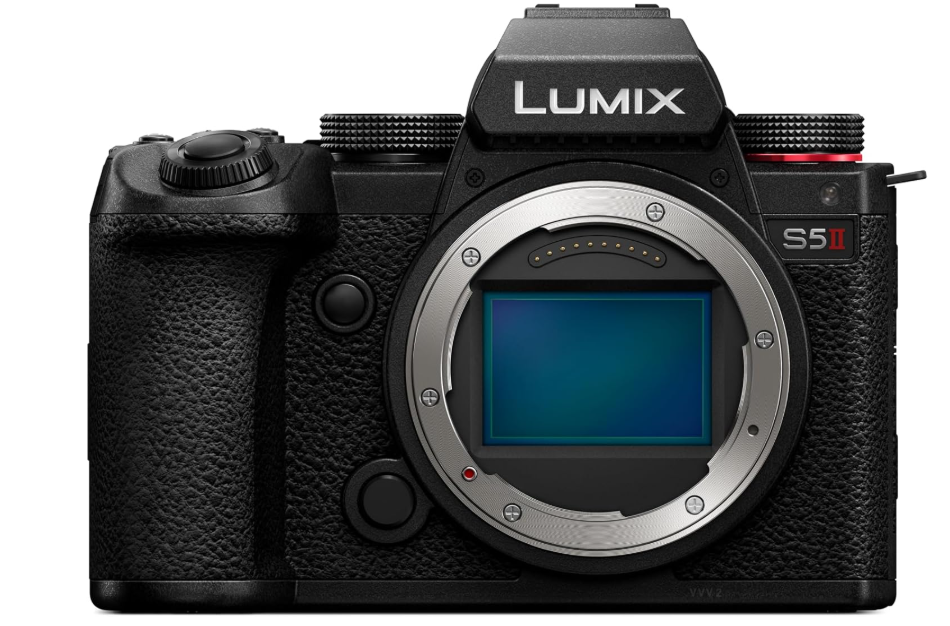
The Panasonic Lumix S5 II is a feature-packed full-frame mirrorless camera designed for photographers, filmmakers, and hybrid creators who demand exceptional image quality and professional video performance. One of its biggest upgrades is the introduction of Phase Hybrid Autofocus, delivering fast, accurate, and reliable subject tracking for both stills and video.
Advanced subject detection and metering technologies allow the camera to quickly identify and lock onto people, animals, and other moving subjects, maintaining sharp focus even in challenging lighting conditions or busy scenes with multiple moving objects. This makes the Lumix S5 II an excellent choice for weddings, sports, wildlife, and documentary filmmaking.
The camera also excels in image stabilization thanks to Panasonic’s advanced Active Image Stabilization (Active I.S.) technology. Designed to significantly reduce camera shake during handheld shooting, Active I.S. is particularly effective when walking while recording video, resulting in smoother, more stable footage without requiring a gimbal. Whether you’re capturing travel vlogs, action sequences, or handheld cinematic shots, the S5 II delivers impressively steady results that enhance the overall production quality.
Video creators will appreciate the Lumix S5 II’s professional recording capabilities. It supports 14+ stops of V-Log/V-Gamut, providing an exceptionally wide dynamic range and rich color reproduction for maximum flexibility during post-production. The camera also features REAL TIME LUT, allowing creators to apply custom LUTs directly in-camera for both photos and videos, streamlining the color grading workflow.
With support for 6K Open Gate recording at 30p and unlimited recording times, filmmakers can capture high-resolution footage without worrying about recording limits. Panasonic achieves this through an innovative heat dispersion system that combines a compact cooling fan with a high-efficiency heat sink, allowing continuous recording while maintaining the camera’s compact and lightweight design.
Key Features
- Full-frame mirrorless camera
- Phase Hybrid Autofocus with advanced subject detection
- Reliable subject tracking in challenging lighting conditions
- Active Image Stabilization (Active I.S.) for enhanced handheld video
- Excellent stabilization for walking shots
- 14+ stop V-Log/V-Gamut recording
- Wide dynamic range and rich color reproduction
- REAL TIME LUT for in-camera photo and video color grading
- 6K Open Gate recording at up to 30p
- Unlimited video recording
- Built-in cooling fan and efficient heat sink for thermal management
- Compact and lightweight body despite active cooling system
Pros
- Fast and highly accurate Phase Hybrid Autofocus
- Excellent subject tracking for both photography and video
- Outstanding Active I.S. delivers smooth handheld footage
- Professional-grade V-Log with over 14 stops of dynamic range
- REAL TIME LUT simplifies in-camera color grading
- 6K Open Gate recording offers greater editing flexibility
- Unlimited recording times without overheating
- Compact body with an effective active cooling system
- Excellent choice for hybrid photo and video creators
Cons
- Autofocus, while greatly improved, may still lag behind Sony and Canon in the most demanding action scenarios
5) Fujifilm X-T5
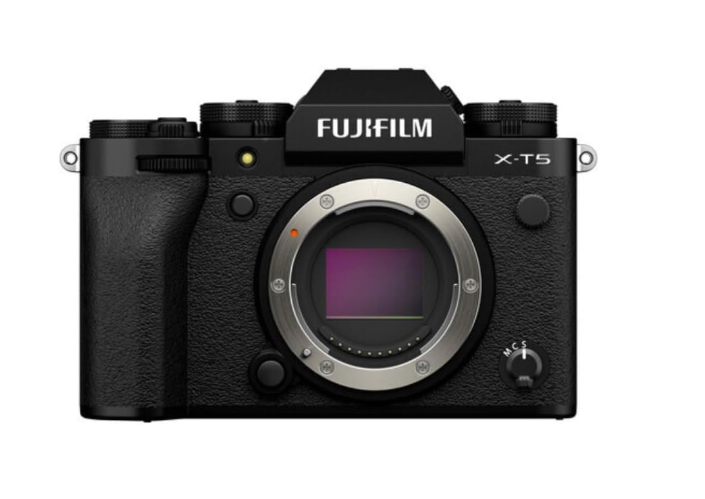
The Fujifilm X-T5 is a premium APS-C mirrorless camera that combines exceptional image quality, classic styling, and professional performance in a compact, lightweight body. At its core is a 40.2MP X-Trans CMOS 5 HR back-illuminated (BSI) sensor, delivering outstanding levels of detail, rich color reproduction, and impressive dynamic range.
The high-resolution sensor is ideal for landscape, portrait, architecture, and commercial photography, while the BSI design enhances low-light performance and minimizes image noise. Whether you’re creating large prints or cropping heavily in post-production, the X-T5 provides remarkable clarity and sharpness.
Performance is equally impressive, with the camera capable of shooting at up to 15 frames per second using its mechanical shutter. This high burst rate allows photographers to confidently capture fast-moving subjects such as wildlife, sports, and street scenes while maintaining exceptional image quality.
The X-T5 also features up to 7 stops of in-body image stabilization (IBIS), enabling sharper handheld photos in low-light conditions and smoother video recording without relying on a tripod or gimbal. This advanced stabilization system gives photographers greater creative freedom when shooting handheld at slower shutter speeds.
For photographers who demand the highest possible resolution, the Fujifilm X-T5 includes a 160MP Pixel Shift Multi-Shot mode. By combining multiple exposures using the camera’s stabilization system, it creates ultra-high-resolution images with extraordinary detail, making it an excellent choice for studio, product, landscape, and fine art photography.
The camera also features an incredibly fast electronic shutter speed of up to 1/180,000 second, allowing users to shoot in extremely bright conditions with wide apertures or freeze ultra-fast action without the need for neutral density filters. Together, these advanced features make the X-T5 one of the most capable APS-C mirrorless cameras for photographers seeking professional image quality in a portable package.
Key Features
- 40.2MP X-Trans CMOS 5 HR back-illuminated (BSI) imaging sensor
- High-resolution APS-C sensor with exceptional image quality
- Continuous shooting up to 15 fps with the mechanical shutter
- Up to 7 stops of in-body image stabilization (IBIS)
- 160MP Pixel Shift Multi-Shot mode
- Electronic shutter speed up to 1/180,000 second
- Excellent dynamic range and low-light performance
- Compact, lightweight, and durable mirrorless design
Pros
- Outstanding 40.2MP image quality with excellent detail
- High-speed 15 fps mechanical burst shooting
- Effective 7-stop IBIS for sharper handheld photos
- 160MP Pixel Shift mode for ultra-high-resolution images
- Ultra-fast 1/180,000-second electronic shutter
- Excellent color reproduction with Fujifilm’s renowned image processing
- Compact and lightweight body ideal for travel and street photography
- Versatile camera suitable for landscapes, portraits, wildlife, and commercial work
Cons
- APS-C sensor offers less background blur than full-frame alternatives
6) Canon EOS R7
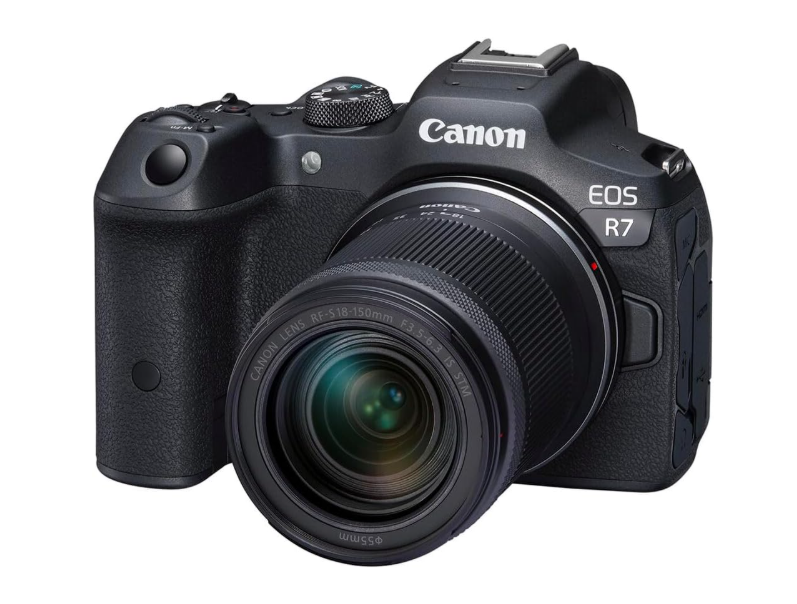
The Canon EOS R7 is a high-performance APS-C mirrorless camera designed for photographers who need speed, versatility, and excellent image quality in a compact package. Powered by Canon’s advanced DIGIC X image processor and a 32.5MP APS-C CMOS sensor, the EOS R7 delivers sharp, detailed photos with vibrant colors and excellent dynamic range.
Whether you’re photographing wildlife, sports, landscapes, or everyday moments, the combination of the high-resolution sensor and powerful processor ensures crisp images and smooth performance. The camera comes bundled with the versatile RF-S 18-150mm lens, providing an impressive zoom range that makes it suitable for everything from wide-angle landscapes to distant subjects.
One of the EOS R7’s biggest strengths is its impressive shooting speed. It can capture up to 15 frames per second using the mechanical shutter, making it ideal for freezing fast-moving action such as birds in flight, sporting events, motorsports, and wildlife.
To help photographers achieve consistently sharp results, Canon has equipped the camera with 5-axis in-body image stabilization (IBIS) that provides up to 7 stops of shake correction when used with compatible lenses. This powerful stabilization system enables sharper handheld photos in low light and smoother video recording without relying on a tripod or gimbal.
The EOS R7 is built with versatility in mind thanks to its broad lens compatibility. It supports RF-S, RF, EF-S, and EF lenses (using Canon’s EF-EOS R mount adapter for EF and EF-S lenses), allowing photographers to take advantage of Canon’s extensive lens ecosystem while protecting existing investments.
The camera also features a bright anti-smudge coated LCD screen for clear viewing in various shooting conditions and an ergonomic grip that provides comfortable handling during extended shooting sessions. Despite its powerful performance, the EOS R7 remains lightweight and compact, making it an excellent companion for travel, outdoor adventures, and everyday photography. Powered by the LP-E6NH battery, it also supports USB charging while the battery remains inside the camera, adding convenience for photographers on the go.
Key Features
- 32.5MP APS-C CMOS sensor
- DIGIC X image processor
- RF-S 18-150mm zoom lens included
- Compatible with RF-S, RF, EF-S, and EF lenses (adapter required for EF/EF-S)
- Continuous shooting up to 15 fps with the mechanical shutter
- 5-axis in-body image stabilization with up to 7 stops of shake correction
- High-resolution video recording capabilities
- Anti-smudge coated LCD screen
- Compact, lightweight body with a comfortable ergonomic grip
- LP-E6NH rechargeable battery with USB charging support
- Includes camera body, RF-S 18-150mm lens, battery, charger, strap, battery cover, and shoe cover
Pros
- Excellent 32.5MP image quality with impressive detail
- Fast DIGIC X processor delivers responsive performance
- High-speed 15 fps continuous shooting for sports and wildlife
- Effective 5-axis IBIS with up to 7 stops of stabilization
- Versatile RF-S 18-150mm lens covers a wide range of shooting situations
- Broad compatibility with Canon RF, RF-S, EF, and EF-S lenses
- Comfortable grip and lightweight design for extended use
- Convenient USB charging while the battery remains installed
Cons
- APS-C sensor produces less shallow depth of field than full-frame cameras
7) Nikon Zf
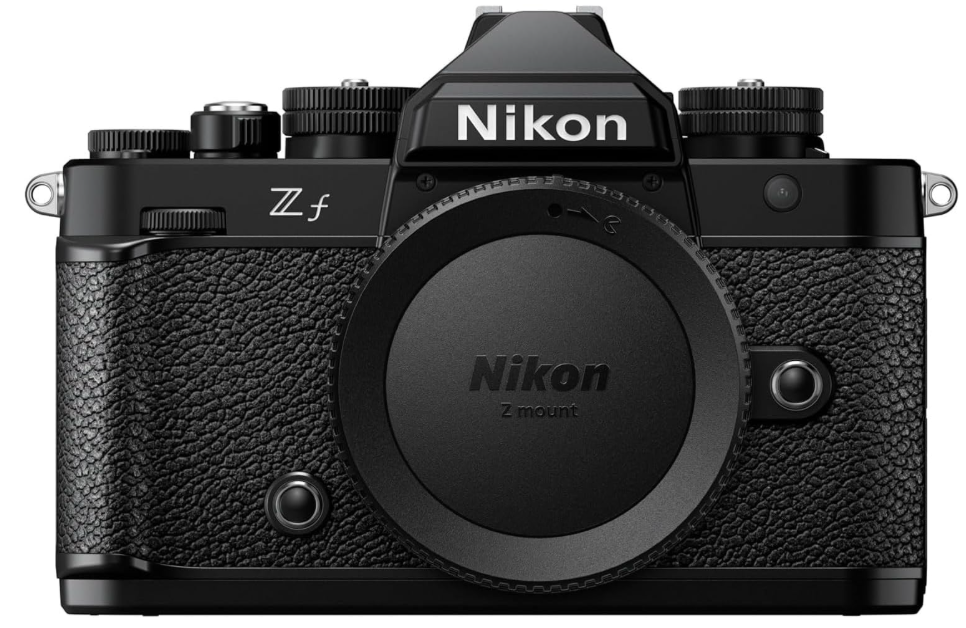
The Nikon Zf blends timeless vintage-inspired design with cutting-edge mirrorless technology, making it one of the most stylish and capable full-frame cameras on the market. At its heart is a 24.5MP back-side illuminated (BSI) full-frame CMOS sensor powered by Nikon’s flagship EXPEED 7 image processor, delivering exceptional image quality, rich colors, and impressive low-light performance.
The combination of the high-performance sensor and processor provides excellent dynamic range, reduced image noise at high ISO settings, and fast overall performance, making the Zf equally suited for portraits, street photography, landscapes, and event photography.
One of the standout features of the Nikon Zf is its advanced autofocus system with 3D Tracking and intelligent subject recognition. The camera can automatically detect and track nine different subject types, ensuring fast, accurate focus on people, animals, vehicles, and other moving subjects.
Whether you’re photographing fast-paced action or everyday moments, the autofocus system maintains reliable tracking across the frame, helping you capture consistently sharp images. The inclusion of Nikon’s latest autofocus technology makes the Zf a significant upgrade for photographers seeking professional-level tracking performance in a compact body.
The Nikon Zf is also a powerful hybrid camera for video creators. It records 4K video at up to 30p oversampled from 6K for exceptional detail and clarity, while also supporting 4K UHD at up to 60p for smoother motion. For dramatic slow-motion footage, the camera offers Full HD recording at up to 120fps. Professional videographers will appreciate support for internal 10-bit H.265 recording in SDR, N-Log, and HLG, providing greater flexibility for color grading and HDR workflows.
Additionally, the camera features Pixel Shift shooting, which combines multiple exposures to create ultra-high-resolution 96MP images with outstanding detail and reduced noise, making it ideal for landscape, architecture, and studio photography. Completing the package is a 3.2-inch vari-angle touchscreen with Nikon’s innovative Touch Fn functionality, allowing photographers to move focus points, select subjects, switch display modes, and control key settings directly from the touchscreen while using the electronic viewfinder.
Key Features
- 24.5MP BSI full-frame CMOS sensor
- EXPEED 7 image processor
- Advanced autofocus with 3D Tracking
- Intelligent subject recognition for nine different subject types
- 4K 30p video oversampled from 6K
- 4K UHD recording up to 60p
- Full HD 1080p recording up to 120fps
- Internal 10-bit H.265 recording
- SDR, N-Log, and HLG recording modes
- 96MP Pixel Shift Multi-Shot mode
- 3.2-inch vari-angle touchscreen
- Touch Fn controls while using the electronic viewfinder
- Classic retro-inspired design with modern mirrorless performance
Pros
- Excellent 24.5MP full-frame image quality
- Outstanding low-light performance with BSI sensor
- Powerful EXPEED 7 processor delivers fast performance
- Advanced AI-powered autofocus with reliable 3D Tracking
- High-quality oversampled 6K-to-4K video
- Internal 10-bit recording supports professional video workflows
- 96MP Pixel Shift mode produces incredibly detailed still images
- Fully articulating touchscreen improves shooting flexibility
- Beautiful retro design with intuitive manual controls
Cons
- Pixel Shift mode requires a tripod and stationary subjects
8) Sony A7 III
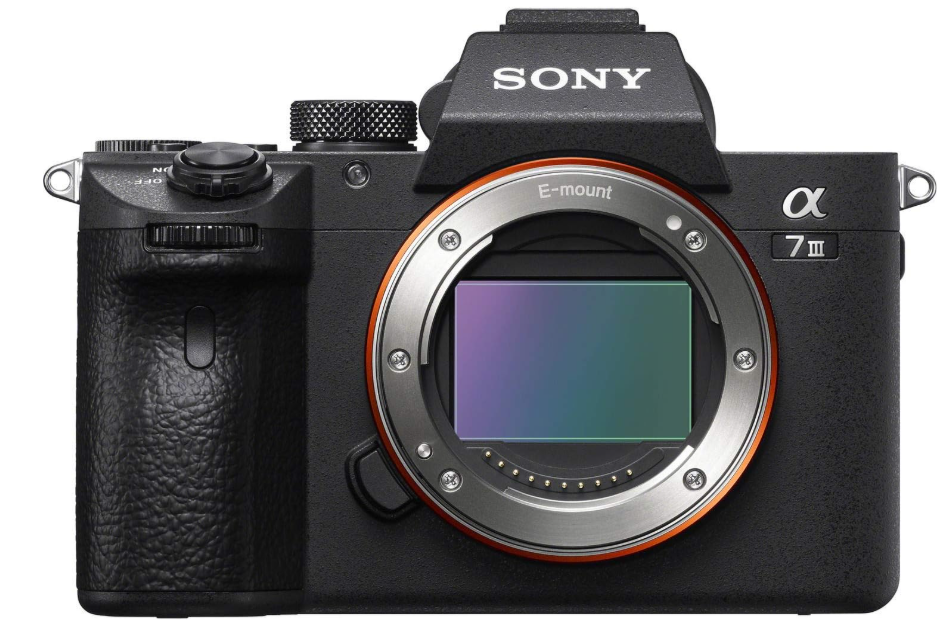
The Sony A7 III is a highly regarded full-frame mirrorless camera that continues to be a favorite among photographers and content creators thanks to its outstanding image quality, reliable autofocus, and exceptional battery life. Built around a 24.2MP back-side illuminated (BSI) full-frame Exmor R CMOS sensor, the A7 III delivers stunning detail, vibrant colors, and excellent low-light performance.
The sensor features an impressive 1.8x readout speed, while its 15-stop dynamic range and 14-bit uncompressed RAW support provide exceptional tonal gradation and editing flexibility. With a wide ISO range of 50–204,800, the camera performs remarkably well in both bright daylight and challenging low-light environments, making it suitable for portraits, weddings, landscapes, and event photography.
Performance is one of the Sony A7 III’s greatest strengths. It features a sophisticated autofocus system with 693 phase-detection and 425 contrast-detection autofocus points, covering approximately 93% of the image area for fast and highly accurate subject acquisition.
Combined with continuous AE/AF tracking, the camera can shoot at up to 10 frames per second using either the mechanical or silent electronic shutter, making it an excellent choice for sports, wildlife, and action photography. Whether you’re tracking fast-moving subjects or capturing fleeting moments, the autofocus system consistently delivers sharp, reliable results.
The Sony A7 III is equally capable as a hybrid camera, offering the connectivity and endurance needed for modern creators. Built-in Bluetooth enables seamless pairing with compatible Android and iOS smartphones for quick image transfers and remote operation. The camera supports both 3.5mm microphone and headphone jacks, allowing users to monitor and record high-quality audio for video projects.
One of its standout features is its impressive battery performance, delivering approximately 710 shots using the LCD monitor or 610 shots through the electronic viewfinder, along with up to 210 minutes of continuous video recording. Compatible with Sony’s extensive E-mount lens system, the A7 III provides photographers and videographers with access to a wide range of high-quality lenses for virtually every shooting scenario.
Key Features
- 24.2MP back-side illuminated (BSI) full-frame Exmor R CMOS sensor
- 1.8x sensor readout speed
- 15-stop dynamic range
- 14-bit uncompressed RAW image support
- ISO range of 50–204,800
- Compatible with Sony E-mount lenses
- 693 phase-detection and 425 contrast-detection autofocus points
- 93% autofocus coverage across the image frame
- Continuous shooting up to 10 fps with AE/AF tracking
- Silent and mechanical shutter shooting modes
- Bluetooth connectivity for Android and iOS devices
- 3.5mm microphone input and headphone output
- Battery life up to approximately 710 shots (LCD) or 610 shots (EVF)
- Continuous video recording up to approximately 210 minutes
- Includes NP-FZ100 battery, AC adapter, shoulder strap, body cap, accessory shoe cap, eyepiece cup, and Micro USB cable
Pros
- Excellent full-frame image quality with impressive dynamic range
- Outstanding low-light performance and high ISO capability
- Fast, accurate autofocus with wide frame coverage
- Continuous shooting up to 10 fps for action photography
- Exceptional battery life compared to many mirrorless competitors
- Supports microphone and headphone monitoring for video production
- Large selection of Sony E-mount lenses available
- Bluetooth connectivity simplifies wireless image transfer
Cons
- Rear LCD has lower resolution than newer mirrorless cameras
9) Fujifilm X-S20
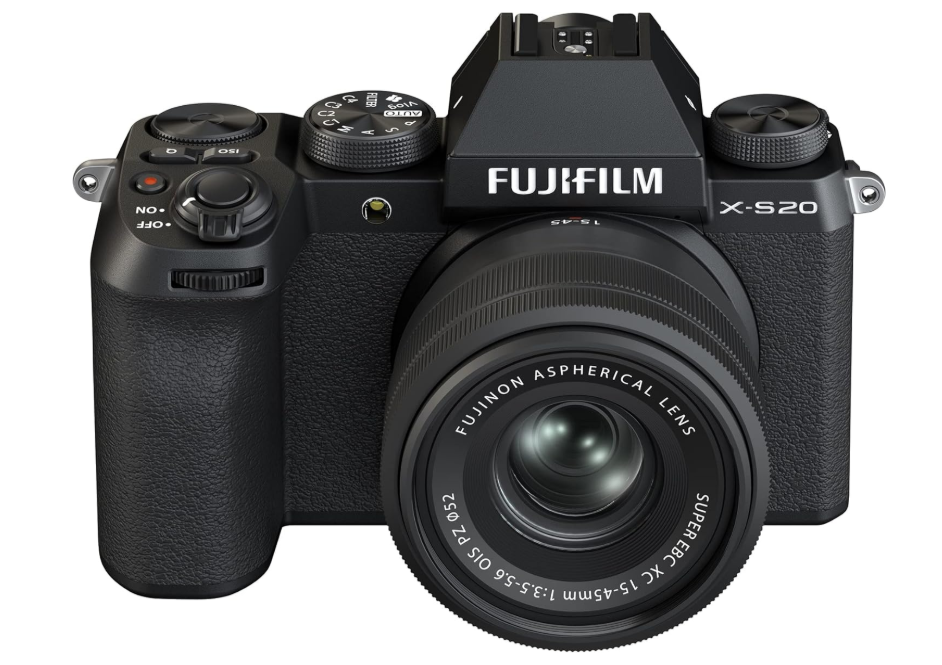
The Fujifilm X-S20 is a compact yet powerful APS-C mirrorless camera designed for photographers, vloggers, and hybrid creators who want professional performance in a lightweight body. Weighing just 491g (1.08 lb), the X-S20 strikes an ideal balance between portability and capability. Its deep ergonomic handgrip provides a secure, comfortable hold even when using larger lenses, making it a reliable companion for travel, street photography, and extended shooting sessions.
Equipped with a 26.1MP X-Trans CMOS 4 sensor, the camera produces stunning, color-rich images straight out of the camera, thanks to Fujifilm’s renowned color science. It also supports continuous shooting at up to 20 frames per second using the electronic shutter, allowing photographers to capture fast-moving action with ease. The 180° vari-angle touchscreen LCD makes selfies, vlogging, and creative shooting angles simple and intuitive.
Performance is significantly enhanced by the pairing of the X-Trans CMOS 4 sensor with Fujifilm’s latest X-Processor 5, delivering faster image processing, improved autofocus, and better overall responsiveness. The updated autofocus algorithm incorporates the same advanced subject detection technology found in Fujifilm’s flagship X-H2S, enabling accurate tracking of people, animals, vehicles, and other subjects.
Auto Subject Detection AF automatically identifies and follows subjects, allowing creators to focus on composition rather than camera settings. Combined with five-axis in-body image stabilization (IBIS) that provides up to 7 stops of compensation, the X-S20 delivers sharper handheld photos and smoother video, even in low-light conditions or while walking.
Video creators will appreciate the Fujifilm X-S20’s impressive filmmaking capabilities. It records 6.2K video at up to 30p in 4:2:2 10-bit color for exceptional image quality and greater flexibility during color grading, while also supporting 4K/60p recording and direct streaming through its USB-C connection. The dedicated Vlog mode simplifies content creation by allowing users to prioritize product focus during unboxing videos or blur distracting backgrounds with a simple tap.
A built-in 3.5mm microphone jack supports external audio accessories, and compatibility with the optional TG-BT1 wireless grip enables hands-free operation for solo creators. To complete the package, the upgraded NP-W235 battery delivers an impressive 750 shots per charge in Normal mode or up to 800 shots in Economy mode, more than doubling the battery life of its predecessor and making the X-S20 an outstanding choice for long shooting days.
Key Features
- 26.1MP X-Trans CMOS 4 APS-C sensor
- X-Processor 5 image processor
- Lightweight 491g (1.08 lb) body
- Deep ergonomic handgrip for comfortable handling
- Continuous shooting up to 20 fps with the electronic shutter
- 180° vari-angle touchscreen LCD
- Advanced Auto Subject Detection Autofocus
- Flagship-level autofocus algorithm from the Fujifilm X-H2S
- Five-axis in-body image stabilization (IBIS) with up to 7 stops of compensation
- 6.2K video recording at up to 30p in 4:2:2 10-bit color
- 4K video recording at up to 60p
- USB-C live streaming support
- Dedicated Vlog mode with product priority and background defocus features
- 3.5mm microphone input
- Compatible with the optional TG-BT1 wireless grip
- NP-W235 battery with up to 750 shots (Normal mode) or 800 shots (Economy mode)
Pros
- Excellent 26.1MP image quality with Fujifilm’s renowned color science
- Compact, lightweight design that’s ideal for travel and everyday use
- Fast X-Processor 5 delivers responsive performance and improved autofocus
- Advanced AI-powered subject detection autofocus
- Up to 20 fps continuous shooting for fast action
- Effective 7-stop IBIS improves handheld photography and video
- High-quality 6.2K 10-bit video and 4K/60p recording
- Dedicated Vlog mode makes content creation simple
- Outstanding battery life compared to most APS-C mirrorless cameras
- Comfortable grip provides secure handling with larger lenses
Cons
- APS-C sensor offers less shallow depth of field than full-frame alternatives
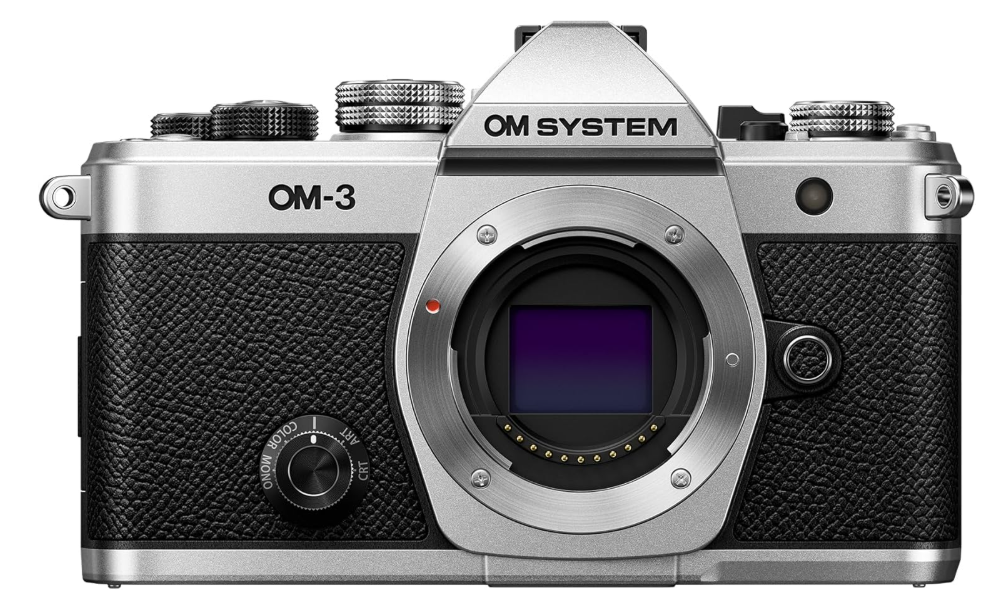
10) OM SYSTEM OM-3
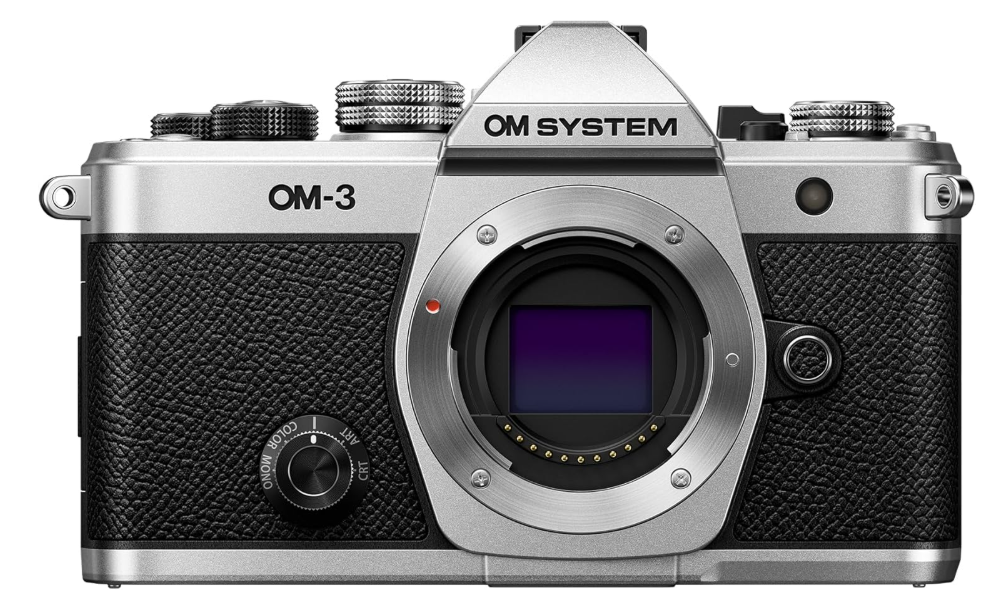
The OM SYSTEM OM-3 is a premium mirrorless camera that combines timeless vintage styling with cutting-edge imaging technology, making it an excellent choice for photographers and creators who value both performance and portability. Built with a durable premium metal body, the OM-3 delivers a classic aesthetic while offering modern reliability for everyday use.
At its core is a 20MP stacked back-side illuminated (BSI) Live MOS sensor powered by the advanced TruePic X image processor, producing sharp, detailed images with excellent color reproduction, fast readout speeds, and impressive low-light performance. Whether you’re capturing landscapes, portraits, street scenes, or wildlife, the OM-3 delivers consistent image quality in a compact, travel-friendly package.
Designed for photographers who frequently shoot outdoors, the OM-3 features an IP53 weather-resistant rating, providing protection against dust, splashes, and freezing temperatures. This rugged construction allows photographers to continue shooting confidently in challenging weather conditions without worrying about the elements. Composing images is equally enjoyable thanks to the bright 2.36-million-dot OLED electronic viewfinder, which provides a clear, detailed view of the scene and enables precise framing in both bright sunlight and low-light environments.
One of the OM-3’s biggest strengths is its impressive suite of Computational Photography features, which allow photographers to achieve creative effects directly in-camera. Tools such as Live ND, Live Composite, High Resolution Shot, and Focus Stacking make it easier to create long-exposure images, detailed landscapes, macro photographs, and night scenes without extensive post-processing.
Creative expression is further enhanced through the dedicated Creative Dial, offering quick access to Color Profile Control, Monochrome Profile Control, Color Creator, and a variety of Art Filters for personalized image styles. For video creators, the S&Q (Slow & Quick) Mode makes it simple to record cinematic slow-motion or dramatic time-lapse-style footage, adding versatility for hybrid photographers and filmmakers.
Key Features
- 20MP stacked BSI Live MOS sensor
- TruePic X image processor
- Premium vintage-inspired metal body
- IP53-rated dustproof, splashproof, and freezeproof construction
- 2.36-million-dot OLED electronic viewfinder
- Computational Photography features including:
- Live ND
- Live Composite
- High Resolution Shot
- Focus Stacking
- Creative Dial with:
- Color Profile Control
- Monochrome Profile Control
- Color Creator
- Art Filters
- S&Q (Slow & Quick) mode for slow-motion and quick-motion video
- Compact and lightweight mirrorless design
Pros
- Stylish vintage-inspired design with premium metal construction
- Fast TruePic X processor delivers responsive performance
- Weather-sealed IP53 body is ideal for outdoor photography
- Excellent computational photography tools reduce the need for post-processing
- Bright OLED electronic viewfinder provides clear composition
- Creative Dial offers quick access to unique color and monochrome profiles
- Compact and lightweight for travel and everyday carry
- S&Q mode makes creating slow-motion and time-lapse-style videos easy
Cons
- 20MP resolution is lower than many competing APS-C and full-frame cameras
Factors to Consider When Choosing the Best Mirrorless Camera Under $2000
1. Sensor Size and Image Quality
The sensor is one of the most important factors when choosing a mirrorless camera because it directly affects image quality, low-light performance, and depth of field. Full-frame cameras generally deliver superior dynamic range, better high-ISO performance, and more background blur for portraits. APS-C cameras offer an excellent balance of image quality, portability, and affordability, while Micro Four Thirds cameras are valued for their compact size and extensive depth of field for wildlife and travel photography. Choose the sensor size that best matches your photography style and budget.
2. Autofocus Performance
A fast and reliable autofocus system is essential, especially if you photograph moving subjects. Modern mirrorless cameras use advanced phase-detection autofocus with AI-powered subject recognition that can detect people, animals, birds, vehicles, and even aircraft. Features like Eye AF and Real-Time Tracking help ensure your subjects remain sharp, whether you’re shooting sports, wildlife, portraits, or fast-paced events. The more advanced the autofocus system, the easier it is to capture consistently sharp images.
3. Resolution
Resolution determines the amount of detail your camera can capture. Cameras with around 20–26 megapixels are ideal for everyday photography, social media, and standard-sized prints, while models offering 32MP to over 40MP provide additional flexibility for cropping and producing large, high-quality prints. Higher resolution is particularly useful for landscape, commercial, studio, and wildlife photographers who often need to crop their images while preserving fine detail.
4. Video Capabilities
If you create videos alongside still photography, pay close attention to a camera’s video features. Many of the best mirrorless cameras under $2,000 now offer oversampled 4K recording, 6K capture, 10-bit internal recording, Log profiles, high frame rates for slow motion, and advanced color grading options. Features like unlimited recording times, microphone and headphone ports, and USB streaming support are also valuable for filmmakers, vloggers, and content creators who need professional-quality video performance.
5. In-Body Image Stabilization (IBIS)
In-body image stabilization helps reduce camera shake when shooting handheld, allowing you to capture sharper photos at slower shutter speeds and smoother video without relying on a tripod or gimbal. Cameras with five-axis IBIS offering up to seven or eight stops of stabilization are particularly beneficial for travel photographers, low-light shooters, and videographers who frequently work without additional stabilization equipment.
6. Continuous Shooting Speed
Continuous shooting speed, measured in frames per second (fps), is important for capturing fast-moving subjects. Cameras capable of shooting 10 to 20 fps or more make it easier to photograph wildlife, birds, sports, and action sequences. Faster burst rates increase your chances of capturing the perfect moment, especially when combined with an advanced autofocus system.
7. Lens Ecosystem
A camera is only as versatile as the lenses available for it. Before buying a mirrorless camera, consider the range of native lenses offered by the manufacturer, including wide-angle, telephoto, macro, portrait, and specialty lenses. Systems from Canon RF, Sony E, Nikon Z, Fujifilm X, Panasonic L-Mount, and OM SYSTEM Micro Four Thirds all offer excellent lens selections. A broad lens ecosystem ensures you can expand your gear as your photography skills and needs grow.
8. Ergonomics and Portability
Comfort plays a significant role during long photography sessions. Look for a camera with a comfortable grip, intuitive button layout, and a body that suits your shooting style. Lightweight cameras are ideal for travel and street photography, while slightly larger bodies may offer better handling with heavier lenses. A well-designed camera can reduce fatigue and improve your overall shooting experience.
9. Viewfinder and LCD Screen
A high-quality electronic viewfinder (EVF) and articulating LCD screen improve composition and usability. A bright, high-resolution EVF provides an accurate preview of exposure and colors before taking the shot, while a fully articulating touchscreen is particularly useful for vlogging, selfies, overhead compositions, and low-angle photography. Responsive touch controls also make menu navigation and autofocus selection much quicker.
10. Battery Life
Battery life becomes increasingly important for travel, weddings, sports, and all-day photography sessions. Mirrorless cameras typically consume more power than DSLRs because they rely on electronic displays. Models with larger batteries or improved power efficiency allow you to shoot longer without constantly changing batteries. USB-C charging and power delivery are additional conveniences, allowing you to recharge using portable power banks while traveling.
11. Weather Sealing and Build Quality
If you frequently shoot outdoors, look for a camera with weather sealing that protects against dust, moisture, and cold temperatures. A rugged magnesium alloy or metal body adds durability while giving you confidence to shoot in rain, snow, or dusty environments. Weather-resistant construction is especially valuable for landscape, wildlife, travel, and adventure photographers who regularly work in unpredictable conditions.
12. Connectivity and Workflow Features
Modern mirrorless cameras offer a variety of connectivity options that streamline your workflow. Built-in Wi-Fi and Bluetooth make it easy to transfer photos to smartphones or tablets for quick sharing, while USB-C enables fast charging, file transfers, and live streaming. Some cameras also support webcam functionality, dual memory card slots, and cloud connectivity, making them more convenient for professional photographers and content creators.
13. Creative Features
Many mirrorless cameras include built-in creative tools that reduce editing time and expand your creative possibilities. Features such as Pixel Shift High Resolution, Focus Stacking, Live Composite, Film Simulations, Art Filters, and in-camera LUTs allow photographers and videographers to create unique results without relying heavily on post-processing software. These tools can be particularly valuable for landscape, macro, studio, and creative photography.
14. Overall Value for Money
The best mirrorless camera under $2,000 is not necessarily the one with the most features—it’s the one that offers the best balance of performance, image quality, lens availability, and long-term value for your specific needs. Consider what’s included in the package, such as kit lenses, batteries, memory cards, or accessories, as these can significantly increase the overall value. Investing in a camera that meets both your current and future requirements will provide the greatest return over time.
FAQs
1. Which is the best mirrorless camera under $2,000?
The best mirrorless camera under $2,000 depends on your needs, but the Canon EOS R8 is an excellent all-around choice thanks to its 24.2MP full-frame sensor, advanced Dual Pixel CMOS AF II, uncropped 4K 60p video, and lightweight design. If video is your priority, the Panasonic Lumix S5 II offers professional features like 6K recording, unlimited recording times, and outstanding image stabilization. For photographers seeking high resolution, the Fujifilm X-T5 stands out with its 40.2MP APS-C sensor and impressive image quality.
2. Is a full-frame mirrorless camera better than an APS-C camera?
Not necessarily. Full-frame cameras generally deliver better low-light performance, wider dynamic range, and shallower depth of field, making them ideal for portraits, weddings, and professional photography. However, APS-C cameras are typically more affordable, lighter, and offer additional reach for wildlife and sports photography due to their crop factor. Models like the Sony a6700, Canon EOS R7, and Fujifilm X-S20 provide exceptional performance and excellent value without the higher cost of a full-frame system.
3. What features should I look for in a mirrorless camera under $2,000?
When choosing a mirrorless camera in this price range, consider the sensor size, autofocus performance, image stabilization (IBIS), continuous shooting speed, video capabilities, battery life, and lens compatibility. Advanced features such as AI-powered subject detection, 4K or 6K video recording, weather sealing, dual memory card slots, and a fully articulating touchscreen can also significantly improve your shooting experience. Selecting a camera that matches your photography or videography style will ensure you get the best value for your investment.
Final Thoughts
The best mirrorless camera under $2,000 ultimately comes down to your photography style, creative goals, and preferred camera system. If you’re looking for an outstanding all-around full-frame camera, the Canon EOS R8 delivers an excellent balance of image quality, autofocus performance, and value.Videographers will appreciate the advanced recording capabilities of the Panasonic Lumix S5 II, while photographers seeking exceptional resolution will find the Fujifilm X-T5 hard to beat. For wildlife and sports enthusiasts, the Canon EOS R7 and Sony a6700 offer impressive speed and subject tracking, while the Nikon Z6 II, Nikon Zf, Sony A7 III, Fujifilm X-S20, and OM SYSTEM OM-3 each bring unique strengths that cater to different shooting styles.
Before making your final decision, consider the factors that matter most to you, including sensor size, autofocus performance, image stabilization, video capabilities, battery life, and lens availability. Investing in a mirrorless camera that fits both your current needs and future ambitions will provide years of reliable performance and creative flexibility. No matter which model you choose from this list, you’ll be getting a capable camera that offers exceptional value and the tools needed to capture stunning photos and videos. Before processing your upgrade, consider if your primary shooting style requires a heavy modular rig or a fast, discrete street setup. For creative options optimized for urban walks, check out our field tests on the best affordable camera for street photography.