
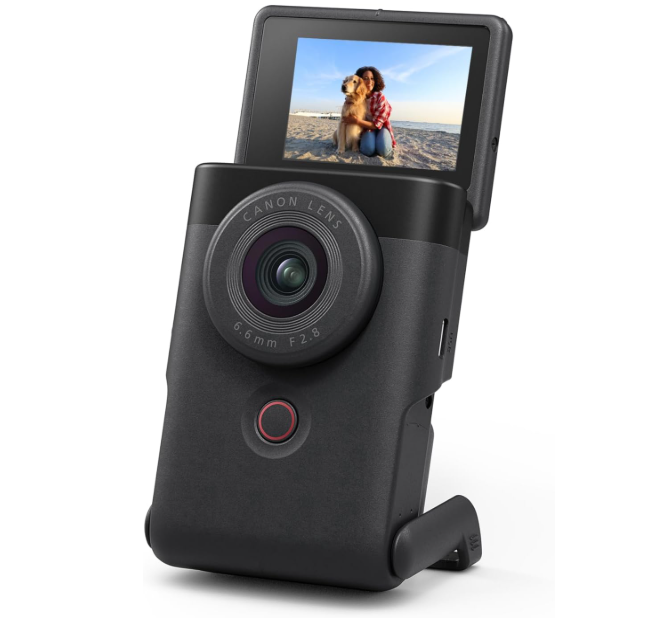
Table of Contents
ToggleGetting started in photography doesn’t have to mean spending thousands of dollars on expensive equipment. Today, many of the best cameras under $500 for beginners offer impressive image quality, reliable autofocus, user-friendly controls, and advanced features that were once reserved for professional models. Whether you’re looking to capture stunning travel photos, memorable family moments, creative portraits, or high-quality videos for YouTube and social media, there’s a budget-friendly camera to suit your needs.
From beginner-friendly DSLRs like the Nikon D3500 and Canon EOS Rebel T7 to compact mirrorless options such as the Canon EOS R100, Sony Alpha a6000, and Panasonic Lumix G100, these affordable cameras provide excellent value while giving you room to grow your skills. In this guide, we’ve rounded up the best cameras under $500 for beginners, highlighting their standout features, strengths, and overall performance to help you choose the perfect camera for your photography journey.
Here is a summary of the Best camera under 500 for beginners;
- Canon EOS R100 — Best Overall
- Nikon D3500 — Best DSLR for Beginners
- Canon EOS Rebel T7 — Best Budget DSLR
- Sony Alpha a6000 — Best Mirrorless for Fast Autofocus
- Olympus OM-D E-M10 Mark III — Best for Travel Photography
- Panasonic Lumix G100 — Best for Vlogging and Content Creation
- Nikon D3300 — Best Value DSLR
- Canon PowerShot V10 — Best Compact Camera for Vloggers
Best camera under 500 for beginners
1) Canon EOS R100
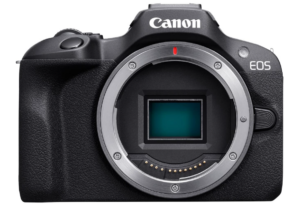
The Canon EOS R100 is an excellent entry-level mirrorless camera designed for beginners who want to step into Canon’s EOS R system without spending a fortune. As the smallest and lightest camera body in the EOS R series, it offers outstanding portability, making it ideal for travel, family events, street photography, and everyday shooting.
Despite its compact size, the camera delivers impressive image quality thanks to its 24.1-megapixel APS-C CMOS sensor paired with the powerful DIGIC 8 image processor, producing sharp, vibrant photos with accurate colors and excellent low-light performance. The Dual Pixel CMOS AF system provides fast and reliable autofocus across up to 143 focus zones, while Auto Subject Detection and Eye Detection AF with Servo AF help keep people and moving subjects in sharp focus.
For capturing action, the EOS R100 can shoot continuously at up to 6.5 frames per second with One-Shot AF, allowing beginners to photograph sports, wildlife, and candid moments with confidence. Combining ease of use, dependable autofocus, and access to Canon’s growing RF lens lineup, the Canon EOS R100 is one of the best beginner mirrorless cameras available under $500.
Pros
- Compact and lightweight design for easy portability
- Affordable entry into the Canon EOS R mirrorless system
- Excellent 24.1MP APS-C CMOS sensor for sharp, detailed images
- Powerful DIGIC 8 processor delivers fast performance
- Dual Pixel CMOS AF with up to 143 autofocus zones
- Eye Detection AF and Auto Subject Detection improve focus accuracy
- Continuous shooting up to 6.5 fps for capturing moving subjects
- User-friendly controls make it ideal for beginners
- Compatible with Canon RF and RF-S lenses for future upgrades
Cons
- Continuous shooting speed is modest compared to higher-end models
2) Nikon D3500
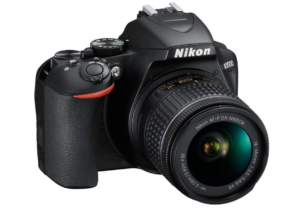
The Nikon D3500 is an outstanding beginner-friendly DSLR that combines the simplicity of a point-and-shoot camera with the creative flexibility of an interchangeable-lens system. Designed with first-time photographers in mind, its compact and comfortable body makes it easy to carry for travel, family gatherings, and special events without feeling bulky.
At the heart of the camera is an image sensor that is approximately 15 times larger than those found in most smartphones, allowing it to capture significantly sharper images, richer colors, and greater detail with improved low-light performance. The D3500 also makes sharing your favorite shots effortless through Nikon’s SnapBridge app, which uses Bluetooth 4.1 to wirelessly transfer photos to a compatible smartphone or tablet for quick posting on social media.
In addition to stunning still images, the camera records 1080p Full HD video with monaural sound at the touch of a button, making it a versatile choice for capturing both everyday moments and memorable occasions. With its intuitive controls, excellent image quality, and reliable performance, the Nikon D3500 remains one of the best DSLR cameras for beginners looking to learn photography without a steep learning curve.
Pros
- Extremely beginner-friendly with point-and-shoot simplicity
- Compact and comfortable design for travel and everyday use
- Large image sensor produces sharper, clearer photos than most smartphones
- Excellent image quality with rich colors and fine detail
- Easy wireless photo sharing via Nikon SnapBridge
- Bluetooth 4.1 provides seamless connection to compatible devices
- Records crisp 1080p Full HD videos with one-touch recording
- Long battery life ideal for extended shooting sessions
- Compatible with a wide range of Nikon F-mount lenses
Cons
- Video recording is limited to Full HD (1080p) with no 4K support
3) Canon EOS Rebel T7
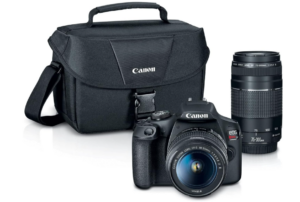
The Canon EOS Rebel T7 is a dependable entry-level DSLR that offers an excellent balance of image quality, ease of use, and affordability for beginner photographers. Equipped with a 24.1-megapixel APS-C CMOS sensor, it captures sharp, vibrant images with impressive detail, while its ISO range of 100–6400 (expandable to H: 12800) helps deliver solid performance in a variety of lighting conditions.
The camera features Improved Dual Pixel CMOS AF and Eye Detection AF, making it easier to achieve accurate focus on people and moving subjects, while the 9-point autofocus system with AI Servo AF provides reliable subject tracking for everyday photography. Framing shots is comfortable through the optical viewfinder, which offers approximately 95% viewing coverage for a natural shooting experience.
Built-in Wi-Fi and NFC connectivity allow you to quickly transfer photos and control the camera remotely using compatible devices. In addition to photography, the Rebel T7 records Full HD 1080p video, making it suitable for capturing family memories, travel adventures, and creative projects.
An added bonus is compatibility with EOS Utility Webcam Beta Software for both Windows and Mac, enabling the camera to function as a high-quality webcam for video calls and live streaming. Overall, the Canon EOS Rebel T7 is a versatile and beginner-friendly DSLR that provides excellent value for anyone looking to learn photography.
Pros
- High-resolution 24.1MP APS-C CMOS sensor produces detailed images
- Improved Dual Pixel CMOS AF and Eye Detection AF enhance focusing accuracy
- Reliable 9-point autofocus system with AI Servo AF
- Optical viewfinder provides a traditional DSLR shooting experience
- Built-in Wi-Fi and NFC make wireless sharing quick and convenient
- Full HD 1080p video recording for everyday videography
- Can be used as a high-quality webcam with EOS Utility Webcam software
- Beginner-friendly controls with an intuitive interface
- Good image quality across a wide ISO range
Cons
- Autofocus system is relatively basic compared to newer mirrorless cameras
4) Sony Alpha a6000
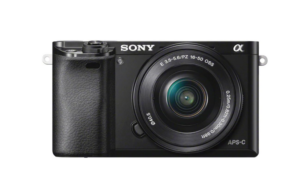
The Sony Alpha a6000 is a powerful and compact mirrorless camera that remains one of the top choices for beginners and photography enthusiasts seeking speed and excellent image quality at an affordable price. It features an advanced 24.2-megapixel back-illuminated image sensor that captures sharp, vibrant images with impressive detail and performs well in a wide range of lighting conditions.
With an ISO range of 100–25,600, expandable to 51,200, the a6000 delivers clean, low-noise images even in challenging low-light environments. Its standout feature is the Hybrid Autofocus system, which combines 179 focal-plane phase-detection points and 25 contrast-detection points to provide exceptionally fast and accurate subject tracking.
For action photography, the camera can shoot continuously at up to 11 frames per second, making it ideal for sports, wildlife, and fast-moving subjects. The 3-inch tilting LCD with 921,000-dot resolution and the 0.39-inch electronic viewfinder offer flexible and comfortable composition from different shooting angles. Compatible with Sony’s extensive E-mount lens lineup, the a6000 gives users plenty of room to expand their creative options.
Additional features such as 1200-zone evaluative metering, an anti-dust system with charge protection coating and ultrasonic vibration, and a battery life of up to 360 shots per charge further enhance its reliability. The camera also comes with essential accessories, including the NP-FW50 rechargeable battery, shoulder strap, eyepiece cup, and Micro USB cable, making it ready to use right out of the box.
Pros
- High-resolution 24.2MP image sensor produces detailed, vibrant photos
- Wide ISO range (100–25,600, expandable to 51,200) for excellent low-light performance
- Extremely fast Hybrid AF with 179 phase-detection and 25 contrast-detection points
- Continuous shooting up to 11 fps is excellent for action photography
- Compact and lightweight design that’s easy to carry
- Tilting 3-inch LCD allows flexible shooting angles
- Bright electronic viewfinder provides real-time exposure preview
- Compatible with a wide selection of Sony E-mount lenses
- Effective anti-dust system helps keep the sensor clean
- Includes essential accessories to get started immediately
Cons
- Battery life of approximately 360 shots is modest compared to many DSLRs
5) Olympus OM-D E-M10 Mark III
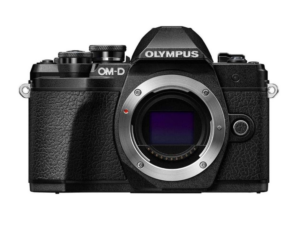
The Olympus OM-D E-M10 Mark III is a stylish and beginner-friendly mirrorless camera that combines classic design with advanced imaging features, making it an excellent choice for travel, street, and everyday photography. At its core is a 16-megapixel Live MOS sensor paired with the TruePic VIII image processor, delivering sharp, vibrant images with accurate colors and reliable performance in various lighting conditions.
One of its standout features is the 5-axis in-body image stabilization (IBIS), which minimizes camera shake to produce blur-free still photos and exceptionally smooth 4K video, even when shooting handheld. The camera records 4K video at 30 frames per second and also offers HD recording at up to 120 frames per second for impressive slow-motion footage.
Designed with simplicity in mind, the OM-D E-M10 Mark III features a timeless, compact, and lightweight body that is comfortable to carry all day. Its intuitive control layout, including dual control dials, an arrow pad, and a customizable shortcut button, makes adjusting settings quick and easy for beginners and enthusiasts alike.
A 3.0-inch tilting touchscreen LCD further enhances usability by allowing touch autofocus and one-step touch shutter release, making it effortless to capture creative angles and fast-moving subjects. Overall, the Olympus OM-D E-M10 Mark III is a well-rounded mirrorless camera that offers excellent stabilization, reliable performance, and portability in an elegant package.
Pros
- Effective 5-axis in-body image stabilization for sharp photos and smooth handheld videos
- High-quality 16MP Live MOS sensor delivers detailed and vibrant images
- TruePic VIII image processor provides fast and responsive performance
- Records crisp 4K video at 30 fps
- HD video at 120 fps enables smooth slow-motion recording
- Compact and lightweight body is ideal for travel and everyday photography
- Stylish retro-inspired design with intuitive controls
- Dual control dials and customizable shortcut button improve shooting efficiency
- 3.0-inch tilting touchscreen supports touch AF and touch shutter operation
- Comfortable handling for both beginners and experienced photographers
Cons
- 16MP resolution is lower than many competing APS-C cameras
6) Panasonic LUMIX G100
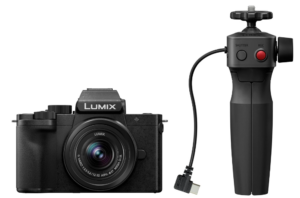
The Panasonic Lumix G100 is a compact and versatile mirrorless camera designed for beginners, content creators, and vloggers who want professional-looking photos and videos without carrying bulky equipment. Its lightweight design makes it comfortable for one-handed shooting, whether you’re documenting your travels, creating YouTube videos, or capturing everyday moments.
The G100 integrates seamlessly with smartphones, allowing you to easily transfer, edit, and share photos and videos with family or directly to platforms like Instagram and other social media apps. It also doubles as a high-quality webcam, enabling crisp, bright video for livestreams, virtual meetings, interviews, and online content creation with a simple connection to your computer.
Packed with creator-friendly features, the camera includes a frame marker that displays popular social media aspect ratios such as 1:1, 4:5, 5:4, and 9:16, making it easier to compose content for different platforms. Additional tools like facial recognition, image stabilization, and V-Log L recording give users greater creative control while producing smoother footage and more flexible color grading during editing.
One of the G100’s standout features is its 360-degree sound recording system, which intelligently adjusts audio based on your environment, ensuring voices remain clear whether you’re filming indoors, outdoors, in busy crowds, or in quiet natural settings. Backed by Panasonic’s renowned Japanese engineering and commitment to innovation, the Lumix G100 is an excellent choice for beginners seeking a portable camera that excels in both photography and video creation.
Pros
- Compact and lightweight design for easy one-handed shooting
- Seamless smartphone connectivity for quick photo and video sharing
- Can be used as a high-quality webcam for livestreaming and video calls
- Frame marker supports multiple social media aspect ratios
- Intelligent 360-degree audio system delivers clear sound in various environments
- Built-in facial recognition improves focus on people
- Image stabilization helps produce smoother handheld videos
- V-Log L recording provides greater flexibility for color grading
- Beginner-friendly interface with features tailored for content creators
- Excellent portability for travel, vlogging, and everyday photography
Cons
- Compact body offers fewer physical controls than larger cameras
7) Nikon D3300
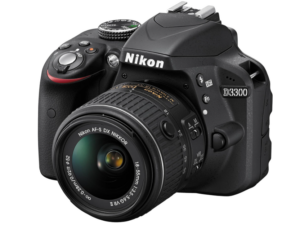
The Nikon D3300 is a beginner-friendly DSLR that delivers impressive image quality and dependable performance, making it an excellent choice for anyone learning photography. It features a 24.2-megapixel DX-format CMOS sensor that captures sharp, detailed images with vibrant colors and excellent clarity, even when printing large photos or cropping images.
With an ISO range of 100–12,800, expandable to 25,600, the D3300 performs well in both bright daylight and low-light environments, helping photographers capture clean images with minimal noise. Its 11-point autofocus system with 3D Tracking quickly locks onto moving subjects and continuously follows them throughout the frame, making it easier to photograph sports, wildlife, and active children.
The camera also supports continuous shooting at up to 5 frames per second, allowing users to capture fast-moving action with confidence. For video enthusiasts, the D3300 records Full HD 1080p video at frame rates of 60, 50, 30, 25, and 24 fps, delivering smooth and detailed footage for home videos and creative projects. A 3-inch LCD screen with 921,000-dot resolution provides a bright and clear display for reviewing images and navigating settings.
Compatible with Nikon’s extensive range of F-mount lenses, the D3300 requires AF-S lenses for autofocus, giving beginners access to a wide variety of lenses as their photography skills grow. Overall, the Nikon D3300 offers an outstanding combination of image quality, ease of use, and affordability, making it one of the best entry-level DSLR cameras available.
Pros
- High-resolution 24.2MP DX-format CMOS sensor captures detailed, vibrant images
- Excellent image quality with strong low-light performance
- ISO range expandable to 25,600 for greater shooting flexibility
- Reliable 11-point autofocus system with 3D Tracking for moving subjects
- Continuous shooting at up to 5 fps for action photography
- Full HD 1080p video recording with multiple frame rate options
- Bright and sharp 3-inch LCD with 921,000-dot resolution
- Comfortable, beginner-friendly design and intuitive controls
- Wide compatibility with Nikon F-mount lenses
- Great value for photographers learning the fundamentals
Cons
- Autofocus is limited to 11 points, fewer than many newer cameras
8) Canon PowerShot V10
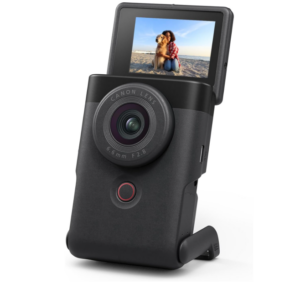
The Canon PowerShot V10 is a compact, all-in-one vlogging camera designed for content creators who want professional-quality video in an ultra-portable package. Its sleek, pocket-sized design makes it easy to carry anywhere, allowing you to capture high-quality content on the go without the bulk of a traditional camera.
At its core is a 15.2-megapixel 1-inch back-illuminated CMOS sensor, which delivers excellent image quality and impressive low-light performance for vibrant photos and detailed videos. The camera features a retractable front-facing screen, making it easy to monitor yourself while recording, while built-in subject detection helps keep you in sharp focus. Connectivity options such as a micro-HDMI output, external microphone input, and USB-C charging add versatility for creators who want to improve their production quality or stream content.
One of the PowerShot V10’s standout features is its innovative built-in stand, which folds both forward and backward to support a variety of shooting angles without the need for a separate tripod. The camera is equipped with a fixed 19mm wide-angle lens (35mm equivalent) that captures expansive scenes, group shots, and tight indoor spaces with ease, making it ideal for travel, lifestyle, and vlog content.
With firmware version 1.2.0 or later, users can choose between three image stabilization modes; IS Off, IS On, and IS Enhanced; for smoother handheld footage. The PowerShot V10 also records 8-bit 4K video at up to 30 fps and Full HD video at up to 60 fps, while 14 built-in movie color filters allow creators to add unique visual styles directly in-camera.
Audio quality is equally impressive thanks to dual stereo microphones and a third center microphone that intelligently reduces background noise, ensuring clear and natural sound even in busy environments. Combining portability, ease of use, and creator-focused features, the Canon PowerShot V10 is an excellent choice for beginners and vloggers looking for a dedicated video camera under $500.
Pros
- Ultra-compact, pocket-sized design for maximum portability
- Large 15.2MP 1-inch back-illuminated CMOS sensor delivers excellent image quality
- Strong low-light performance for indoor and nighttime recording
- Retractable front-facing screen is perfect for vlogging and selfies
- Innovative built-in stand supports hands-free recording from multiple angles
- Fixed 19mm wide-angle lens is ideal for vlogs, travel, and group shots
- Three video image stabilization modes improve handheld footage
- Records sharp 4K video at up to 30 fps and Full HD at up to 60 fps
- Built-in subject detection helps maintain accurate focus
- External microphone input allows for higher-quality audio recording
- USB-C charging offers convenient power management
- High-quality stereo microphones with noise reduction provide clear audio
- Includes 14 movie color filters for creative video effects
Cons
- Fixed lens cannot be changed or zoomed
Factors to Consider When Choosing the Best camera under 500 for beginners
1. Image Sensor Size and Resolution
The image sensor is one of the most important components of any camera because it directly affects image quality. Most beginner cameras under $500 feature APS-C, Micro Four Thirds, or 1-inch sensors, all of which produce significantly better photos than a smartphone. Cameras such as the Canon EOS R100, Nikon D3500, and Sony Alpha a6000 offer sensors ranging from 16MP to 24.2MP, providing excellent detail, vibrant colors, and improved low-light performance. A larger sensor also creates a more natural background blur (bokeh), making portraits look more professional.
2. Ease of Use
As a beginner, choosing a camera with an intuitive interface and beginner-friendly controls will make learning photography much easier. Cameras like the Nikon D3500 feature helpful guide modes, while the Canon EOS Rebel T7 and Canon EOS R100 offer simple menu systems and automatic shooting modes that let new users start taking great photos immediately. Easy-to-access controls and straightforward menus reduce the learning curve and allow beginners to focus on composition rather than complicated settings.
3. Autofocus Performance
A reliable autofocus system ensures your photos remain sharp, especially when photographing moving subjects, children, pets, or sporting events. Modern beginner cameras such as the Canon EOS R100 feature Dual Pixel CMOS AF with Eye Detection, while the Sony Alpha a6000 boasts an impressive Hybrid AF system with 179 phase-detection points for extremely fast subject tracking. Choosing a camera with responsive autofocus increases your chances of capturing perfectly focused images every time.
4. Video Recording Capabilities
Many beginners want a camera that can capture both high-quality photos and videos. While some cameras are primarily photography-focused, others excel at content creation. Look for cameras capable of recording at least Full HD 1080p, while models like the Olympus OM-D E-M10 Mark III, Panasonic Lumix G100, and Canon PowerShot V10 offer 4K video, producing sharper footage for YouTube, travel videos, and social media. Features such as image stabilization, external microphone support, and slow-motion recording further enhance the video experience.
5. Portability and Weight
A lightweight camera is more enjoyable to carry and encourages you to take it everywhere. Mirrorless models such as the Canon EOS R100, Sony Alpha a6000, Panasonic Lumix G100, and Canon PowerShot V10 are significantly smaller and lighter than traditional DSLRs while still delivering excellent image quality. If you travel frequently, hike, or simply want a camera that’s easy to fit into a backpack or handbag, portability should be a top priority.
6. Lens Compatibility and Upgrade Potential
A camera is a long-term investment, so it’s worth considering the availability of interchangeable lenses. Systems like Canon’s RF mount, Sony’s E-mount, Nikon’s F-mount, and the Micro Four Thirds mount offer a wide selection of lenses for portraits, landscapes, wildlife, sports, and macro photography. Choosing a camera with an established lens ecosystem allows you to upgrade your equipment over time without replacing the camera body.
7. Low-Light Performance
Not all photography happens in bright daylight. Whether you’re shooting indoors, at evening events, or during sunset, good low-light performance is essential. Cameras with larger sensors and wider ISO ranges generally perform better under dim lighting. Models like the Sony Alpha a6000, Canon EOS R100, and Nikon D3500 produce cleaner images with less digital noise, helping beginners capture better photos without relying heavily on flash.
8. Continuous Shooting Speed
If you plan to photograph sports, wildlife, pets, or children, continuous shooting speed can make a big difference. Faster burst rates allow you to capture multiple frames in quick succession, increasing the chances of getting the perfect shot. The Sony Alpha a6000 leads this category with up to 11 frames per second, while the Canon EOS R100 and Nikon D3300 also provide respectable burst shooting speeds for everyday action photography.
9. Connectivity and Sharing Features
Modern cameras make it easier than ever to share photos instantly. Built-in Wi-Fi, Bluetooth, or smartphone integration lets you transfer images directly to your mobile device for quick editing and social media posting. Cameras like the Panasonic Lumix G100, Canon EOS Rebel T7, Canon PowerShot V10, and Nikon D3500 with SnapBridge simplify wireless sharing, making them especially appealing to beginners and content creators.
10. Display and Viewfinder
A quality LCD screen and viewfinder improve both shooting and image review. Tilting or fully articulating touchscreens are especially useful for selfies, vlogging, and shooting from creative angles. Cameras such as the Olympus OM-D E-M10 Mark III feature a tilting touchscreen, while the Canon PowerShot V10 includes a front-facing display for easy self-recording. Electronic or optical viewfinders also help when shooting outdoors in bright sunlight where LCD screens may be difficult to see.
11. Image Stabilization
Image stabilization helps reduce blur caused by camera shake, especially when shooting handheld in low light or recording video. Cameras equipped with in-body image stabilization (IBIS), such as the Olympus OM-D E-M10 Mark III, provide noticeably smoother videos and sharper still images. Even cameras without IBIS may include digital stabilization or work with stabilized lenses to improve handheld performance.
12. Battery Life
Battery life is an often-overlooked feature, but it’s important if you plan to shoot throughout the day. DSLR cameras like the Nikon D3500 and Nikon D3300 typically offer longer battery life than most mirrorless models because they use optical viewfinders instead of electronic displays. If you expect to travel or attend long events, choosing a camera with strong battery performance; or purchasing a spare battery; will ensure you never miss important moments.
13. Overall Value for Money
Finally, consider the complete package rather than focusing solely on specifications. The best beginner camera under $500 should provide excellent image quality, reliable autofocus, useful video features, ease of use, and room to grow as your skills improve. Cameras like the Canon EOS R100, Sony Alpha a6000, and Nikon D3500 continue to be among the best values because they balance affordability with performance, making them ideal choices for photographers who are just starting their creative journey.
FAQs
1. What is the best camera under $500 for beginners?
The Canon EOS R100 is widely regarded as one of the best cameras under $500 for beginners due to its compact design, 24.1MP APS-C sensor, Dual Pixel CMOS AF, and compatibility with Canon’s RF lens system. Other excellent options include the Nikon D3500 for those who prefer a DSLR, the Sony Alpha a6000 for fast autofocus and action photography, and the Panasonic Lumix G100 for aspiring vloggers and content creators. The best choice ultimately depends on whether your primary focus is photography, video recording, travel, or everyday use.
2. Is a DSLR or a mirrorless camera better for beginners?
Both DSLR and mirrorless cameras are excellent choices for beginners, but they offer different advantages. DSLRs like the Nikon D3500 and Canon EOS Rebel T7 provide longer battery life, optical viewfinders, and a traditional shooting experience that’s great for learning photography fundamentals. Mirrorless cameras such as the Canon EOS R100, Sony Alpha a6000, and Olympus OM-D E-M10 Mark III are lighter, more compact, feature faster autofocus, and often include advanced video capabilities, making them ideal for beginners who want a modern and versatile camera system.
3. Can I shoot professional-quality photos with a camera under $500?
Yes. Many cameras under $500 are capable of producing professional-looking images when paired with good lighting, proper camera settings, and quality lenses. Models like the Canon EOS R100, Sony Alpha a6000, Nikon D3300, and Nikon D3500 feature large image sensors that deliver significantly better image quality than most smartphones. As your photography skills improve, upgrading your lenses can further enhance image quality without needing to replace the camera body, making these cameras excellent long-term investments for beginners.
Read Also : Best Camera for Mom Photographer
Final Thoughts
Choosing the best camera under $500 for beginners ultimately comes down to your photography goals, preferred shooting style, and future upgrade plans. Whether you opt for the versatile Canon EOS R100, the dependable Nikon D3500, the fast-focusing Sony Alpha a6000, or a content creator-friendly option like the Panasonic Lumix G100 or Canon PowerShot V10, each camera offers excellent value and the essential features needed to build your skills.
From high-resolution sensors and reliable autofocus to quality video recording and interchangeable lens systems, these budget-friendly cameras prove that you don’t need to spend a fortune to achieve impressive results. By considering factors such as image quality, portability, autofocus performance, and lens compatibility, you can confidently invest in a camera that not only meets your current needs but also supports your growth as a photographer or content creator for years to come.