
Table of Contents
ToggleChoosing your first mirrorless camera doesn’t have to mean spending a fortune. With a budget of under $500, you can find impressive cameras that deliver outstanding image quality, fast autofocus, 4K video recording, and interchangeable lens systems; all without overwhelming you with complicated features.
Whether you’re looking to capture family memories, travel adventures, stunning landscapes, or create content for YouTube and social media, today’s entry-level mirrorless cameras offer exceptional value and performance. In this guide, we’ve carefully selected the best mirrorless cameras for beginners under $500, comparing their features, strengths, and overall value to help you find the perfect camera that matches your photography goals and sets you up for success.
Here is a summary of the Best Mirrorless Camera for Beginners under 500;
- Canon EOS R100 – Best Overall
- Sony Alpha a6000 – Best Value for Money
- Sony a5100 – Best Compact Option
- Sony Alpha a6300 – Best for Fast Autofocus
- Nikon Z50 – Best for All-Round Performance
- OM SYSTEM OLYMPUS OM-D E-M10 Mark III – Best for Image Stabilization
- OM SYSTEM Olympus OM-D E-M5 Mark II – Best for Travel Photography
Best Mirrorless Camera for Beginners under 500
1) Sony Alpha a6000
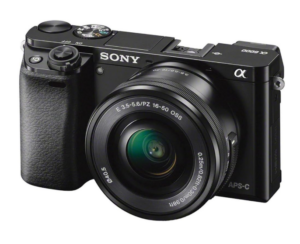
The Sony Alpha a6000 remains one of the best mirrorless cameras for beginners thanks to its excellent balance of image quality, speed, and portability. It features a 24.2MP back-illuminated image sensor that captures sharp, vibrant photos with impressive detail, even in challenging lighting conditions.
Its ISO range of 100–25,600, expandable to 51,200, provides excellent low-light performance, making it suitable for indoor photography, evening shoots, and travel. The camera is compatible with Sony E-mount lenses, giving beginners access to a wide range of lenses as they develop their photography skills.
One of the standout features of the Sony Alpha a6000 is its hybrid autofocus system, which combines 179 phase-detection points with 25 contrast-detection points for fast and accurate subject tracking. Whether you’re photographing moving subjects, wildlife, sports, or children, the autofocus performs reliably. The camera also supports continuous shooting at up to 11 frames per second, allowing you to capture fast action with ease. A 1,200-zone evaluative metering system helps ensure accurate exposure across a variety of shooting environments.
The camera offers a comfortable shooting experience with its 3-inch tilting LCD screen featuring 921,000 dots, making it easy to compose shots from creative angles. It also includes a 0.39-inch electronic colour viewfinder, which provides a clear view when shooting in bright sunlight.
The built-in anti-dust system, featuring a charge protection coating and ultrasonic vibration mechanism, helps keep the sensor clean and reduces the need for frequent maintenance. Power comes from the included NP-FW50 rechargeable battery, which delivers up to 360 shots per charge, while the package also includes a shoulder strap, eyepiece cup, and Micro USB cable, giving beginners everything needed to get started. Overall, the Sony Alpha a6000 continues to be an outstanding choice for anyone seeking an affordable, fast, and highly capable mirrorless camera under $500.
Pros
- Excellent 24.2MP back-illuminated sensor delivers sharp, detailed images.
- Fast hybrid autofocus with 179 phase-detection points.
- Shoots up to 11 fps for sports and action photography.
- Wide ISO range with good low-light performance.
- Compatible with a large selection of Sony E-mount lenses.
- Tilting LCD screen and electronic viewfinder improve shooting flexibility.
- Effective anti-dust sensor cleaning system.
- Compact and lightweight design for travel and everyday use.
Cons
- Battery life of approximately 360 shots is relatively modest.
2) Sony a5100
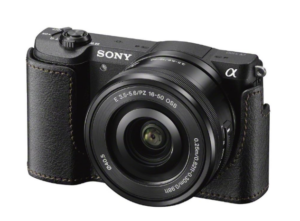
The Sony a5100 is an excellent entry-level mirrorless camera that combines compact portability with impressive performance, making it a great choice for beginners and casual photographers. At its core is a 24MP APS-C image sensor that captures sharp, high-resolution photos with rich colours and fine detail.
Powered by Sony’s BIONZ X image processor, the camera delivers outstanding image quality with enhanced detail reproduction and effective noise reduction, even when shooting in challenging lighting conditions. Its compatibility with Sony E-mount lenses also allows users to expand their creative options with a wide range of lenses as their photography skills grow.
One of the Sony a5100’s biggest strengths is its ultra-fast autofocus system, which features 179 autofocus points for quick and accurate subject acquisition. Whether you’re photographing portraits, family moments, or moving subjects, the autofocus performs reliably, while the continuous shooting speed of up to 6 frames per second helps capture fast-paced action. For video creators, the camera records Full HD 1080p video at 24, 30, and 60 frames per second with data rates of up to 50Mb/s, producing smooth and detailed footage suitable for YouTube, travel videos, and everyday content creation.
Sharing your photos and videos is quick and convenient thanks to the camera’s built-in Wi-Fi and NFC connectivity, allowing instant transfers to compatible smartphones for easy posting on social media. The Sony a5100 is also compatible with both Windows and Mac OS X operating systems, making file management straightforward across different devices.
The package includes a rechargeable NP-FW50 battery, AC charger (AC-UB10), lens cap, shoulder strap, and Micro USB cable, providing everything needed to start shooting right out of the box. Overall, the Sony a5100 offers an excellent combination of image quality, fast autofocus, wireless connectivity, and portability, making it one of the best beginner-friendly mirrorless cameras available under $500.
Pros
- High-resolution 24MP APS-C sensor captures sharp, detailed images.
- BIONZ X image processor delivers excellent detail and low-noise performance.
- Fast 179-point autofocus system for accurate subject tracking.
- Continuous shooting at up to 6 fps.
- Records high-quality Full HD 1080p video.
- Built-in Wi-Fi and NFC enable quick wireless photo sharing.
- Compatible with a wide range of Sony E-mount lenses.
- Compact, lightweight design that’s ideal for travel and everyday use.
- Includes essential accessories to get started immediately.
Cons
- Does not support 4K video recording.
3) Sony Alpha a6300
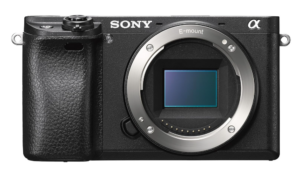
The Sony Alpha a6300 is a powerful mirrorless camera that offers advanced features in a compact, travel-friendly body, making it an excellent choice for beginners who want room to grow as well as enthusiast photographers. It is equipped with a 24.2MP Exmor CMOS sensor, which produces sharp, vibrant images with excellent detail and dynamic range.
The advanced sensor also delivers improved light sensitivity while minimizing image noise, allowing you to capture high-quality photos in both bright daylight and low-light environments. Whether you’re shooting landscapes, portraits, or street photography, the a6300 consistently delivers professional-looking results.
One of the camera’s standout features is its exceptionally fast autofocus system, featuring 425 phase-detection autofocus points and an impressive 0.05-second autofocus speed. This advanced AF system quickly locks onto subjects and tracks them accurately, making it ideal for sports, wildlife, and action photography.
Combined with continuous shooting at up to 11 frames per second, the Sony Alpha a6300 makes it easy to capture fast-moving moments without missing the perfect shot. For composition, the camera includes a high-resolution XGA OLED Tru-Finder electronic viewfinder, providing a bright, detailed view that remains easy to use even in direct sunlight.
Videographers will also appreciate the Sony Alpha a6300’s impressive recording capabilities. The camera supports 4K UHD and Full HD video recording with full pixel readout, producing exceptionally detailed footage with minimal moiré and aliasing. Multiple movie functions provide greater creative flexibility, making it suitable for content creators, vloggers, and aspiring filmmakers.
Despite its advanced performance, the camera remains highly portable thanks to its compact magnesium alloy body, which is protected by dust and moisture-resistant sealing for reliable use in challenging outdoor conditions. Overall, the Sony Alpha a6300 is a versatile mirrorless camera that combines speed, image quality, and durability, making it one of the best options for photographers seeking premium performance under a modest budget.
Pros
- Outstanding 24.2MP Exmor CMOS sensor delivers excellent image quality.
- Ultra-fast autofocus with 425 phase-detection points and 0.05-second AF speed.
- Continuous shooting at up to 11 fps is ideal for sports and wildlife photography.
- High-resolution XGA OLED Tru-Finder provides a bright, detailed view.
- Records sharp 4K UHD and Full HD video with full pixel readout.
- Compact, lightweight magnesium alloy body is easy to carry.
- Dust and moisture-resistant construction improves durability for outdoor use.
- Excellent balance of performance and portability.
Cons
- Rear LCD screen is tilting rather than fully articulating.
4) Canon EOS R100
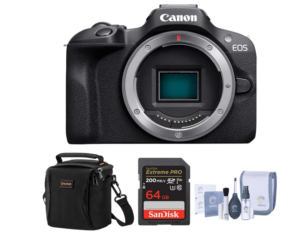
The Canon EOS R100 is an outstanding entry-level mirrorless camera that combines excellent image quality, beginner-friendly features, and a lightweight design, making it one of the best cameras for first-time photographers and content creators. It is powered by a 24.1MP APS-C CMOS sensor paired with the DIGIC 8 image processor, delivering sharp, detailed images with vibrant colours, accurate exposure, and reliable performance across a variety of shooting conditions.
Whether you’re capturing family moments, landscapes, or travel adventures, the EOS R100 consistently produces high-quality results. Its compatibility with the Canon RF lens mount also gives users access to a growing range of RF lenses, making it easy to expand their creative possibilities as their skills develop.
The Canon EOS R100 is equally impressive when it comes to autofocus and video performance. It records 4K video at 24fps and Full HD video at 60fps, producing crisp, detailed footage for vlogs, travel videos, and everyday content creation.
The Dual Pixel CMOS Autofocus system, featuring 143 autofocus zones, provides fast, accurate subject tracking and reliable eye detection, helping users keep portraits and moving subjects sharp with minimal effort. These features make the camera especially appealing to beginners who want dependable autofocus for both photography and video.
Designed with portability in mind, the EOS R100 features a compact, lightweight body that’s comfortable to carry throughout the day. It includes a 2.36-million-dot OLED electronic viewfinder for clear viewing in bright conditions and a 3-inch LCD screen for easy image composition and playback.
Canon also includes beginner-friendly tools such as Creative Assist for simple exposure adjustments, Silent Mode for discreet shooting, and built-in Wi-Fi and Bluetooth for quick wireless sharing and remote camera control. This bundle adds even more value by including a 64GB UHS-I SDXC memory card, Slinger Alpine 120 shoulder bag, cleaning kit, battery, charger, neck strap, body cap, and a Canon 1-year limited warranty, giving new photographers everything they need to start shooting immediately.
Pros
- High-quality 24.1MP APS-C sensor produces sharp, detailed images.
- DIGIC 8 processor delivers fast performance and excellent colour reproduction.
- Dual Pixel CMOS AF with 143 autofocus zones offers fast and accurate focusing.
- Records 4K 24p and Full HD 60p video.
- Compact and lightweight design is ideal for travel and everyday photography.
- Bright 2.36-million-dot OLED electronic viewfinder.
- Built-in Wi-Fi and Bluetooth for seamless wireless sharing and remote control.
- Compatible with Canon’s expanding RF lens ecosystem.
- Includes a generous starter bundle with a 64GB memory card, shoulder bag, and cleaning kit.
- Creative Assist and Silent Mode make it beginner-friendly.
Cons
- Fixed rear LCD screen lacks tilt or full articulation.
5) Nikon Z50
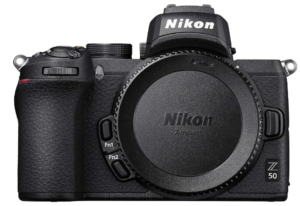
The Nikon Z50 is a versatile and beginner-friendly mirrorless camera that delivers exceptional image quality and fast performance in a compact, ergonomic body. It features a 20.9MP DX-format (APS-C) CMOS sensor, paired with Nikon’s EXPEED 6 image processor, producing sharp, vibrant images with impressive dynamic range and low-light performance.
The camera also benefits from Nikon’s wide Z-mount, allowing more light to reach the sensor for enhanced image quality while providing access to a growing selection of high-performance Z-mount lenses. Whether you’re capturing portraits, landscapes, or everyday moments, the Z50 consistently delivers professional-looking results.
One of the Nikon Z50’s standout features is its advanced hybrid autofocus system, which uses 209 on-sensor autofocus points covering approximately 90% of the frame both horizontally and vertically. This extensive AF coverage ensures fast, accurate subject tracking and edge-to-edge sharpness, making it ideal for portraits, wildlife, sports, and street photography.
The camera also supports continuous shooting at up to 11 frames per second with both autofocus and auto exposure, allowing photographers to capture fast-moving action with confidence. For those who prefer quiet shooting environments, the Z50 includes a Silent Photography Mode, making it perfect for ceremonies, wildlife, and candid photography.
The Nikon Z50 is equally capable for video creators, offering 4K UHD video recording at 30p with no crop factor, allowing users to take full advantage of the sensor’s field of view. It also records Full HD slow-motion footage, making it easy to create smooth cinematic sequences, while 4K time-lapse videos can be produced directly in-camera without additional software.
Creativity is further enhanced with 20 built-in creative effects for both photos and videos, with adjustable intensity for personalized results. Nikon’s renowned ergonomics are evident in the camera’s deep, comfortable grip, intuitive button layout, touchscreen controls, and customizable dials, ensuring comfortable operation during extended shooting sessions.
With a maximum shutter speed of 1/4000 second and a minimum shutter speed of 30 seconds, the Nikon Z50 is well-equipped for everything from freezing fast action to capturing long-exposure night scenes, making it one of the best mirrorless cameras for beginners under $500 when purchased used or refurbished.
Pros
- Excellent 20.9MP APS-C sensor produces sharp, detailed images.
- EXPEED 6 processor delivers fast performance and excellent image quality.
- Wide Nikon Z mount supports high-quality lenses and improved light gathering.
- Hybrid autofocus with 209 AF points covering approximately 90% of the frame.
- Continuous shooting up to 11 fps with AF and AE tracking.
- Records uncropped 4K UHD video and Full HD slow-motion footage.
- Built-in 4K time-lapse creation for creative filmmaking.
- Silent Photography Mode is ideal for discreet shooting.
- Includes 20 adjustable creative effects for photos and videos.
- Comfortable deep grip and intuitive controls enhance handling.
Cons
- No in-body image stabilization, relying on stabilized lenses for shake reduction.
6) OM SYSTEM OLYMPUS OM-D E-M10 Mark III
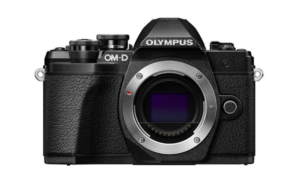
The OM SYSTEM OLYMPUS OM-D E-M10 Mark III is a stylish and beginner-friendly mirrorless camera that combines impressive image quality with advanced stabilization in a compact, lightweight body. It features a 16MP Live MOS sensor paired with the TruePic VIII image processor, delivering sharp, vibrant images with accurate colours and excellent overall performance.
While its resolution is lower than some APS-C competitors, the camera produces detailed photos suitable for travel, portraits, landscapes, and everyday photography. Its classic, retro-inspired design is not only visually appealing but also highly practical, with dual control dials, an arrow pad, and a shortcut button that provide quick access to essential camera settings.
One of the camera’s standout features is its 5-axis in-body image stabilization (IBIS), which effectively reduces camera shake when shooting handheld. This allows photographers to capture blur-free still images at slower shutter speeds while also producing smooth, stable video footage without the need for a gimbal in many situations.
The camera supports 4K video recording at 30fps, delivering crisp, detailed footage for travel videos, family memories, and content creation. It also offers HD high-speed recording at 120 frames per second, enabling smooth slow-motion videos that add a creative touch to action scenes.
The 3.0-inch tilting LCD touchscreen makes composing shots from high and low angles simple and intuitive. Its responsive Touch AF system allows users to select a focus point with a tap, while the one-step touch shutter release lets you focus and capture an image instantly with a single touch.
Thanks to its compact size and lightweight construction, the OM-D E-M10 Mark III is easy to carry all day, making it an excellent companion for travel, street photography, and everyday adventures. Overall, it offers an outstanding balance of portability, ease of use, image stabilization, and 4K video capabilities, making it one of the best mirrorless cameras for beginners under $500.
Pros
- Excellent 5-axis in-body image stabilization for sharper photos and smoother videos.
- High-quality 16MP Live MOS sensor delivers detailed, vibrant images.
- TruePic VIII processor provides fast and reliable image processing.
- Records crisp 4K video at 30fps.
- Supports 120fps HD recording for smooth slow-motion videos.
- Compact and lightweight body is ideal for travel and everyday photography.
- Classic ergonomic design with dual control dials for easy operation.
- Tilting 3-inch touchscreen with Touch AF and one-touch shutter release.
- Beginner-friendly controls with room to grow as skills improve.
Cons
- 16MP resolution is lower than many competing APS-C mirrorless cameras.
7) OM SYSTEM Olympus OM-D E-M5 Mark II
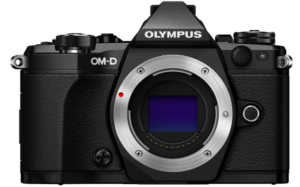
The OM SYSTEM Olympus OM-D E-M5 Mark II is a compact and feature-rich mirrorless camera that delivers excellent image quality, impressive stabilization, and professional-level controls in a weather-sealed body. It features a 16MP Live MOS sensor paired with a Micro Four Thirds lens mount, producing sharp, vibrant images with accurate colour reproduction.
One of its standout capabilities is the innovative 40MP High Resolution Shot Mode, which combines multiple exposures to create ultra-detailed images, making it an excellent choice for landscape, architecture, and studio photography. Compatible with a wide range of Micro Four Thirds lenses, the camera offers photographers plenty of creative flexibility.
A key highlight of the OM-D E-M5 Mark II is its advanced 5-axis Voice Coil Motor image stabilization system, which significantly reduces blur caused by camera shake. This powerful sensor-shift image stabilization enables photographers to capture sharp handheld images at slower shutter speeds while also producing smoother videos without relying on a tripod or gimbal.
The camera also supports continuous shooting at up to 10 frames per second, making it suitable for capturing fast-moving subjects such as wildlife, sports, and action scenes. Whether you’re photographing stills or dynamic moments, the camera delivers reliable performance with excellent stability.
For videographers, the OM-D E-M5 Mark II records Full HD 1080p video at 60p, 30p, 25p, and 24p, providing flexibility for different shooting styles. It also includes focus peaking, which helps achieve precise manual focus for both video and still photography.
Composing shots is a pleasure thanks to the large 2.35-million-dot electronic viewfinder, which provides a bright and detailed view even in strong sunlight. Built-in Wi-Fi allows for quick wireless image transfers and remote camera control via a compatible smartphone. With its durable bayonet-mounted Micro Four Thirds system, exceptional stabilization, and compact design, the OM-D E-M5 Mark II remains an excellent mirrorless camera for enthusiasts and beginners looking for premium features at an affordable price.
Pros
- Excellent 5-axis image stabilization delivers sharp handheld photos and smooth video.
- High-quality 16MP Live MOS sensor produces vibrant, detailed images.
- Unique 40MP High Resolution Shot Mode captures exceptional detail for static subjects.
- Fast continuous shooting at up to 10 fps.
- Large 2.35-million-dot electronic viewfinder provides a bright, clear viewing experience.
- Full HD video recording with multiple frame-rate options.
- Focus peaking improves manual focusing accuracy.
- Built-in Wi-Fi enables easy wireless sharing and remote camera control.
- Wide selection of compatible Micro Four Thirds lenses.
- Compact, durable body that is comfortable to carry.
Cons
- Limited to Full HD video and does not support 4K recording.
Factors to Consider When Choosing the Best Mirrorless Camera for Beginners under 500
1. Sensor Size and Image Quality
The sensor is one of the most important components of any camera because it determines image quality, low-light performance, and dynamic range. Most beginner mirrorless cameras under $500 feature either an APS-C or Micro Four Thirds sensor. APS-C sensors, found in cameras like the Canon EOS R100, Sony Alpha a6000, Sony a5100, Sony Alpha a6300, and Nikon Z50, generally produce better low-light performance and shallower depth of field. Micro Four Thirds sensors, used in the OM SYSTEM OM-D E-M10 Mark III and OM-D E-M5 Mark II, offer excellent image quality while allowing for smaller, lighter camera bodies and lenses.
2. Autofocus Performance
A fast and accurate autofocus (AF) system makes it easier to capture sharp images, especially when photographing moving subjects such as children, pets, sports, or wildlife. Cameras with advanced autofocus systems, such as the Sony Alpha a6300 with 425 phase-detection AF points, the Sony Alpha a6000 with 179 phase-detection points, and the Canon EOS R100 with Dual Pixel CMOS AF, deliver quicker subject tracking and more reliable focus. Beginners benefit from modern autofocus technology because it reduces missed shots and makes photography more enjoyable.
3. Video Recording Capabilities
If you plan to create YouTube videos, travel vlogs, or social media content, video quality should be a key consideration. Many mirrorless cameras under $500 now offer 4K video recording, including the Canon EOS R100, Sony Alpha a6300, Nikon Z50, and OM-D E-M10 Mark III. Others, such as the Sony a5100 and OM-D E-M5 Mark II, record high-quality Full HD 1080p video, which is still suitable for many beginner content creators. Features such as slow-motion recording, eye autofocus during video, and full pixel readout can further improve video quality and creative flexibility.
4. Image Stabilization
Image stabilization helps reduce blur caused by camera shake, resulting in sharper handheld photos and smoother videos. Cameras with in-body image stabilization (IBIS), such as the OM SYSTEM OM-D E-M10 Mark III and OM-D E-M5 Mark II, provide a significant advantage because stabilization works with almost any attached lens. Cameras without IBIS rely on lenses with optical stabilization, which may not always be available or may increase the cost of your camera setup.
5. Lens Compatibility and Upgrade Potential
One of the biggest advantages of mirrorless cameras is the ability to change lenses. Choosing a camera with a strong lens ecosystem ensures you can upgrade your equipment as your skills improve. The Canon EOS R100 uses Canon’s expanding RF mount, while Sony’s E-mount system offers one of the largest selections of affordable lenses. Nikon’s Z mount continues to grow, and the Micro Four Thirds system provides an extensive range of compact lenses from multiple manufacturers. A versatile lens system allows beginners to experiment with portrait, landscape, macro, wildlife, and telephoto photography without replacing the camera body.
6. Ease of Use and Ergonomics
A beginner camera should be comfortable to hold and easy to operate. Features such as intuitive menus, touchscreen controls, customizable buttons, and well-designed grips make learning photography much easier. Cameras like the Nikon Z50 feature a deep ergonomic grip, while the OM-D E-M10 Mark III includes dual control dials and simple shortcut buttons for quick adjustments. Beginner-friendly shooting modes and automatic settings also help new photographers gain confidence before moving to manual controls.
7. Continuous Shooting Speed
Burst shooting speed is important if you intend to photograph action, sports, wildlife, or fast-moving subjects. Cameras capable of higher frame rates can capture multiple images in rapid succession, increasing the likelihood of getting the perfect shot. The Sony Alpha a6000 and Sony Alpha a6300 shoot at up to 11 frames per second, while the Nikon Z50 also reaches 11 fps, making them excellent choices for action photography. Slower burst rates are still sufficient for everyday photography but may struggle with fast-moving subjects.
8. Viewfinder and LCD Screen
A quality electronic viewfinder (EVF) and LCD screen improve the overall shooting experience. An EVF provides a clear view of your composition, especially in bright sunlight where LCD screens can be difficult to see. Cameras such as the Sony Alpha a6300, Canon EOS R100, Nikon Z50, and OM-D E-M5 Mark II include high-resolution electronic viewfinders for accurate framing. Tilting or touchscreen LCD screens also make it easier to shoot from creative angles and simplify navigation through camera settings.
9. Connectivity Features
Wireless connectivity makes it easy to transfer photos and videos directly to your smartphone or tablet for quick editing and sharing. Many beginner mirrorless cameras now include built-in Wi-Fi and Bluetooth, allowing seamless file transfers and remote camera control. Models like the Canon EOS R100, Sony a5100, and OM-D E-M5 Mark II enable users to share content instantly, making them ideal for social media creators and travellers who want a fast workflow.
10. Portability and Build Quality
Since many beginners purchase a mirrorless camera for travel or everyday use, size and weight are important considerations. Lightweight cameras are easier to carry throughout the day and encourage more frequent use. The Canon EOS R100, Sony a5100, and OM-D E-M10 Mark III are particularly compact and travel-friendly. If you frequently shoot outdoors, consider a model with a more durable construction, such as the Sony Alpha a6300, which features a magnesium alloy body with dust and moisture resistance, offering added protection in challenging environments.
11. Battery Life
Battery life determines how long you can shoot before needing to recharge or swap batteries. Entry-level mirrorless cameras generally offer fewer shots per charge than DSLRs due to their electronic viewfinders and LCD screens. While most cameras in this category provide enough battery life for casual photography, carrying a spare battery is recommended for travel, events, or extended shooting sessions. Checking the camera’s rated battery life can help you avoid interruptions during important moments.
12. Overall Value for Money
Finally, consider what you receive for your budget. Some cameras are sold as body-only, while others come as complete kits that include a lens, memory card, carrying bag, battery, charger, and cleaning accessories. Bundle packages like the Canon EOS R100 offer excellent value for beginners by providing nearly everything needed to start shooting immediately. Comparing included accessories, camera features, and future upgrade options will help you choose the best mirrorless camera that meets both your needs and your budget.
FAQs
1. What is the best mirrorless camera for beginners under $500?
The Canon EOS R100 is widely considered one of the best mirrorless cameras for beginners under $500 thanks to its 24.1MP APS-C sensor, DIGIC 8 image processor, Dual Pixel CMOS autofocus, and 4K video recording. It offers excellent image quality, user-friendly controls, and access to Canon’s RF lens system, making it a great option for new photographers who want room to grow.
2. Is a mirrorless camera under $500 good enough for photography and video?
Yes. Many mirrorless cameras under $500 deliver excellent performance for both photography and video. Models such as the Sony Alpha a6300, Nikon Z50, Canon EOS R100, and OM SYSTEM OM-D E-M10 Mark III offer features like fast autofocus, interchangeable lenses, high-resolution sensors, and 4K video recording. They are ideal for portraits, travel, landscapes, family photography, and beginner content creation.
3. What features should beginners look for in a mirrorless camera under $500?
Beginners should focus on features such as a high-quality APS-C or Micro Four Thirds sensor, reliable autofocus, image stabilization, 4K video recording, an easy-to-use interface, and a good selection of compatible lenses. Additional features like Wi-Fi and Bluetooth connectivity, a tilting or touchscreen display, an electronic viewfinder, and a lightweight design can further improve the overall shooting experience and make learning photography more enjoyable.
Read Also : Best Point and Shoot Camera under 500 Dollars
Final Thoughts
Choosing the best mirrorless camera for beginners under $500 ultimately comes down to your photography goals, preferred features, and future upgrade plans. Whether you prioritise the beginner-friendly simplicity of the Canon EOS R100, the lightning-fast autofocus of the Sony Alpha a6300, the excellent value of the Sony Alpha a6000, the superb in-body image stabilization of the OM SYSTEM OM-D E-M10 Mark III, or the versatile performance of the Nikon Z50, there is an affordable option to suit every aspiring photographer.
Each of the cameras featured in this guide offers excellent image quality, interchangeable lenses, and the creative flexibility needed to develop your skills. By focusing on the features that matter most; such as sensor quality, autofocus, video capabilities, portability, and lens compatibility; you can confidently invest in a mirrorless camera that will help you capture stunning photos and videos while growing with you for years to come.