
Table of Contents
ToggleCreating high-quality content has never been more accessible, but choosing the best vlogging camera with a flip screen can make a significant difference in the quality of your videos. A flip screen lets you monitor your framing while recording, making it an essential feature for solo creators, travel vloggers, YouTubers, and social media influencers.
Whether you’re looking for a compact camera that’s easy to carry, a versatile mirrorless model with interchangeable lenses, or a full-frame powerhouse for cinematic productions, there’s a camera to suit every budget and creative style. In this guide, we’ve rounded up the best vlogging cameras with flip screens, comparing their standout features, strengths, and overall value to help you find the perfect camera for your content creation journey.
Best Vlogging Camera with Flip Screen
1) Sony ZV-E1
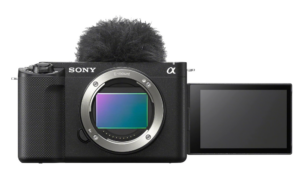
The Sony ZV-E1 is a premium full-frame mirrorless camera built specifically for content creators who demand professional-quality video in a compact, lightweight body. Equipped with a 12.1MP full-frame Exmor R CMOS sensor, it is optimized for 4K video production, delivering exceptional low-light performance, fast readout speeds, and impressive dynamic range.
The camera records 10-bit 4:2:2 video with direct pixel readout and supports both Long GOP and All Intra recording formats, giving creators greater flexibility for color grading and professional post-production workflows. Whether you’re filming YouTube videos, documentaries, or cinematic travel content, the ZV-E1 captures rich detail and lifelike colors with minimal effort.
Sony has also made creating cinematic content easier than ever with its Cinematic Vlog Setting, which automatically applies professional-looking color profiles and aspect ratios to produce film-like footage without requiring advanced editing skills. Powered by a dedicated AI Processor, the camera offers Real-time Recognition autofocus that intelligently tracks people, animals, birds, vehicles, and other subjects with remarkable precision, ensuring your subject remains sharp even during fast-paced movements.
To complement its autofocus system, the 5-axis in-body image stabilization works alongside Dynamic Active Mode to significantly reduce camera shake, producing smooth handheld footage without the need for a gimbal in many shooting situations. These advanced features make the Sony ZV-E1 one of the best full-frame vlogging cameras for creators who want outstanding image quality, reliable autofocus, and professional stabilization.
Pros
- Full-frame 12.1MP Exmor R sensor delivers exceptional 4K image quality and low-light performance.
- Records high-quality 10-bit 4:2:2 video for professional color grading.
- Supports both Long GOP and All Intra recording formats.
- Cinematic Vlog Setting simplifies the creation of cinematic-looking videos.
- Dedicated AI Processor provides highly accurate Real-time Recognition subject tracking.
- 5-axis in-body image stabilization minimizes camera shake during handheld shooting.
- Dynamic Active Mode delivers smoother video while walking or moving.
- Compact and lightweight design makes it ideal for travel and everyday vlogging.
Cons
- The 12.1MP resolution is relatively low for photographers who frequently crop images.
2) Sony ZV-E10 II
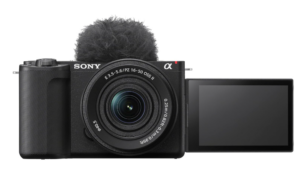
The Sony ZV-E10 II is a powerful APS-C mirrorless camera designed for vloggers, content creators, and aspiring filmmakers who want professional-quality results without stepping up to a full-frame system. At its core is Sony’s advanced 26MP back-illuminated Exmor R CMOS sensor, which delivers exceptional image quality with sharp detail, vibrant colors, and excellent low-light performance. The large APS-C sensor is approximately ten times larger than the average smartphone sensor and three times larger than the 1-inch sensors commonly found in premium compact cameras, allowing for greater dynamic range, improved background blur, and a more cinematic look in both photos and videos.
One of the ZV-E10 II’s greatest strengths is its compatibility with Sony’s extensive E-mount lens ecosystem, giving creators the freedom to choose lenses that suit their creative vision. Whether paired with premium G Master lenses for stunning sharpness and bokeh or the versatile E PZ 16-50mm F3.5-5.6 OSS II kit lens for everyday shooting, the camera adapts easily to everything from travel vlogs and interviews to portraits and cinematic productions. This flexibility allows users to expand their capabilities as their content evolves.
Sony also makes it easy to achieve polished visuals straight out of the camera. The Creative Look function offers ten customizable presets that let users create distinctive moods for both photos and videos without extensive editing. For beginners, the My Image Style feature simplifies creative control by allowing quick adjustments to background bokeh, brightness, and color tone through intuitive touchscreen icons while using Intelligent Auto or Scene Selection modes. These tools help creators produce eye-catching content with minimal effort.
Autofocus performance is another standout feature of the Sony ZV-E10 II. Its Real-time Eye AF accurately detects and tracks the eyes of humans, animals, and birds, ensuring consistently sharp focus even when subjects are moving. Combined with Real-time Tracking, the camera reliably follows subjects throughout the frame, making it ideal for solo vloggers, action shots, and dynamic filming situations where maintaining focus is critical.
For creators who want smooth, high-quality video and creative slow-motion effects, the ZV-E10 II delivers impressive performance. It records 4K video at up to 60 fps and Full HD at up to 120 fps, allowing for detailed footage and cinematic slow-motion sequences using the S&Q mode with up to 5x slow-motion playback. The camera also supports in-camera time-lapse recording with adjustable exposure intervals from one to sixty seconds, while its 11 fps continuous shooting with full autofocus and auto-exposure tracking makes it equally capable for fast-moving photography subjects.
Pros
- High-resolution 26MP APS-C back-illuminated Exmor R CMOS sensor delivers excellent image quality.
- Large sensor provides superior low-light performance and natural background blur compared to smartphones and compact cameras.
- Compatible with Sony’s extensive E-mount lens lineup for maximum creative flexibility.
- Includes the versatile E PZ 16-50mm OSS II power zoom kit lens.
- Creative Look presets and My Image Style simplify in-camera customization.
- Real-time Eye AF accurately tracks humans, animals, and birds.
- Real-time Tracking maintains reliable focus on moving subjects.
- Records 4K video up to 60 fps and Full HD up to 120 fps for smooth slow-motion footage.
- Supports S&Q mode and in-camera time-lapse creation.
- Shoots continuously at up to 11 fps with full AF/AE tracking.
Cons
- No in-body image stabilization, relying on lens stabilization or digital stabilization for handheld shooting.
3) Canon EOS R50 V
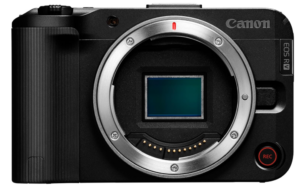
The Canon EOS R50 V is a creator-focused mirrorless camera designed for vloggers, streamers, and video enthusiasts who want professional-quality content in a compact and easy-to-use package. As the first camera body in Canon’s EOS V series, it places video creation at the forefront while maintaining the flexibility of an interchangeable-lens system. Whether you’re filming travel vlogs, tutorials, product reviews, or live streams, the EOS R50 V gives you the creative freedom to switch lenses for different shooting styles, from ultra-wide landscapes to beautifully blurred portraits.
Canon has redesigned the camera with content creators in mind, introducing an intuitive user interface that makes recording more efficient. Features such as the Front Record button allow solo creators to start and stop recording effortlessly while facing the camera, while the dedicated Vertical Video tripod mount simplifies shooting content optimized for platforms like TikTok, Instagram Reels, and YouTube Shorts. These thoughtful design improvements make the EOS R50 V especially convenient for creators who frequently produce content for multiple social media platforms.
At the heart of the camera is a 24.2MP APS-C CMOS sensor paired with the powerful DIGIC X image processor, delivering sharp still images and detailed video with excellent color reproduction. The camera supports 4K recording at up to 59.94p (cropped), full-width 4K at 29.97p, and full-width Full HD at up to 119.8p, giving creators the flexibility to capture smooth, high-resolution footage and dramatic slow-motion sequences. The built-in Slow and Fast mode further expands creative possibilities by allowing users to adjust frame rates and playback speeds directly in-camera, making it easy to produce cinematic slow-motion or fast-paced time-lapse-style videos without complex editing.
Autofocus performance is another major highlight of the EOS R50 V. Canon’s advanced Dual Pixel CMOS AF II provides fast, accurate, and dependable focusing across a wide range of shooting situations. The camera supports Register People Priority, allowing it to recognize and prioritize specific individuals, while intelligent Subject Detection automatically tracks people, animals, and vehicles to keep subjects consistently sharp. This reliable autofocus system makes the EOS R50 V an excellent choice for solo vloggers, content creators, and anyone who needs dependable focus while recording on the move.
Pros
- First EOS V series camera designed specifically for video creators.
- Interchangeable RF lens system offers outstanding creative flexibility.
- Compact, lightweight design ideal for travel and everyday content creation.
- Creator-focused controls including a Front Record button and Vertical Video tripod mount.
- 24.2MP APS-C CMOS sensor delivers excellent image quality and detailed video.
- DIGIC X processor provides fast performance and responsive operation.
- Records 4K up to 59.94p (cropped) and full-width 4K at 29.97p.
- Full HD up to 119.8p enables smooth slow-motion video.
- Slow and Fast mode allows creative frame-rate and playback-speed control.
- Dual Pixel CMOS AF II offers fast and accurate autofocus with intelligent subject tracking.
- Supports Register People Priority along with People, Animal, and Vehicle Subject Detection.
Cons
- 4K at 59.94p is cropped, reducing the field of view.
4) Canon PowerShot V10
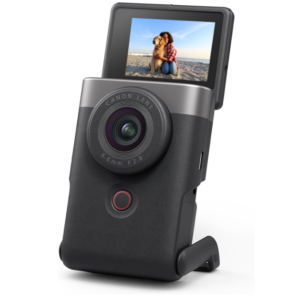
The Canon PowerShot V10 is an ultra-compact vlogging camera built for creators who want high-quality video without carrying bulky equipment. Its sleek, pocket-sized design makes it easy to take anywhere, whether you’re documenting your travels, filming daily vlogs, or creating content on the go. Despite its small size, the PowerShot V10 is packed with creator-friendly features, offering an all-in-one solution that combines portability, simplicity, and impressive video performance.
At the heart of the camera is a 15.2MP 1-inch back-illuminated CMOS sensor, which delivers excellent image quality with improved low-light performance compared to most smartphones. The large sensor captures vibrant colors, sharp details, and pleasing background blur, helping your videos look more professional.
The camera also features a retractable front-facing screen, making it easy to frame yourself while recording, while built-in subject detection helps keep you in focus throughout your shoot. Additional connectivity options, including a micro-HDMI output, external microphone input, and USB-C charging, make the PowerShot V10 a versatile choice for creators looking to expand their recording setup.
One of the PowerShot V10’s most unique features is its integrated folding stand, which flips both forward and backward to provide flexible shooting angles without requiring a separate tripod. Whether you’re filming on a desk, capturing cooking tutorials, recording livestreams, or shooting time-lapse videos, the built-in stand makes hands-free recording quick and convenient. Combined with its lightweight construction, this thoughtful design makes the camera especially appealing for creators who frequently shoot in different locations.
The camera is equipped with a fixed 19mm wide-angle lens (35mm equivalent) that captures expansive scenes while keeping you comfortably in the frame during handheld selfies and vlogs. Recent firmware updates (version 1.2.0 or later) further enhance handheld recording with three image stabilization modes; IS Off, IS On, and IS Enhanced; helping reduce camera shake for smoother footage. For video performance, the PowerShot V10 records 8-bit 4K video at up to 30 fps and Full HD at up to 60 fps, while 14 built-in movie color filters allow creators to easily customize the look and mood of their videos without additional editing.
Audio quality is another strength of the PowerShot V10. It features dual high-quality stereo microphones that capture clear, natural sound, while a third center microphone actively helps reduce unwanted background noise. This built-in audio system allows creators to produce cleaner recordings without immediately needing an external microphone, making the camera an excellent option for travel, lifestyle, and everyday vlogging.
Pros
- Compact, lightweight, and highly portable pocket-sized design.
- 15.2MP 1-inch back-illuminated CMOS sensor delivers excellent image quality and strong low-light performance.
- Retractable front-facing screen simplifies self-recording.
- Built-in subject detection keeps subjects accurately focused.
- Innovative folding stand supports multiple shooting angles without a separate tripod.
- 19mm wide-angle lens is ideal for vlogging, travel, and indoor recording.
- Three image stabilization modes improve handheld video stability.
- Records 8-bit 4K video up to 30 fps and Full HD up to 60 fps.
- Includes 14 movie color filters for creative in-camera effects.
- High-quality stereo microphones with dedicated noise-reduction microphone improve audio capture.
- Supports external microphones via the 3.5mm auxiliary input.
- USB-C charging and micro-HDMI output increase versatility.
Cons
- Fixed lens limits creative flexibility compared to interchangeable-lens cameras.
5) Sony ZV-1 II
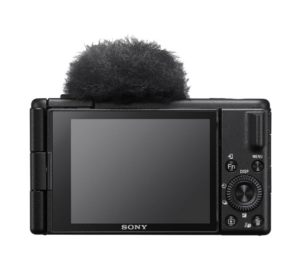
The Sony ZV-1 II is a compact premium vlogging camera designed for creators who want professional-quality videos without the size and complexity of a mirrorless system. Its standout feature is the ultra-wide 18–50mm zoom lens, which gives you the flexibility to capture everything from expansive landscapes and indoor scenes to tighter, more intimate shots. The wider 18mm focal length is especially useful for handheld selfies and travel vlogs, allowing you to fit more of yourself and your surroundings into the frame without needing a selfie stick.
At the heart of the ZV-1 II is a large 1.0-type image sensor that delivers exceptional image quality for a compact camera. The sensor captures sharp details, vibrant colors, and impressive dynamic range while performing remarkably well in low-light environments. Paired with the bright F1.8–4.0 aperture lens, the camera produces beautifully blurred backgrounds that help your subject stand out, giving your videos a polished, cinematic appearance that is difficult to achieve with most smartphones.
Sony has also focused on delivering outstanding audio quality for content creators. The camera features a directional 3-capsule microphone that captures clear, natural voice recordings while minimizing unwanted ambient noise. An included windscreen accessory further improves outdoor recordings by significantly reducing wind interference, making the ZV-1 II an excellent companion for travel vlogs, interviews, and outdoor adventures where audio clarity is just as important as video quality.
Autofocus is another area where the Sony ZV-1 II excels. Equipped with Real-time autofocus tracking and Real-time Eye AF, the camera quickly recognizes and locks onto your face or eyes, maintaining precise focus even as you move around the frame. Whether you’re walking while vlogging, demonstrating products, or recording fast-moving subjects, the autofocus system ensures consistently sharp footage, allowing creators to focus on storytelling instead of camera settings.
Pros
- Compact and lightweight design that’s easy to carry anywhere.
- Ultra-wide 18–50mm zoom lens provides excellent versatility for vlogging and everyday shooting.
- Large 1.0-type sensor delivers outstanding image quality and excellent low-light performance.
- Bright F1.8–4.0 aperture creates attractive background blur for a cinematic look.
- Directional 3-capsule microphone captures clear, high-quality audio.
- Included windscreen accessory improves outdoor audio recordings.
- Real-time Eye AF provides fast and accurate eye detection.
- Real-time autofocus tracking keeps moving subjects consistently in focus.
- User-friendly controls make it ideal for beginners and experienced creators alike.
Cons
- Fixed lens limits flexibility compared to interchangeable-lens cameras.
Factors to Consider When Choosing the Best Vlogging Camera with Flip Screen
1. Sensor Size and Image Quality
The size of a camera’s sensor has a significant impact on image quality, especially when shooting in challenging lighting conditions. Larger sensors, such as APS-C and full-frame, capture more light, resulting in sharper images, improved dynamic range, and reduced noise in low-light environments. Cameras like the Sony ZV-E1 and Sony ZV-E10 II offer larger sensors that produce a more cinematic look with natural background blur, while compact cameras with 1-inch sensors, such as the Sony ZV-1 II and Canon PowerShot V10, strike an excellent balance between portability and image quality.
2. Flip Screen Design
A fully articulating flip screen is one of the most important features for vloggers because it allows you to monitor yourself while recording. Whether you’re filming handheld, using a tripod, or recording vertically for social media, a flip screen helps ensure you’re always properly framed and in focus. It also simplifies solo content creation by allowing you to adjust your composition without needing a second person behind the camera.
3. Video Resolution and Frame Rates
Modern vloggers should look for cameras that record at least 4K resolution for crisp, detailed footage. Higher frame rates, such as 4K at 60fps or Full HD at 120fps, provide smoother motion and allow creators to produce cinematic slow-motion videos. If you frequently create action content, travel videos, or product demonstrations, higher frame rates offer greater creative flexibility during editing.
4. Autofocus Performance
Reliable autofocus can make or break a vlog. Advanced systems with eye detection and subject tracking keep your face sharp even as you move around the frame. Features like Sony’s Real-time Eye AF and Canon’s Dual Pixel CMOS AF II automatically track people, animals, and other subjects, allowing creators to focus on presenting instead of constantly checking focus.
5. Image Stabilization
Stable footage is essential for professional-looking videos, particularly when filming while walking or shooting handheld. Cameras with 5-axis in-body image stabilization (IBIS), optical lens stabilization, or advanced electronic stabilization produce smoother videos with less camera shake. Strong stabilization reduces the need for an external gimbal, making travel and daily vlogging much more convenient.
6. Lens Options
The type of lens you need depends on the style of content you create. Interchangeable-lens cameras provide the flexibility to switch between wide-angle, portrait, macro, and telephoto lenses, making them ideal for creators who want to grow their skills. Fixed-lens cameras, on the other hand, are lighter, easier to use, and require no additional lens purchases, making them perfect for beginners and casual vloggers.
7. Low-Light Performance
If you often record indoors, at night, or in dimly lit environments, low-light performance becomes an important consideration. Cameras with larger sensors and bright lenses maintain cleaner images with less digital noise while preserving color accuracy and detail. This allows you to produce high-quality videos without relying heavily on artificial lighting.
8. Audio Recording Quality
Excellent video deserves equally impressive audio. Look for cameras with high-quality built-in microphones that reduce background noise and capture clear voices. A microphone input is also valuable because it allows you to connect external shotgun or wireless microphones, significantly improving audio quality for interviews, travel vlogs, and professional productions.
9. Portability and Ergonomics
A lightweight and compact camera is easier to carry throughout the day, making it more likely that you’ll capture spontaneous moments. Ergonomic features such as comfortable grips, dedicated record buttons, intuitive menus, and creator-focused controls improve the overall shooting experience. If you travel frequently or vlog on the move, portability should be a top priority.
10. Battery Life and Charging Options
Long battery life allows you to record more content without interruption, especially during travel, live streaming, or extended filming sessions. Cameras that support USB-C charging or USB power delivery offer additional convenience because they can be charged with portable power banks while on location, reducing downtime between shoots.
11. Creative Shooting Features
Many modern vlogging cameras include creative tools that simplify content production. Features such as cinematic shooting modes, customizable color profiles, slow-motion recording, time-lapse, vertical video support, and built-in filters allow creators to produce engaging content with minimal editing. These tools are especially useful for beginners who want professional-looking results straight out of the camera.
12. Budget and Future Expandability
Finally, choose a camera that fits both your current budget and your long-term content creation goals. Entry-level cameras are ideal for beginners and offer excellent value, while premium mirrorless models provide advanced video capabilities, better autofocus, and room to expand with new lenses and accessories. Investing in a camera system that can grow with your skills helps maximize value over time and reduces the need for frequent upgrades.
FAQs
1. What is the best vlogging camera with a flip screen?
The best vlogging camera with a flip screen depends on your budget and content creation needs. For most creators, the Sony ZV-E10 II stands out as the best overall choice thanks to its 26MP APS-C sensor, interchangeable lens system, impressive autofocus, and 4K video recording. If you prefer a compact all-in-one camera, the Sony ZV-1 II and Canon PowerShot V10 are excellent options for travel and everyday vlogging, while the Sony ZV-E1 is ideal for professionals seeking outstanding full-frame video quality.
2. Why is a flip screen important for vlogging?
A flip screen allows you to see yourself while recording, making it easier to maintain proper framing, focus, and composition. This is especially valuable for solo creators who film without a camera operator. It also simplifies recording for YouTube, TikTok, Instagram Reels, livestreams, and travel vlogs, helping you produce more polished and professional-looking content.
3. Is a mirrorless camera better than a compact camera for vlogging?
Mirrorless cameras generally offer superior image quality, interchangeable lenses, better low-light performance, and more advanced autofocus systems, making them ideal for creators who want maximum creative flexibility. Compact cameras, however, are lighter, easier to carry, and more beginner-friendly, making them an excellent choice for travel, casual vlogging, and creators who prioritize portability over lens versatility.
Read Also : Best 4k Vlogging Camera with Flip Screen
Final Thoughts
Choosing the best vlogging camera with a flip screen ultimately comes down to your content style, experience level, and budget. If you’re looking for the best all-around performance, the Sony ZV-E10 II delivers an excellent balance of image quality, autofocus, and creative flexibility with its interchangeable lens system. For creators seeking professional-grade video, the Sony ZV-E1 offers exceptional full-frame performance, while compact options like the Sony ZV-1 II and Canon PowerShot V10 are perfect for travel and everyday vlogging.
The Canon EOS R50 V also stands out as an excellent choice for creators who prioritize video-first features and intuitive operation. No matter which camera you choose, investing in a model with a flip screen, reliable autofocus, quality audio, and strong video capabilities will help you create engaging, professional-looking content that keeps your audience coming back for more.