
Table of Contents
ToggleA compact vlogging camera with a flip screen is one of the best investments for content creators who want to produce high-quality videos without carrying bulky equipment. Whether you’re documenting your travels, creating YouTube videos, livestreaming, or posting short-form content on TikTok and Instagram, the right camera makes it easier to capture sharp footage, clear audio, and well-framed shots.
A flip screen allows you to monitor yourself while recording, ensuring you’re always in focus and properly positioned, while modern features like 4K video, advanced autofocus, image stabilization, and creator-friendly controls help elevate your content to a professional level.
With so many excellent options available, choosing the perfect camera can be challenging. In this guide, we’ve rounded up the best compact vlogging cameras with flip screens, comparing their standout features, strengths, and value to help you find the ideal model for your budget and content creation needs. Whether you’re a beginner looking for an easy-to-use camera or an experienced creator seeking premium video performance, there’s a camera on this list that’s ready to bring your creative vision to life.
Here is a summary of the Best Compact Vlogging Camera with Flip Screen;
- Sony ZV-1 II – Best Overall Compact Vlogging Camera
- Canon PowerShot V10 – Best Beginner Compact Vlogging Camera
- Sony ZV-E10 APS-C – Best Interchangeable Lens Vlogging Camera
- Nikon Z30 – Best for Content Creators and Live Streaming
- DJI Osmo Pocket 3 – Best Pocket-Sized Vlogging Camera
Best Compact Vlogging Camera with Flip Screen
1) Sony ZV-1 II
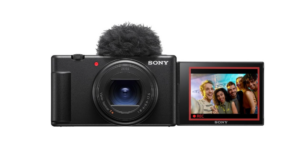
The Sony ZV-1 II is a premium compact vlogging camera designed specifically for content creators who want professional-quality videos in a lightweight, travel-friendly package. Equipped with an ultra-wide 18–50mm zoom lens, it makes it easy to capture everything from solo selfies to expansive landscapes and group shots without needing to step back.
Its large 1.0-type image sensor delivers impressive image quality with excellent detail, vibrant colors, and reduced noise, ensuring sharp and professional-looking footage even in challenging low-light conditions. The bright F1.8–4.0 aperture lens also creates beautiful background blur (bokeh), helping your subject stand out while giving videos a more cinematic appearance.
Sony has also packed the ZV-1 II with creator-focused features that simplify recording. The Real-time Autofocus Tracking and Eye Autofocus (Eye-AF) continuously lock onto your face or eyes, keeping you perfectly in focus even as you move around the frame. Audio quality is equally impressive thanks to the built-in directional 3-capsule microphone, which captures clear voice recordings while minimizing surrounding noise.
Sony further enhances outdoor recording by including a wind screen accessory that effectively reduces wind interference, making the camera an excellent choice for travel vloggers, YouTubers, and social media creators who frequently shoot on location.
Pros
- Ultra-wide 18–50mm zoom lens is ideal for selfies, travel, and landscape vlogging.
- Large 1.0-type sensor delivers excellent image quality and low-light performance.
- Bright F1.8–4.0 lens creates attractive background blur for a professional look.
- Directional 3-capsule microphone records clear, high-quality audio.
- Included wind screen helps reduce wind noise during outdoor recording.
- Real-time Autofocus Tracking and Eye-AF keep subjects consistently sharp.
- Compact and lightweight design is easy to carry for everyday content creation.
Cons
- Zoom range is shorter than some competing compact cameras.
2) Canon PowerShot V10
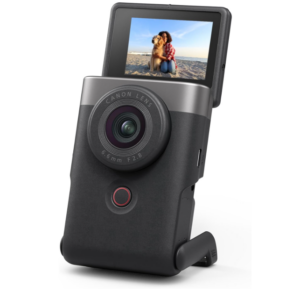
The Canon PowerShot V10 is a compact, creator-focused vlogging camera designed for anyone who wants to produce high-quality videos without carrying bulky equipment. Its sleek, pocket-sized design makes it incredibly easy to slip into a pocket or bag, making it an excellent companion for travel, daily vlogs, and spontaneous content creation.
Despite its small size, the camera packs a powerful 15.2-megapixel 1-inch back-illuminated CMOS sensor, delivering sharp images, vibrant colors, and impressive low-light performance. The retractable front-facing screen makes framing selfies and videos effortless, while built-in subject detection ensures you remain the focal point throughout your recordings. Additional conveniences such as a micro-HDMI output, external microphone input, and USB-C charging further enhance its versatility for modern creators.
One of the PowerShot V10’s standout features is its innovative built-in stand, which folds both forward and backward to support a variety of shooting angles without requiring a separate tripod. Its fixed 19mm wide-angle lens captures expansive scenes, group shots, and tight indoor spaces with ease, making it ideal for travel, lifestyle, and walking vlogs.
Canon has also improved video stability with three selectable image stabilization modes; IS Off, IS On, and IS Enhanced; available through firmware version 1.2.0 or later, helping produce smoother handheld footage. Video quality is equally impressive, with 8-bit 4K recording at up to 30 fps and Full HD recording at up to 60 fps, complemented by 14 creative movie color filters for different visual styles. Audio is captured through dual stereo microphones, while a third center microphone actively reduces background noise, ensuring voices remain clear and natural even in busy environments.
Pros
- Compact, pocket-sized design is perfect for travel and everyday vlogging.
- Large 15.2MP 1-inch back-illuminated CMOS sensor delivers excellent image quality and low-light performance.
- Retractable front-facing screen makes self-recording simple.
- Built-in subject detection helps keep you in focus.
- Innovative built-in stand supports hands-free recording at multiple angles.
- Fixed 19mm wide-angle lens is ideal for selfies, landscapes, and indoor shooting.
- Three image stabilization modes provide smoother handheld videos.
- Records 4K video at up to 30 fps and Full HD at up to 60 fps.
- Includes 14 movie color filters for creative video styles.
- High-quality stereo microphones with dedicated noise-reduction microphone deliver clear audio.
- External microphone input, micro-HDMI output, and USB-C charging increase versatility.
Cons
- Fixed lens offers no optical zoom capability.
3) Sony ZV-E10 APS-C
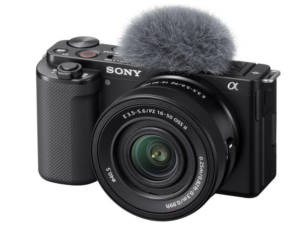
The Sony ZV-E10 APS-C is a powerful mirrorless vlogging camera that combines interchangeable lens versatility with creator-focused features, making it an excellent choice for YouTubers, streamers, and aspiring filmmakers. At its core is a 24.2-megapixel APS-C Exmor CMOS sensor paired with Sony’s fast BIONZ X image processor, delivering exceptional image quality with rich colors, impressive dynamic range, and excellent low-light performance.
The large APS-C sensor also produces a naturally shallow depth of field, allowing creators to achieve cinematic-looking videos and sharp, detailed still photos. Whether you’re filming indoors, outdoors, or in challenging lighting conditions, the ZV-E10 consistently delivers professional-quality results.
Video performance is one of the camera’s biggest strengths. It records stunning 4K video oversampled from 6K using full pixel readout with no pixel binning, resulting in highly detailed footage with minimal moiré and excellent clarity. Sony’s creator-friendly features further simplify content production, including the Product Showcase Setting, which quickly shifts focus from your face to an object held in front of the camera; ideal for product reviews and unboxing videos.
The dedicated Background Defocus button instantly switches between a beautifully blurred background and a fully sharp scene without requiring manual camera adjustments. For creators who livestream, the ZV-E10 offers hassle-free connectivity by functioning as a high-quality webcam through a single USB cable, eliminating the need for additional capture cards, software, or complicated setups.
Pros
- Large 24.2MP APS-C Exmor CMOS sensor delivers outstanding image quality and excellent low-light performance.
- Fast BIONZ X processor ensures responsive performance and reliable image processing.
- Records highly detailed 4K video oversampled from 6K with full pixel readout and no pixel binning.
- Product Showcase Setting smoothly shifts focus from your face to featured products.
- Dedicated Background Defocus button instantly creates a cinematic background blur.
- Easy USB live streaming requires only a single cable with no extra hardware or software.
- Interchangeable lens system offers excellent creative flexibility for different shooting styles.
- Produces professional-looking photos and videos suitable for content creation.
Cons
- Lacks in-body image stabilization, making handheld shooting less stable without stabilized lenses.
4) Nikon Z 30
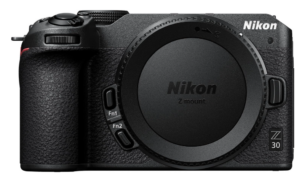
The Nikon Z 30 is a compact mirrorless camera built specifically for content creators, vloggers, and live streamers who want professional-quality video in an easy-to-use package. Featuring Nikon’s versatile Z-mount system, the camera body is compatible with the entire lineup of NIKKOR Z lenses (sold separately), giving creators the flexibility to choose the perfect lens for everything from travel vlogs and portraits to macro photography and cinematic filmmaking. Designed with beginners and experienced creators in mind, the Z 30 combines intuitive controls with excellent image quality, making it an ideal camera that can grow alongside your skills.
The Z 30 delivers impressive 4K video recording with crisp detail and vibrant colors, while its advanced autofocus system features Eye Detection AF for both people and pets, ensuring subjects remain sharp even while moving. The large sensor also produces beautifully blurred backgrounds for a professional cinematic look and performs exceptionally well in low-light environments. Vloggers will appreciate the fully articulating flip-out touchscreen, which makes self-recording simple, along with the built-in stereo microphone featuring adjustable sensitivity for clearer audio capture.
Additional creator-friendly features include a red REC tally light that clearly indicates when recording is active and smartphone app support that allows compatible phones to remotely control the camera. For live streaming, the Nikon Z 30 functions as a plug-and-play webcam, supporting Full HD 60p streaming via USB-C, 4K 30p output through HDMI, and continuous power delivery over USB-C for extended broadcasts without worrying about battery life.
Pros
- Designed specifically for vloggers, streamers, and content creators.
- Records sharp, high-quality 4K video with excellent detail.
- Fast autofocus with Eye Detection AF for both people and pets.
- Produces beautiful background blur and excellent low-light performance.
- Fully articulating flip-out touchscreen is ideal for self-recording.
- Built-in stereo microphone with adjustable sensitivity improves audio quality.
- Red REC indicator light clearly shows when recording is active.
- Easy plug-and-play webcam functionality over USB-C.
- Supports Full HD 60p USB streaming and 4K 30p HDMI output.
- USB-C power delivery enables extended recording and streaming sessions.
- Compatible with Nikon’s extensive range of NIKKOR Z lenses for future upgrades.
Cons
- Camera body is sold without a lens, requiring an additional purchase.
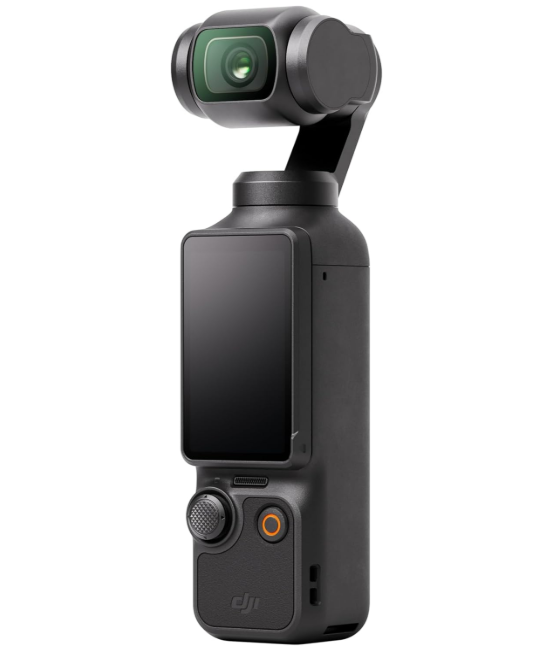
5) DJI Osmo Pocket 3
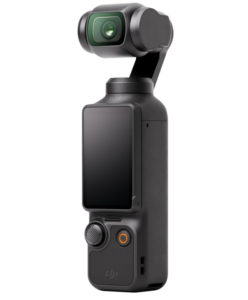
The DJI Osmo Pocket 3 is a powerful pocket-sized camera that delivers professional-quality video in an incredibly compact design, making it an outstanding choice for vloggers, travel creators, and filmmakers on the go. At the heart of the camera is a large 1-inch CMOS sensor, which captures sharp, detailed footage with rich colors and excellent dynamic range, even in challenging lighting conditions.
Its bright image quality and improved low-light performance allow creators to record stunning content both during the day and at night. The innovative 2-inch rotatable touchscreen makes switching between horizontal and vertical shooting effortless, allowing creators to produce content optimized for YouTube, Instagram, TikTok, and other social media platforms without complicated editing or cropping.
One of the Osmo Pocket 3’s biggest strengths is its advanced 3-axis mechanical gimbal stabilization, which produces exceptionally smooth, shake-free footage while walking, running, or filming handheld. It supports 4K video recording at up to 120 frames per second, enabling creators to capture incredibly detailed slow-motion footage for cinematic storytelling. DJI’s ActiveTrack 6.0 intelligently follows subjects, ensuring they remain centered in the frame even as they move, making solo filming easier than ever.
The camera also features full-pixel fast focusing for quick and reliable autofocus performance, while D-Log M 10-bit color provides greater color depth and flexibility for professional color grading during post-production. Finished in a sleek black and grey design, the DJI Osmo Pocket 3 combines portability, advanced stabilization, and high-end video features into one of the most capable compact vlogging cameras available today.
Pros
- Large 1-inch CMOS sensor delivers excellent image quality and strong low-light performance.
- Compact, pocket-sized design is ideal for travel and everyday content creation.
- 2-inch rotatable touchscreen easily switches between horizontal and vertical recording.
- Records stunning 4K video at up to 120 fps for smooth slow-motion footage.
- 3-axis mechanical gimbal provides exceptionally stable handheld videos.
- ActiveTrack 6.0 intelligently tracks moving subjects.
- Full-pixel fast focusing ensures quick and accurate autofocus.
- D-Log M 10-bit color offers greater flexibility for professional color grading.
- Lightweight and easy to carry anywhere.
- Excellent choice for vloggers, travel creators, and social media content.
Cons
- Fixed lens limits creative flexibility compared to interchangeable-lens cameras.
Factors to Consider When Choosing the Best Compact Vlogging Camera with Flip Screen
1. Sensor Size and Image Quality
The sensor is one of the most important components of a vlogging camera because it directly affects image quality, dynamic range, and low-light performance. Cameras with larger sensors, such as a 1-inch or APS-C sensor, produce sharper images, richer colors, and less noise in dim lighting. They also create a more natural background blur that gives videos a professional, cinematic look. If you frequently vlog indoors, at night, or in changing lighting conditions, choosing a camera with a larger sensor will significantly improve your content.
2. Flip Screen Design
A fully articulating flip screen allows you to see yourself while recording, making it much easier to frame shots, monitor focus, and ensure you’re always centered in the video. This feature is especially valuable for solo creators who don’t have someone behind the camera. Some cameras offer side-opening screens, while others use flip-up or rotating displays. A screen that remains visible even when using an external microphone is often the most practical option for vloggers.
3. Video Resolution and Frame Rates
Modern viewers expect crisp, high-quality videos, making 4K recording a worthwhile investment. A camera capable of recording 4K footage captures more detail and provides greater flexibility when editing or cropping videos. Higher frame rates, such as 60fps or 120fps, are also useful for creating smooth slow-motion footage, adding a more polished and cinematic feel to travel videos, tutorials, and action sequences.
4. Autofocus Performance
Reliable autofocus ensures you remain sharp and in focus throughout your videos, even when moving around or changing positions. Features like Eye Autofocus, Face Detection, and Real-Time Subject Tracking are particularly helpful for solo vloggers because they automatically keep the camera locked onto your face. If you create product reviews or unboxing videos, a Product Showcase mode that quickly shifts focus from your face to an item can greatly enhance your workflow.
5. Lens Type and Field of View
The lens determines how much of the scene fits into the frame and how versatile the camera is for different shooting situations. Wide-angle lenses are ideal for selfie-style vlogging because they allow you to capture yourself along with more of the surrounding environment. Zoom lenses provide added flexibility for travel and everyday shooting, while interchangeable-lens cameras let you switch lenses as your content evolves and your creative needs grow.
6. Image Stabilization
Handheld footage can quickly become distracting if the camera lacks effective stabilization. Optical image stabilization, electronic stabilization, or mechanical gimbal stabilization all help reduce camera shake and produce smoother videos. If you regularly film while walking, traveling, or recording outdoor adventures, strong stabilization is essential for creating professional-looking content without carrying additional equipment.
7. Audio Quality
Great video deserves equally good sound. A camera with high-quality built-in microphones can capture clear dialogue while reducing unwanted background noise. Features such as directional microphones or wind-reduction accessories are particularly useful for outdoor recording. If you plan to create professional content, choosing a camera with an external microphone input provides even greater flexibility and significantly improves overall audio quality.
8. Portability and Build Quality
Compact vlogging cameras are designed to be carried everywhere, but size and weight still matter. A lightweight camera is easier to hold during long recording sessions and more convenient for travel. At the same time, it should feel durable enough to withstand frequent use. The ideal camera strikes a balance between portability, comfortable handling, and solid construction without becoming cumbersome.
9. Live Streaming and Connectivity
Many content creators livestream or transfer videos directly to their smartphones or computers. Features such as USB-C connectivity, webcam functionality, Wi-Fi, Bluetooth, and HDMI output make sharing content faster and more convenient. Cameras that support plug-and-play live streaming eliminate the need for extra capture devices or complicated software, making them especially useful for streamers and online educators.
10. Battery Life and Power Options
Battery performance is an important consideration, especially for travel vloggers or creators who record lengthy videos. A camera with longer battery life reduces interruptions during filming, while USB-C charging or continuous USB power allows extended recording and live streaming sessions. If you frequently shoot away from power outlets, the ability to use power banks or carry spare batteries can make a significant difference.
11. Ease of Use and Creator-Friendly Features
The best compact vlogging cameras include features that simplify content creation, particularly for beginners. Dedicated controls such as background defocus buttons, product showcase modes, recording tally lights, touchscreen menus, and intelligent shooting modes reduce the learning curve and let you focus more on storytelling than camera settings. An intuitive interface helps creators spend less time adjusting controls and more time producing engaging videos.
12. Value for Money
Price should always be evaluated alongside the features and performance you receive. Budget-friendly cameras may offer excellent value for beginners, while premium models often include larger sensors, advanced autofocus, superior stabilization, and more robust video capabilities. Consider your current needs as well as your future content goals, and choose a camera that provides the best balance of performance, features, and long-term value within your budget.
FAQs
1. What is the best compact vlogging camera with a flip screen?
The Sony ZV-1 II is widely considered one of the best compact vlogging cameras with a flip screen thanks to its large 1-inch sensor, ultra-wide 18–50mm lens, excellent autofocus, and high-quality built-in microphone. However, the best choice depends on your budget and content style. If you need interchangeable lenses, the Sony ZV-E10 APS-C or Nikon Z30 are excellent alternatives, while the DJI Osmo Pocket 3 is ideal for creators who prioritize stabilization and portability.
2. Why is a flip screen important for vlogging?
A flip screen allows you to see yourself while recording, making it easier to frame your shots, maintain eye contact with the camera, and ensure you’re properly focused. This is especially useful for solo creators, travel vloggers, and livestreamers who don’t have someone operating the camera. A fully articulating screen also simplifies recording from creative angles and improves the overall filming experience.
3. What features should I look for in a compact vlogging camera?
When choosing a compact vlogging camera, prioritize a large image sensor for better image quality, reliable autofocus with eye tracking, 4K video recording, effective image stabilization, and clear audio capture. Other valuable features include a fully articulating flip screen, USB-C connectivity, external microphone support, long battery life, and easy live-streaming capabilities. Selecting a camera with these features will help you produce professional-looking content while making the filming process more enjoyable and efficient.
Read Also : Best Sony Vlogging Camera with Flip Screen
Final Thoughts
Choosing the best compact vlogging camera with a flip screen ultimately comes down to your content style, budget, and long-term creative goals. Whether you prefer the all-around performance of the Sony ZV-1 II, the versatility of interchangeable-lens models like the Sony ZV-E10 APS-C and Nikon Z30, the portability of the Canon PowerShot V10, or the unmatched stabilization of the DJI Osmo Pocket 3, each camera offers features designed to help you create engaging, professional-looking content.
By prioritizing factors such as image quality, autofocus, stabilization, audio performance, and ease of use, you can confidently choose a camera that fits your needs. Investing in the right compact vlogging camera today will not only improve the quality of your videos but also make recording more enjoyable, helping you grow your audience and create content with confidence.