
Table of Contents
ToggleImagine spotting a rare bird perched high in a distant tree and being able to see every detail of its feathers, colors, and markings without carrying a heavy scope all day. That is where the best lightweight spotting scope for birding can make a real difference. Whether you are hiking through a nature reserve, exploring wetlands, or spending hours in the field, a lightweight scope gives you the portability you need while still delivering the magnification and clarity required for accurate bird identification.
From ultra-compact models like the Celestron Hummingbird ED and Kowa TSN-500 to more powerful options such as the Vortex Diamondback HD and Celestron Regal M2 80ED, there are plenty of choices for different birding styles and budgets. The key is finding a scope that strikes the right balance between weight, optical quality, magnification, close-focus ability, durability, and low-light performance.
Best Lightweight Spotting Scope for Birding
1) Vortex Viper HD Spotting Scopes
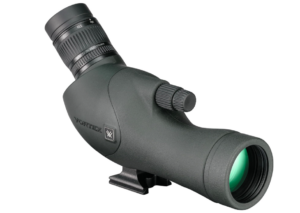
The Vortex Viper HD 11-33×50 Spotting Scope is a lightweight and compact option for birding, wildlife observation, and other outdoor viewing where portability matters. Its Arca-Swiss compatible foot makes it easy to mount on a compatible tripod and allows for quick setup and storage. The HD optical system uses select glass elements and XR Plus lens coatings to deliver excellent resolution, reduce chromatic aberration, and produce accurate colors, sharpness across the field of view, and strong light transmission.
Its dual focus knobs provide both quick and precise focusing, helping users achieve a clear view of birds, wildlife, or distant habitats. Built for demanding outdoor conditions, the scope is argon purged and shockproof, providing waterproof and fogproof performance. Armortek coatings help protect the lenses from oil, scratches, and dirt, while the rubber armor improves durability and provides a secure grip.
Vortex also backs the Viper HD with its VIP Warranty, an unlimited, unconditional, lifetime warranty that is fully transferable and covers repair or replacement for damage or defects, excluding loss, theft, deliberate damage, and cosmetic damage that does not affect performance.
Pros
- Lightweight and compact design for easy transportation
- Arca-Swiss compatible foot for quick tripod mounting
- HD optical system provides excellent resolution and color fidelity
- XR Plus lens coatings improve light transmission and sharpness
- Reduces chromatic aberration for clearer images
- Dual focus knobs allow fast and precise focusing
- Waterproof, fogproof, and shockproof construction
- Armortek coatings protect lenses from scratches, oil, and dirt
- Rubber armor improves grip and durability
- Backed by an unlimited, unconditional, transferable lifetime VIP Warranty
Cons
- The 50mm objective lens provides less light-gathering capability than larger spotting scopes
2) Vortex Diamondback HD Spotting Scope 16-48×65 Angled
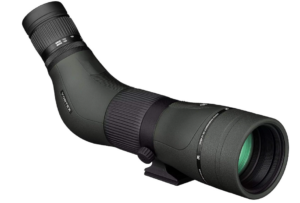
The Vortex Diamondback HD Spotting Scope 16-48×65 Angled is a versatile and durable spotting scope designed for hunters, birders, and outdoor enthusiasts who need strong optical performance, particularly in challenging low-light conditions. Its redesigned body features a streamlined exterior for a sleeker profile, while the built-in helical focus wheel allows for fast and fine focusing adjustments. The HD optical system delivers exceptional resolution, reduces chromatic aberration, and provides excellent color fidelity, edge-to-edge sharpness, and light transmission.
Multiple anti-reflective coatings on all air-to-glass surfaces further improve light transmission, helping produce brighter and clearer images. For comfortable viewing, the adjustable eyecups twist up and down for use with or without eyeglasses, while the built-in sunshade helps reduce glare and protects the objective lens from rain and snow. The scope is tripod adaptable and works with car window mounts, while its Arca-Swiss compatibility allows direct attachment to compatible tripod heads without an additional plate. It also accepts standard 1/4-20 threads for alternative tripod heads.
Built for demanding outdoor conditions, the scope is O-ring sealed and argon purged for waterproof and fogproof performance. Armortek coatings protect the lenses from oil, scratches, and dirt, while rubber armor improves durability and grip. It is also backed by Vortex’s unlimited, unconditional, transferable lifetime VIP Warranty, covering repair or replacement for damage or defects, excluding loss, theft, deliberate damage, and cosmetic damage that does not affect performance.
Pros
- Excellent HD optical performance
- 16-48x magnification provides versatile viewing
- 65mm objective performs well in low-light conditions
- Reduces chromatic aberration and improves color fidelity
- Multiple anti-reflective coatings enhance light transmission
- Edge-to-edge sharpness for detailed viewing
- Built-in helical focus wheel allows fast and precise adjustments
- Adjustable eyecups accommodate users with or without eyeglasses
- Built-in sunshade reduces glare and protects against rain and snow
- Arca-Swiss compatible for convenient tripod mounting
- Also accepts 1/4-20 tripod threads
- Waterproof, fogproof, and durable construction
- Armortek coatings protect lenses from scratches, oil, and dirt
- Rubber armor improves grip and durability
- Backed by a transferable lifetime VIP Warranty
Cons
- Larger and heavier than compact spotting scopes
3) Kowa Sporting Optics 20-40x 50mm Fully Multi-Coated Spotting Scope
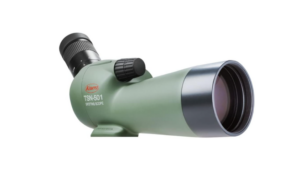
The Kowa Sporting Optics 20-40x 50mm Fully Multi-Coated Spotting Scope is a compact and lightweight option for birdwatching, wildlife observation, nature study, and outdoor adventures. Part of the Kowa TSN-500 series, this scope weighs only 400g, making it easy to carry on long hikes, treks, and expeditions. Its 20-40x magnification provides flexibility for viewing subjects at different distances, while the close-focus capability of just 2.5m allows users to observe detailed views of nearby plants, insects, and other small subjects.
Measuring only 239mm in length on the TSN-501 model, the scope is compact enough for convenient transport and easy enough to handle for users of different ages. The fully multi-coated optics and Kowa optical design help deliver clear, detailed images despite the scope’s small size. It is also fully waterproof and nitrogen-filled, giving it the durability needed to perform reliably in harsh outdoor environments.
Pros
- Lightweight design weighing only 400g
- Compact 239mm length on the TSN-501 model
- 20-40x magnification for versatile viewing
- Close focus down to 2.5m
- Excellent for observing plants, insects, birds, and wildlife
- Fully multi-coated optics provide clear images
- Kowa optical design delivers good clarity in a compact body
- Fully waterproof and nitrogen-filled
- Easy to carry on long hikes and outdoor expeditions
- Suitable for users of different ages
Cons
- 50mm objective lens gathers less light than larger spotting scopes
4) Celestron Hummingbird ED 56mm Angled Micro Spotting Scope
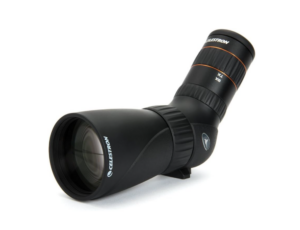
The Celestron Hummingbird ED 56mm Angled Micro Spotting Scope is an excellent compact option for birders and outdoor enthusiasts who prioritize portability without giving up useful magnification or optical quality. Its micro-sized design is small enough to carry in a vest or coat pocket, belt pack, or shoulder bag, making it convenient for hikes, birding trips, and travel. The ED lens optical system produces sharp, clear images with vivid and well-controlled color, while the 9-27x magnification range bridges the gap between binoculars and traditional spotting scopes.
Its close-focus distance of just 10 feet (3m) is particularly useful for birding, allowing users to observe nearby birds and other subjects with good detail. Built for outdoor use, the scope is waterproof and nitrogen-filled, helping protect it from wet weather, humidity, and other environmental conditions. Celestron also includes a Limited Lifetime U.S. Warranty and U.S.-based expert technical support, providing additional confidence for buyers.
Pros
- Extremely compact and easy to carry
- Fits conveniently in a vest, coat pocket, belt pack, or shoulder bag
- ED optics provide sharp and clear images
- Vivid and well-managed color reproduction
- Versatile 9-27x magnification range
- Bridges the gap between binoculars and traditional spotting scopes
- 3m close-focus distance is well suited to birding
- Waterproof and nitrogen-filled for outdoor protection
- Excellent choice for travel and mobile birding
- Includes a Limited Lifetime U.S. Warranty
- Backed by U.S.-based technical support
Cons
- 56mm objective is smaller than those found on many full-size spotting scopes
5) Celestron – Regal M2 80ED Spotting Scope
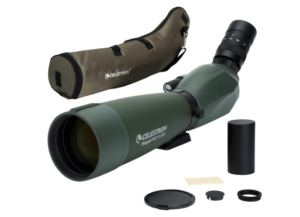
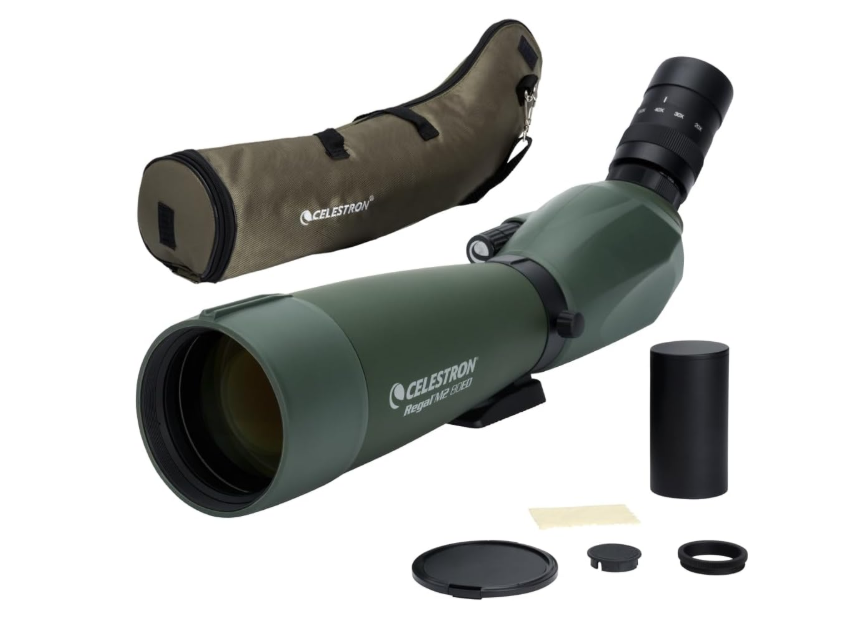
The Celestron Regal M2 80ED Spotting Scope is a high-performance option for birdwatching, wildlife observation, and long-distance viewing, combining an 80mm objective lens with high-quality ED optical glass. Its extra-low dispersion (ED) objective lens dramatically reduces chromatic aberration while producing razor-sharp images with excellent color correction, resolution, and contrast. The scope features Celestron’s proprietary XLT optical coatings, which are also used on observatory-class telescopes, to maximize light transmission and produce brighter images in challenging lighting conditions.
The included 20-60x zoom eyepiece provides versatile magnification, while the scope can also accept any compatible 1.25-inch astronomical eyepiece. Its rotating tripod mount allows users to adjust the eyepiece to a comfortable viewing angle. Celestron also includes several useful accessories, including a padded view-through case, objective and eyepiece covers, storage covers, a T-mount adapter for connecting a DSLR camera for digiscoping, a cleaning cloth, and an instruction manual. The Regal M2 80ED is further backed by a Limited Lifetime U.S. Warranty and U.S.-based expert technical support.
Pros
- High-quality 80mm ED objective lens
- Excellent reduction of chromatic aberration
- Produces sharp images with accurate color
- Enhanced resolution and contrast
- XLT coatings maximize light transmission
- Bright images in challenging lighting conditions
- Includes versatile 20-60x zoom eyepiece
- Compatible with 1.25-inch astronomical eyepieces
- Rotating tripod mount provides comfortable viewing angles
- Includes a padded view-through carrying case
- T-mount adapter supports DSLR digiscoping
- Includes objective, eyepiece, and storage covers
- Backed by a Limited Lifetime U.S. Warranty
- U.S.-based technical support
Cons
- 80mm objective makes it larger and less portable than compact spotting scopes
Factors to Consider When Choosing the Best Lightweight Spotting Scope for Birding
1. Weight and Portability
Weight is one of the most important factors when choosing a lightweight spotting scope for birding. A lighter scope is easier to carry during long hikes, birding walks, and outdoor expeditions. Compact models such as the Kowa TSN-500 and Celestron Hummingbird ED are particularly convenient because they can be carried in a backpack, shoulder bag, or even a coat pocket. However, birders should balance weight with optical performance, as larger scopes generally provide better light-gathering capability.
2. Optical Quality
Optical quality determines how clearly you can identify birds, especially when observing small or distant species. Look for scopes with high-quality glass and optical systems that provide sharp images, accurate colors, good contrast, and edge-to-edge clarity. ED glass, such as that used in the Celestron Hummingbird ED and Celestron Regal M2 80ED, can help reduce chromatic aberration and produce clearer, more detailed images.
3. Magnification Range
The magnification range affects how close distant birds appear through the scope. A scope with a versatile zoom range gives you greater flexibility when switching between nearby and distant subjects. For example, the Celestron Hummingbird ED offers 9-27x, while the Celestron Regal M2 80ED provides 20-60x. Lower magnification makes it easier to locate moving birds, while higher magnification can help identify birds at greater distances.
4. Objective Lens Size
The objective lens determines how much light enters the spotting scope. Larger objectives, such as the 80mm lens on the Celestron Regal M2 80ED, generally provide brighter images and perform better in low-light conditions. However, larger lenses also add weight and bulk. For lightweight birding, 50-65mm objectives can provide a good compromise between portability and light-gathering performance.
5. Close-Focus Capability
Close-focus distance is particularly important for birders who observe birds at relatively short distances or study insects and plants. A short close-focus distance allows you to see nearby subjects with greater detail. The Celestron Hummingbird ED, for example, focuses as close as 3 meters, making it particularly suitable for birding environments where subjects may appear close to the observer.
6. Lens Coatings
Quality lens coatings improve light transmission and help produce brighter, clearer images. Fully multi-coated optics are especially useful because they reduce reflections across the optical path. Models such as the Vortex Diamondback HD and Celestron Regal M2 80ED use multiple coatings to improve light transmission, contrast, and image clarity, which can be especially beneficial when birding during early morning or late afternoon.
7. Low-Light Performance
Birds are often most active during early morning and late afternoon when available light is limited. A spotting scope with good low-light performance can help you maintain image brightness and detail during these conditions. Objective size, optical glass, and lens coatings all contribute to low-light performance. Larger objectives generally gather more light, while high-quality coatings and ED glass can help preserve image quality.
8. Durability and Weather Resistance
Birding often involves exposure to rain, humidity, dust, and changing outdoor conditions, so durability should be considered before purchasing. Waterproof and fogproof construction helps protect the scope from moisture and prevents internal fogging when temperatures change. Features such as nitrogen or argon purging, O-ring seals, rubber armor, and protective lens coatings can provide additional protection during outdoor use.
9. Focusing System
A precise and responsive focusing system makes it easier to quickly bring birds into sharp focus. This is particularly important when observing active birds that may move between branches or fly away quickly. Dual-focus systems can provide both rapid and fine adjustments, while built-in helical focus wheels can make focusing fast and convenient.
10. Tripod Compatibility
Even a lightweight spotting scope benefits from a stable tripod, particularly when using higher magnification. Before buying, check whether the scope can mount directly to your preferred tripod system. Features such as Arca-Swiss compatibility can make setup faster by allowing direct attachment to compatible tripod heads. Some models also support standard 1/4-20 threads, giving birders more mounting options.
11. Viewing Comfort
Comfort becomes increasingly important during long birding sessions. Adjustable or twist-up eyecups can help position the eye correctly and make the scope comfortable for users who wear glasses. A rotating tripod mount, such as the one found on the Celestron Regal M2 80ED, can also allow the eyepiece to be positioned at a more comfortable viewing angle.
12. Build Quality and Grip
A good lightweight spotting scope should still be rugged enough for outdoor use. Rubber armor can protect the body from minor impacts while providing a more secure grip when handling the scope. Protective lens coatings such as Armortek can also help shield optical surfaces from scratches, oil, and dirt, which is useful when the scope is frequently transported outdoors.
13. Accessories and Compatibility
Consider what accessories are included with the scope because they can improve its overall usefulness and value. Useful accessories may include carrying cases, lens covers, cleaning cloths, tripod adapters, and compatible eyepieces. For birders interested in photography, a scope that supports digiscoping through a camera adapter can provide an additional way to capture and share bird sightings.
14. Warranty and Customer Support
A strong warranty provides additional protection when investing in a spotting scope. Look for manufacturers that offer comprehensive warranty coverage and reliable customer support. For example, Vortex provides its VIP Warranty on applicable products, while Celestron offers a Limited Lifetime U.S. Warranty with U.S.-based technical support. A good warranty can provide greater confidence when using an optical instrument regularly outdoors.
15. Price and Overall Value
Price should be considered alongside optical performance, portability, durability, and included features. A more expensive scope may provide better glass, coatings, low-light performance, and construction, but it may not be necessary for casual birding. Lightweight models such as the Kowa TSN-500 and Celestron Hummingbird ED can be attractive for highly mobile birders, while larger models such as the Regal M2 80ED may be better suited to users who prioritize optical performance over portability.
FAQs
1. What is the best lightweight spotting scope for birding?
The Vortex Razor HD 13-39×56 is an excellent overall choice for birders who want a balance of portability, optical quality, and useful magnification. For maximum portability, the Celestron Hummingbird ED 9-27×56 and Kowa TSN-500 series are excellent alternatives because of their compact and lightweight designs.
2. What magnification is best for birding with a lightweight spotting scope?
A 15-45x or similar zoom range provides a good balance for general birding. Lower magnification makes it easier to locate and track moving birds, while higher magnification helps identify distant species. Compact scopes with ranges such as 9-27x can be preferable for close and medium-distance birding because they are easier to carry and use.
3. Is a 50mm or 60mm spotting scope good for birding?
Yes. A 50mm to 60mm objective lens can be an excellent choice for birders who prioritize portability. These smaller objectives reduce the overall weight and size of the scope while still providing good daytime image quality. However, larger objectives such as 65mm or 80mm generally offer better light-gathering performance in low-light conditions but add more weight and bulk.
Read Also : Best Thermal Scope for Hog Hunting 2026
Final Thoughts
Choosing the best lightweight spotting scope for birding ultimately comes down to finding the right balance between portability, optical performance, magnification, and durability. Compact options such as the Celestron Hummingbird ED and Kowa TSN-500 are excellent for birders who prioritize easy carrying and travel, while the Vortex Razor HD and Vortex Diamondback HD offer greater optical performance for more demanding observations.
For birders who want a larger objective and brighter images, the Celestron Regal M2 80ED is a strong option, although it comes with additional weight and bulk. By considering factors such as lens quality, close-focus distance, low-light performance, weather resistance, focusing system, and tripod compatibility, you can choose a lightweight spotting scope that makes identifying and enjoying birds clearer, easier, and more rewarding.