An illuminated riflescope can make a meaningful difference when a dark crosshair becomes difficult to distinguish against shaded timber, dark vegetation, or a target in fading light. However, spending more does not automatically mean getting a better scope for your particular rifle and shooting needs.
The best affordable scopes with illuminated reticles balance a clearly visible aiming point, useful magnification, manageable weight, and dependable construction. For budget-conscious deer hunters, hog hunters, and recreational shooters, the key is choosing an illumination system that solves a real problem without paying for features they will rarely use.
This guide compares budget-oriented options with different magnification ranges and reticle designs, helping you narrow your choice based on how you intend to use your rifle.
Quick Decision Table
| Product | Best For | Weight | Magnification | Key Advantage | Check Price |
| SIG SAUER Buckmasters 3–9×40 Illuminated | Traditional deer hunting | 14.7 oz | 3–9× | Compact BDC hunting setup | 👉 View on Amazon |
| Athlon Talos 3–12×40 BDC 600 IR | General hunting | 16.2 oz | 3–12× | Side-focus parallax adjustment | 👉 View on Amazon |
| SIG SAUER Buckmasters 3–12×44 Illuminated | Mixed woodland and open terrain | Not Specified | 3–12× | Wider magnification range | 👉 View on Amazon |
| Athlon Talos 4–16×40 BDC 600 IR | Varmint and target shooting | 19.1 oz | 4–16× | Greater magnification | 👉 View on Amazon |
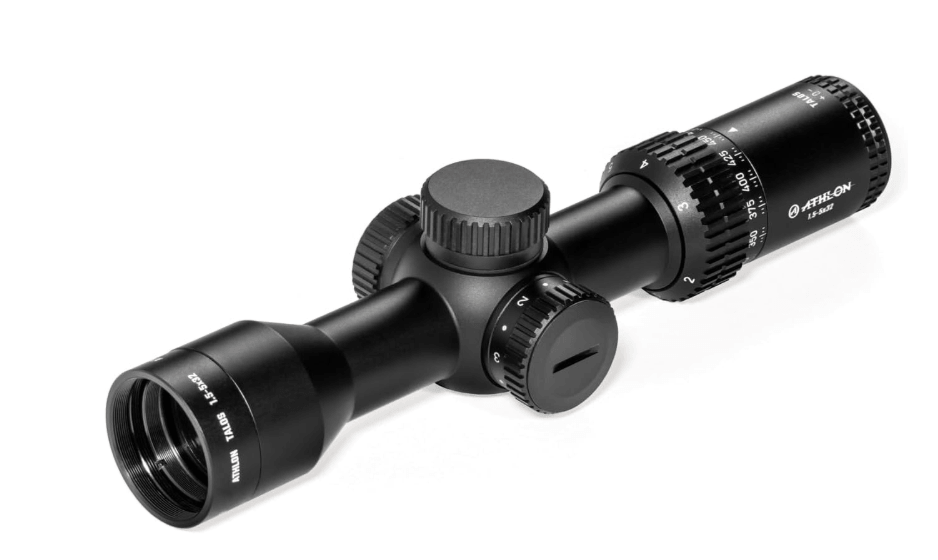
| Athlon Talos 1.5–5×32 CB100 IR | Crossbow users | 14.8 oz | 1.5–5× | Compact, crossbow-specific design | 👉 View on Amazon |
Quick Recommendations
Choose the SIG SAUER Buckmasters 3–9×40 Illuminated if you want a conventional hunting scope with a familiar magnification range and an illuminated BDC reticle.
Choose the Athlon Talos 3–12×40 BDC 600 IR if you want additional magnification without moving to a heavier 50mm or 56mm objective.
Consider the SIG SAUER Buckmasters 3–12×44 Illuminated if your hunting includes both wooded areas and more open ground.
Consider the Athlon Talos 4–16×40 BDC 600 IR if you need higher magnification for stationary targets or varmint shooting.
Choose the Athlon Talos 1.5–5×32 CB100 IR only if you use a compatible crossbow and want a purpose-designed optic rather than a conventional rifle scope.
How These Products Were Chosen
The selection prioritizes illumination, useful magnification, weight, reticle design, and suitability for specific shooting situations. The goal is to distinguish straightforward hunting optics from models designed for higher magnification or crossbow use.
Manufacturer documentation is the basis for the stated specifications. Importantly, an illuminated reticle alone does not establish superior optical clarity, and a scope’s intended application matters as much as its feature list.
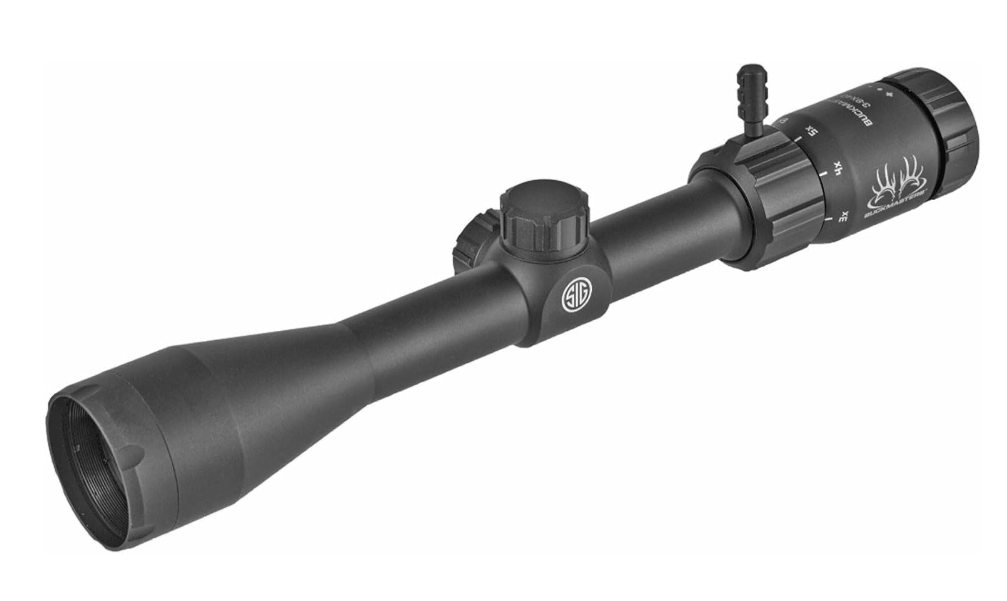
1. SIG SAUER Buckmasters 3–9×40 Illuminated
Best For
Deer hunters who want a relatively compact optic for conventional hunting distances, particularly where a dark reticle can disappear against shaded backgrounds.
Why Choose It
The Buckmasters combines a familiar 3–9× magnification range with an illuminated Buckmasters BDC reticle. That makes it a practical starting point for buyers who want illumination without needing a high-magnification scope.
SIG SAUER lists the model at 14.7 ounces, which is attractive for a hunter who carries a rifle for long periods. Its 40mm objective also keeps the overall configuration conventional rather than oversized.
Key Features
Magnification: 3–9×
Objective lens: 40mm
Weight: 14.7 ounces
Tube diameter: 1 inch
Focal plane: Second focal plane
Reticle: Hellfire Illuminated Buckmasters BDC
Illumination: Six brightness settings
Battery: CR2032
Field of view: 34.1 feet at 3× to 11.3 feet at 9×, at 100 yards
What These Features Mean in Real Use
The 3–9× range offers a useful balance between a relatively wide view at low power and additional target detail at high power. At 3×, it is easier to locate a target within the sight picture than at maximum magnification.
The illuminated center aiming point can help distinguish the reticle from a dark animal or background. However, it cannot restore detail lost because of insufficient light or poor image quality.
The BDC reticle incorporates holdover references. Their practical usefulness depends on the ammunition, trajectory, sight-in distance, and conditions for which the references are appropriate.
Trade-Offs
The 40mm objective is a sensible compromise between size and light-gathering potential, but it does not guarantee superior low-light performance. Optical coatings, image quality, magnification, and the shooter’s pupil also matter.
The second focal plane reticle maintains its apparent size as magnification changes. However, any calibrated holdover references must be used according to the manufacturer’s instructions.
May Not Be Ideal If
You regularly shoot small targets at longer distances and need more than 9× magnification.
Pros
Relatively light at 14.7 ounces
Familiar hunting magnification range
Illuminated BDC reticle
Six brightness settings
Cons
Limited to 9× maximum magnification
Holdover references require appropriate verification
Battery-powered illumination requires battery maintenance
Best if: You want a conventional hunting scope with illumination and moderate weight.
Consider another option if: You need greater magnification or a reticle designed specifically for a different shooting application.
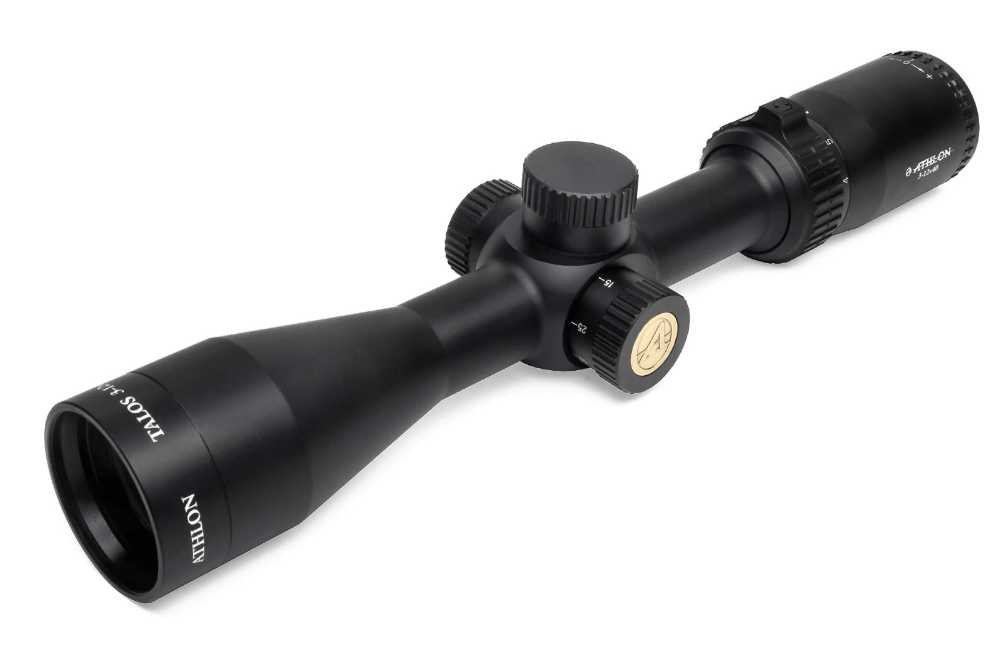
2. Athlon Talos 3–12×40 BDC 600 IR
Best For
Budget-conscious hunters who want a wider magnification range and a relatively lightweight scope for general hunting.
Why Choose It
The Talos 3–12×40 provides 3× at the low end and 12× at the high end, giving it more flexibility than a conventional 3–9× scope. Athlon lists a weight of 16.2 ounces and a length of 12 inches.
Its side-focus parallax adjustment also gives the shooter more control when focusing at different distances. This can be useful when the scope is used for more than one type of shooting.
Key Features
Magnification: 3–12×
Objective lens: 40mm
Weight: 16.2 ounces
Length: 12 inches
Tube diameter: 1 inch
Reticle: BDC 600 IR
Focal plane: Second focal plane
Eye relief: 3.8–3.35 inches
Parallax adjustment: Starting at 15 yards
What These Features Mean in Real Use
The additional 3× of maximum magnification compared with a 3–9× scope can help when examining a stationary target at a distance. However, increasing magnification narrows the field of view and can make target acquisition less forgiving.
The 40mm objective avoids the extra bulk associated with many larger-objective scopes. At 16.2 ounces, the Talos is still a consideration for lightweight hunting rifles, but the complete rifle’s balance depends on the mount, rings, and other equipment.
Athlon’s BDC 600 IR reticle combines illumination with holdover references. Do not assume that its markings correspond to your ammunition without checking the manufacturer’s reticle guidance and confirming the actual trajectory.
Trade-Offs
This scope offers more flexibility than a basic 3–9× optic, but its extra magnification may be unnecessary for hunters who mainly shoot at short distances.
Side focus is useful, although it adds an adjustment that some buyers may prefer not to manage.
May Not Be Ideal If
You want the simplest possible hunting scope or prioritize a very low magnification setting for close-range shooting.
Pros
Versatile 3–12× range
Relatively light construction
Side-focus parallax adjustment
Illuminated BDC reticle
Cons
More adjustment options than some hunters need
Higher magnification reduces field of view
BDC references need to match the actual shooting setup
Best if: You want a lightweight 3–12× scope with illumination and additional focusing flexibility.
Consider another option if: A simple, lower-magnification hunting scope better matches your normal shooting distances.
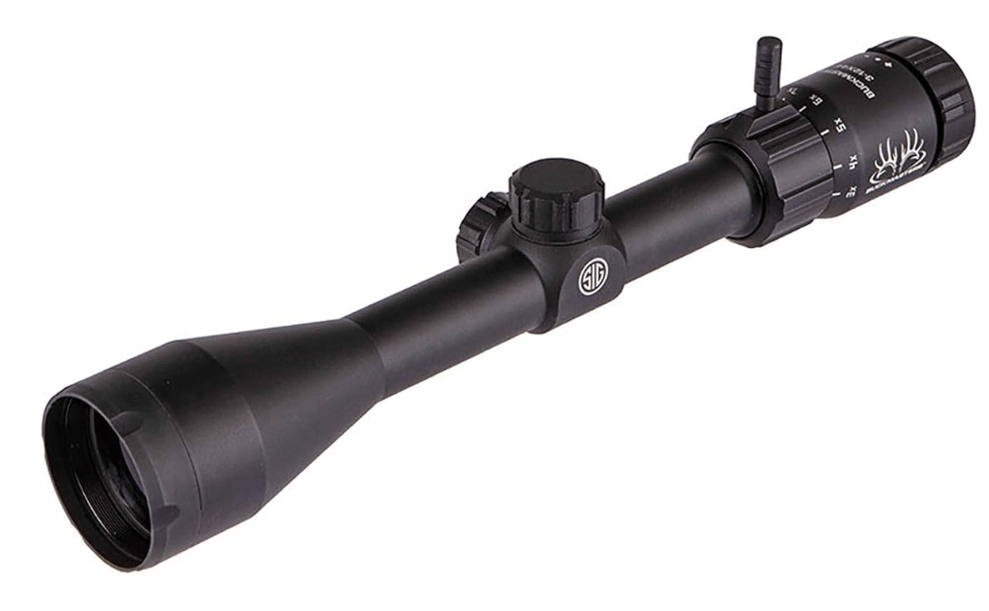
3. SIG SAUER Buckmasters 3–12×44 Illuminated
Best For
Hunters who move between wooded areas and open terrain and want a 3–12× scope with a larger objective lens.
Why Choose It
This Buckmasters configuration combines the same broad 3–12× magnification range as the Athlon Talos with a 44mm objective. It is worth considering if you prefer the SIG SAUER Buckmasters reticle system and want a larger objective than the 40mm models.
SIG SAUER lists the illuminated 3–12×44 version as a second focal plane scope with a Hellfire illuminated Buckmasters BDC reticle.
Key Features
Magnification: 3–12×
Objective lens: 44mm
Tube diameter: 1 inch
Focal plane: Second focal plane
Reticle: Hellfire Illuminated Buckmasters BDC
What These Features Mean in Real Use
The 3× low end is useful for general hunting, while 12× provides extra detail when viewing stationary targets farther away.
A 44mm objective can provide a larger exit pupil than a 40mm objective at the same magnification. However, the difference is modest, and actual low-light image quality depends on more than objective diameter.
The illuminated reticle is particularly relevant when a conventional dark aiming point becomes difficult to distinguish from the target’s surroundings.
Trade-Offs
The larger objective may require higher mounting rings, depending on the rifle, barrel clearance, and scope design. It can also add bulk compared with a smaller hunting optic.
Do not assume that the 3–12×44 has the same weight or eye relief as the 3–9×40 version.
May Not Be Ideal If
You prioritize the lightest possible rifle setup or mainly hunt in dense cover at relatively short distances.
Pros
Versatile magnification range
Larger 44mm objective
Illuminated hunting reticle
Familiar second focal plane design
Cons
Larger objective may complicate mounting
Exact weight needs configuration-specific verification
Holdover references require appropriate confirmation
Best if: You want a 3–12× hunting scope with a 44mm objective and illuminated BDC reticle.
Consider another option if: Weight, compact dimensions, or a lower starting magnification is your primary concern.
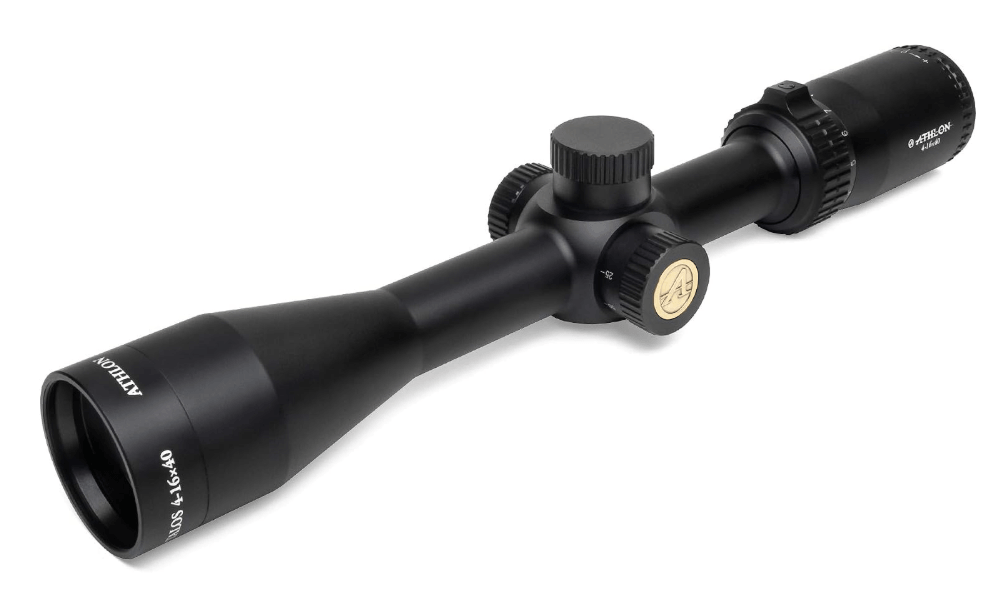
4. Athlon Talos 4–16×40 BDC 600 IR
Best For
Varmint shooters and target shooters who want more magnification than a conventional hunting scope provides.
Why Choose It
The Talos 4–16×40 increases maximum magnification to 16×. Athlon lists the illuminated BDC 600 version at 19.1 ounces and 12.9 inches long.
This design makes more sense when the shooter expects to use a supported position and carefully examine smaller targets, rather than rapidly acquiring close targets while moving through dense cover.
Key Features
Magnification: 4–16×
Objective lens: 40mm
Weight: 19.1 ounces
Length: 12.9 inches
Tube diameter: 1 inch
Reticle: BDC 600 IR
Focal plane: Second focal plane
Parallax adjustment: Confirm the exact configuration’s manual
What These Features Mean in Real Use
At 16×, a small or distant target appears larger in the sight picture. That can be useful for stationary target work and varmint shooting.
However, high magnification also reduces the field of view and makes image movement more noticeable. It is less forgiving when acquiring a moving target or shooting without support.
The 19.1-ounce weight is also worth considering. On a rifle carried over long distances, a lighter 3–9× or 3–12× scope may be more comfortable.
Trade-Offs
The higher magnification offers more detail but does not automatically improve accuracy. A stable shooting position, suitable ammunition, correct zero, and appropriate environmental conditions remain essential.
The 40mm objective also means buyers should not select this model solely because they expect it to outperform larger-objective scopes in fading light.
May Not Be Ideal If
You primarily hunt moving game at close range or carry your rifle through mountainous terrain.
Pros
Up to 16× magnification
Illuminated BDC reticle
40mm objective
Suitable magnification range for supported target work
Cons
Heavier than the 3–12×40 Talos
Narrower field of view at high power
Higher magnification can be unnecessary for ordinary hunting
Best if: You need more magnification for stationary targets or varmint shooting.
Consider another option if: You value fast target acquisition, low weight, or a wider field of view.
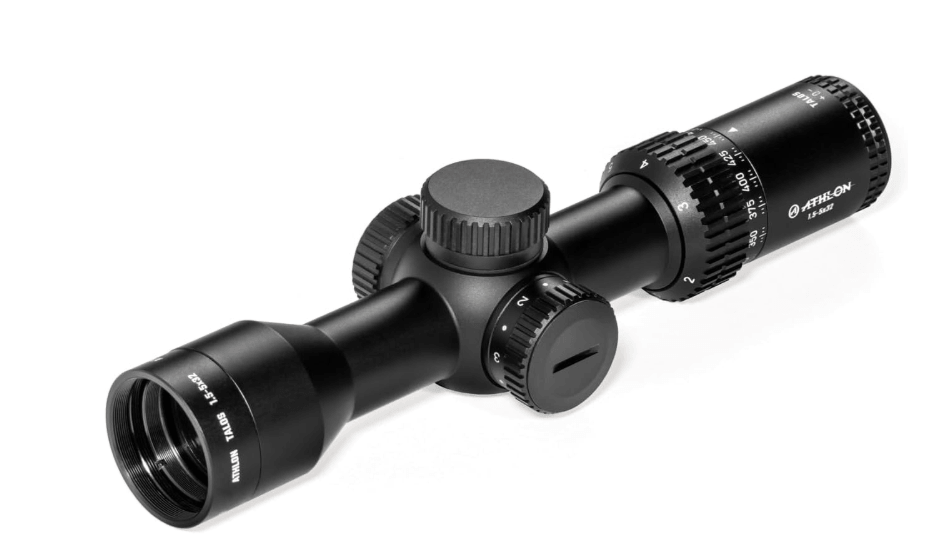
5. Athlon Talos 1.5–5×32 CB100 IR
Best For
Crossbow users seeking a compact optic with an illuminated reticle and low-to-moderate magnification.
Why Choose It
This model differs from the other four because it is designed around crossbow use rather than being a conventional general-purpose rifle scope. Athlon lists a 1.5–5× magnification range, a 32mm objective, and a weight of 14.8 ounces.
Its compact dimensions make it worth considering when a crossbow-specific configuration is more appropriate than a conventional hunting riflescope.
Key Features
Magnification: 1.5–5×
Objective lens: 32mm
Weight: 14.8 ounces
Length: 8.8 inches
Tube diameter: 1 inch
Reticle: CB100 IR crossbow reticle
What These Features Mean in Real Use
The 1.5× starting magnification provides a wider view than the 4× minimum of the higher-magnification Talos model. That is useful for locating targets without excessive magnification.
The CB100 IR reticle is designed for crossbow applications, so it should not be treated as interchangeable with a conventional rifle BDC reticle. Confirm that its intended trajectory and aiming references suit your crossbow and ammunition.
Trade-Offs
The low maximum magnification is appropriate for its intended role but limits its usefulness for distant, small targets compared with a 3–12× or 4–16× optic.
Although its compact size is appealing, this is not the right choice for a buyer who simply wants an illuminated scope for a conventional hunting rifle.
May Not Be Ideal If
You need a general-purpose riflescope for a centerfire rifle or want substantial magnification for precision target shooting.
Pros
Compact 8.8-inch design
Relatively light at 14.8 ounces
Low starting magnification
Crossbow-specific illuminated reticle
Cons
Limited maximum magnification
Intended for crossbow use
Reticle compatibility must match the equipment
Best if: You use a compatible crossbow and want a compact illuminated optic.
Consider another option if: You need a conventional rifle scope or higher magnification.
Factors to Consider When Choosing an Affordable Illuminated Scope
1. Reticle Visibility and Brightness
The main purpose of illumination is to make some or all of the reticle easier to distinguish. A small illuminated center dot can be sufficient for many hunting situations, while other shooters may prefer a more elaborate illuminated reticle.
More brightness settings can make it easier to adapt the aiming point to different backgrounds. However, excessive brightness may cause glare or obscure fine target detail. Look for illumination that can be adjusted to a useful level rather than assuming the brightest setting is best.
2. Magnification and Field of View
A 3–9× scope is often a sensible starting point for general hunting. A 3–12× model offers more flexibility, while a 4–16× scope is better suited to situations where higher magnification is genuinely useful.
Remember that the field of view becomes narrower as magnification increases. For close-range or moving targets, a lower starting magnification can be more important than a high maximum setting.
3. Objective Lens and Low-Light Performance
A larger objective lens can provide a larger exit pupil at a given magnification. Exit pupil is the diameter of the light beam leaving the scope’s eyepiece.
However, the objective diameter alone does not determine how clearly you can see a target at dawn or dusk. Lens coatings, optical design, image contrast, magnification, and your eye’s ability to use the available light also affect the view.
A 40mm objective may be a good compromise for a lightweight hunting rifle, while a larger objective may suit a setup where additional bulk is acceptable.
4. Weight and Mounting
Scope weight affects the balance of the complete rifle. A difference of several ounces can become noticeable when carrying a rifle over long distances.
Before buying, check the scope’s length, objective bell clearance, tube diameter, ring requirements, and eye relief. A scope that looks suitable on paper may require different mounting hardware or sit too high for a comfortable cheek weld.
5. Battery and Reticle Compatibility
Battery-powered illumination requires a compatible replacement battery and a way to manage battery life. Check whether the illumination controls are accessible and whether the scope provides a suitable brightness range.
For BDC reticles, confirm that the holdover references are appropriate for the ammunition, zero, and distances you intend to use. A reticle’s markings should not be assumed to provide exact trajectory compensation for every cartridge.
For additional context on choosing an optic for fading light, the Optics Find guide to illuminated reticle scopes for dawn and dusk discusses how reticle visibility and optical performance address different problems.
Frequently Asked Questions
1. Are illuminated rifle scopes worth buying?
They can be worthwhile if a dark reticle becomes difficult to see against shaded backgrounds. Illumination helps distinguish the aiming point, but it does not make a scope’s image brighter by itself or replace adequate target visibility.
2. Is a 40mm or 44mm objective better for low-light hunting?
A 44mm objective can provide a larger exit pupil than a 40mm objective at the same magnification. However, optical quality, coatings, magnification, and viewing conditions also affect performance. The larger objective may require different mounting rings.
3. What magnification is best for an affordable illuminated hunting scope?
For general hunting, 3–9× is a useful starting point. A 3–12× scope provides more flexibility for open terrain, while a 4–16× model is better suited to applications where high magnification is genuinely needed.
Conclusion
The right affordable illuminated scope depends on your shooting situation rather than the number of features on the box.
For conventional hunting, the SIG SAUER Buckmasters 3–9×40 offers a relatively light configuration and a familiar magnification range. The Athlon Talos 3–12×40 adds magnification and side-focus adjustment, while the 4–16×40 Talos is more appropriate for supported target shooting. The Buckmasters 3–12×44 offers another option for buyers who prefer a larger objective, and the Talos 1.5–5×32 is specifically aimed at crossbow users.