A good low power variable optic (LPVO) gives an AR-style rifle the flexibility of low magnification for close-range target acquisition and higher magnification for more precise aiming at greater distances. However, the best value LPVO is not necessarily the cheapest scope or the one with the highest magnification. It is the one that delivers the features you need without forcing you to pay for extras you will rarely use.
For budget-conscious buyers, the most important differences are reticle visibility, optical clarity, eye relief, weight, and whether a suitable mounting system is included. These five LPVO scopes offer different approaches to value, from a ready-to-mount package to a lightweight optic with a specialized illuminated reticle.
Quick Decision Table
| Product | Best For | Weight | Magnification | Key Advantage | Check Price |
|---|---|---|---|---|---|
| SIG Sauer TANGO-MSR 1-6×24 SFP | Complete starter setup | 18.5 oz | 1–6× | Includes cantilever mount and illuminated BDC reticle | 👉 View on Amazon |
| Primary Arms SLx 1-6×24 Gen IV ACSS NOVA | Bright illuminated aiming point | 17.9 oz | 1–6× | Red Dot Bright illumination | 👉 View on Amazon |
| Burris RT-6 1-6×24 | Lightweight, practical setup | 17.4 oz | 1–6× | Integrated throw lever and compact design | 👉 View on Amazon |
| Vortex Strike Eagle 1-6×24 AR-BDC3 | General-purpose AR-style rifle | 18.5 oz | 1–6× | Illuminated reticle with BDC references | 👉 View on Amazon |
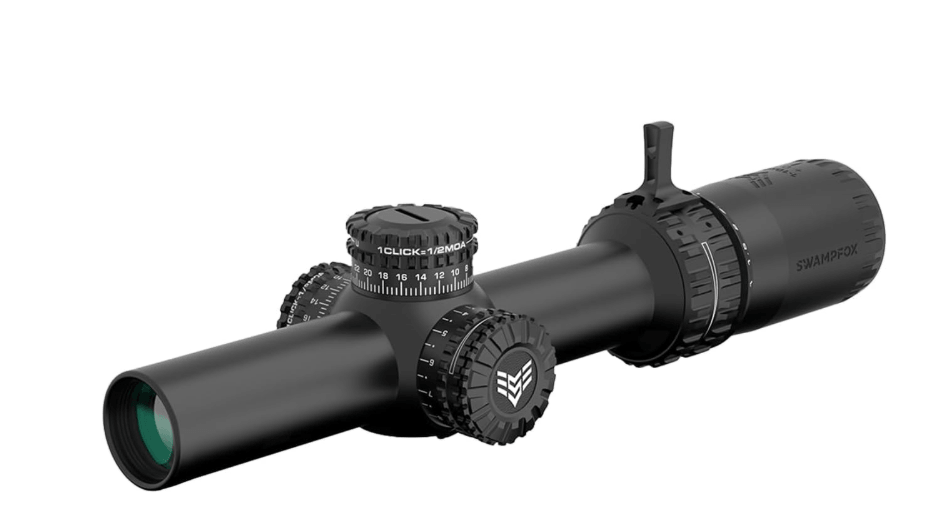
| Swampfox Arrowhead 1-6×24 SFP | Buyers wanting locking turrets | 20.36 oz | 1–6× | Push/pull locking turrets and 12 illumination settings | 👉 View on Amazon |
Quick Recommendations
Choose the SIG Sauer TANGO-MSR if you want a package that includes a mount, lens covers, and an illuminated reticle, reducing the need to buy separate accessories.
Choose the Primary Arms SLx NOVA if a bright, easily visible aiming point is a priority and you want a relatively light 1–6× optic.
Choose the Burris RT-6 if you prefer a compact, straightforward 1–6× design with an integrated magnification lever.
Choose the Vortex Strike Eagle if you want an illuminated AR-oriented BDC reticle and a familiar 1–6× configuration.
Choose the Swampfox Arrowhead if locking turrets and multiple illumination settings are worth the extra weight to you.
How These Products Were Chosen
The comparison focuses on overall value rather than simply selecting the lowest-priced scopes. Each optic offers a different reason to consider it: included mounting hardware, reticle visibility, weight, reticle design, or adjustment controls.
All five use a 1–6× magnification range and a 24mm objective lens. At 1×, an LPVO is designed to support rapid sight acquisition with a broad view; at 6×, it provides more detail for aiming at greater distances. The trade-off is that the view narrows as magnification increases.
For buyers comparing a variable-power scope with other sighting systems, the most useful question is how often they genuinely need magnification. The site’s budget 1–6× LPVO scope guide is also relevant when narrowing the decision to an affordable optic in this magnification class.
The specifications below are tied to the named configurations. Retail packages and reticles can differ even when two listings use similar product names.
1. SIG Sauer TANGO-MSR 1-6×24 SFP — Best Complete Starter Package
Best for buyers who want a practical LPVO with mounting hardware included.
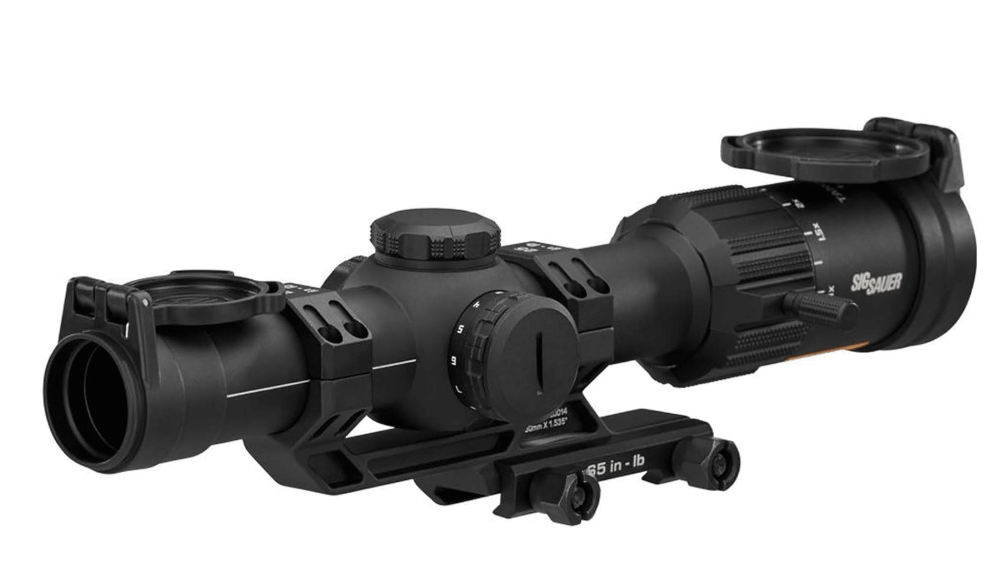
The TANGO-MSR stands out because its standard 1–6×24 package includes an ALPHA-MSR cantilever mount, flip-back lens covers, and a removable throw lever. Those accessories matter when comparing total setup costs: a scope that looks cheaper initially may require a separate mount before it can be installed.
Why Choose It
The illuminated MSR BDC6 reticle gives the shooter a central aiming reference and additional ballistic markings. Its six-times zoom range provides flexibility without moving into the higher cost and complexity of many 1–8× or 1–10× optics.
Key Features
Magnification: 1–6×
Objective lens: 24mm
Weight: 18.5 ounces
Tube diameter: 30mm
Focal plane: Second focal plane (SFP)
Eye relief: 3.74–3.93 inches
Field of view: 124.8 feet at 1× and 19.6 feet at 6×, per 100 yards
Illumination: 11 settings
Included accessories: Mount, throw lever, and flip-back lens covers
These specifications refer to the standard illuminated BDC6 configuration.
What These Features Mean in Real Use
The wide published field of view at 1× is useful when you want to maintain awareness of a broad area through the optic. At 6×, the narrower view helps you examine a more distant target, although acquiring it takes more deliberate alignment.
The included mount is the strongest value argument. Check its height and compatibility with your particular rifle rather than assuming every mount suits every setup.
Trade-Offs
The second-focal-plane reticle remains the same apparent size as magnification changes, but its ballistic references generally correspond to a specified magnification. You must understand the reticle’s calibration rather than assume its markings work identically throughout the zoom range.
May Not Be Ideal If
You want a first-focal-plane reticle, need a lighter setup above all else, or prefer a more specialized reticle design.
Pros
Mount and useful accessories included in the standard package
Illuminated BDC6 reticle
Broad field of view at 1×
Waterproof, shockproof, and fog-proof design
Cons
Second-focal-plane reticle
Included mount may not suit every rifle configuration
Scope-only and bundled versions need to be distinguished
Decision Summary
Best if: You want an LPVO package that reduces the need to purchase mounting accessories separately.
Consider another option if: Reticle complexity, maximum weight savings, or a different focal-plane design matters more than the complete package.
2. Primary Arms SLx 1-6×24 Gen IV ACSS NOVA — Best for Reticle Visibility
Best for buyers who prioritize an illuminated aiming point.
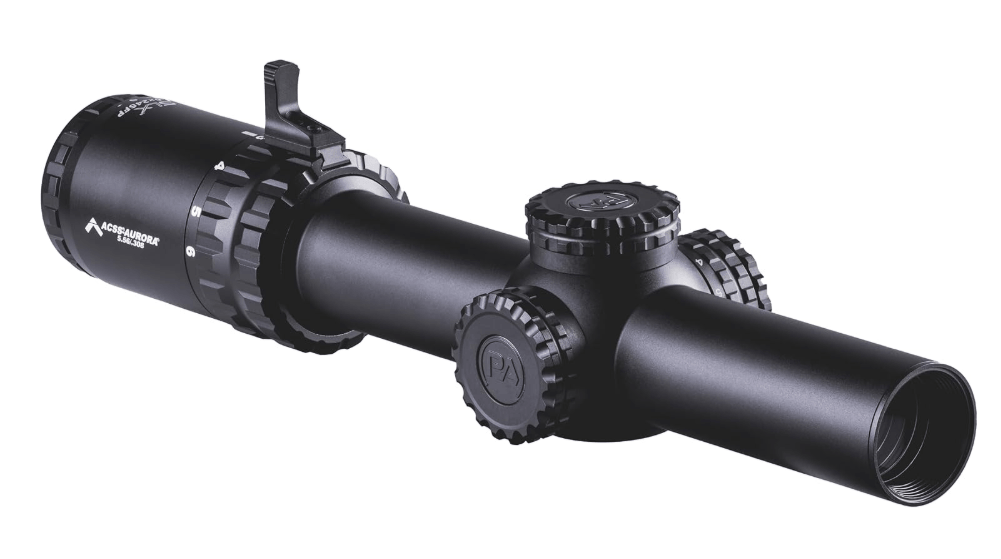
The Primary Arms SLx Gen IV makes a strong case through its ACSS NOVA fiber-wire reticle and Red Dot Bright illumination system. Its combination of a 17.9-ounce weight and a 4-inch published eye relief also makes it a useful option for buyers trying to keep an LPVO setup relatively light.
Why Choose It
The main attraction is the reticle, not simply the magnification range. The ACSS NOVA configuration has 11 illumination settings, and the design is intended to make the central aiming reference easy to see. That is especially relevant when an ordinary dark reticle blends into the background.
Primary Arms also offers different reticle configurations in the SLx Gen IV family. Confirm the exact version before buying, since the ballistic references and intended calibration can differ.
Key Features
Magnification: 1–6×
Objective lens: 24mm
Weight: 17.9 ounces, including battery but excluding lens covers
Eye relief: 4 inches
Tube compatibility: 30mm
Focal plane: Second focal plane
Field of view: 120 feet at 1× and 20 feet at 6×, per 100 yards
Reticle: ACSS NOVA
Illumination: 11 settings
Adjustment clicks: 0.1 MIL
What These Features Mean in Real Use
At 17.9 ounces, the SLx is lighter than the standard TANGO-MSR and Arrowhead configurations listed here. The 4-inch eye relief gives you some flexibility in positioning your head behind the optic, although the scope still needs to be mounted and adjusted correctly.
The NOVA reticle is a particularly relevant feature if illumination is high on your priority list. However, the presence of illumination alone does not establish that every setting will remain equally visible in every lighting condition.
Trade-Offs
This is a scope-only option, so factor a compatible 30mm mount into the overall cost. Also, the SFP reticle’s ballistic references require attention to the magnification at which they are calibrated.
May Not Be Ideal If
You want a mount included, prefer a simple non-illuminated reticle, or need a first-focal-plane design.
Pros
Relatively low weight
4-inch published eye relief
ACSS NOVA reticle with 11 illumination settings
Broad field of view at 1×
Cons
Separate mounting hardware may add to the cost
Reticle choice requires careful configuration matching
Second-focal-plane ballistic references require calibration awareness
Decision Summary
Best if: You value reticle visibility and want a relatively lightweight 1–6× scope.
Consider another option if: A complete mounting package or a different reticle system offers more practical value for your setup.
3. Burris RT-6 1-6×24 — Best Lightweight Option
Best for buyers who want a compact LPVO without unnecessary bulk.
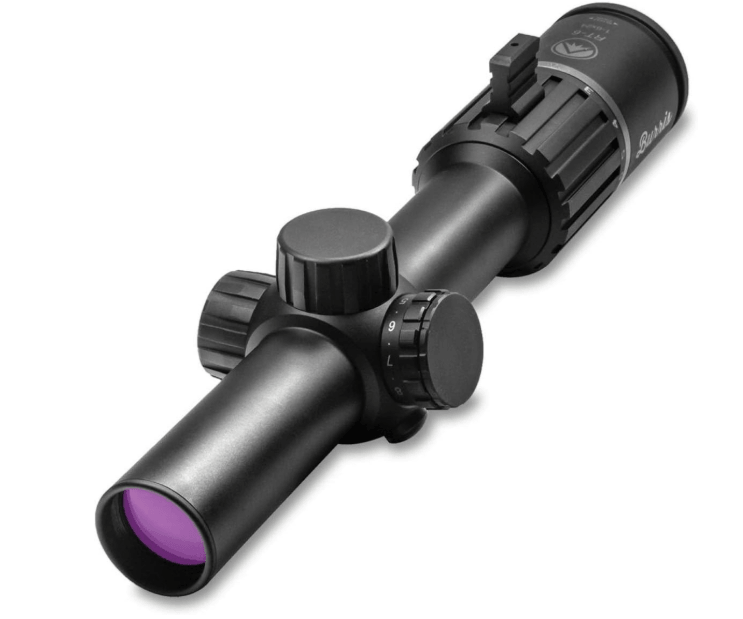
The Burris RT-6 has a straightforward appeal: it combines 1–6× magnification, a 24mm objective, an illuminated Ballistic AR reticle, and a published weight of 17.4 ounces. Among the five configurations compared here, it has the lowest stated scope weight.
Why Choose It
The RT-6 offers a useful combination of low weight and an integrated throw lever. The lever makes it easier to adjust magnification without having to grip the power ring awkwardly, while the compact 10.3-inch length helps keep the optic’s overall profile manageable.
Burris specifies a fixed 100-yard parallax setting and a second-focal-plane reticle.
Key Features
Magnification: 1–6×
Objective lens: 24mm
Weight: 17.4 ounces for the scope-only configuration
Length: 10.3 inches
Tube diameter: 30mm
Focal plane: Second focal plane
Reticle: Illuminated Ballistic AR
Eye relief: 3.3–4 inches
Field of view: 106 feet at 1× and 18.5 feet at 6×, per 100 yards
Parallax: Fixed at 100 yards
Adjustment graduations: ½ MOA
What These Features Mean in Real Use
The RT-6’s low weight is attractive when you want to avoid adding unnecessary mass to the rifle. A few ounces may not seem important in isolation, but the total becomes more noticeable once you add the mount, backup sights, and other accessories.
Its integrated throw lever provides a practical way to switch between low and high magnification. The Ballistic AR reticle adds aiming references, but these should be understood in relation to the ammunition and calibration rather than treated as universal distance markings.
For a closer look at how illuminated reticles differ in practical buying decisions, the illuminated riflescope guide for dawn and dusk explains why visibility of the aiming point and overall image brightness are separate considerations.
Trade-Offs
The RT-6 has a narrower published field of view at 1× than the Primary Arms SLx and TANGO-MSR. Its fixed parallax setting also gives you less flexibility than an optic with adjustable parallax, though this is not unusual for an LPVO.
May Not Be Ideal If
You prioritize the widest possible field of view, need adjustable parallax, or want mounting hardware included in the package.
Pros
Lowest published scope weight among these five
Compact 10.3-inch length
Integrated throw lever
Illuminated Ballistic AR reticle
Waterproof, shockproof, and fog-proof construction
Cons
Narrower published field of view at 1× than some alternatives
Fixed parallax
Mounting hardware needs to be considered separately
Decision Summary
Best if: You want a compact, relatively lightweight LPVO with an integrated magnification lever.
Consider another option if: A wider field of view or an included mount matters more than saving weight.
4. Vortex Strike Eagle 1-6×24 AR-BDC3 — Best All-Rounder
Best for buyers who want a familiar 1–6× LPVO with an illuminated BDC reticle.
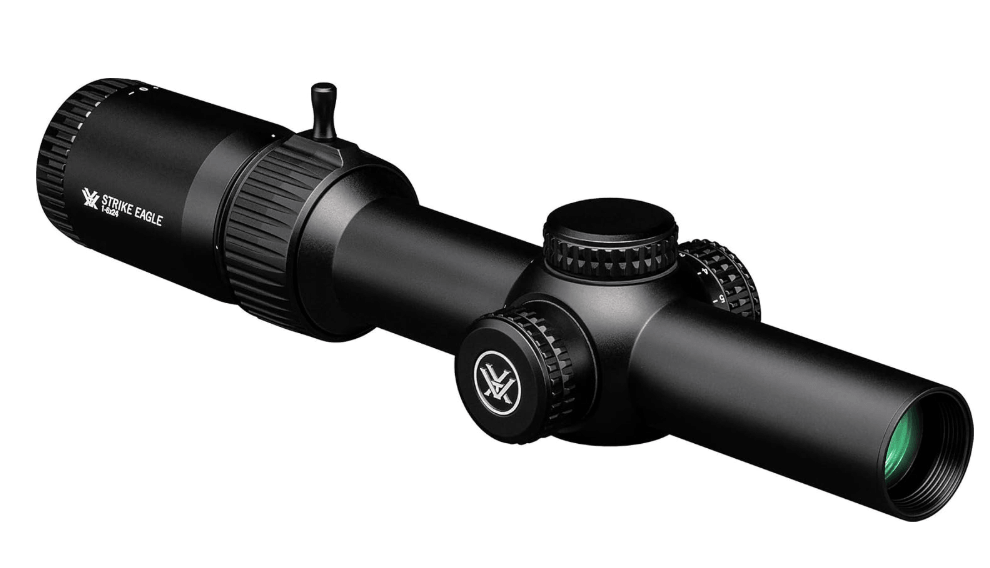
The Vortex Strike Eagle offers a practical combination of 1–6× magnification, an illuminated AR-BDC3 reticle, and a 30mm tube. Its appeal is its straightforward design: a useful magnification range, protected adjustment controls, and a reticle that combines a central aiming point with additional ballistic references.
Why Choose It
The AR-BDC3 reticle is designed around common 5.56 ammunition and provides holdover references. This can be useful for buyers who prefer an integrated reticle rather than relying entirely on a plain aiming point.
Vortex also includes a removable throw lever and lens caps with the identified configuration. Its published specifications list 18.5 ounces, a 10.5-inch length, and 3.5 inches of eye relief.
Key Features
Magnification: 1–6×
Objective lens: 24mm
Weight: 18.5 ounces for the AR-BDC3 configuration
Length: 10.5 inches
Tube diameter: 30mm
Focal plane: Second focal plane
Reticle: Illuminated AR-BDC3
Eye relief: 3.5 inches
Field of view: 116.5 feet at 1× and 19.2 feet at 6×, per 100 yards
Parallax: Fixed at 100 yards
Adjustment graduation: ½ MOA
What These Features Mean in Real Use
The AR-BDC3 reticle provides more information than a simple crosshair, but that information is only useful when you understand the markings and their relationship to your rifle and ammunition. Do not assume that a holdover reference gives an exact distance or trajectory for every cartridge.
The 1–6× range keeps the design relatively straightforward. The 1× setting supports a wide view, while 6× provides more visual detail when required. The scope’s 18.5-ounce weight is reasonable for this category, although it is not the lightest option in this comparison.
Trade-Offs
The Strike Eagle’s value depends on the price of the exact configuration and whether a compatible mount is already available. It is a second-focal-plane design, and its fixed parallax setting offers less adjustment flexibility than some specialized optics.
May Not Be Ideal If
You need a first-focal-plane reticle, adjustable parallax, or the lowest possible weight.
Pros
Illuminated AR-BDC3 reticle
Practical 1–6× magnification range
Removable throw lever
Fully multi-coated lenses
Shockproof construction and weather protection
Cons
Separate mounting costs may apply
Second-focal-plane reticle
Fixed parallax
Decision Summary
Best if: You want a straightforward 1–6× optic with an illuminated reticle and ballistic references.
Consider another option if: You prefer a simpler reticle, a lighter scope, or a more adjustable optical system.
5. Swampfox Arrowhead 1-6×24 SFP — Best for Locking Turrets
Best for buyers who value locking adjustments and multiple illumination settings.
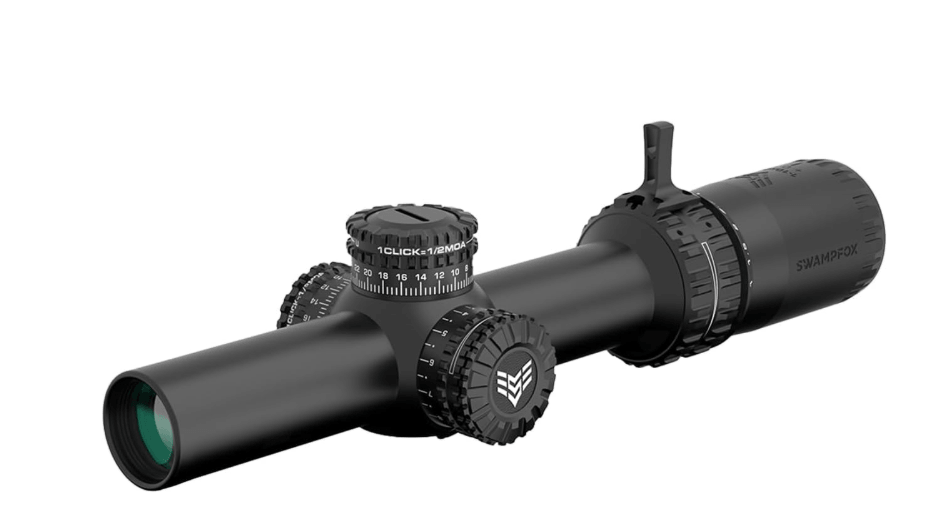
The Swampfox Arrowhead takes a more feature-focused approach to value. Its standout features include push/pull locking turrets, an illuminated reticle with 12 brightness settings, and a 30mm tube. It is worth considering if you prefer additional adjustment security over a simpler, lighter design.
Why Choose It
The Arrowhead’s locking turret mechanism is designed to help prevent unintended adjustments. That can be useful when handling a rifle around equipment or moving through brush, where exposed controls may otherwise be bumped.
The scope is available with different reticle options, including BDC and MIL configurations. Make sure the exact reticle matches your intended application before ordering.
Key Features
Magnification: 1–6×
Objective lens: 24mm
Weight: 20.36 ounces
Length: 10.67 inches
Tube diameter: 30mm
Focal plane: Second focal plane
Eye relief: Approximately 3.39–3.54 inches
Field of view: Approximately 119.9 feet at 1× and 19.27 feet at 6×, per 100 yards
Illumination: 12 settings
Turrets: Push/pull locking design with zero reset
Parallax: Fixed at 100 yards
What These Features Mean in Real Use
The locking turrets offer a practical benefit if you want to reduce the chance of accidentally changing an adjustment. However, they do not eliminate the need to confirm zero or understand the adjustment system.
Its relatively broad field of view at 1× is useful for a 1–6× scope. The main compromise is weight: at 20.36 ounces, the Arrowhead is heavier than the other four products in this comparison. The difference may matter if the rifle needs to remain compact and comfortable to carry.
Trade-Offs
You are paying in weight for a more feature-rich design. The Arrowhead also requires a suitable mount, and buyers need to choose the correct reticle and adjustment configuration.
May Not Be Ideal If
You want the lightest possible LPVO, a complete package with a mount, or the simplest possible set of controls.
Pros
Locking turrets with zero reset
12 illumination settings
Multiple reticle options
Broad field of view at 1×
Waterproof design specified by the manufacturer
Cons
Heaviest scope in this comparison
Mounting hardware adds to the total cost
Reticle options require careful selection
Decision Summary
Best if: You value locking turrets and a feature-rich illuminated reticle.
Consider another option if: Weight and total setup cost matter more than additional adjustment features.
Factors to Consider When Choosing an LPVO
1. Magnification and Field of View
A 1–6× scope balances low-magnification viewing with additional magnification when you need more detail. At 1×, the field of view is much wider than at 6×, which can make it easier to locate a target and maintain awareness of the surrounding area.
Compare the published field-of-view figures rather than assuming all 1–6× scopes offer the same experience. A higher maximum magnification is not automatically better if the optic becomes harder to use at its lowest setting.
2. Reticle Design and Focal Plane
Reticle design determines how you interpret the aiming point and any additional references.
Simple illuminated reticle: Prioritizes a clear central aiming reference.
BDC reticle: Provides ballistic references intended for particular trajectories and calibration conditions.
MIL-based reticle: Uses angular measurements that can support more systematic ranging and holdover calculations.
All five scopes in this comparison use second-focal-plane reticles. The reticle remains the same apparent size as magnification changes, but its subtensions are generally calibrated for a specified magnification. If you want holdover references to retain their intended angular values at every magnification, consider a first-focal-plane model instead.
3. Illumination and Optical Clarity
Illumination can make the aiming point easier to distinguish against a dark or cluttered background. However, the number of brightness settings does not tell you everything about how visible the reticle will be in bright daylight.
Optical clarity also depends on the glass, lens coatings, and overall optical design. A bright illuminated reticle cannot compensate for insufficient image detail, so consider both factors when comparing scopes.
4. Weight and Mounting Hardware
The scope’s weight is only part of the total setup. The mount and accessories add more mass, and the final balance depends on the rifle and where the optic sits.
The Burris RT-6 is the lightest of these five at 17.4 ounces. The Swampfox Arrowhead is the heaviest at 20.36 ounces. Meanwhile, the standard SIG TANGO-MSR package includes a mount, which may improve its overall value if you need one.
Check the tube diameter, mount compatibility, and mounting height before purchasing. A 30mm tube requires a compatible mounting system; the 24mm objective lens does not determine ring size.
5. Eye Relief and Adjustment Controls
Eye relief is the distance between your eye and the eyepiece when you have a usable sight picture. Adequate eye relief is particularly important on a recoiling rifle, and correct mounting helps you maintain a comfortable, consistent head position.
Also consider whether you prefer capped, locking, or exposed adjustment turrets. Locking or capped controls help protect against unintended changes, while exposed turrets can be useful for users who regularly make deliberate adjustments.
If you’re choosing an optic for an AR-pattern rifle, the AR-15 scope buying guide offers additional context on matching magnification, reticle design, mounting geometry, and weight to your intended application.
Frequently Asked Questions
1. What is the best value LPVO scope?
The best choice depends on which features matter most to you. The SIG Sauer TANGO-MSR is worth considering if you need a complete package with a mount, while the Primary Arms SLx Gen IV ACSS NOVA is attractive if illuminated reticle visibility is your priority.
2. Is a 1–6× LPVO enough for most applications?
A 1–6× scope offers a useful range of magnification for many close-to-medium-range applications. Whether it provides enough magnification depends on your intended use, viewing conditions, and the level of detail you need at the distance involved.
3. Is a first-focal-plane LPVO better than a second-focal-plane model?
Neither is automatically better. A first-focal-plane reticle scales with magnification, so its subtensions remain consistent throughout the zoom range. A second-focal-plane reticle stays the same apparent size and is often preferred by buyers who use its ballistic references at a specific magnification.
Conclusion
The best value LPVO is the one that matches your priorities without adding unnecessary expense or weight.
Choose the SIG Sauer TANGO-MSR if included mounting hardware matters most, the Primary Arms SLx Gen IV if illuminated reticle visibility is your priority, or the Burris RT-6 if you want the lightest scope in this comparison. The Vortex Strike Eagle offers a straightforward illuminated BDC design, while the Swampfox Arrowhead is worth considering if locking turrets are important to you.
Before buying, compare the exact model, reticle, mounting requirements, and current price. A scope that fits your requirements and total budget is a better value than one that simply has the most features.