Budget night vision scopes for coyote hunting can help hunters observe animals after dark without paying for a premium thermal imaging system. However, the right choice depends on more than price. Image clarity, infrared illumination, battery life, magnification, mounting compatibility, and the ability to identify an animal clearly all affect how useful a digital scope will be.
This guide focuses on digital day/night riflescopes and affordable night-vision options worth researching.
Quick Decision Table
| Product | Best For | Weight | Magnification | Key Advantage | Check Price |
| GOYOJO NV075-50 | Entry-level digital night vision | Not Specified | 4x optical magnification listed in the manual | 1080p imaging and IR illumination | 👉 View on Amazon |
| Sightmark Wraith HD 4-32×50 | Feature-rich digital viewing | 36.3 oz with batteries | 4–32x | 1080p imaging and built-in recording | 👉 View on Amazon |
| ATN X-Sight 5 3-15x | Buyers seeking advanced digital features | Not Specified | 3–15x | 4K+ sensor and recording | 👉 View on Amazon |
| ATN X-Sight 5 5-25x | Higher-magnification digital viewing | Not Specified | 5–25x | Greater magnification range | 👉 View on Amazon |
| DNT Optics ZULUS HD V2 | Buyers prioritizing digital image detail | Not Specified | Not Specified | HD digital viewing platform | 👉 View on Amazon |
Quick Recommendations
Consider the GOYOJO NV075-50 if you want to investigate an entry-level digital night-vision device with a 1080p display and infrared illumination. Verify the exact model, mounting arrangement, and suitability for your intended use before buying.
Consider the Sightmark Wraith HD 4-32×50 if its feature set appeals to you, but do not treat it as a current purchase recommendation until you confirm availability.
Consider the ATN X-Sight 5 3-15x if you want a digital day/night scope with a high-resolution sensor and onboard recording. It may stretch a strict budget.
Consider the ATN X-Sight 5 5-25x if you need a higher-magnification configuration for viewing across open terrain. It is not automatically better for close-range observation.
Research the DNT Optics ZULUS HD V2 if image detail is a priority, while checking the exact model and total system cost.
How These Products Were Chosen
The selection focuses on digital night-vision technology, manufacturer documentation, practical feature differences, and the limitations that matter to budget-conscious buyers.
The most relevant considerations are:
Whether the device supports genuine night viewing rather than merely illuminating a conventional reticle.
Whether infrared illumination is included or must be purchased separately.
Whether magnification is optical, digital, or a combination of both.
Whether the display and sensor specifications are clearly identified.
Whether battery life is sufficient for the intended session.
Whether the device can be mounted and used safely on the intended platform.
Whether the exact model is currently available through the intended retailer.
1. GOYOJO NV075-50
Best For
Buyers researching an entry-level digital night-vision device for observation and potential hunting applications.
Why Choose It?
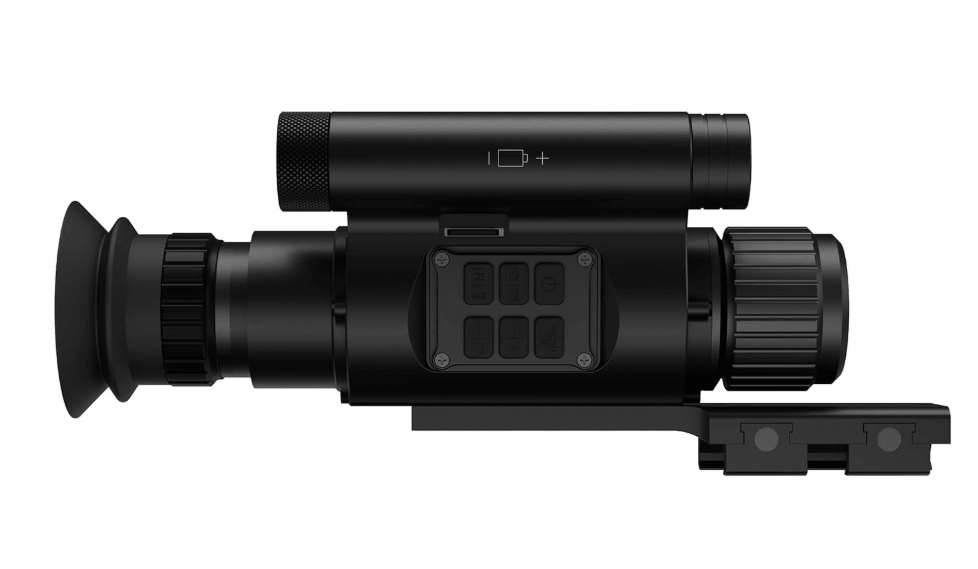
The GOYOJO NV075-50 is a digital night-vision device documented in a model-specific user manual. The manual describes 1080p imaging, an OLED display, recording functions, and an 850nm infrared illuminator. These features make it worth investigating when comparing less expensive digital night-vision equipment.
The important distinction is that advertised night-vision capability does not establish the quality of the image at a particular distance. A device may show movement or a recognizable shape without providing sufficient detail for reliable identification.
Key Features
1080p imaging as stated in the manual.
OLED HD display.
850nm infrared illumination.
Photo and video functions.
50mm focal-length lens listed in the documentation.
4x magnification listed in the manual.
What These Features Mean in Real Use
The 1080p figure describes the documented imaging resolution, but buyers should check whether a specification refers to the sensor, display, or recorded video. These are different components and should not be treated as interchangeable.
Infrared illumination helps a digital night-vision system obtain a usable image in darkness. The manual describes visibility up to 300 meters under low-light conditions, but this should not be interpreted as a guaranteed distance for identifying a coyote. Terrain, vegetation, atmospheric conditions, illumination, and the animal’s size all affect the result.
Before buying, confirm whether the exact product is designed as a rifle-mounted optic and whether its mounting system and recoil compatibility match the intended platform.
Trade-Offs
The appeal is its entry-level feature set. The limitation is that a published specification sheet alone cannot establish real-world identification performance or suitability for a particular rifle.
May Not Be Ideal If
You need independently verified performance at longer distances or require confirmed recoil compatibility for a specific firearm.
Pros
Documented digital night-vision functions.
Infrared illumination.
Recording capability.
Published model-specific manual.
Cons
Current Amazon availability is unverified.
Practical identification range is not established by the specifications alone.
Exact mounting and recoil compatibility need confirmation.
Decision Summary
Best if: you want to research a lower-cost digital night-vision option.
Consider another option if: you require verified retailer availability, confirmed rifle compatibility, or independently established long-distance identification performance.
2. Sightmark Wraith HD 4-32×50
Best For
Buyers comparing a feature-rich digital riflescope with a wide advertised magnification range.
Why Choose It?
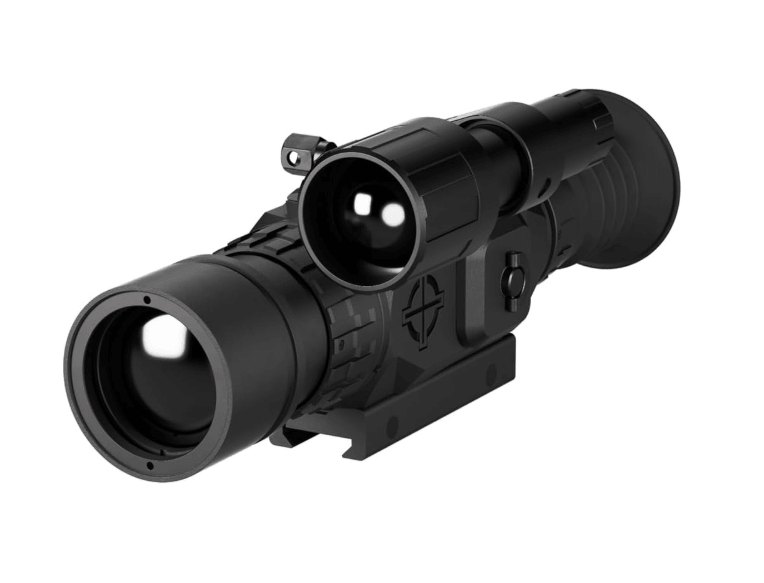
The Sightmark Wraith HD 4-32×50 combines daytime color viewing with a digital night mode. Sightmark’s published specifications include a 1920 × 1080 sensor, a 1280 × 720 display, built-in video recording, and an 850nm infrared illuminator.
Key Features
4–32x magnification.
50mm objective lens.
1920 × 1080 sensor.
1280 × 720 display.
Built-in video recording.
Removable 850nm infrared illuminator.
Four AA batteries.
36.3-ounce published weight with batteries.
IP55 water-resistance rating.
What These Features Mean in Real Use
The 4–32x magnification range offers flexibility for viewing subjects at different distances. However, digital zoom does not create additional detail that the sensor has not captured. Increasing magnification can make an image appear larger while also making pixelation and loss of detail more noticeable.
The included infrared illuminator is important because digital night vision generally needs available light or infrared illumination to produce a useful nighttime image. Sightmark publishes a night-vision detection range of approximately 200 yards for this model. That is a manufacturer claim, not a guarantee of clear identification at that distance.
Weight is another consideration. At 36.3 ounces with batteries, this is a substantial addition to a rifle. The total weight may affect balance and portability.
Trade-Offs
The Wraith HD offers recording, multiple reticle options, and an included infrared illuminator. However, its published battery life is limited to approximately 3.5 hours in video mode or 4.5 hours in preview mode, and the current manufacturer listing is sold out.
May Not Be Ideal If
You need a lightweight setup, extended battery operation, or a product you can confirm is currently available to purchase.
Pros
Full-color daytime mode.
Digital night mode.
Included infrared illuminator.
Built-in video recording.
Wide advertised magnification range.
Cons
Manufacturer lists the product as sold out.
Relatively heavy at 36.3 ounces with batteries.
Digital zoom may reduce perceived image detail.
Published battery life is limited.
Decision Summary
Best if: you are comparing the features of a full-size digital night-vision riflescope.
Consider another option if: immediate availability, low weight, or long operating time is essential.
3. ATN X-Sight 5 3-15x
Best For
Buyers seeking a digital day/night scope with advanced imaging and recording features.
Why Choose It?
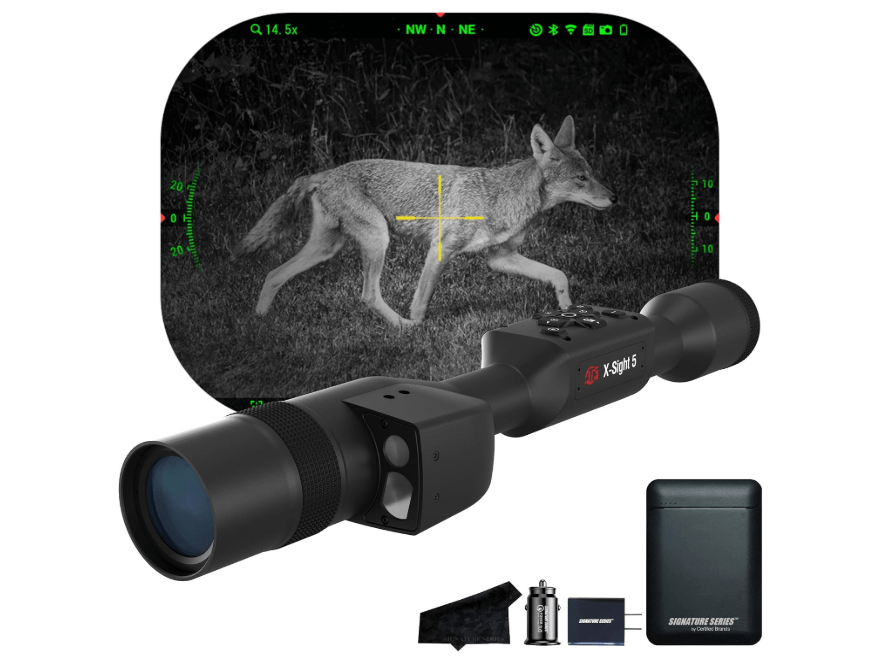
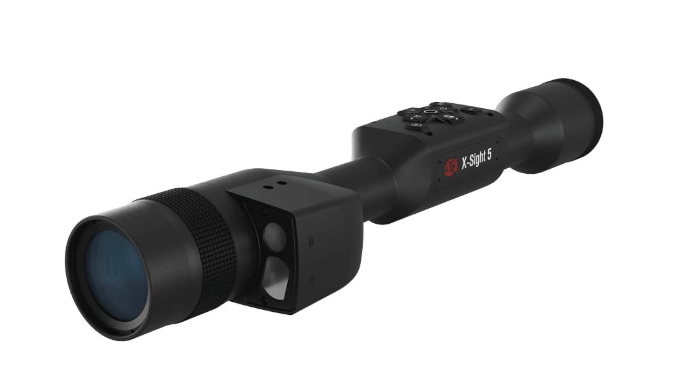
ATN’s X-Sight 5 3-15x is a digital day/night riflescope built around a 4K+ sensor. The manufacturer lists features including video recording, a ballistic calculator, custom reticles, Recoil Activated Video, and One Shot Zero.
Its 3–15x magnification range distinguishes it from the higher-magnification configuration in the same family.
Key Features
3–15x magnification.
4K+ sensor.
Daytime and nighttime modes.
Video recording in 4K.
Custom reticle options.
Ballistic calculator.
Recoil Activated Video.
One Shot Zero.
What These Features Mean in Real Use
A high-resolution sensor can help preserve image detail, but image quality also depends on available light, infrared illumination, processing, display resolution, and viewing conditions.
The 3x starting magnification is worth considering for situations where a wider field of view is useful. Lower starting magnification can make it easier to keep track of a moving subject within the display than a configuration that begins at 5x. It does not guarantee faster target acquisition in every setting.
Recording and ballistic features add complexity as well as functionality. Buyers should consider whether they genuinely need those features or would be better served by a simpler, less expensive device.
Trade-Offs
The X-Sight 5 provides a more advanced feature set than a basic digital viewer, but its price may exceed a strict budget. Buyers should also verify the included accessories, battery specifications, and exact model configuration before comparing total cost.
May Not Be Ideal If
Your budget is firmly limited to entry-level equipment or you prefer a simple device with minimal menus and electronic features.
Pros
4K+ sensor.
Day/night functionality.
Built-in recording.
Custom reticle options.
Additional digital features.
Cons
May be expensive for a strict budget.
More features can mean a steeper learning curve.
Amazon availability for the exact configuration is unverified.
Decision Summary
Best if: you want a feature-rich digital day/night scope and can accommodate the cost.
Consider another option if: you need the lowest purchase price or prefer simpler controls.
4. ATN X-Sight 5 5-25x
Best For
Buyers who prioritize higher magnification for viewing across open terrain.
Why Choose It?
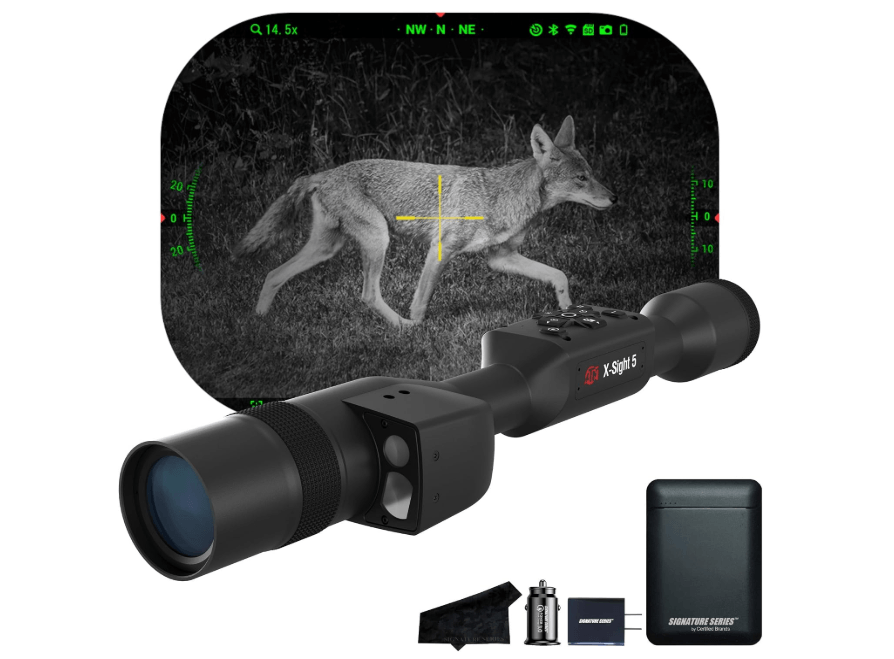
The ATN X-Sight 5 5-25x shares the broader digital platform of the 3-15x model but provides a different magnification range. ATN lists both configurations in its X-Sight 5 family.
This distinction matters because a higher maximum magnification is not automatically an advantage. The appropriate configuration depends on the distance, field of view, and level of detail needed.
Key Features
5–25x magnification.
4K+ digital imaging platform.
Day and night viewing modes.
Video recording.
Custom reticle options.
Ballistic calculator.
Recoil Activated Video.
What These Features Mean in Real Use
A 5x starting magnification gives a narrower view than a 3x starting point on an otherwise comparable optical system. That may be useful when observing more distant subjects, but it can make it harder to keep a nearby moving animal within the display.
The maximum 25x setting should also be evaluated realistically. High digital magnification can enlarge an image without providing the same detail as a higher-quality optical image. Atmospheric conditions, sensor performance, illumination, and stability affect what the user can actually see.
As with the 3-15x model, the electronic features may be valuable to some buyers but unnecessary for others.
Trade-Offs
The higher-magnification range is the primary distinction. However, the higher starting magnification is less versatile for close observation, and the model may not meet the needs of someone shopping for the lowest-cost option.
May Not Be Ideal If
You expect most viewing to occur at short distances or need a broad field of view for scanning.
Pros
Higher maximum magnification.
Digital day/night functionality.
Recording and reticle features.
Ballistic calculator.
Cons
Higher starting magnification.
Digital zoom does not guarantee additional detail.
Exact Amazon availability and package contents are unverified.
Decision Summary
Best if: you prioritize higher magnification and understand its limitations.
Consider another option if: you need a wider starting field of view or are working with a strict entry-level budget.
5. DNT Optics ZULUS HD V2
Best For
Buyers researching a digital night-vision platform with an emphasis on high-definition viewing.
Why Choose It?
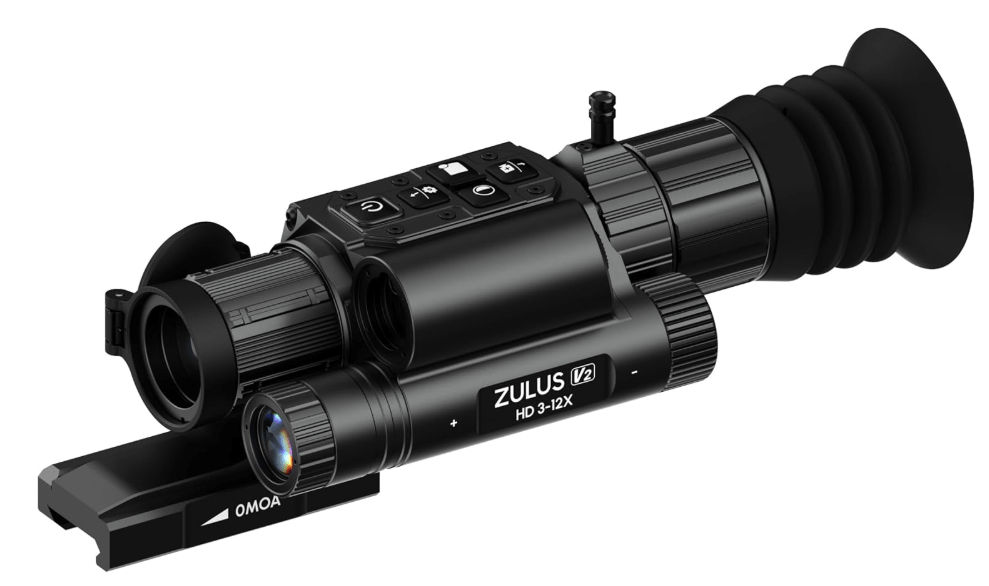
DNT Optics’ ZULUS HD V2 family is another digital optic worth investigating. Before treating a specific ZULUS configuration as a recommendation, verify its exact model, mounting format, magnification range, and intended use. Product-family names alone are not sufficient to establish that two configurations have the same specifications.
Key Features
The exact specifications depend on the configuration being considered. Before publishing or purchasing, verify:
Sensor and display resolution.
Optical and digital magnification.
Infrared illumination requirements.
Weight and mounting system.
Battery type and operating time.
Intended mounting and recoil compatibility.
Included accessories.
What These Features Mean in Real Use
For digital night vision, sensor resolution is only one part of the picture. The display must show the captured detail clearly, and the illumination system must provide enough usable light for the viewing conditions.
Buyers should also establish whether the selected product is a standalone riflescope, a clip-on device, or another type of digital optic. These designs are not interchangeable: a clip-on may require a compatible daytime scope, while a standalone riflescope is intended to serve as the primary sighting optic.
The complete cost should include any necessary illumination, mounting equipment, batteries, and accessories.
Trade-Offs
The ZULUS HD V2 family provides another option to compare, but without verification of the exact configuration and retailer listing, a confident value recommendation would be premature.
May Not Be Ideal If
You need a confirmed low-cost model that is currently available on Amazon with clearly documented package contents.
Pros
Another digital platform to compare.
Potentially useful for evaluating high-definition viewing features.
Exact specifications can be checked against the chosen configuration.
Cons
The exact model configuration must be established.
Amazon availability has not been verified.
Total system cost needs confirmation.
Decision Summary
Best if: you are willing to compare exact configurations and verify the complete system before purchasing.
Consider another option if: you require a confirmed Amazon listing and fully verified specifications immediately.
Factors to Consider When Choosing a Budget Night Vision Scope for Coyote Hunting
1. Digital Night Vision vs. Thermal Imaging
Digital night vision uses a sensor to capture available light and, where supported, infrared illumination. Thermal imaging detects differences in heat radiation instead.
A digital night-vision system may be more affordable, but its nighttime performance can depend heavily on illumination and environmental conditions. Thermal devices can locate heat signatures without an infrared illuminator, although image detail, weather, and thermal contrast still matter.
For a more detailed explanation of the technology difference, our guide to thermal riflescopes provides useful background on thermal sensors and detection claims.
2. Infrared Illumination
An infrared illuminator supplies light that a compatible night-vision sensor can use to produce an image. Check whether it is included, whether its intensity is adjustable, and whether it is compatible with the device.
Published illumination distances should be treated as manufacturer claims rather than guaranteed identification ranges. An animal may be detectable at a distance where its identity is still unclear.
3. Sensor Resolution and Display Quality
Sensor resolution describes the captured image, while display resolution describes the image shown to the viewer. Recording resolution is another separate specification.
Higher numbers can be useful, but they do not guarantee better nighttime identification. Image processing, lens quality, illumination, and environmental conditions all contribute to the final image.
4. Magnification and Field of View
Higher magnification enlarges the view but generally narrows the field of view. That can make it harder to follow a moving subject or maintain awareness of nearby surroundings.
A lower starting magnification may be more flexible for close observation, while higher magnification can help inspect details at a distance when the sensor has captured enough information.
5. Battery Life and Weight
Digital scopes rely on electronics and displays, so battery life is an important part of the buying decision. Check the manufacturer’s stated operating time and whether it changes when infrared illumination or recording is enabled.
Weight also affects the complete setup. Include the scope, mounting equipment, batteries, and illuminator when considering portability.
6. Mounting Compatibility and Weather Resistance
Confirm that the exact model is designed for the intended mounting arrangement and is compatible with the rifle or platform. Do not assume that every digital night-vision device can withstand the recoil of every firearm.
Water resistance and waterproofing are also different claims. Check the manufacturer’s specified protection rating and follow the manual’s limitations.
7. Availability and Total Cost
The lowest advertised price may not represent the lowest total cost if an illuminator, mounting hardware, or power accessories must be purchased separately.
If you are comparing ordinary optics for dawn and dusk rather than true night vision, our low-light scope guide for whitetail deer explains why optical brightness and target identification are different from electronic night vision.
For conventional scopes, an illuminated reticle can help make the aiming point visible in dim conditions, but it does not turn a daytime riflescope into a night-vision device. Our guide to illuminated reticle scopes for dawn and dusk explores that distinction.
Frequently Asked Questions
1. What is the cheapest type of night-vision scope for coyote hunting?
Entry-level digital night-vision devices are generally worth investigating first when cost is the main concern. However, the total price must include any required infrared illuminator, mounting equipment, batteries, and other accessories. Verify the exact product and its current availability before deciding.
2. How far can a budget night-vision scope see a coyote?
The answer depends on the sensor, lens, infrared illumination, terrain, and environmental conditions. Detection range is not the same as identification range: seeing movement at a distance does not mean you can reliably identify the animal. Treat manufacturer distance figures as test-condition-dependent claims, not guarantees.
3. Is digital night vision better than thermal imaging for coyote hunting?
Neither technology is universally better. Digital night vision can provide a recognizable image using available light and infrared illumination, while thermal imaging detects heat differences. Cost, terrain, weather, identification needs, and local hunting regulations all affect which system is appropriate.
Conclusion
A budget night-vision purchase should begin with the complete system rather than a headline magnification number. The GOYOJO NV075-50 is worth researching as an entry-level digital option, the Sightmark Wraith HD illustrates the features available in a full-size digital scope, and the ATN X-Sight 5 configurations offer more advanced imaging and recording features. The DNT Optics ZULUS HD V2 is another candidate to investigate once its exact configuration is confirmed.