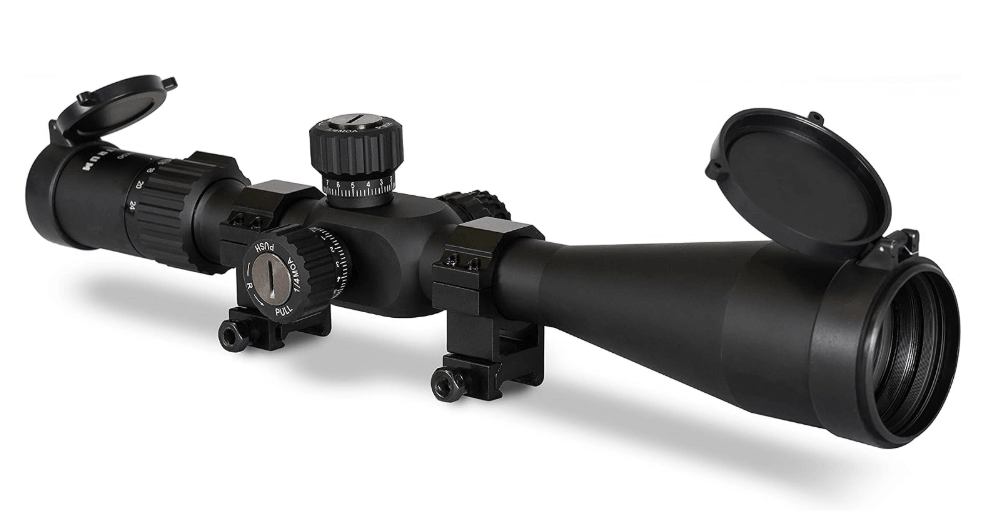
Finding the best tactical rifle scopes under $300 means balancing practical magnification, a useful reticle, dependable construction, and adjustment features without spending your entire budget on the optic. The right choice depends on whether you want a low-power variable optic (LPVO) for general-purpose shooting or a higher-magnification scope for precision-oriented target shooting.
Not every scope marketed as tactical offers the same features. Some prioritize a wide field of view at low magnification, while others offer adjustable parallax and reticles designed for more detailed aiming. The five options below cover different priorities, so you can focus on the features that matter to your intended use rather than buying specifications you may never need.
Quick Comparison Table
| Product | Best For | Weight | Magnification | Key Advantage | Check Price |
|---|---|---|---|---|---|
| Athlon Talos 4-16×40 Mildot | Budget-conscious precision shooting | 19.1 oz | 4-16x | Side-focus parallax adjustment | 👉 View on Amazon |
| SIG Sauer TANGO-MSR 1-6×24 SFP | General-purpose LPVO use | 18.5 oz | 1-6x | Illuminated reticle and included mount on specified package | 👉 View on Amazon |
| SIG Sauer TANGO-SPR 4-16×44 SFP | Higher-magnification shooting | Not Specified | 4-16x | Side focus and tactical-style adjustments | 👉 View on Amazon |
| Firefield RapidStrike 1-6×24 | Entry-level LPVO buyers | Not Specified | 1-6x | Low-power variable design | 👉 View on Amazon |
| Monstrum G3 6-24×50 FFP | Buyers seeking first-focal-plane magnification | Not Specified | 6-24x | Reticle scales with magnification | 👉 View on Amazon |
Quick Recommendations
Choose the Athlon Talos 4-16×40 Mildot if you want adjustable parallax and a higher magnification range at a manufacturer-listed price below $300.
Consider the SIG Sauer TANGO-MSR 1-6×24 SFP if a low-power variable optic, illuminated reticle, and included mounting system suit your needs. Verify that the selected package is priced below $300.
Consider the SIG Sauer TANGO-SPR 4-16×44 SFP if you prefer more magnification and side-focus adjustment.
Consider the Firefield RapidStrike 1-6×24 if you’re looking for an entry-level LPVO and can verify the current price and exact configuration.
Consider the Monstrum G3 6-24×50 FFP if a first-focal-plane reticle and substantial magnification are priorities. Check the model’s weight and other specifications before purchase.
How These Products Were Selected
The selection focuses on differences that help buyers compare budget tactical-style optics: magnification range, focal plane, reticle illumination, parallax adjustment, weight, and mounting requirements. Manufacturer documentation is the preferred source for specifications, while retailer listings help establish whether a particular package may fit the budget.
1. Athlon Talos 4-16×40 Mildot
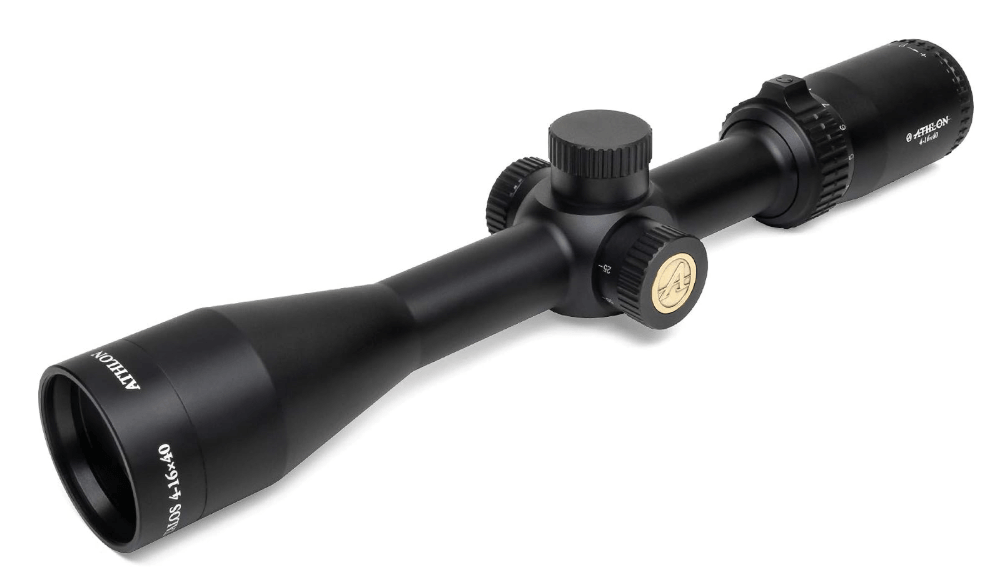
Best for higher magnification on a budget
The Athlon Talos 4-16×40 Mildot is worth considering if you want more magnification and adjustable parallax without spending more than $300 on the scope itself.
Why Choose It
Its 4-16x magnification range makes it more suited to stationary target viewing than a low-power variable optic. The side-focus adjustment also gives you a way to compensate for parallax at different distances.
Key Features
Magnification: 4-16x
Objective lens: 40mm
Weight: 19.1 ounces
Tube diameter: 1 inch
Eye relief: 3.35-3.8 inches
Reticle: Mildot, second focal plane
Parallax: Side focus, with the manufacturer’s product page and manual to be checked for the exact configuration’s adjustment range
Construction: Waterproof and nitrogen-purged, according to Athlon
What These Features Mean in Real Use
The 4-16x range offers more top-end magnification than a 1-6x LPVO. However, the narrower field of view at higher power makes locating and following a target less convenient. This is an important distinction when comparing a precision-oriented optic with a general-purpose scope.
The Mildot reticle provides reference marks within the sight picture. The second-focal-plane design means the reticle stays the same apparent size as magnification changes, so its measurement references must be used with the appropriate calibration.
The 40mm objective keeps the scope more compact than many 50mm high-magnification models. Its one-inch tube also means you must buy compatible rings rather than assuming 30mm rings will fit.
Trade-Offs
The Athlon’s strongest selling points are its magnification range, side focus, and relatively manageable weight. Its main limitations are the lack of an illuminated reticle in the specified Mildot configuration and the additional mounting cost.
Pros
4-16x magnification
Adjustable side-focus parallax
Relatively light at 19.1 ounces
Published waterproof and nitrogen-purged construction
Cons
No illumination on the specified Mildot model
One-inch tube requires compatible rings
Higher magnification reduces field of view
Best if: You want a budget-conscious scope with higher magnification and adjustable parallax.
Consider another option if: You need an illuminated reticle or a low-power design with a wider field of view.
2. SIG Sauer TANGO-MSR 1-6×24 SFP
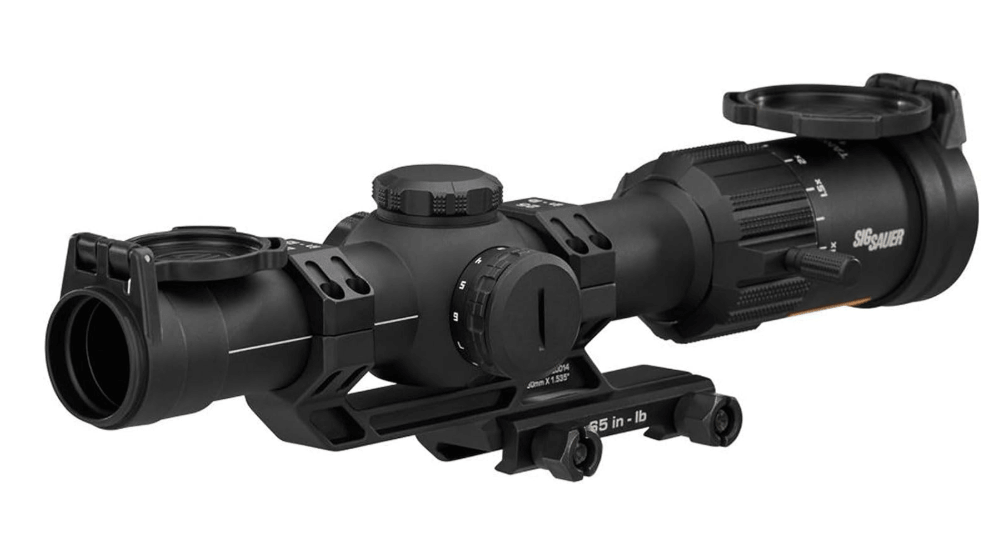
Best for a low-power variable optic
The SIG Sauer TANGO-MSR 1-6×24 SFP is designed around versatility rather than maximum magnification. Its low-power setting provides a broad field of view, while the 6x setting offers additional visual detail. The standard illuminated BDC6 configuration is listed with an included mount, but you should confirm the exact package and current price before treating it as a sub-$300 purchase.
Why Choose It
The TANGO-MSR makes sense for buyers who prefer a variable-power scope that comes with useful accessories. The included mount on the specified package can reduce the extra cost of putting together a compatible setup.
Key Features
Magnification: 1-6x
Objective lens: 24mm
Tube diameter: 30mm
Focal plane: Second focal plane
Reticle: Illuminated MSR BDC6 on the specified configuration
Eye relief: Approximately 3.74-3.93 inches
Field of view: 124.8 feet at 1x and 19.6 feet at 6x per 100 yards
Standard package accessories: Mount, throw lever, and flip-back lens covers
What These Features Mean in Real Use
At 1x, an LPVO offers a much wider view than it does at 6x. That makes the low-power design appealing to buyers who want a versatile optic rather than a dedicated high-magnification scope.
The illuminated reticle can help the aiming point stand out against a dark background. However, illumination cannot compensate for poor image detail or make a target identifiable when visibility is insufficient.
The BDC6 reticle includes ballistic references, but their suitability depends on the exact reticle version and its intended calibration. Do not assume that markings correspond to exact distances with every rifle and ammunition combination.
Trade-Offs
The TANGO-MSR has less maximum magnification than the Athlon Talos or Monstrum G3. Its 24mm objective is also smaller than the objectives on many precision-oriented scopes.
The included mount is useful only if it fits the intended rifle and mounting arrangement. Compare the complete package cost, not just the optic’s advertised price.
Pros
Versatile 1-6x range
Illuminated reticle
Mount included with the specified package
Published waterproof, shockproof, and fog-proof construction
Cons
Limited maximum magnification compared with 4-16x and 6-24x scopes
Reticle calibration depends on the selected configuration
Price varies by package and seller
Best if: You want an LPVO and value a package with mounting accessories.
Consider another option if: You need higher magnification or a first-focal-plane reticle.
For a closer comparison of low-power optics, Optics Find’s guide to value LPVO scopes explains how magnification, reticle design, weight, and mounting costs affect the buying decision.
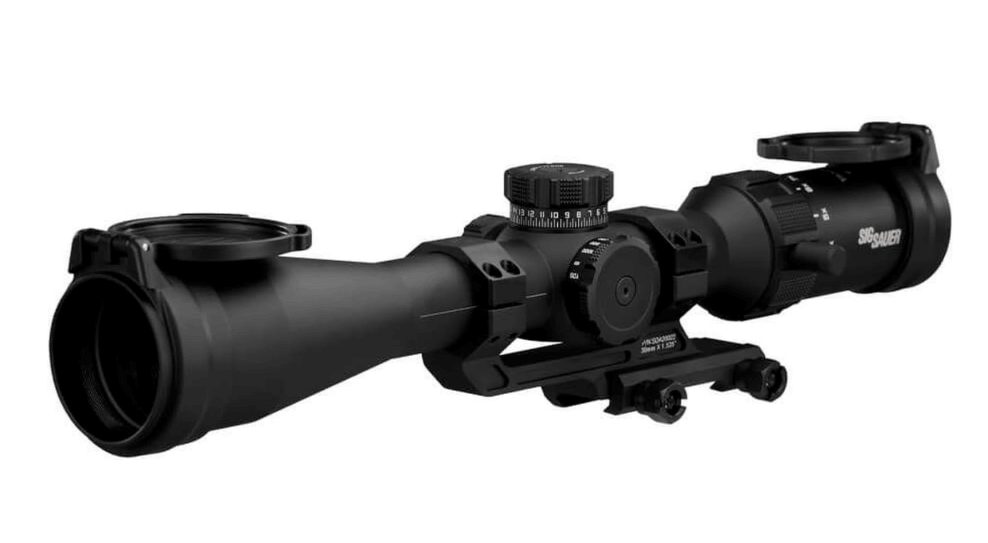
3. SIG Sauer TANGO-SPR 4-16×44 SFP
Best for higher magnification and side focus
The SIG Sauer TANGO-SPR 4-16×44 SFP is a strong candidate for buyers who want a higher-magnification scope with several adjustment features while keeping the optic price below $300.
Why Choose It
The TANGO-SPR combines a 4-16x range with dedicated side focus, a BDC-1 reticle, and an included factory-installed mount. Those features make it a different proposition from the simpler, low-power TANGO-MSR.
Key Features
Magnification: 4-16x
Objective lens: 44mm
Tube diameter: 30mm
Weight: 29.6 ounces with mount
Focal plane: Second focal plane
Reticle: BDC-1, non-illuminated
Eye relief: 3.5 inches
Adjustment system: Exposed zero-stop elevation dial and capped windage dial
Mount: Factory-installed SPR mount
What These Features Mean in Real Use
The 4-16x range gives you more magnification flexibility than a 1-6x optic. A 44mm objective also provides a larger optical entrance than a 24mm objective, although actual image brightness depends on the complete optical design, magnification, and lighting conditions.
The side-focus control allows the user to adjust for parallax. This is particularly relevant when using higher magnification, where small alignment differences can become more noticeable.
The included mount can help reduce additional purchase costs. Nevertheless, the scope weighs 29.6 ounces with its mount, making it substantially heavier than the Athlon Talos. That difference is worth considering if overall rifle weight matters.
Trade-Offs
This model offers more adjustment features than a basic hunting scope, but it is relatively heavy. Its reticle is not illuminated, which may be a disadvantage against dark backgrounds.
The 3.5-inch eye relief should also be checked against the intended rifle and shooting position to ensure comfortable, appropriate eye placement.
Pros
Officially listed at $199.99
4-16x magnification
Dedicated side-focus adjustment
Factory-installed mount
Exposed zero-stop elevation dial
Cons
29.6 ounces with mount
Non-illuminated reticle
3.5-inch eye relief requires attention to fit and positioning
Best if: You want higher magnification, side focus, and a factory-installed mount within the budget.
Consider another option if: You prioritize low weight or an illuminated reticle.
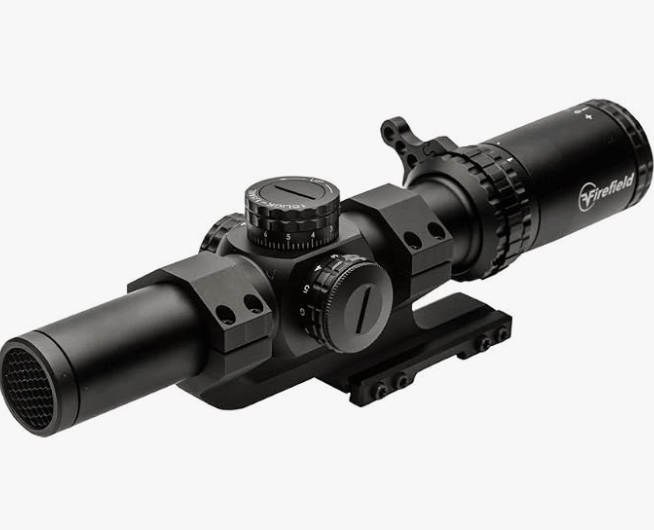
4. Firefield RapidStrike 1-6×24
Best for entry-level LPVO buyers
The Firefield RapidStrike 1-6×24 is another low-power variable optic to investigate when comparing budget-oriented models. Its 1-6x format places it in the same broad category as the TANGO-MSR, but you should verify the exact RapidStrike model number, reticle, included accessories, and current price before purchasing.
Why Choose It
A 1-6x scope may suit someone who does not need the magnification range of a dedicated precision optic. It offers a lower-power starting point while retaining the option to increase magnification when more visual detail is useful.
Key Features
Magnification: 1-6x, as identified in the product name
Objective lens: 24mm, as identified in the product name
Reticle, weight, tube diameter, illumination, and mounting accessories: Verify against the exact current listing
Price: Confirm the selected configuration remains under $300
What These Features Mean in Real Use
The low-power design is the main reason to compare the RapidStrike with other LPVOs. It provides a different balance from a 4-16x or 6-24x scope, which prioritizes greater magnification over a wider view at the low end.
Do not assume two 1-6x optics are interchangeable. Eye relief, reticle design, illumination, optical clarity, and the mounting package can differ. Those differences matter more than the shared magnification label alone.
Trade-Offs
The available information here does not establish all current specifications for the exact RapidStrike configuration. Therefore, a firm comparison of weight, reticle features, or adjustment performance would be premature.
Before choosing it, compare its complete cost and documented features against the SIG Sauer TANGO-MSR and other established LPVO options.
Pros
Low-power variable format
1-6x magnification range
Worth comparing for budget-conscious buyers
Cons
Exact configuration needs verification
Current price and package contents need confirmation
Available information is insufficient for a complete specification comparison
Best if: You find a verified RapidStrike configuration under $300 that meets your requirements.
Consider another option if: You need fully verified specifications or a clearly documented mounting package before buying.
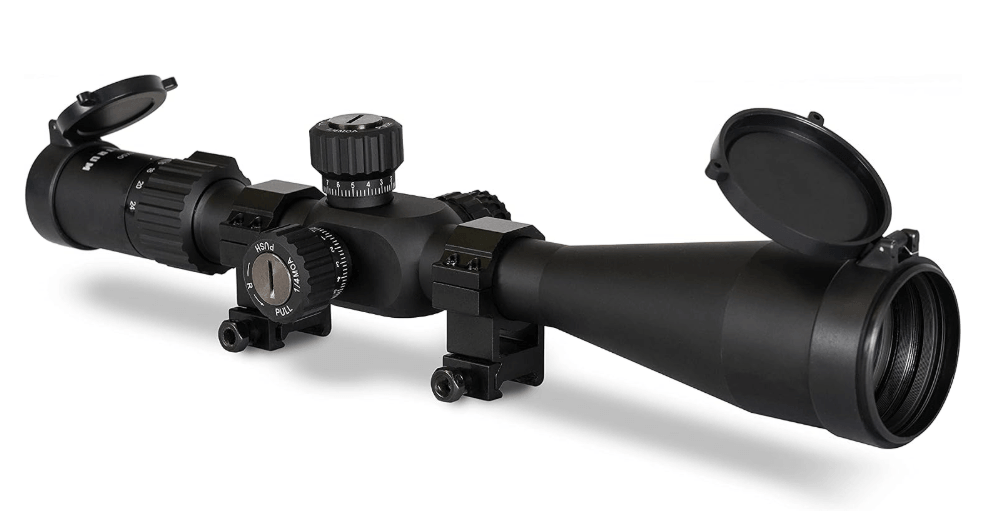
5. Monstrum G3 6-24×50 FFP
Best for budget first-focal-plane magnification
The Monstrum G3 6-24×50 FFP is designed for buyers who want a high-magnification scope with a first-focal-plane reticle. Monstrum lists the model in its G3 range at approximately $249.95-$259.95, depending on the selected option.
Why Choose It
Its main distinction is the combination of 6-24x magnification and a first-focal-plane reticle. This gives it a different purpose from the low-power SIG Sauer scopes and the second-focal-plane Athlon Talos.
Key Features
Magnification: 6-24x
Objective lens: 50mm
Focal plane: First focal plane
Tube diameter: 30mm
Reticle: Verify the exact selected G3 configuration
Weight: Confirm with the manufacturer for the selected configuration
What These Features Mean in Real Use
The 6-24x range provides considerably more maximum magnification than a 1-6x LPVO. However, starting at 6x also means a narrower field of view at the low end, so it is less versatile for situations where a broad view is important.
A first-focal-plane reticle changes apparent size as magnification changes. Its measurement references therefore maintain their proportional relationship to the target throughout the zoom range. This can be useful to buyers who prefer that reticle design, although the markings still need to be understood correctly.
The 50mm objective makes this a larger optic than many low-power scopes. Weight, mounting height, and overall rifle balance should all be considered before purchase.
Trade-Offs
The G3’s high magnification and FFP design are its key attractions. The compromises are size, weight, and reduced field of view at high magnification.
Do not treat the maximum magnification number as proof of optical quality. The complete optical system and the conditions in which the scope is used also influence the image.
Pros
6-24x magnification
First-focal-plane design
50mm objective
Manufacturer-listed price below $300 for the identified model family
Cons
Larger format than an LPVO
Narrower field of view at high magnification
Exact weight and reticle configuration should be confirmed
Best if: You want high magnification and an FFP reticle at a sub-$300 price.
Consider another option if: You need a lighter, more compact scope or a wider field of view at low magnification.
For another perspective on higher-magnification options, Optics Find’s guide to long-range scopes under $300 compares budget optics by magnification, reticle design, parallax adjustment, and weight.
Factors to Consider When Choosing Tactical Rifle Scopes Under $300
1. Magnification and Field of View
Magnification should match the kind of viewing you need. A 1-6x LPVO offers a broad view at 1x and more detail at 6x. A 4-16x scope offers more top-end magnification, while a 6-24x model is more specialized for high-magnification viewing.
Higher magnification is not automatically better. As magnification increases, the field of view narrows, and movement in the image becomes more noticeable. Choose a range that suits your intended application rather than focusing only on the highest number.
2. Reticle and Focal Plane
The reticle affects how you interpret the sight picture.
Simple reticle: Offers a straightforward aiming reference.
BDC reticle: Provides ballistic references designed around particular calibration conditions.
Mildot or other measurement reticle: Uses reference marks that require familiarity with their measurement system.
First focal plane: The reticle changes apparent size as magnification changes.
Second focal plane: The reticle stays the same apparent size, and its measurement references generally correspond to a specified magnification.
Neither focal-plane design is universally superior. The right choice depends on how you prefer to use the reticle and how much complexity you want.
3. Objective Lens and Optical Clarity
A larger objective lens can support a larger exit pupil, but it does not guarantee a brighter or clearer image. Optical design, lens coatings, magnification, and available light also matter.
A 24mm objective helps keep an LPVO compact. A 40mm or 44mm objective is common on midrange variable-power scopes, while a 50mm objective adds size and may affect mounting height.
4. Parallax and Turret Design
Parallax adjustment helps reduce apparent reticle movement relative to the target when your eye position changes. It is a useful feature to compare on higher-magnification scopes.
Turrets also differ. Capped controls protect against accidental changes, while exposed turrets offer direct access to adjustments. Zero-stop systems provide a reference point for returning an elevation turret to its established zero. Choose features that suit your intended use rather than paying for adjustments you will not need.
5. Weight, Eye Relief, and Mounting Costs
Scope weight is only one part of the complete setup. Rings or a mount, lens covers, and other accessories add weight and cost.
Eye relief matters because it affects how far your eye sits from the eyepiece while maintaining a usable image. Check the manufacturer’s specified eye relief and ensure the scope is appropriate for the intended rifle and mounting position.
Finally, confirm the tube diameter and mount compatibility. A one-inch tube and a 30mm tube require different ring sizes.
6. Weather Protection and Warranty
Waterproofing and fog-proofing are useful when equipment is exposed to changing weather. Look for specific manufacturer documentation rather than assuming that every scope described as tactical has the same sealing or construction.
Warranty terms also differ. Read the manufacturer’s current warranty conditions and confirm what is covered before making a purchase.
Frequently Asked Questions
1. What is the best tactical rifle scope under $300?
The best option depends on your priorities. The Athlon Talos 4-16×40 offers higher magnification and side focus, the SIG Sauer TANGO-SPR 4-16×44 combines higher magnification with an included mount, and the Monstrum G3 6-24×50 FFP offers a first-focal-plane design. Compare the exact configuration and total price before deciding.
2. Is a first-focal-plane scope better than a second-focal-plane scope?
Neither is automatically better. An FFP reticle scales with magnification, while an SFP reticle stays the same apparent size. The best choice depends on the reticle references you need and how you prefer to use them.
3. Should I choose a 1-6x scope or a 4-16x scope?
A 1-6x scope offers a wider view at low magnification and a versatile format. A 4-16x scope provides greater maximum magnification but a narrower field of view at the high end. Choose according to your intended application, rather than maximum magnification alone.
Conclusion
The best tactical rifle scope under $300 is the one that fits your priorities without forcing you to pay for features you do not need. The Athlon Talos 4-16×40 and SIG Sauer TANGO-SPR 4-16×44 are worth comparing if you prefer higher magnification, while the SIG Sauer TANGO-MSR is a different option for buyers who want an LPVO. The Monstrum G3 6-24×50 FFP is worth considering if first-focal-plane functionality and high magnification are priorities.
The Firefield RapidStrike may also be worth investigating, but confirm the exact configuration and current price first. Before purchasing any of these scopes, verify the model number, reticle, weight, mounting requirements, warranty, and total checkout price.