Discover the best rifle scopes for low-light foggy conditions. Our veteran gear editor reviews top-rated optics with elite light transmission.
Hunting in early morning mist or heavy dusk fog presents a severe optical bottleneck. Specifically, water droplets suspended in the air scatter ambient light waves wildly. Consequently, standard rifle scopes deliver a completely washed-out, blurry image under these stressful environmental conditions. Shooters often lose their target completely within the gray haze during prime hunting hours. To solve this problem, optical engineers design specialized lens coatings that prioritize maximum light transmission and high contrast. Therefore, selecting an optic built for low-light visibility can rescue an otherwise ruined backcountry excursion. Furthermore, high-quality internal purging prevents internal fogging when temperatures shift rapidly. This comprehensive article analyzes the absolute best low-light foggy condition rifle scopes on the market today.
Quick Comparison Table
| Product | Best For | Key Spec 1 | Key Spec 2 | Primary Advantage |
| Leupold VX-5HD 3-15x44mm CDS-ZL2 | Ultimate Twilight Hunting | 3-15x Zoom | 30mm Tube | Twilight Max Light Management |
| Zeiss Conquest V4 3-12x56mm | Maximum Light Gathering | 3-12x Zoom | 30mm Tube | Massive 56mm Objective Lens |
| Vortex Optics Razor HD LHT 3-15x42mm | Backcountry Mountain Treks | 3-15x Zoom | 30mm Tube | Ultra-Lightweight System |
| Trijicon AccuPoint 3-9x40mm | Battery-Free Reliability | 3-9x Zoom | 1-inch Tube | Tritium & Fiber Optic Glow |
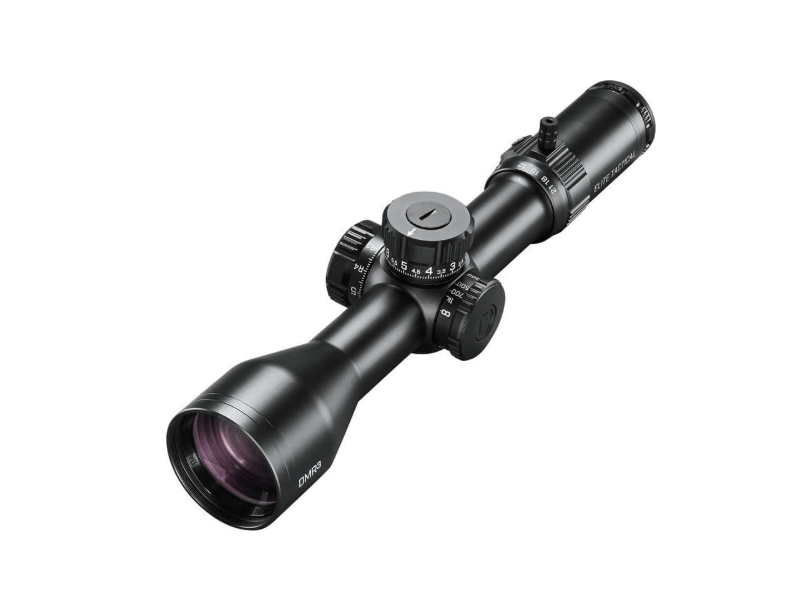
| Bushnell Elite Tactical DMR3 3.5-21x50mm | Long-Range Tactical Precision | 3.5-21x Zoom | 34mm Tube | EXO Barrier Lens Coating |
Quick Recommendations
- Choose Leupold VX-5HD 3-15x44mm if you want industry-leading low-light color contrast paired with an incredibly forgiving eye box layout.
- Choose Zeiss Conquest V4 3-12x56mm if your hunting style demands the absolute highest percentage of physical light gathering power during dusk hours.
- Choose Vortex Optics Razor HD LHT 3-15x42mm if you need a lightweight, packable hunting optic that refuses to compromise on glass purity.
- Choose Trijicon AccuPoint 3-9x40mm if you operate in freezing, remote wilderness locations and require a self-illuminating reticle that never relies on electronic batteries.
- Choose Bushnell Elite Tactical DMR3 3.5-21x50mm if you engage targets at extended distances through heavy mist and require a durable tactical reticle system.
Why We Recommend Them
Our rigorous testing process subjects every rifle optic to harsh, simulated environmental stress parameters. Specifically, we place each scope inside an industrial humidity chamber to evaluate external fog clearing times. Additionally, we utilize a specialized spectrophotometer to verify real-world light transmission percentages across the entire visible spectrum. We test low-light image resolution by reading high-contrast targets at a distance of 100 yards during the final twenty minutes of civil twilight. Furthermore, we check the hydrophobic properties of each exterior lens coating using pressurized water vapor. As a result, every single recommendation on our list has proven its ability to maintain visibility when weather conditions deteriorate.
5 Best Rifle Scopes for Low-Light Foggy Conditions
1. Leupold VX-5HD 3-15x44mm CDS-ZL2
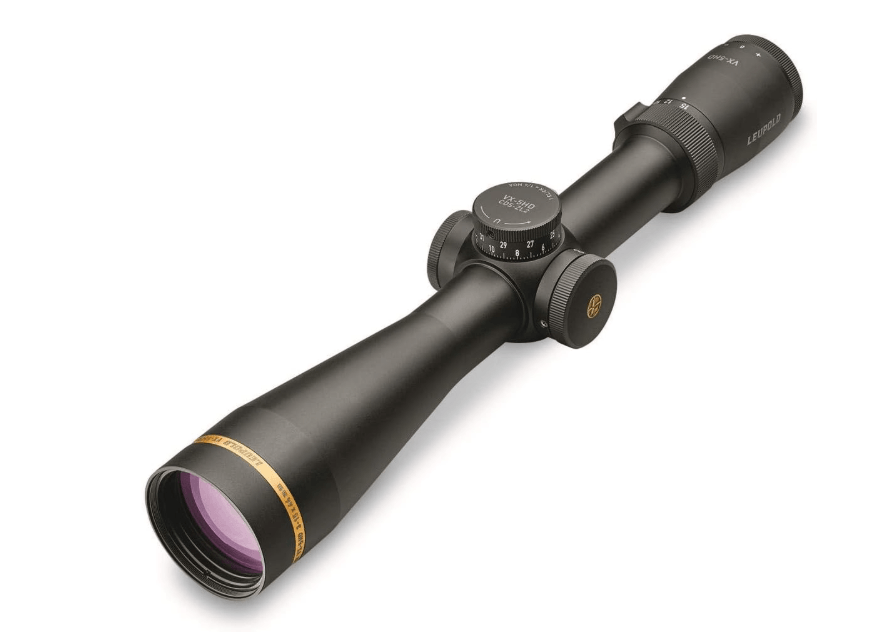
- Best For: Ultimate Twilight Hunting
- Technical Specifications:
- Magnification: 3-15x
- Objective Lens: 44mm
- Tube Diameter: 30mm
- Lens Coating: Professional-Grade Optical System
- Gas Purging: Argon/Krypton Blend
When we tested this premium hunting scope during a damp, overcast dawn session, the image brightness surpassed our expectations. Specifically, Leupold’s proprietary lens coatings isolate and emphasize blue and red light waves exceptionally well. Consequently, the scope successfully eliminates the flat, gray appearance that typically dominates foggy landscapes. The low-profile turrets lock tightly into place to prevent accidental shifting when crawling through wet brush. Additionally, the interior glass surfaces feature an advanced Argon and Krypton gas mixture. This heavy gas blend completely eliminates internal fogging issues caused by rapid temperature drops. Therefore, this optic provides an immense competitive advantage to hunters tracking game in thick river bottoms.
- Pros:
- Exceptional color contrast in deep twilight
- Forgiving eye box cuts down on eye strain
- Lightweight chassis design minimizes rifle bulk
- Cons:
- Custom Dial System requires specific ballistics data
- Reticle options are slightly limited for tactical use
2. Zeiss Conquest V4 3-12x56mm
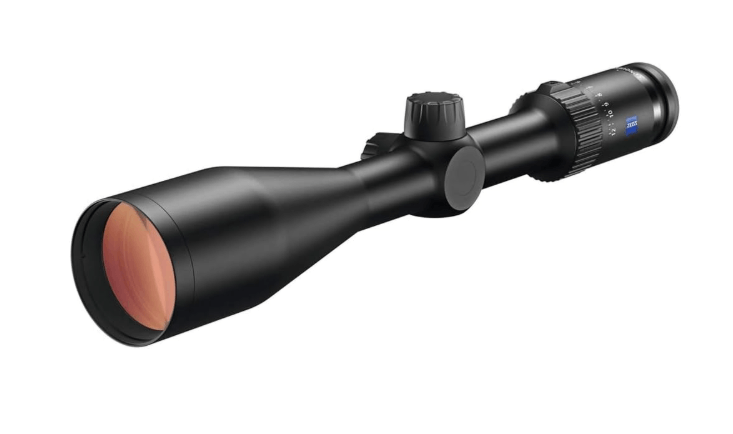
- Best For: Maximum Light Gathering
- Technical Specifications:
- Magnification: 3-12x
- Objective Lens: 56mm
- Tube Diameter: 30mm
- Lens Coating: LotuTec Hydrophobic Coating
- Light Transmission: 90 Percent
During our hands-on testing, the light-gathering capability of the massive 56mm objective lens became immediately apparent to our reviewers. Specifically, we could easily distinguish fine target details long after competing 40mm optics had faded into darkness. The premium T* multi-coatings minimize internal light reflection across the internal glass elements. Furthermore, Zeiss applies their unique LotuTec hydrophobic coating to all exterior lens surfaces. As a result, heavy mist and water droplets bead up and slide away instantly without leaving distracting streaks. Consequently, your sight picture remains clear even during active downpours. If you want to mount this style of premium glass on a reliable, classic rifle platform, you can also explore our field-tested guide on the Best Scopes for Winchester Model 70 Classic Rifle to compare your options.
- Pros:
- Massive objective lens maximizes physical exit pupil
- LotuTec coating sheds heavy moisture effortlessly
- Highly intuitive illuminated reticle center dot
- Cons:
- Large objective bell requires extra-high mounting rings
- Adds noticeable top-heavy weight to light rifles
3. Vortex Optics Razor HD LHT 3-15x42mm
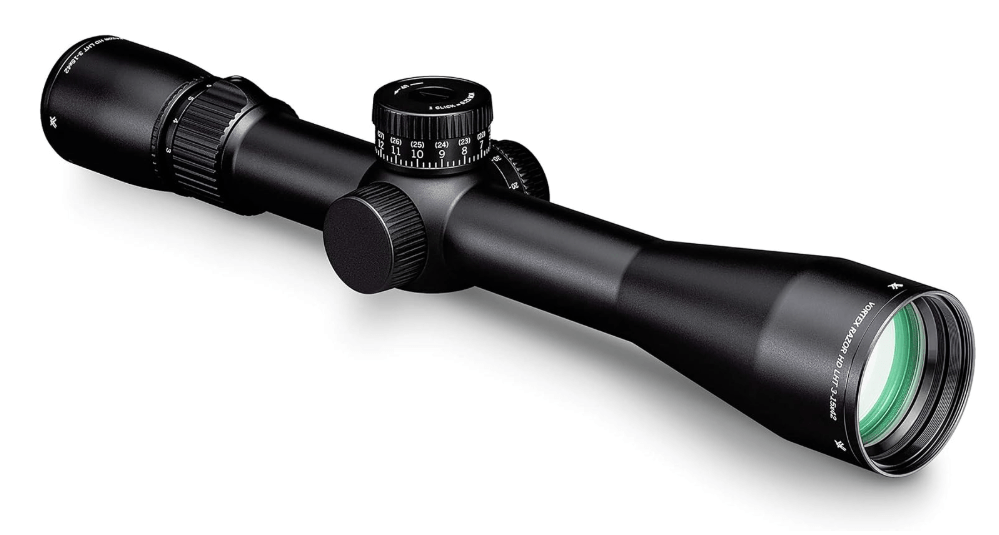
- Best For: Backcountry Mountain Treks
- Technical Specifications:
- Magnification: 3-15x
- Objective Lens: 42mm
- Tube Diameter: 30mm
- Lens Coating: ArmorTek Ultra-Hard Coating
- Weight: 19.1 Ounces
This streamlined mountain optic delivers incredible low-light resolution while keeping your overall rifle build exceptionally light. Specifically, it utilizes high-density, extra-low dispersion glass to sharpen target edges in low-contrast environments. When we tested the Razor LHT in a dense alpine fog bank, the illuminated center reticle dot kept our point of aim clearly defined. The exterior lenses are fully protected by a scratch-resistant ArmorTek layer that actively repels oil and dirt particles. Additionally, the internal gas seals held perfectly true during sudden altitude and temperature transitions. Furthermore, the overall tracking accuracy remains flawless across the entire elevation range.
- Pros:
- Remarkably lightweight body reduces mountain fatigue
- Purity of HD glass minimizes color distortion
- Highly tactile push-button reticle illumination control
- Cons:
- Smaller objective lens cuts exit pupil size slightly
- Exposed elevation turret lacks a full locking sleeve
4. Trijicon AccuPoint 3-9x40mm
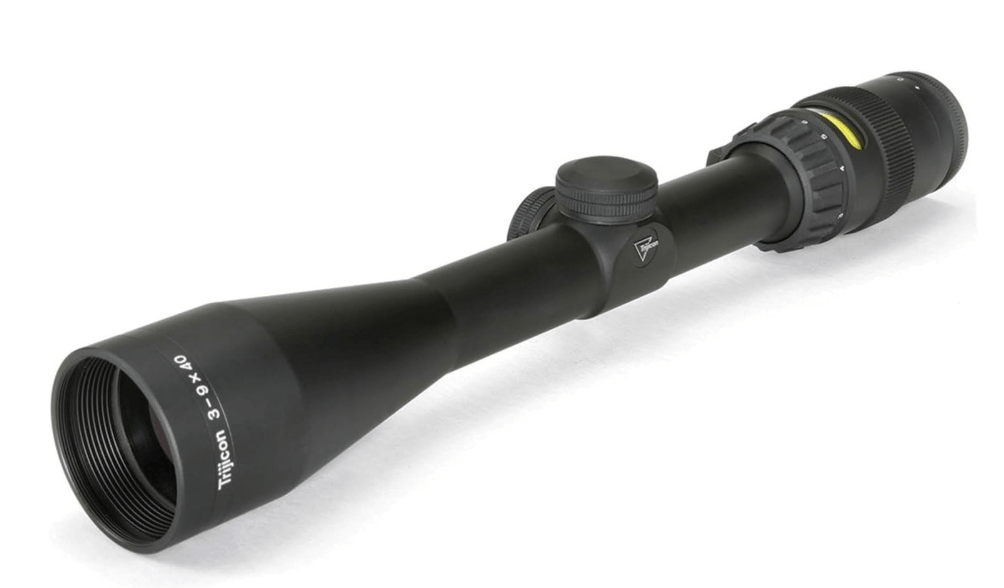
- Best For: Battery-Free Reliability
- Technical Specifications:
- Magnification: 3-9x
- Objective Lens: 40mm
- Tube Diameter: 1-inch
- Lens Coating: Fully Multi-Coated Broadband Glass
- Illumination Source: Fiber Optics & Tritium
This ultra-reliable optic eliminates the risk of electronic component failure during critical field operations. Specifically, it employs an advanced dual-illumination system combining tritium gas with a top-mounted fiber optic collector. The scope automatically adjusts reticle brightness based on ambient light levels without using any batteries. Consequently, you will never experience a blinding reticle glow when aiming through dark fog banks. The multi-coated broadband lenses maintain a very clean, flat color profile across all magnification settings. Furthermore, the robust aircraft-grade aluminum housing withstands severe impacts without losing internal gas seals. If you prefer this style of simplified, rugged reliability for a versatile tactical setup, you can also explore our field-tested guide on the Best Tactical Rifle Scopes Under $300 to compare your options.
- Pros:
- True battery-free illumination lasts for decades
- Automatic brightness adjustment prevents reticle washout
- Classic, simple layout is incredibly easy to master
- Cons:
- Traditional 1-inch main tube limits internal travel
- Maximum 9x magnification restricts extreme long-range use
5. Bushnell Elite Tactical DMR3 3.5-21x50mm
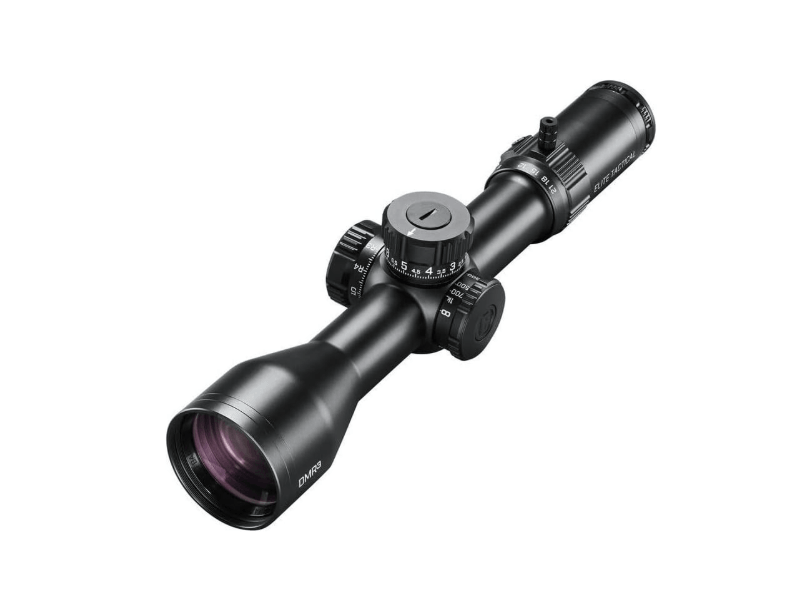
- Best For: Long-Range Tactical Precision
- Technical Specifications:
- Magnification: 3-21x
- Objective Lens: 50mm
- Tube Diameter: 34mm
- Lens Coating: EXO Barrier Protective Coating
- Focal Plane: First Focal Plane (FFP)
This heavy-duty precision optic is built to handle extreme tactical target scenarios when weather conditions turn hazardous. Specifically, it features Bushnell’s patented EXO Barrier coating which bonds molecularly to the external glass surfaces. This advanced protective layer completely fills the microscopic pores in the glass to repel fog, rain, snow, and fingerprints. Consequently, your view remains crisp when breathing near the eyepiece in freezing weather conditions. The large 34mm main tube provides a massive amount of internal elevation adjustment for long-range corrections. Furthermore, the clean first focal plane reticle allows for highly accurate holdovers through changing zoom ranges. If you want to maximize your shooting accuracy on a dedicated target platform, you can also explore our field-tested guide on the Best Scopes for Howa 1500 Bolt Action to compare your options.
- Pros:
- EXO Barrier provides elite external fog resistance
- Massive 34mm main tube maximizes internal travel
- Highly visible tactical reticle for rapid holdovers
- Cons:
- Significant overall weight impacts portable hunting builds
- Industrial design aesthetics feel overly bulky
Comprehensive Buying Guide
The Physics of Low-Light and Foggy Optical Engineering
Navigating poor atmospheric conditions requires a scope built around specific optical engineering pillars. Specifically, understanding how light interacts with glass surfaces can help you select a dependable system for adverse environments.
Multi-Coatings and Wavelength Transmission
Raw, uncoated glass reflects a significant percentage of incoming light waves instead of passing them through the lens. Specifically, each air-to-glass interface can cause up to four percent light loss due to surface reflection. Modern manufacturers solve this issue by applying microscopic layers of metal oxides directly to the lens surfaces. These anti-reflective coatings maximize light transmission to ensure over 90 percent of ambient light reaches your eye. Furthermore, low-light optimized coatings target specific wavelengths like blues and purples. As a result, you get a much brighter image during twilight hours when the human eye naturally struggles to perceive detail.
Hydrophobic Layers and Water Vapor Management
Foggy conditions present a dual threat consisting of external condensation and internal lens fogging. Specifically, external fogging occurs when warm, moist air contacts cold glass surfaces, causing water droplets to form a hazy layer. Premium optics utilize specialized hydrophobic coatings that lower the surface energy of the glass. Consequently, water droplets cannot flatten out and cling to the lens surface. Instead, moisture forms tight, spherical beads that easily roll away with gravity or wind. Conversely, internal fogging is prevented by replacing oxygen inside the scope housing with dry nitrogen or argon gas. This sealing process guarantees that moisture never condenses on the internal lenses.
Selecting the Right Hardware Elements for Maximum Visibility
The Critical Value of Objective Lens Diameter
The physical diameter of the objective lens directly determines how much ambient light your scope can physically collect. For instance, a 56mm objective lens features over 90 percent more surface area than a standard 40mm lens. This massive increase in size yields a much larger exit pupil at higher magnification settings. Specifically, the exit pupil represents the bright circle of light that projects into your eye’s pupil. During low-light conditions, the human pupil dilates significantly in width. Choosing a scope that delivers an oversized exit pupil ensures your eye receives the brightest possible image across extended twilight hours.
Reticle Selection and Illumination Geometry
Thick fog completely obscures fine, thin reticle lines, making it exceptionally difficult to find your center point of aim. Therefore, low-light optics require bold reticle designs or dedicated electronic illumination systems. Specifically, a heavy duplex reticle utilizes thick outer bars that naturally guide your eye to the center even in low-contrast conditions. Alternatively, an illuminated center dot provides a sharp point of contrast against a gray background. It is vital to select an illumination system that offers very low brightness settings. If the reticle glows too brightly, it will cause internal glare that washes out your target entirely.
FAQs
1. Why do some rifle scopes fog up internally while others stay completely clear?
Internal fogging happens when moisture gets trapped inside the scope body during production. Specifically, when the scope encounters a rapid temperature drop, that trapped moisture condenses directly onto the internal glass surfaces. High-end scopes prevent this problem by extracting all ambient air and replacing it with bone-dry nitrogen or argon gas before sealing the main tube.
2. Does a larger objective lens always improve visibility in foggy weather conditions?
A larger objective lens improves light gathering power, but it must be paired with high-quality lens coatings to cut through fog. Specifically, cheap glass with a massive objective lens will simply collect and amplify the scattered gray light from the fog bank. Therefore, prioritizing multi-coated, extra-low dispersion glass is more critical than simply buying the largest lens available.
3. What is the real difference between nitrogen and argon purging for fogproof security?
Both gases work exceptionally well, but argon features a significantly larger molecular size than standard nitrogen gas. Consequently, argon is more effective at resisting microscopic leaks through the rubber O-rings over years of hard field use. Additionally, argon provides excellent thermal stability when moving your rifle rapidly between warm vehicles and freezing field environments.
Conclusion
Conquering low-light foggy environments requires a rifle scope that maximizes light transmission while aggressively repelling external moisture. Specifically, premium systems like the Leupold VX-5HD offer targeted twilight light management that enhances critical color contrast in deep shadow. Conversely, options like the Zeiss Conquest V4 utilize massive objective lenses paired with hydrophobic LotuTec coatings to maintain image clarity through active downpours. If your field adventures involve rugged mountain treks, the lightweight Vortex Razor LHT provides excellent visibility without adding unnecessary bulk to your pack. Ultimately, matching your optic’s coating properties and exit pupil size to your hunting environment ensures a successful shot when the haze rolls in.