The last fifteen minutes of legal shooting light are when mature whitetail bucks move, and it is also when cheap glass betrays you. You are staring down a narrow, overgrown logging road in the deep timber, the canopy is choking out the remaining sky, and a dense twilight fog is rolling into the bottomland. Through a subpar scope, this critical moment dissolves into a milky, low-contrast blur where the crosshairs vanish against the dark hide of a deer.
Vortex Optics has built a massive following in the hunting community by addressing this exact bottleneck, offering glass that maintains structural contrast when ambient light drops to zero. Choosing the right optic requires matching the physical limits of your hunting environment with the precise mechanical boundaries of your rifle system.
The Physics of Whitetail Optics: Exit Pupil and Light Transmission
To consistently place a clean shot on a whitetail during prime movement hours, an optic must maximize the amount of usable light reaching the human eye. This is governed by exit pupil geometry, a mathematical relationship calculated by dividing the objective lens diameter by the current magnification setting. A 3-9x40mm scope set at 3x produces a massive 13.3mm exit pupil, which easily floods the human eye with light. However, if you crank that same scope up to 9x to check a brow tine at long range, the exit pupil shrinks to a restrictive 4.4mm. Because the dark-adapted human pupil expands to roughly 7mm, any exit pupil smaller than that threshold creates a perceived dimming effect, forcing your eye to align perfectly with the optical axis to prevent immediate blackout.
Lens coating chemistry is the second critical variable in the low-light equation. Raw glass naturally reflects a significant percentage of light rather than transmitting it through the optical column. Vortex addresses this by applying proprietary anti-reflective coatings to all air-to-glass surfaces. These ultra-thin chemical layers are engineered to minimize surface reflection across the entire visible spectrum, keeping the light transmission rate exceptionally high. In the field, this engineering prevents internal scattering and ghost images, ensuring that the faint glint of a mature buck’s antlers stands out sharply against dark brush instead of washing out into a grey haze.
Four Real-World Optical Challenges in the Whitetail Woods
Navigating the whitetail woods exposes an optic to extreme physical stress and optical anomalies that laboratory testing rarely accounts for. Cheap scopes frequently fail under these four specific field conditions:
- Optical edge distortion under heavy canopy shadows. When aiming into dense, dark timber, lower-tier lenses suffer from rapid degradation of resolution along the outer 20% of the field of view. This blurring effect prevents a hunter from spotting subtle movements, like a tail flick or an antler turn, in the periphery of their sight picture.
- Reticle starbursting glare during twilight hours. Illuminated reticles are excellent for low light, but poorly engineered diodes cause the light to bleed out into the surrounding glass. At dawn or dusk, this starbursting effect completely obscures the vital zone of a deer, turning a precise aiming point into a blinding red or green blob.
- Parallax inconsistency during rapid, off-axis mounting. Whitetail hunting rarely offers the luxury of a perfect benchrest setup. When jumping a deer from a tree stand or snapping a shot over a fallen log, your eye is often misaligned with the center of the scope. If the internal lens groups are not perfectly calibrated, this misalignment shifts the perceived point of impact, leading to a clean miss.
- Internal fogging from rapid thermal shock. Moving a rifle from a warm truck cab or a heated hunting cabin into freezing morning air causes immediate moisture condensation. Scopes without high-grade O-ring seals and true Argon or Nitrogen gas purging will trap this moisture internally, instantly ruining the internal lenses and blinding the hunter for the rest of the morning.
Top 5 Vortex Scopes for Whitetail Deer Hunting
| Model | Magnification & Objective | Reticle Type | Focal Plane | Best Performance Scenario |
| Vortex Razor HD LHT 3-15×42 | 3-15x42mm | HSR-5i (MOA) | Second | Deep Woods to Open Fields |
| Vortex Viper PST Gen II 2-10×32 | 2-10x32mm | EBR-4 (MOA/MRAD) | First | Dense Timber & Brush Hunting |
| Vortex Viper HS 2.5-10×44 | 2.5-10x44mm | Dead-Hold BDC | Second | Classic Stand & Box Blind Hunting |
| Vortex Strike Eagle 1-8×24 FFP | 1-8x24mm | EBR-8 (Illuminated) | First | Driven Hunts & Thick Bottomlands |
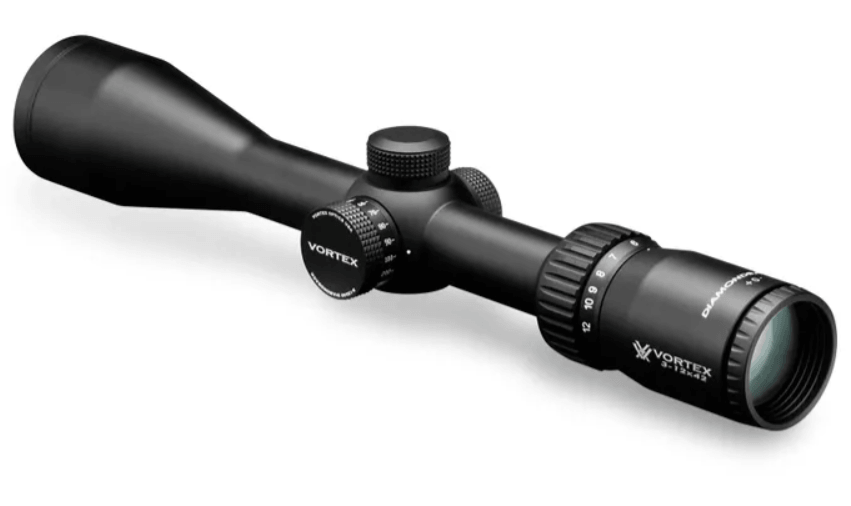
| Vortex Diamondback HP 3-12×42 | 3-12x42mm | Dead-Hold BDC | Second | Budget-Conscious All-Rounder |
1. Vortex Razor HD LHT 3-15×42
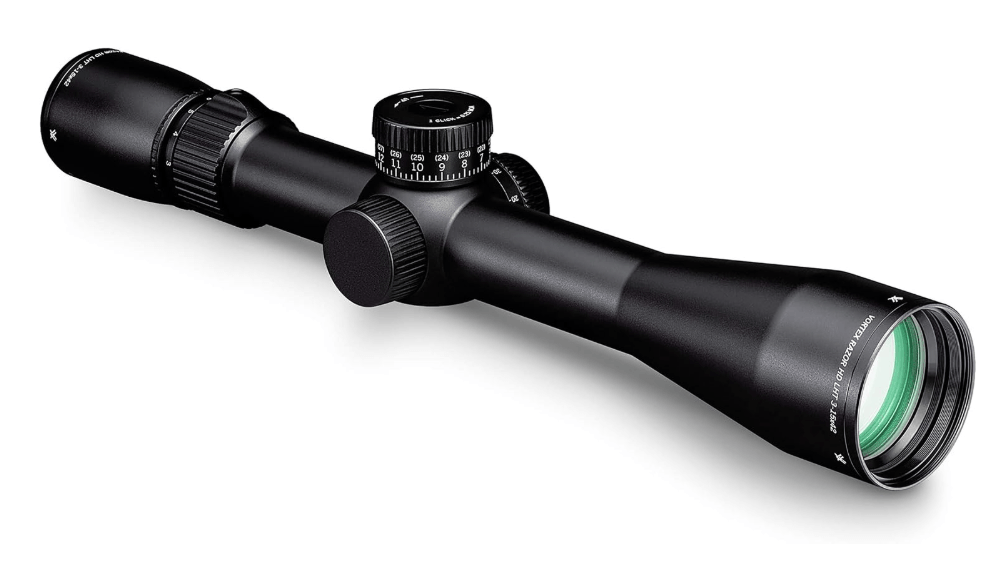
Built specifically for the hunter who demands maximum optical clarity without adding unnecessary weight to their rifle setup, this scope sits at the pinnacle of Vortex’s hunting lineup. The High Definition optical system delivers incredible color fidelity and edge-to-edge sharpness, ensuring you can pick apart thick bedding thickets in low-light conditions. The push-button illumination is seamlessly integrated into the side focus dial, keeping the profile sleek while providing an incredibly crisp, sunlight-bright center aiming dot that will not bleed or starburst when the sun drops below the horizon.
- Pros: Exceptional low-light performance; remarkably lightweight at just 19.1 ounces; locking elevation turret prevents accidental field adjustments.
- Cons: The push-button illumination menu requires a slight learning curve compared to standard rotating dials.
- Performance Constraints: The second focal plane design means the sub tensions are only accurate at maximum 15x magnification, which is something to keep in mind if you need to hold over at intermediate distances.
2. Vortex Viper PST Gen II 2-10×32
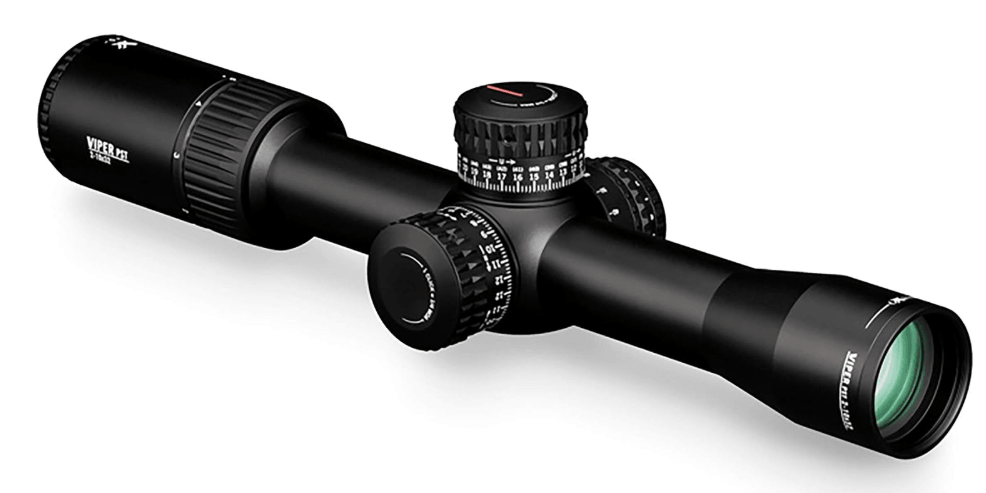
For hunters operating in thick river bottoms or dense big-woods environments where shots happen fast and tracking moving targets is mandatory, this first focal plane optic is a rugged powerhouse. Because the reticle grows and shrinks in direct proportion to the magnification, your holdovers and windage corrections are perfectly accurate at every single setting. The laser-etched reticle is highly visible even without illumination, but turning on the dial-operated brightness settings reveals a clean, sharp aiming system that excels against dark timber backdrops.
- Pros: First focal plane tracking accuracy; highly tactile, exposed elevation turrets; built like a tank out of aircraft-grade aluminum.
- Cons: The 32mm objective lens limits the absolute exit pupil diameter at higher magnifications compared to 40mm options.
- Performance Constraints: Weighing in at 26.3 ounces, this optic adds noticeable heft to a lightweight mountain rifle, making it better suited for static stand placements.
3. Vortex Viper HS 2.5-10×44
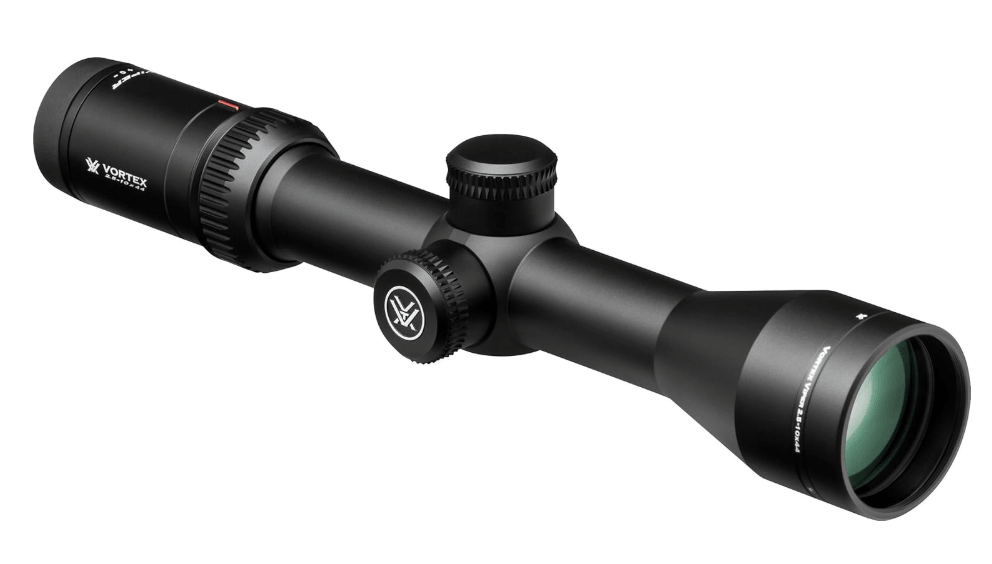
This model represents the traditional sweet spot for the vast majority of whitetail hunters across North America, balancing a highly versatile magnification range with a generous objective lens. The 44mm objective draws in an immense amount of light, pairing beautifully with the second focal plane Dead-Hold BDC reticle to give you a bright, uncluttered view of your target. It features a highly forgiving eye box, allowing for incredibly fast target acquisition the moment your cheek hits the stock, and if you are setting up a dedicated slug gun or a mid-range rifle system, you can also explore our field-tested guide on the best scopes for deer hunting to compare your options.
- Pros: Ultra-forgiving eye box with long eye relief; simple, intuitive reticle layout; excellent cost-to-performance ratio.
- Cons: Lacks an illuminated reticle option, relying strictly on ambient light for crosshair visibility.
- Performance Constraints: Capped turrets mean this scope is designed for holding over rather than dialing adjustments on the fly in the field.
4. Vortex Strike Eagle 1-8×24 FFP
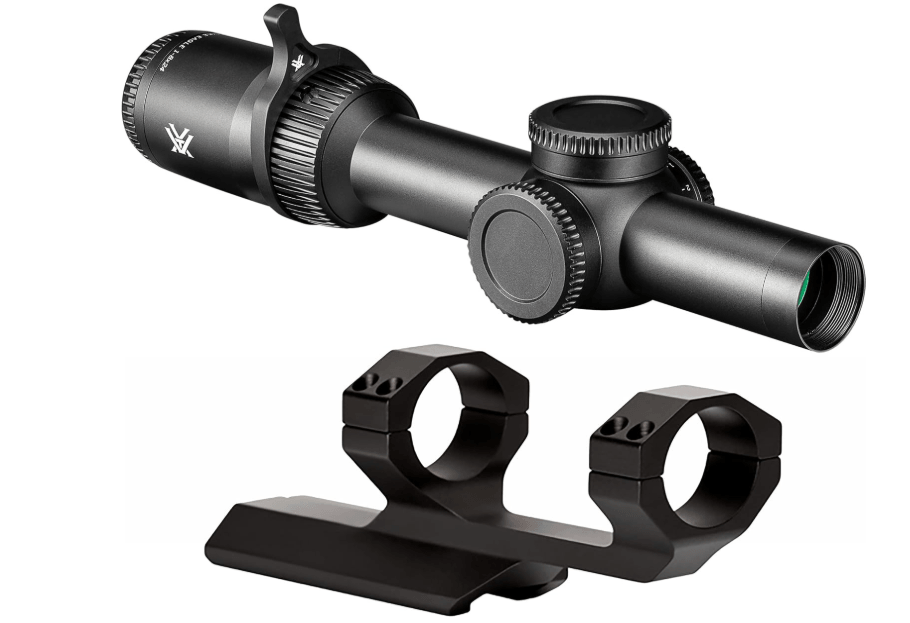
Low-power variable optics (LPVOs) have rapidly migrated from the tactical arena into the big woods due to their unmatched speed at close range. At true 1x magnification, this scope functions exactly like a red dot, allowing you to hunt with both eyes open while tracking a buck running through a thicket. Cranking the dial up to 8x gives you more than enough precision to take ethical shots out to standard whitetail distances, while the first focal plane EBR-8 reticle provides clear, fast reference points.
- Pros: Incredibly fast target acquisition at 1x; fully illuminated reticle with daytime brightness; wide field of view for tracking moving deer.
- Cons: The small 24mm objective lens requires maximum illumination usage during the final minutes of legal shooting light.
- Performance Constraints: Eye placement becomes noticeably more critical at 8x magnification, requiring a consistent, repeatable cheek weld.
5. Vortex Diamondback HP 3-12×42
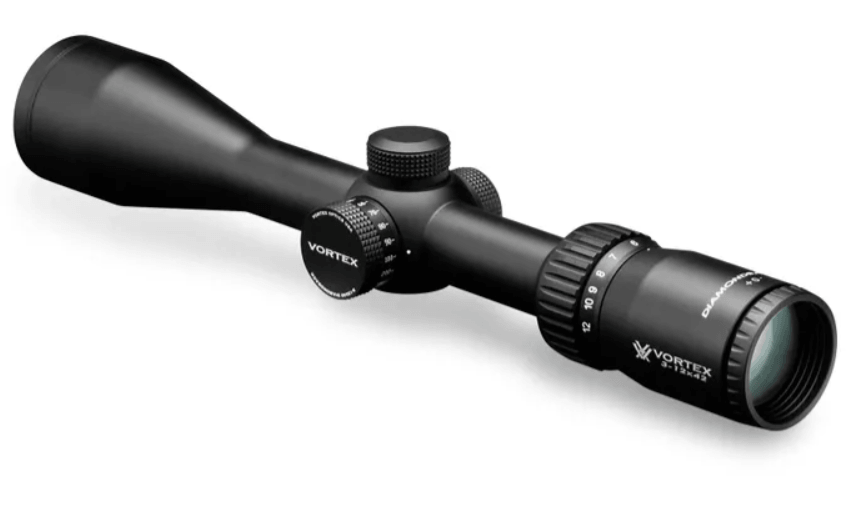
Hunters looking for premium optical features without a premium price tag will find great value in this high-performance variant of the classic Diamondback line. The extra-low dispersion (ED) glass elements significantly reduce chromatic aberration, giving you a much cleaner, sharper image than entry-level glass can provide. The inclusion of a side parallax adjustment ensures that your target and reticle remain perfectly in focus at any distance, eliminating the off-axis shifting that often ruins cross-canyon or deep-timber shots.
- Pros: Includes high-grade ED glass at an accessible price; side parallax adjustment dial; compact profile.
- Cons: The turrets feel slightly less crisp and clicky than those found on the higher-tier Viper and Razor lines.
- Performance Constraints: The light transmission, while highly impressive for its class, drops off slightly faster in deep twilight than the Viper series.
Vortex Whitetail Scope Buying Guide
Matching Magnification to Your Hunting Terrain
Selecting the correct magnification is completely dependent on your physical hunting environment. If your stands are perched over wide-open Midwestern cornfields or long powerline cuts where shots frequently stretch past 200 yards, opt for a versatile 3-15x or 4-16x system to give you the zoom necessary for precise shot placement. Conversely, if you spend your season in the dense hemlock swamps of the Northeast or the thick brush of the South, a 1-8x LPVO or a classic 2-10x scope is vastly superior. Lower magnification settings provide a much wider field of view, allowing you to react instantly when a buck steps out of the brush at close range.
Reticle Selection and Focal Plane Mechanics
The choice between a first focal plane (FFP) and a second focal plane (SFP) scope comes down to how you intend to shoot. An SFP reticle remains the exact same size regardless of your magnification setting, ensuring it stays large, thick, and highly visible even at the lowest zoom level in dark woods. The trade-off is that holdover hashes are only accurate at one specific magnification setting. An FFP reticle scales dynamically with the zoom, meaning your holdover marks are always mathematically accurate, though the reticle can appear quite fine and thin at the lowest magnification settings. For traditional whitetail distances under 200 yards, a clean, bold SFP reticle like the Dead-Hold BDC is often the most reliable choice, and if you are building an ultra-precise setup for varied terrain, you can also explore our field-tested guide on the best long range rifle scopes to compare your options.
Tube Diameter and Turret Configurations
Scope body tubes are typically offered in 1-inch, 30mm, or 34mm configurations. While larger tubes do not inherently let more light pass through to your eye, they provide significantly more internal space for the erector system to move, allowing for a wider range of elevation and windage adjustments. A 30mm tube also offers increased structural rigidity against heavy recoil. When it comes to turrets, capped variations are generally preferred for traditional deer hunting because they prevent branches, briars, or thick clothing from accidentally turning your dials while you are hiking through the woods. Exposed, locking turrets should be reserved for scenarios where you actively plan to dial for distance, and if you are pairing your new glass with a dedicated short-action brush gun, you can also explore our field-tested guide on the best scopes for 350 legend to compare your options.
Vortex Whitetail Scopes FAQ
1. Is a 40mm or 50mm objective lens better for whitetail hunting?
A 40mm objective lens is generally superior for the vast majority of deer hunters because it allows the scope to be mounted lower to the rifle barrel, maintaining a natural, comfortable cheek weld while reducing overall weight. While a 50mm objective lens technically creates a larger exit pupil that can gather more light at higher magnification settings, it forces the shooter to mount the optic higher off the bore line, which often compromises shooting posture and alters the rifle’s balance point in the field.
2. Should I choose an illuminated reticle for deer hunting?
An illuminated reticle provides a distinct mechanical advantage for whitetail hunting because it projects a bright, high-contrast aiming point directly onto the center of the glass, preventing the crosshairs from completely disappearing against the dark hide of a deer during dawn or dusk. Non-illuminated reticles can easily become lost in thick brush or heavy tree canopy shadows during prime shooting hours, making an illuminated center dot an excellent insurance policy for clean shot placement.
3. What is the best Vortex magnification for hunting in thick woods?
The best magnification range for hunting in thick, dense timber is a 1-8x or a 2-10x setting. These lower zoom ranges offer a massive field of view that allows a hunter to quickly acquire a moving deer in heavy cover, keeping both eyes open if necessary to track the animal through the brush, whereas starting at a higher base magnification like 4x or 6x creates a narrow sight window that makes finding a close-range target incredibly difficult.